
Embracing Indigenous Wisdom in Modern Well-Being Solutions


One year ago today, on 26 May 2025, the World Health Assembly did something quietly radical: it adopted a ten-year plan that treats traditional healing practices not as folklore to be tolerated but as systems of care to be regulated, studied, and integrated into national health systems. That matters more than it sounds, because more than 80% of the world's population, across over 170 of WHO's 194 member states, already relies on some form of traditional medicine. The practices were never going away. What changed is that the institutions finally stopped pretending they had.
I want to spend this article doing the thing the wellness market rarely does, which is to name what we are actually talking about — specific traditions, carried by specific communities, in specific languages — instead of blending them into one warm idea about balance.
What "traditional healing practices" actually means
Traditional healing practices are codified or non-codified systems of care that developed before, and largely apart from, modern biomedicine — and that are still practiced by living communities today. The phrase covers an enormous range, from Japan's national-insurance-covered herbal medicine to a curandera's limpia in Oaxaca, and it is a mistake to treat them as interchangeable flavors of the same thing. They have different cosmologies, different pharmacopeias, different ideas about what a body even is.
There is one distinction worth carrying through the rest of this piece, because it prevents most of the confusion in this field. A practice can have cultural efficacy — what it does in and for the community that holds it — and it can have biomedical efficacy — what a randomized trial can measure about it. These are two different questions. A practice can score high on one and we simply may not know about the other. Collapsing them is how a tradition gets oversold, and also how it gets unfairly dismissed.
Five living traditions, named
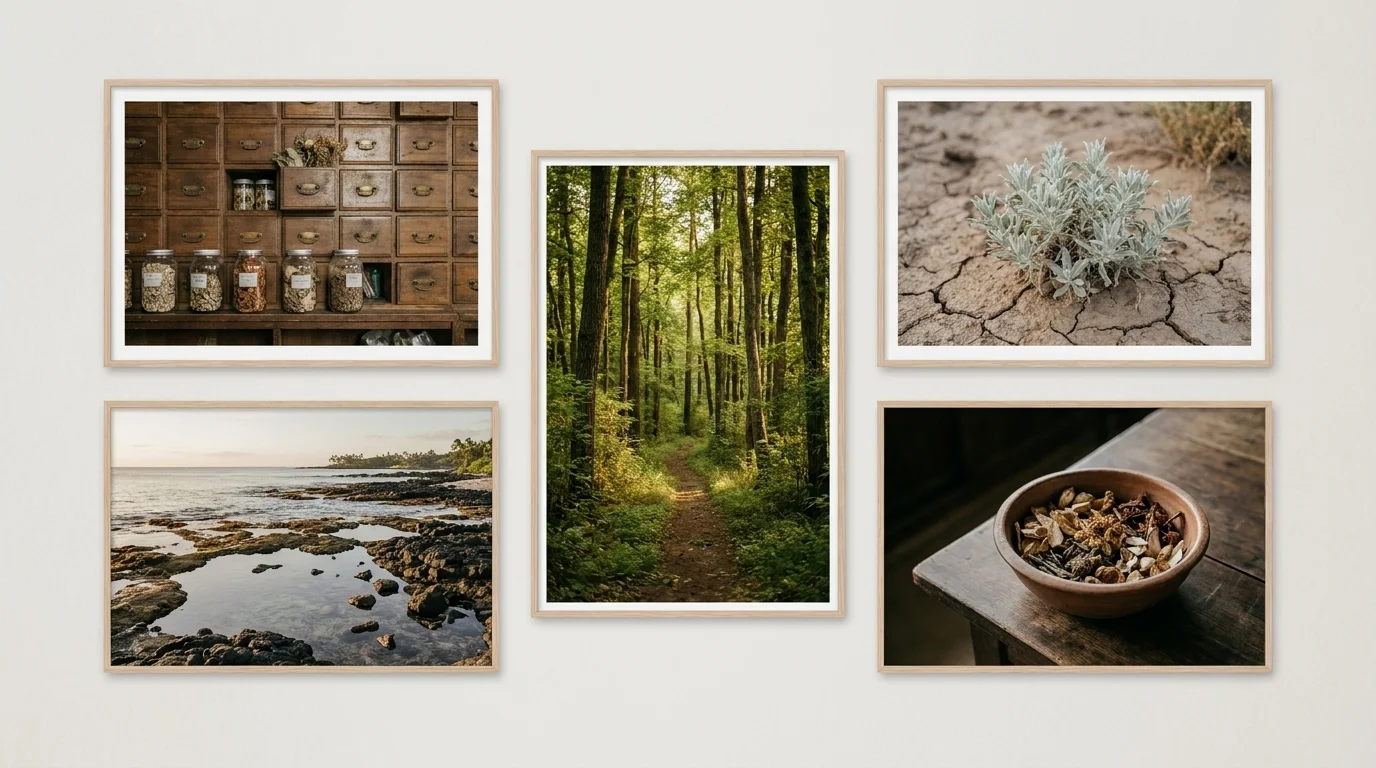
Traditional Chinese Medicine
The cleanest example of a traditional remedy becoming biomedicine comes from China. Tu Youyou, searching classical Chinese texts for a malaria treatment, isolated artemisinin from Artemisia annua — sweet wormwood — and the resulting drug is now a Nobel-recognized frontline antimalarial used worldwide. That is a tradition delivering, by the strictest biomedical standard, a measurable win. It is worth remembering that this took decades of laboratory work; the plant did not arrive in a clinic by itself.
Ayurveda
Ayurveda, the system of the Indian subcontinent, is being formalized rather than romanticized. India's Ministry of Ayush is working with the WHO to standardize Ayurvedic, Siddha, and Unani categories within WHO's classification of health interventions — a bureaucratic milestone that does something important: it makes the practices legible to health systems and insurers without pretending the metaphysics has been proven. The diagnostic interview and the daily-routine scaffolding are the parts most worth taking seriously.
Native American healing
In October 2024, California did something concrete: it expanded Medi-Cal to cover Native American traditional healing services for substance-use treatment. This is the integration debate stops being abstract — a state insurance program paying for ceremony and community practice delivered by tribal practitioners, on their terms, inside the formal care system. Note what makes it work: the practitioners and the community are not the raw material for someone else's product. They are the providers.
Shinrin-yoku (Japanese forest bathing)
Shinrin-yoku is the case I use to teach the efficacy distinction. As a Japanese practice of slow, attentive time among trees, its cultural meaning is one thing; its biomedical signal is another, and unusually well-studied. A 2024 review and a multi-study meta-analysis link forest bathing to measurable cortisol reduction and a parasympathetic shift — a real, if modest, physiological effect. What does not survive the translation into a "45-minute forest-therapy session" is the unhurried social and seasonal context the practice grew in.
Curanderismo
Curanderismo, the folk healing of Mexico and the Latin American diaspora, treats body, spirit, and social relationship as one fabric. Its ancestral and lineage dimension — the curandera working through relationship, story, and ritual passed down within a community — is precisely the part that does not show up in a trial and does not need to, because its work is communal repair. It belongs in this list as the reminder that not every tradition is trying to compete with a pharmaceutical, and judging it by that yardstick misses the point.
What the WHO's 2025 strategy actually changed
The Global Traditional Medicine Strategy 2025–2034, adopted at the 78th World Health Assembly, is built on stronger evidence, better regulation, and integration into health systems. The honest framing inside it is complement, not replacement. Traditional healing practices are used alongside biomedical care, not as a substitute for it — and the strategy is careful never to claim that a practice is safe or effective simply because it is old. That restraint is the whole point. A herbal preparation can interact with a prescription; a wellness product is not a treatment for a serious condition. Taking a tradition seriously includes being honest about what it cannot do.
Who benefits when a tradition becomes "wellness"?
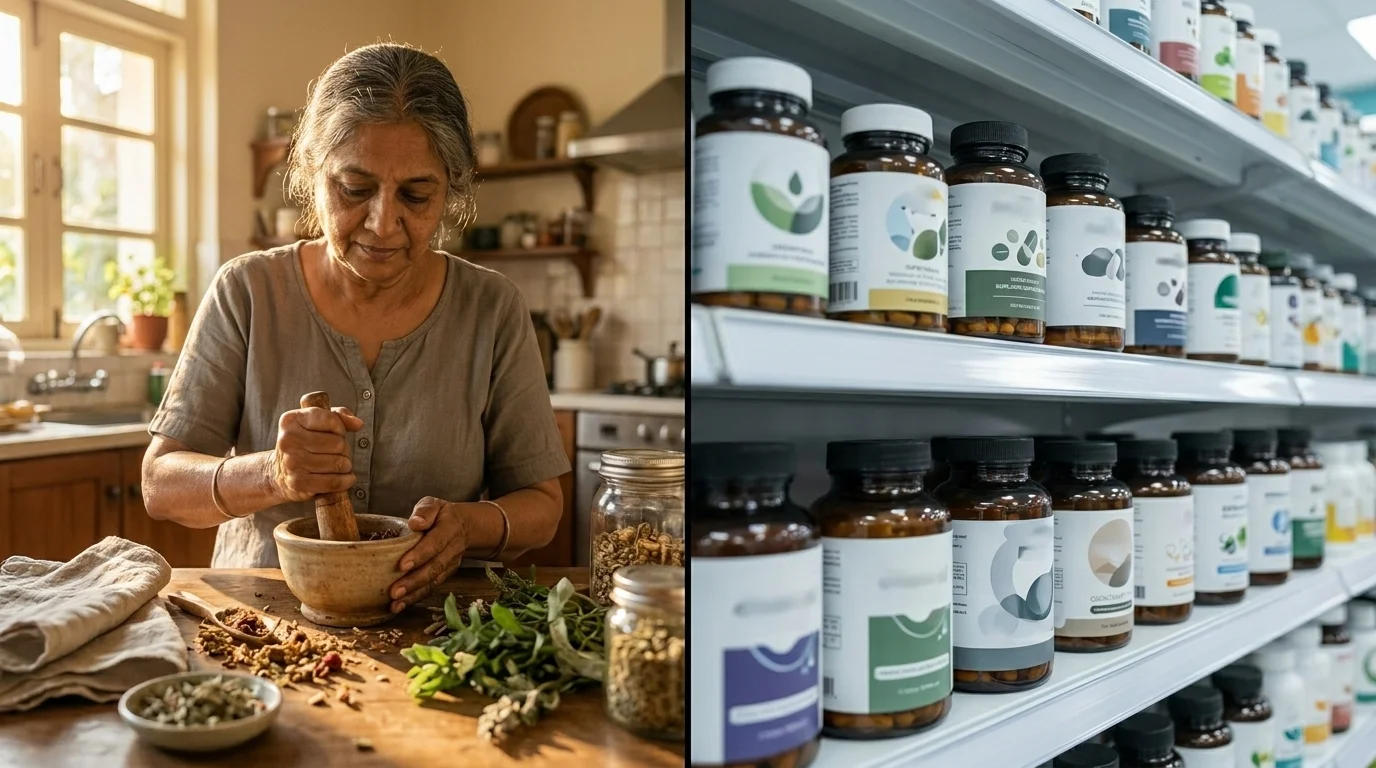
Here is the part the inspirational version of this story leaves out. When a practice travels from a community into the global wellness market — a sector now worth hundreds of billions — something usually gets left behind, and someone usually gets left out. The diagnostic context goes. The practitioner's authority goes. Often the community that carried the knowledge for centuries sees none of the revenue.
This is no longer only an ethical complaint; it is becoming law. In May 2024, WIPO adopted the GRATK Treaty, the first international instrument requiring patent applicants to disclose the origin of genetic resources and associated traditional knowledge. Alongside it, the principle of Indigenous Data Sovereignty — the right of peoples to control the data and knowledge derived from them — is reshaping what "integration" is allowed to mean. The WHA78 strategy itself "explicitly recognized not only the role of traditional knowledge of indigenous peoples but also the importance of upholding their rights."
So if you want to engage a tradition that is not your own, the practical version of respect is simple. Learn the practice in its actual context. Support the practitioners who carry it rather than a brand that has stripped it down to the part you can bill for. And keep asking the only question that really sorts the honest integration from the extractive kind: when this tradition becomes "wellness," who benefits — the community that kept it alive, or the revenue line that found it?
Frequently Asked Questions
Age-old practices offer significant benefits by promoting a holistic approach to well-being. They emphasize the interconnectedness of individuals with their environment, fostering balance and mindfulness. These traditions often incorporate natural remedies that enhance physical health while also supporting mental clarity and emotional resilience, making them relevant in today's fast-paced world.
Integrating traditional healing wisdom into modern health solutions involves recognizing the value of indigenous knowledge alongside contemporary practices. This integration allows individuals to access diverse remedies that cater to their unique needs, addressing not only physical health but also mental and spiritual well-being for a comprehensive approach to personal health.
Cultural heritage is crucial as it serves as a repository of knowledge that informs sustainable well-being practices. By preserving and adapting this wisdom, we honor ancestral legacies while promoting innovative advancements in health solutions. Understanding diverse cultural perspectives amplifies the relevance of traditional health wisdom in contemporary contexts.
Ancestral insights are foundational to cutting-edge solutions in holistic wellness. They provide a rich source of knowledge that, when combined with modern research, fuels advancements in areas like herbal medicine and mindfulness therapies. This blend allows individuals to explore various avenues for achieving optimal health while honoring their cultural heritage.
Embracing indigenous wisdom can significantly enhance personal well-being by fostering a balanced lifestyle that integrates mind, body, and spirit. These ancient practices encourage a deeper connection with one's roots and promote holistic health solutions that resonate across cultures, ultimately leading to improved mental clarity and emotional resilience.
Modern society benefits from traditional healing practices by gaining access to time-tested methods that promote holistic well-being. These practices offer valuable insights into maintaining balance and harmony within oneself and with the environment, which can counterbalance the rapid technological advancements that often overlook these essential aspects of health.
Adopted on 26 May 2025 at the 78th World Health Assembly, it is WHO's ten-year plan to integrate evidence-based traditional and complementary medicine into health systems while upholding indigenous peoples' rights and protecting biodiversity. It frames traditional healing as a complement to biomedical care, not a replacement.
For specific practices, yes. The antimalarial artemisinin derives from the Chinese herb sweet wormwood, and forest bathing (shinrin-yoku) is linked to measurable cortisol reduction in controlled studies. But biomedical efficacy varies by practice, and a tradition's cultural value is a separate question from what a trial can measure.
Learn the practice in its actual cultural context, support practitioners from the community that carries it rather than brands that strip it down, and respect indigenous data sovereignty — the right of peoples to control knowledge derived from them, now reinforced by the 2024 WIPO GRATK Treaty.