
The Art of Storytelling in Nutritional Education: Inspiring Healthy Food Choices


Here is a frustrating fact about nutrition education: we know that telling a story can shift what people eat, and we almost never use it. A systematic review of narrative interventions for health behavior found that only about 3 of 52 studies specifically targeted nutrition. The technique is well-studied across health communication — smoking, screening, vaccination — and barely applied to dinner. A 2024 commentary in the Journal of Nutrition Education and Behavior made the same point directly, noting that storytelling may be especially effective for learners with lower literacy levels yet "is not yet readily used" in nutrition programs.
So this is a piece for the people who do the educating — dietitians, teachers, parents, and food content creators — about what the evidence actually says, and how to build a food story you can use this week. No "superfoods," no moral lectures about eating. Just the technique, the research behind it, and the honest size of the effect.
Why Stories Actually Change What We Eat
Start with the uncomfortable part: the effect is real but small. A meta-analysis of 25 studies and 9,330 participants found that narratives produced a statistically significant but modest shift in health attitudes, intentions, and behaviors — an effect size of about r = .063. That is not a magic bullet. It is a reliable nudge, the kind that compounds across a classroom or a clinic over time rather than transforming one person overnight.
Two findings from the broader literature make the technique more useful once you know them. First, narrative shines for prevention. A meta-analysis of 50 studies (13,113 participants) found no overall winner between story-based and statistics-based messaging, but a significant advantage for narratives when the message advocated a prevention behavior — which is exactly what "eat more vegetables before there's a problem" is. Second, point of view is a lever you can pull: first-person narratives raised readers' sense of personal susceptibility and their identification with the character (each about d = 0.10) compared with third-person tellings.
The honest takeaway: a story will not out-argue a person's circumstances or budget. But framed as prevention, told in first person, and repeated, it measurably outperforms a list of facts. That is enough reason to learn the craft.
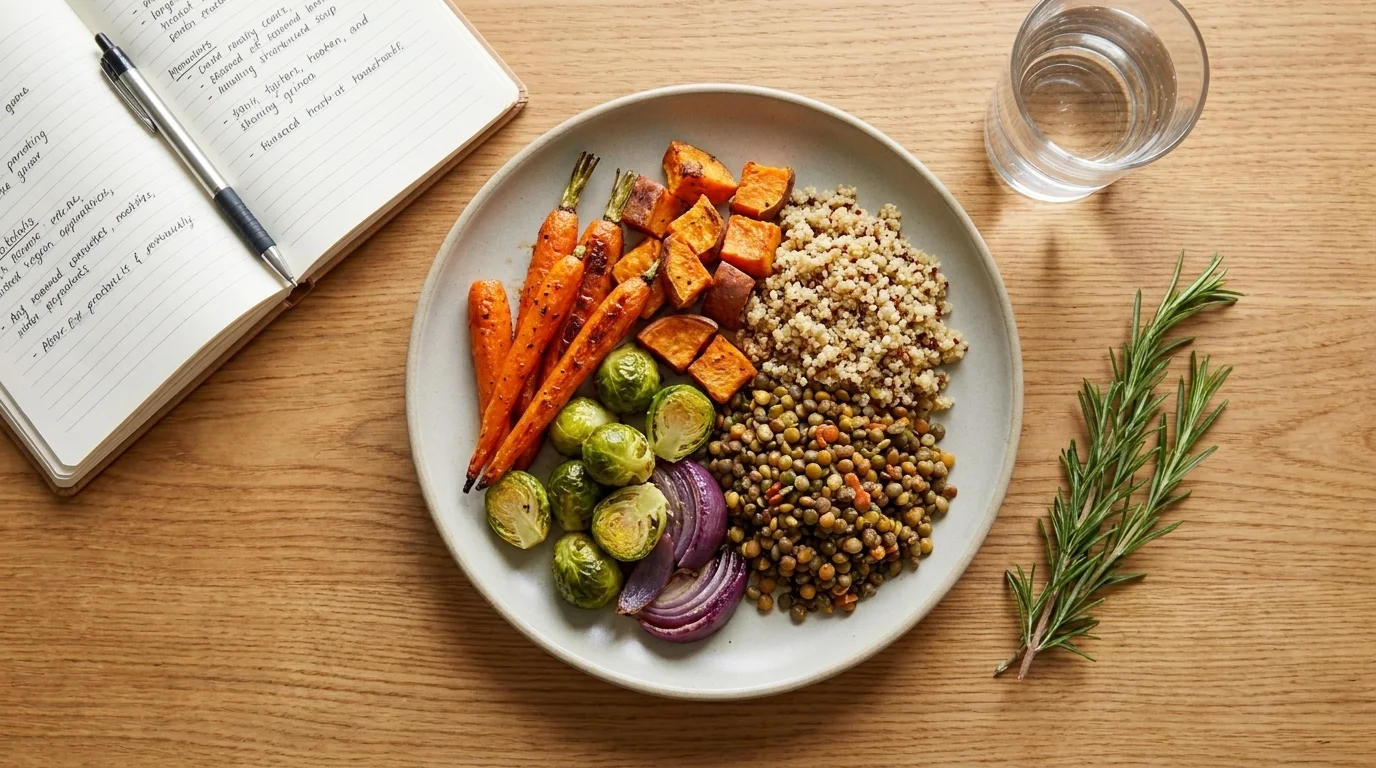
Five Storytelling Techniques, With a Template for Each
The five approaches below are the workhorses of food storytelling. Each gets one concrete example and a short build-it template — because "use a story" is advice nobody can act on.
1. The Origin Story
Tie a food to where it actually comes from. Quinoa, for instance, carries thousands of years of cultivation by Andean communities — a fact that gives the grain context and respect rather than a marketing halo. The point is connection and accuracy, not exotic packaging.
Build it: Pick the food → name its real cultural or agricultural history (check the claim) → connect that history to how a reader might cook it now. Three beats, no embellishment.
2. The Personal Transformation
A first-person account of one specific change — not a dramatic before-and-after weight saga, which tends to moralize and misrepresent how bodies work. The research backs the format: first-person framing lifts identification and perceived relevance. Keep it specific and proportionate.
Build it: One person → one concrete change ("started keeping cut vegetables at eye level in the fridge") → the small, believable result. Avoid promising outcomes the evidence can't support.
3. The Cultural / Culinary Tale
Use the story behind a dish to broaden what counts as healthy eating. A pot of beans and rice, a bowl of miso soup, a plate of lentils — each carries a culinary tradition that makes the nutrition incidental and the meal central. This reframes "healthy food" away from a narrow, often Eurocentric checklist.
Build it: Choose a culturally significant dish → tell its story → let the nutrition ride along quietly. The dish is the hero; the nutrients are the supporting cast.
4. The Challenge-to-Resolution Arc
Narratives about navigating a real dietary constraint — feeding a family on a tight budget, cooking around an allergy — work because they model problem-solving, not perfection. Because this is prevention-adjacent and relatable, it fits the format the evidence favors most.
Build it: Name a real obstacle → show the workaround → end with a usable tactic the reader can copy, not an inspirational flourish.

5. The Sustainability Narrative
Connect a food choice to something larger — a local farm, a growing season, less waste. Industry trend reporting frames 2026 food communication as needing to be "evidence-based, emotionally intelligent," and notes that 78% of consumers say health matters when they choose food. The audience is receptive; the standard is honesty, not hype.
Build it: Pick a tangible link (this farm, this season) → tell that specific story → avoid sweeping environmental claims you can't source.
A Worked Example: Fairytales and Kids' Plates
The clearest demonstration comes from young children. A 2024 study — important caveat, a preprint that has not yet been peer-reviewed — ran experiments with children aged 4 to 6 using fairytales whose characters ate "magic" fruits and vegetables; the children's healthy-food choices rose significantly versus baseline, and the effect held for up to two weeks. The authors flagged three ingredients that made it work: an engaging story, a clear link from the story's "health info" to daily life, and an adult — parent or teacher — leading a discussion afterward.
That last ingredient matters most for anyone applying this. The story did not work alone; the conversation around it did the lifting. Treat the narrative as the opener, not the whole lesson.
Pick the Right Format
Here is a finding that should change how you deliver a food story: medium matters more than you'd guess. In the 25-study meta-analysis, audio and video narratives produced significant persuasion effects, but print-based narratives did not. A beautifully written paragraph may underperform the same story told aloud or on screen.
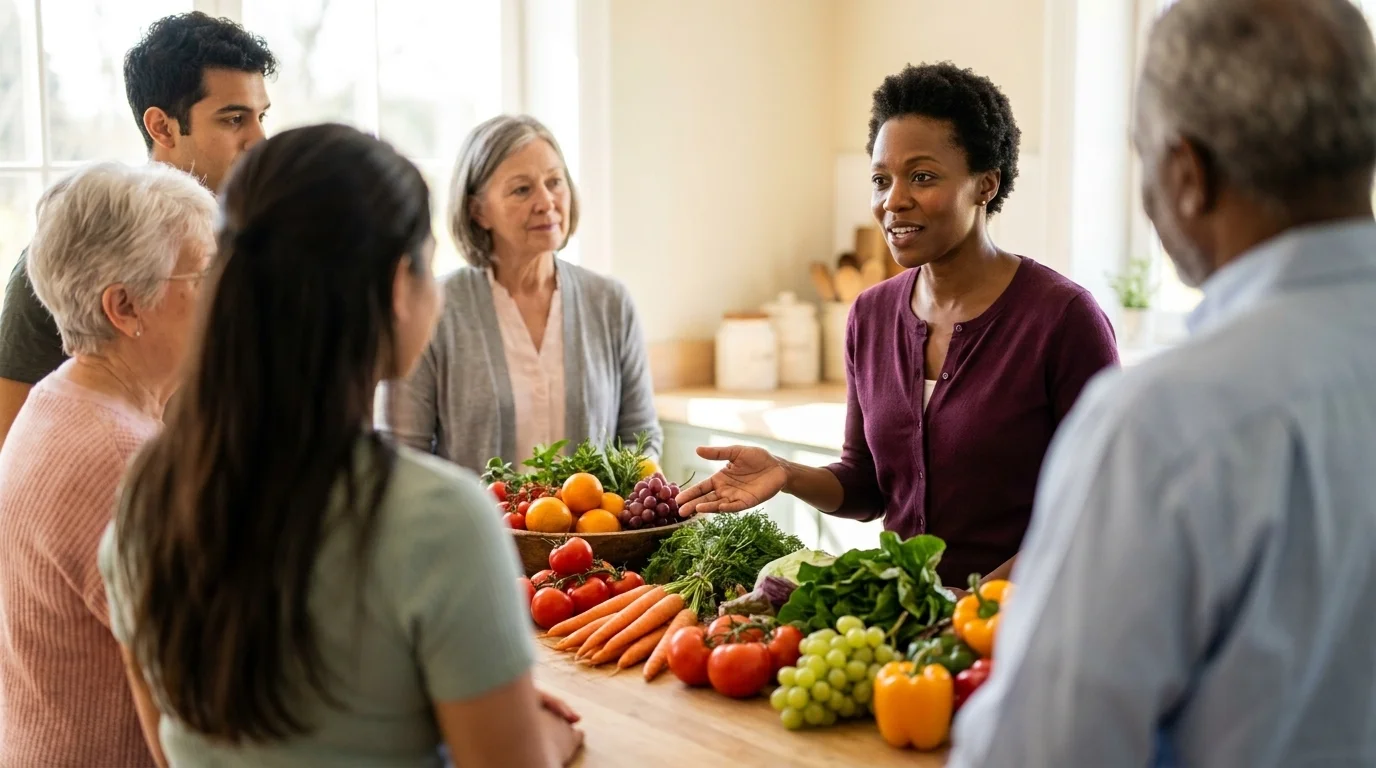
Modern nutrition tech already reflects this. A scoping review of nutrition-education games found a story or narrative built into 15 of 22 of them — about 68%. Narrative isn't a flourish in interactive learning; it's the default scaffold. If you're choosing where to put your effort, a short video, a spoken anecdote in a counseling session, or an interactive story will likely outwork a handout.
The Sober Takeaway
Storytelling is not an alternative to accurate nutrition information — it's the delivery vehicle that makes accurate information land. The evidence says the effect is small, strongest for prevention, better in first person, and better in audio or video than on paper. Used that way, paired with real sourcing and an honest accounting of what food can and can't do, a story does something a fact sheet rarely manages: it gets remembered, and sometimes acted on. That is the whole job.
Frequently Asked Questions
The effect is small but real. A meta-analysis of 25 studies (9,330 participants) found narratives positively shifted health attitudes, intentions, and behaviors (about r = .063), with the strongest results for prevention-focused messages and for audio or video over print. Stories are a reliable nudge, not a magic bullet.
It's an implementation gap, not an evidence gap. Narrative persuasion is well-studied across health communication, but a systematic review found only about 3 of 52 narrative-intervention studies specifically targeted nutrition behaviors — so the technique is proven elsewhere and underused here.
A 2024 experiment (a preprint, not yet peer-reviewed) with children aged 4–6 used fairytales whose characters ate 'magic' fruits and vegetables; healthy-food choices rose versus baseline and held for up to two weeks. It worked best when a parent or teacher discussed the story afterward.
Roughly a tie overall. A meta-analysis of 50 studies (13,113 participants) found no significant difference between narrative and statistical evidence overall, but narratives had a clear advantage when the message advocated prevention behaviors — like eating more vegetables before a health problem arises.
Yes, substantially. In the same 25-study meta-analysis, audio and video narratives produced significant persuasion effects while print-based narratives did not. Modern nutrition-education games reflect this too — about 68% are built around a narrative scaffold.
Anyone doing the educating: registered dietitians, classroom teachers, parents, and food content creators. The goal is to pair accurate nutrition information with a delivery format people actually remember and act on.