
Ethical Marketing in Well-Being: Balancing Promotion with Consumer Well-Being


There is a comfortable version of this topic that says ethical marketing is the right thing to do, and it is. There is also a less comfortable version that says it is increasingly the profitable thing to do — and that one tends to move budgets. The 2025 Edelman Trust Barometer found that 60% of consumers rank trust and transparency as the most important traits a brand can have, 80% say they trust the brands they actually use, and 43% of American consumers shifted spending to match their values in just the first months of the year. For a wellness brand, trust isn't a virtue line item. It's the asset most likely to be destroyed by a marketing claim that doesn't hold up.
So this piece is less about the philosophy of ethical marketing and more about where the line actually is — drawn, these days, by the FTC and FDA, with dollar figures attached. Ethical marketing in wellness means promoting a product truthfully, substantiating health claims before you make them, and disclosing who paid for what. Here is what each of those looks like when it goes wrong.
Truth in Advertising: What "Clinically Proven" Has to Mean
The most abused phrase in wellness copy is some version of "clinically proven." The FTC's case against Quincy Bioscience, maker of the memory supplement Prevagen, is the one to know. After years of litigation, a court ordered the company to stop making "memory improvement" claims, and a parallel class settlement refunds purchasers between $12 and $70 each. The flagged language was "clinically shown" — and the lesson is that the phrase is not a marketing flourish. It is a factual assertion that has to be backed by competent, reliable evidence for the specific claim being made.
There is also a line wellness brands cross constantly, often gently: the difference between a structure/function claim and a disease claim. "Supports a healthy inflammatory response" is a structure/function claim. "Helps lower blood pressure" is a disease claim — even phrased softly, it triggers drug-level requirements, and the FDA's December 2025 guidance reiterated that the DSHEA disclaimer must sit adjacent to the claim on each panel that carries one. The penalties are not theoretical: the FTC's maximum civil penalty now runs to $53,088 per violation, and each ad or post can count separately.

Greenwashing: The Wellness Industry's Favorite Loophole
If "clinically proven" is the overreach on the health side, "clean," "natural," and "non-toxic" are the overreach on the environmental side. And here is the part that should make any careful reader skeptical: the FTC's updated Green Guides scrutinize "free-of" and "non-toxic" claims, but the agency pointedly declined to define "natural," "organic," or "sustainable". Those wellness-favorite words remain, legally, buzzwords. When a brand calls itself "clean," it is making a claim that has no regulatory meaning — which is precisely why it is so popular.
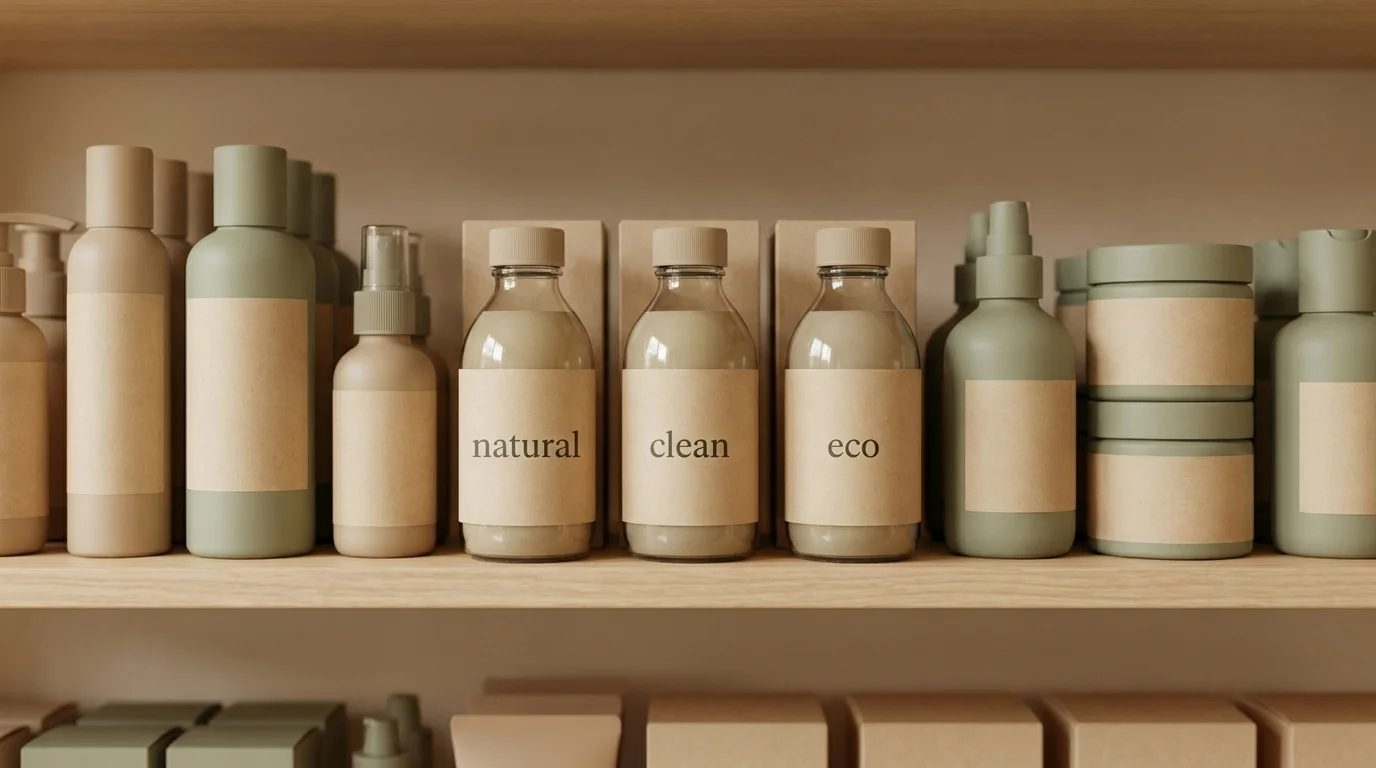
That doesn't mean green claims are consequence-free. Walmart paid $3 million and Kohl's $2.5 million in FTC civil penalties for marketing rayon textiles as "bamboo" and as produced without harmful chemicals — neither claim substantiated, and among the largest penalties ever for false environmental marketing. The pattern is consistent: vague feel-good environmental language is tolerated right up until it makes a specific, falsifiable claim that turns out to be false. For a wellness consumer, the practical read is simple — "natural" tells you nothing, and "clinically tested" tells you everything depends on what kind of test.
Influencer Disclosure: Why "#ad" Isn't Enough Anymore
The article you'd have read two years ago would tell wellness brands to "disclose their affiliations." True, but obsolete in the specifics. The FTC modernized its Endorsement Guides in 2023, and the changes land directly on wellness influencer marketing. Simply tagging a brand now counts as an endorsement, and the FTC has stated that platform-native tools — Instagram and TikTok "Paid Partnership" toggles, or a bare #ad buried in a tag dump — are inadequate disclosure on their own. Disclosure has to be clear and conspicuous within the content itself.
This is not a hypothetical standard. In November 2023, the FTC sent warning letters to 12 health influencers over posts promoting products without adequate disclosure of paid relationships. The updated rules also explicitly cover fake and AI-generated reviewers and synthetic influencers — so the synthetic-testimonial shortcut is closed too. If a wellness brand's growth depends on testimonials that are quietly paid for, that is now a compliance liability, not a clever tactic.

What Ethical Wellness Marketing Actually Looks Like
It's easy to list what not to do. Here are brands that built marketing on the opposite premise, with one line on why each works:
- Patagonia — publishes its environmental and social footprint, funds 1% for the Planet, and has famously run "buy less" campaigns. The transparency is specific and verifiable, which is what separates it from a "sustainable" label.
- Everlane — built its brand on "Radical Transparency," breaking down the actual cost of each product. Whether or not you buy it, the claim is checkable.
- Dove (Real Beauty) — moved the marketing away from idealized imagery toward a broader, less manipulated standard. The ethical move was refusing the manufactured-insecurity playbook the beauty industry runs on.
The common thread is not warmth or good intentions. It's that each claim is specific and falsifiable — the opposite of "natural" and "clinically inspired." Ethical marketing, stripped of the halo, mostly means making claims you'd be comfortable defending to a regulator.
An Ethical Wellness Marketing Checklist
For brands and marketers, the operational version:
- Substantiate before you claim. "Clinically shown" requires evidence for that exact claim — ideally human clinical testing, not a single study or a testimonial.
- Place the DSHEA disclaimer correctly. Adjacent to the claim, on each panel that carries one — not buried in a footer.
- Watch the disease line. If your wording implies treating, curing, or preventing a condition, it's a disease claim, however gently phrased.
- Disclose in the content, not via toggle. A "Paid Partnership" label or a buried
#adis not enough on its own. - Drop the undefined eco-buzzwords — or substantiate them. "Natural," "clean," and "sustainable" carry no legal definition; "non-toxic" and "free-of" now draw scrutiny.
- Keep testimonials genuine. Fabricated, incentivized-but-undisclosed, or AI-generated reviews are explicitly prohibited.
The Bottom Line
The honest synthesis: ethical marketing in wellness is no longer mainly a matter of conscience, because the regulators have written much of it down. "Clinically proven" has to mean something; "natural" means nothing; a paid endorsement has to say so out loud. The brands that treat those as constraints will keep getting warning letters. The ones that treat transparency as the product — Patagonia's footprint report, Everlane's cost breakdowns — are the ones the trust data says win. In an industry built on what consumers are willing to believe, the most durable marketing asset is the claim you can actually back.
Frequently Asked Questions
Only with competent, reliable scientific evidence behind the specific claim. The FTC sued Quincy Bioscience over 'clinically shown' memory claims for Prevagen; after years of litigation a court ordered the company to stop making them, and a class settlement refunds buyers $12–$70 each.
Not by itself. Under the FTC's updated 2023 Endorsement Guides, buried hashtags and platform 'Paid Partnership' toggles are inadequate — disclosure must be clear and conspicuous within the content. The FTC warned 12 health influencers over exactly this in 2023.
Using vague green claims — 'clean,' 'natural,' 'non-toxic,' 'eco-friendly' — without substantiation. The FTC's Green Guides scrutinize 'free-of'/'non-toxic' claims and pointedly decline to define 'natural,' 'organic,' or 'sustainable.' Walmart and Kohl's paid $3M and $2.5M for calling rayon 'bamboo.'
A structure/function claim describes how a product affects the body's normal functioning ('supports a healthy inflammatory response'). A disease claim says or implies the product treats, cures, or prevents a condition ('helps lower blood pressure') — and that triggers drug-level requirements, even when phrased gently.
The data says yes. The 2025 Edelman Trust Barometer found 60% of consumers rank trust and transparency as a brand's most important traits, 80% trust the brands they use, and 43% of American consumers shifted spending to align with their values early in the year. For wellness brands, trust is the asset most easily destroyed by an unsubstantiated claim.