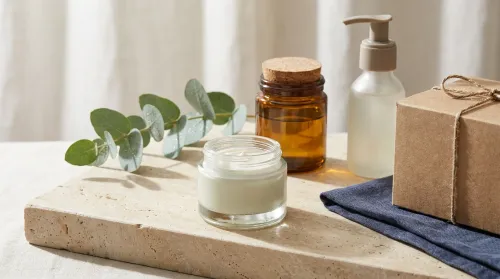
From Sanatoriums to Wellness Resorts: A Journey Through Health Tourism's Evolution


Health tourism is usually told as one story with two halves: people who travel to get well, and people who travel to stay well. Follow the money and the halves are not close. In 2024, travelers spent roughly $894 billion on wellness tourism — spas, wellness retreats, forest walks, prevention — while the entire medical-tourism market, the surgeries and dental work and fertility treatment most people picture when they hear the phrase, came to about $107.5 billion (Global Wellness Institute; Future Market Insights). The branch everyone treats as the serious one is, by spend, the smaller one — by a factor of roughly eight.
That inversion is the actual evolution, and it is the part no one connects to the history. The story usually gets told as a gentle drift from grim medical institutions toward luxury spas. What really happened is that the money moved from the cure to the prevention, and the prevention turned out to be the bigger business.
What is health tourism, and how is it different from medical tourism?
Health tourism is the umbrella. Underneath it sit two different products with two different postures. Medical tourism is reactive: you are sick, or you need a procedure, and you travel because it is cheaper or faster somewhere else. Wellness tourism is proactive — the Global Wellness Institute defines it as "travel associated with the pursuit of maintaining or enhancing one's personal wellbeing" (GWI). One treats a problem. The other sells the absence of one.
The distinction matters because Google, and most of the internet, collapses them. Search "health tourism" and you get cross-border surgery guides. But the dated history below, and the revenue, both belong to the wellness side.
| Medical tourism | Wellness (health) tourism | |
|---|---|---|
| What you're treating | An existing condition | The risk of a future one |
| The posture | Reactive | Proactive |
| Where you go | Hospitals, clinics, surgical centers | Spas, retreats, wellness resorts |
| 2024 market size | ~$107.5B | $894B |
| Who vouches for quality | JCI and similar accreditors | Largely no one — it's a consumer category |
| What can go wrong | Clinical: infection, no recourse abroad | Financial: paying retreat prices for unproven claims |
That last row is the one the brochures leave out, and it is worth keeping in view for the rest of this piece.
Where it started: the rest cure, the spa town, and the sanatorium
The wellness-travel idea is older than the spa-resort aesthetic suggests, and it began as medicine. In 18th-century Europe, patients traveled to spa towns for mineral waters they believed could treat gout, liver disorders, and bronchitis (Wikipedia: Medical tourism). That is balneotherapy — treatment by bathing in mineral-rich water — and it was the original health-tourism product. It still exists, but as a search interest it has been fading for years, which tells you something about how much of its appeal was always the destination rather than the water.
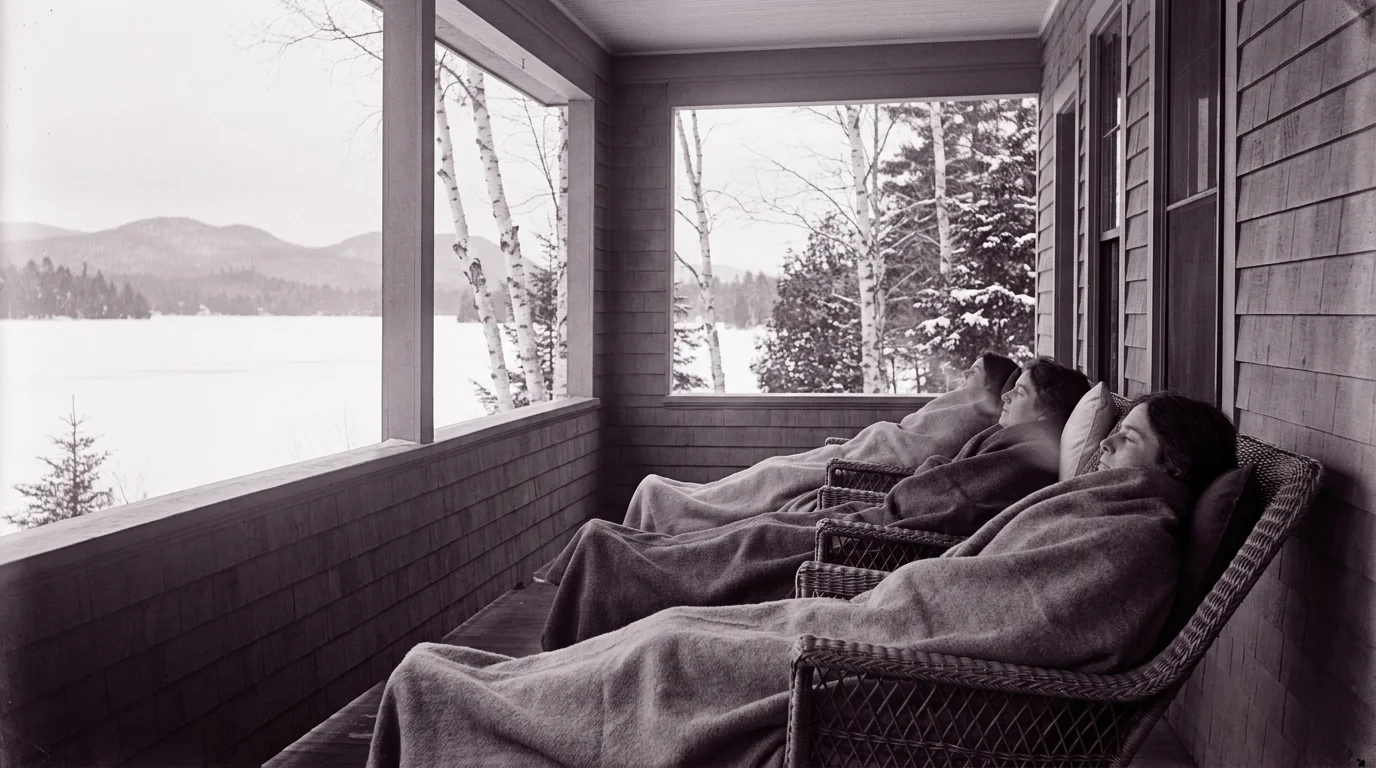
The sanatorium era is more concrete. In the 1850s and '60s, the German physician Hermann Brehmer built his treatment for tuberculosis around mountain air and a structured "rest cure," and Davos, Switzerland became Europe's flagship TB resort. In February 1885, Dr. Edward Livingston Trudeau founded the Adirondack Cottage Sanitarium at Saranac Lake, New York; the town operated as a world center for the TB cure from 1873 until 1945, and the Trudeau Sanatorium itself closed in 1954, after antibiotics made the rest cure obsolete (Adirondack Cottage Sanitarium; Cure Cottages of Saranac Lake).
Read those dates as a business, not a costume drama. Antibiotics did not end health travel — they ended the medical justification for it. The buildings, the mountain settings, the idea that getting well requires going somewhere: all of that survived the science that had explained it. What filled the vacuum was a product that did not need a diagnosis to sell.
The healing spa becomes a $273 billion industry
The thing that filled the vacuum is what the industry now calls the wellness retreat, and it is the fastest-growing line item in health travel. The wellness-retreat market was valued at about $248 billion in 2025 and is projected to reach roughly $273 billion in 2026, growing at a 10.1% compound rate (The Business Research Company). Step back to the whole category and wellness tourism grew 13.8% between 2023 and 2024, inside a global wellness economy that hit a record $6.8 trillion in 2025 and is forecast to reach $9.8 trillion by 2029 (GWI via PRNewswire).
Those are not spa numbers. Those are sector numbers, and they explain why every hotel group with a balance sheet now has a "wellness" division. The luxury wellness resort is not a richer version of the sanatorium. It is a different financial instrument — one that monetizes the well, indefinitely, instead of discharging the sick.
The 2026 wellness resort: biohacking, longevity, and the nervous-system reset
If you want to see where the spend is going, read a 2026 resort menu. The new, nameable categories are "biohacking suites" and "longevity hubs" — red-light therapy, infrared saunas, cryotherapy, hyperbaric oxygen — alongside sound-healing and nervous-system programs, digital-detox and burnout-recovery retreats, and family-inclusive wellness (Elite Traveler; Compare Retreats). This is also where the "technology is reshaping health tourism" claim actually cashes out: the future of the resort is not telemedicine, it is a cryotherapy chamber with a waiting list.
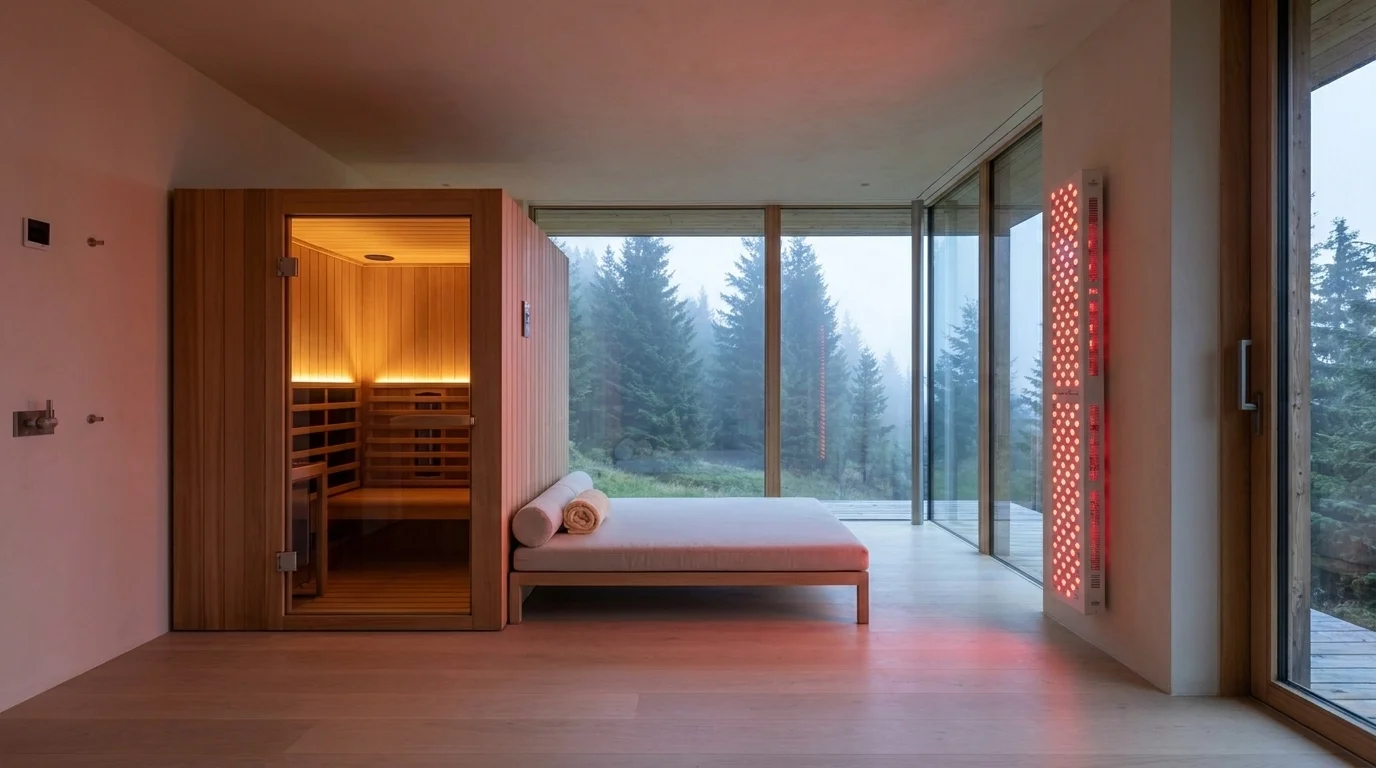
A note on the marketing, because someone should make it. Much of this is sold with the vocabulary of "ancient wisdom" and "indigenous tradition" wrapped around equipment that was patented in the last decade. The infrared sauna is not a 3,000-year-old practice; it is a 3,000-dollar appliance. Some of these modalities have evidence behind them and most do not yet, and the resort price is the same either way. The category that grew 13.8% in a year did not grow because the science improved. It grew because the storytelling did.
From cure to prevention: why we travel for health now
The deeper shift is in why people book at all. Wellness used to be the extra you tacked onto a vacation. It is now the reason for the trip: the share of travelers citing wellness as a core motive for travel rose from 43% to 55% (Travel And Tour World). That is a structural change in demand, not a fad — and it is exactly the move from reactive to proactive that the comparison table describes, expressed in booking behavior. People are no longer traveling to recover. They are traveling to pre-empt.
Forest bathing: the part with actual evidence
Most of the wellness-resort menu is faith-based. One of the oldest and cheapest items on it is not. Forest bathing — shinrin-yoku, the practice of slow, attentive time among trees — has accumulated real peer-reviewed support. A 2025 narrative review reports that across nearly all studies examined, cortisol levels were significantly lower after forest bathing than in control groups, and the literature links the practice to increased natural-killer (NK) cell activity, a parasympathetic (rest-and-digest) shift, and improved mood, effects attributed to tree-derived compounds called phytoncides (Frontiers in Public Health, 2025; PMC: Shinrin-yoku review).
I flag this one specifically because it inverts the usual pattern. The forest is free, requires no suite and no membership, and has more clinical backing than the cryo chamber it shares a brochure with. If you are going to spend money on a wellness trip, the evidence points toward the cheapest thing on the list.

The fine print
Here is the part the evolution narrative skips. The wellness branch won on revenue, but it won as a consumer category — which means it carries almost none of the oversight people assume protects them. On the medical side, accreditors like the Joint Commission International exist, but as the CDC puts it plainly, "accreditation does not guarantee a good outcome" (CDC Yellow Book). On the wellness side, there is rarely even that.
So the reasonable reader's move is the same one a financial reporter makes with a glossy prospectus: separate the asset from the story. The history is real — Davos, Saranac Lake, the spa towns were genuine medicine in their day. The growth is real — the money does not lie. But the resort selling you a longevity protocol is selling a product with a 70-plus-percent storytelling margin, and "ancient" is a marketing word, not a clinical one. Travel for your health if you like. Just price the brochure as advertising, and put your money on the parts with evidence behind them.
Frequently Asked Questions
Health tourism is the umbrella term. Medical tourism is reactive — traveling for surgery, dental work, or fertility care. Wellness (health) tourism is proactive — spas, retreats, and prevention. By spend, the wellness branch is now far larger.
The wellness branch is booming. Wellness-tourism spending reached $894 billion in 2024, up 13.8% year over year, far outpacing the roughly $107.5 billion medical-tourism market. The wellness-retreat market alone is projected near $273 billion in 2026.
There is genuine evidence. A 2025 narrative review found cortisol levels significantly lower after forest bathing than in control groups, with links to higher natural-killer cell activity and improved mood, attributed to tree-derived phytoncides.
With 18th-century European spa towns and 19th-century sanatoriums — notably Davos, Switzerland, and Dr. Edward Trudeau's 1885 Adirondack Cottage Sanitarium at Saranac Lake, New York, where patients traveled for the open-air tuberculosis 'rest cure.'