Uniting Cultures Through Culinary Wellness: A Journey through Global Healing Foods


People ask me which cuisine is the healthiest the way they ask which single food will fix everything — hoping for one clean answer. The honest version is better than the hope: a handful of the world's traditional cuisines have decades of evidence behind them, and they win for the same boring, durable reasons. So here's a ranked, sourced tour of the healthiest cuisines in the world — what each one actually does for you, the dish that captures it, and the receipt to back the claim.
Which cuisine is the healthiest in the world?
The Mediterranean diet, by the most-cited scorecard. U.S. News named it the best overall diet for the eighth consecutive year in January 2025, also ranking it #1 for heart health, inflammation, and gut health (U.S. News via GMA). Japanese (especially Okinawan) cuisine is the close runner-up on longevity evidence. But notice what the top cuisines share before you pick one: they're plant-forward, lightly processed, and built around whole foods — the pattern matters more than the passport.
| Cuisine | Why it's healthy | Signature dish | The receipt |
|---|---|---|---|
| Mediterranean | Olive oil, fish, legumes, vegetables | Greek horiatiki salad | #1 diet 8 yrs running (U.S. News); ~25% lower mortality (2023 JAMA) |
| Japanese / Okinawan | Fish, soy, sweet potato, seaweed | Okinawan sweet potato & miso | Japan obesity ~3% vs US ~32%; a Blue Zone |
| Korean | Fermented vegetables, vegetable-heavy | Kimchi | Fermentation ↑ gut diversity, ↓ inflammation (2025) |
| Indian | Anti-inflammatory spices, legumes | Dal with turmeric | Curcumin's anti-inflammatory activity |
| Vietnamese | Herbs, broth, minimal frying | Pho | Light, vegetable- and herb-forward |
| Mexican (traditional) | Beans, corn, squash | Black beans & nopales | Legumes linked to longer telomeres (2025) |
| Thai | Aromatics: ginger, galangal, chili | Tom yum | Herb- and vegetable-dense |
The healthiest cuisines, ranked
1. Mediterranean (Greek, Italian, Spanish)
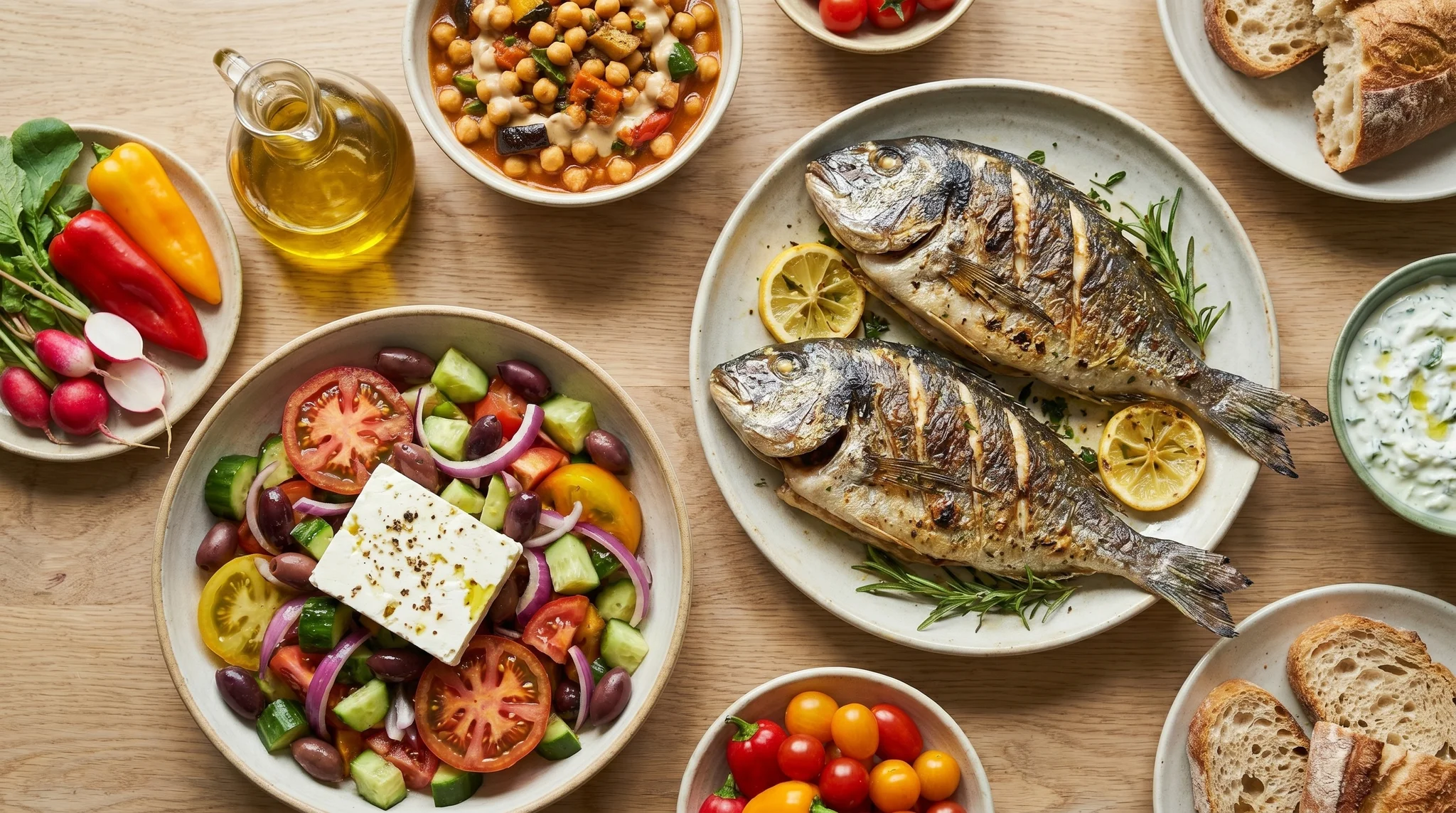
This is the one with the deepest evidence base, and it isn't close. Built on olive oil, fish, legumes, vegetables, and whole grains, the Mediterranean pattern is associated in a large 2023 analysis in JAMA Internal Medicine with roughly 25% lower overall mortality and about 20% lower risk of premature death tracked over 36 years (U.S. News). I'll label that honestly: it's observational cohort evidence, not a randomized trial — but it's a very large, very consistent body of it. Two of the world's five Blue Zones (Sardinia, Ikaria) eat versions of this. A Greek horiatiki — tomatoes, cucumber, olives, feta, a flood of olive oil — is the whole philosophy on a plate.
2. Japanese (and Okinawan)
Japan posts an adult obesity rate around 3%, against roughly 32% in the United States, alongside one of the world's longest life expectancies (Spices Inc). The traditional Okinawan diet — a Blue Zone — leans heavily on sweet potato, soy, vegetables, and seaweed, with fish over red meat. Portions are modest, vegetables dominate, and the food is minimally processed. It's a useful counterpoint to the idea that "healthy" has to mean salads: this is warm, savory, satisfying food.
3. Korean
Korean cuisine earns its spot largely on fermentation. Kimchi and other fermented vegetables show up at nearly every meal, and the 2025 science on that is genuinely interesting (more below). It's also reliably vegetable-heavy, with banchan turning a meal into a spread of plants.
4. Indian
The strength here is the spice cabinet, used as medicine and flavor at once. Turmeric, with its active compound curcumin, has well-studied anti-inflammatory activity, and Indian cooking pairs it with legumes — a dal is essentially lentils plus an anti-inflammatory spice blend. One honest caveat, because it matters: turmeric in food is not the same as a concentrated curcumin supplement, which carries its own risks. As a spice, it's a genuine, low-stakes win.
5. Vietnamese
Vietnamese food is light by construction: herb-heavy, broth-based, with relatively little frying. A bowl of pho is broth, rice noodles, lean protein, and a pile of fresh herbs and bean sprouts you add yourself. It's a good example of how technique — simmering, not deep-frying — shapes a cuisine's whole nutritional profile.
6. Mexican (traditional)
Not the cheese-blanketed version — the traditional one, built on beans, corn, squash, tomatoes, chilies, and nopales. Costa Rica's Nicoya peninsula, another Blue Zone, runs on a closely related bean-and-corn foundation. Legumes are the quiet hero across these longevity diets: a 2025 review in Current Research in Nutrition and Food Science linked legume-heavy Blue Zone patterns to longer telomere length, a marker of cellular aging (journal).
7. Thai
Thai cuisine builds flavor from aromatics with real pharmacological track records — ginger, galangal, lemongrass, chili, garlic — layered over vegetables and herbs. A tom yum is essentially a broth of anti-inflammatory aromatics. As with all of these, the health lives in the traditional, vegetable-forward version, not the coconut-cream-heavy restaurant adaptation.
Are fermented foods actually good for your gut?
Yes — and this is one of the few areas where the gut-health hype has caught up to real data. A wave of 2025 peer-reviewed reviews and meta-analyses found that regular fermented-food intake increases gut microbial diversity and lowers specific inflammatory markers, including the cytokines IL-6, IL-10, and IL-12β (Frontiers in Nutrition, 2025).
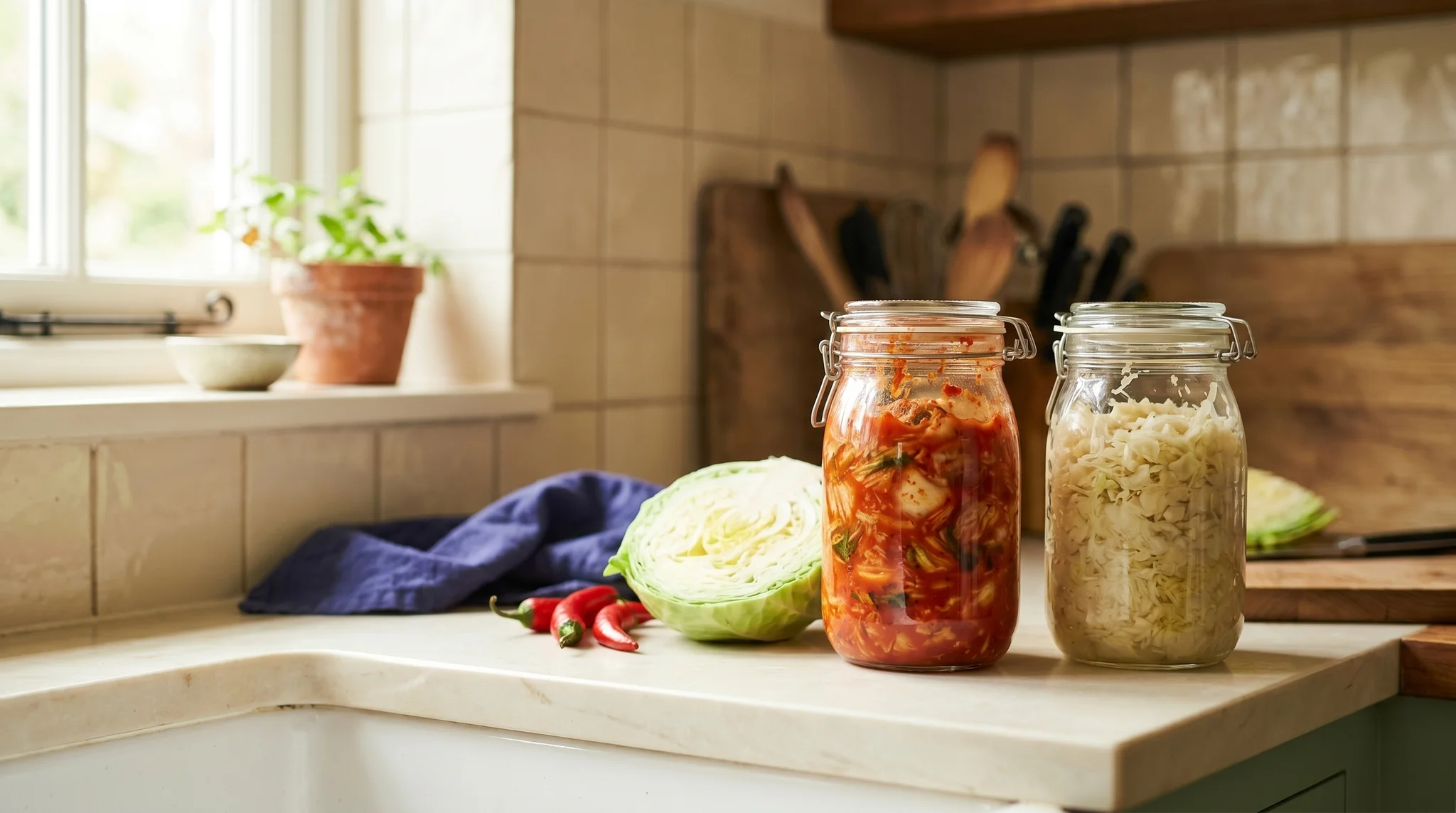
Here's the dietitian's framing, though. "Gut health" is about the dietary pattern you eat over weeks, not a single shot of probiotic drink. Most fermented foods deliver transient colonization — the microbes pass through, do some work, and leave — which is exactly why a culture that eats kimchi or miso or yogurt at most meals sees the benefit, while a one-off kombucha doesn't move much. Kimchi, sauerkraut, miso, tempeh, natto, kefir, and plain yogurt are the reliable players. Build them into the week, not the moment.
The anti-inflammatory spice cabinet
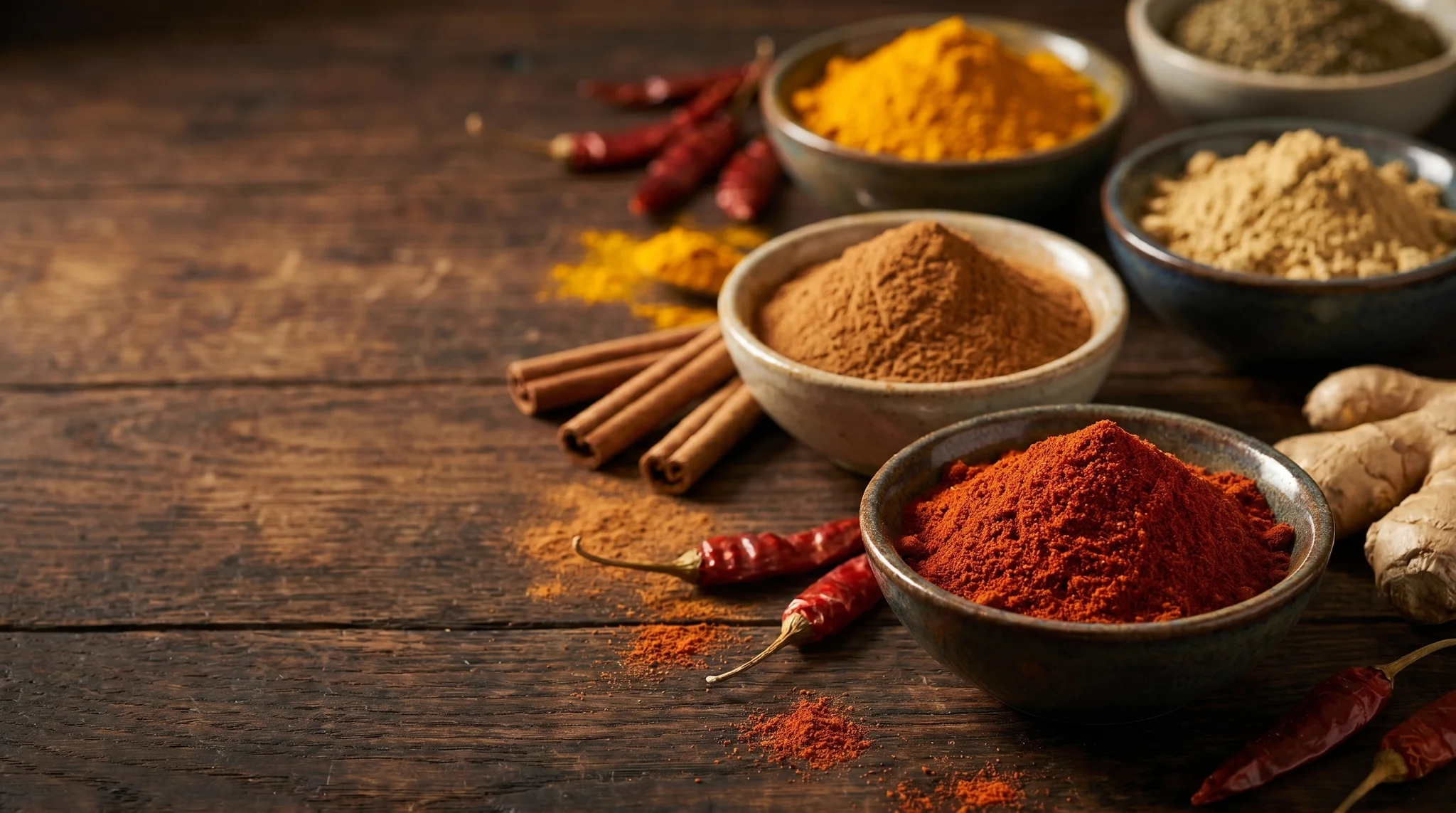
Spices are where several of these cuisines do quiet, real work. Turmeric (curcumin) has the most-studied anti-inflammatory profile — best used generously in food rather than as a high-dose capsule. Ginger is well-regarded for nausea and adds an anti-inflammatory kick. Cinnamon has some evidence for blunting post-meal blood-sugar spikes. None of these is a cure, and I'd be suspicious of anyone selling them as one — but as the everyday seasoning of Indian, Thai, and Middle Eastern cooking, they're a free upgrade.
What these cuisines share
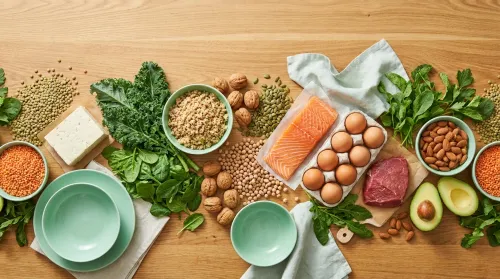
Strip away the flavors and the same skeleton is underneath every one: roughly plant-forward eating, whole and minimally processed foods, legumes as a staple, fish over red meat, and fermentation somewhere in the rotation. Across all five Blue Zones, about 95% of daily food comes from plants, with leafy greens and legumes doing the heaviest lifting (Blue Zones). That's the actual lesson of a global tour of healthy eating — not that you should chase one exotic superfood, but that the world's longest-lived people eat strikingly similar, unglamorous, plant-heavy meals.
The usable takeaway
You don't have to adopt a whole country's cuisine to eat like this. Borrow the pattern: make plants the center of the plate, lean on beans and lentils, cook fish more than red meat, keep a fermented food in the fridge, and season generously with real spices. Pick the traditions whose flavors you actually love — because the healthiest diet in the world is also, not coincidentally, the one you'll still be eating next year.
Frequently Asked Questions
The Mediterranean diet ranks #1, named best overall by U.S. News for eight straight years, with Japanese (Okinawan) cuisine a close runner-up on longevity evidence.
Japan and the Mediterranean nations (Greece, Italy, Spain) consistently top rankings — Japan for low obesity (~3%) and long life expectancy, the Mediterranean for cardiovascular and gut-health outcomes.
Yes — 2025 research shows fermented foods like kimchi and sauerkraut raise gut microbial diversity and lower inflammatory markers (IL-6, IL-10, IL-12β). The benefit comes from eating them regularly, not from a one-off.
It's the traditional Blue-Zones diet of Okinawa, Japan — roughly 95% plant-based, built on sweet potato, soy, and vegetables — and linked to some of the world's longest lifespans.
Built on olive oil, fish, legumes, and vegetables, it's associated in a large 2023 JAMA Internal Medicine analysis with roughly 25% lower overall mortality, and U.S. News ranks it #1 for heart health, inflammation, and gut health.
Spices like turmeric (curcumin), ginger, and cinnamon carry anti-inflammatory and blood-sugar-related benefits when used generously in food — though as everyday seasonings, not as high-dose supplements, which carry their own risks.