
Trends Shaping Global Health and Wellness Practices


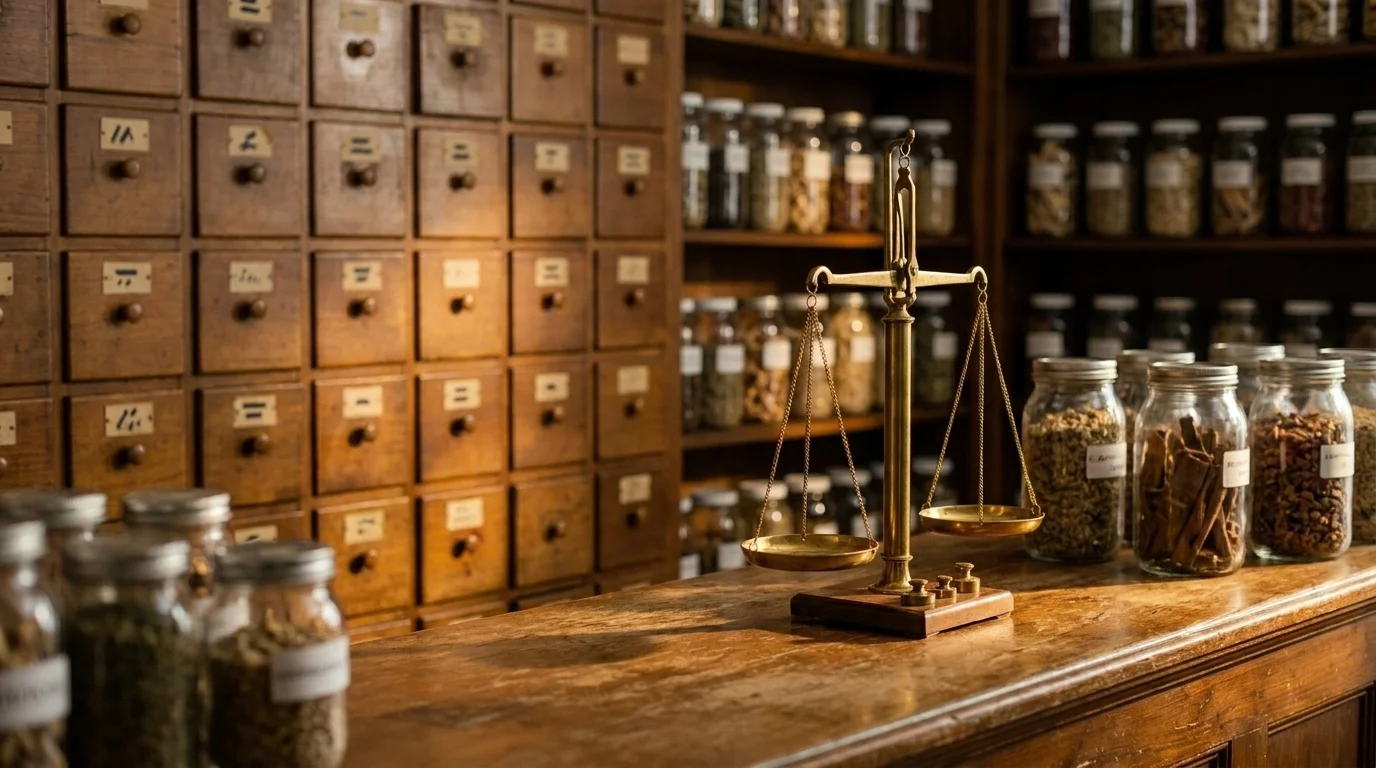
In a pharmacy in Kyoto, a licensed pharmacist dispenses kampo — Japan's adaptation of classical Chinese herbal medicine — in grams of standardized extract, prescribed for a specific constellation of symptoms after a diagnostic process that can take the better part of an hour. It is covered by Japan's national health insurance. It is not "alternative medicine" there. It is medicine. When the same formula — or a remedy from India's Ayurveda — crosses the Pacific, it often becomes a branded capsule in a wellness shop labeled "adaptogenic support" — the diagnostic context, which is half of what the tradition is, left behind at the dock.
That gap is the real story of "global wellness trends," and it is more interesting than the usual framing. The traditions people are discovering — Ayurveda, Traditional Chinese Medicine, kampo, the many distinct Indigenous healing systems — are not interchangeable flavors of one "ancient wisdom." Each has a specific origin, a living community of practitioners, and a set of internal disagreements. What's actually new in 2025 is not that Westerners are curious about them. It's that the World Health Organization has begun to standardize and integrate them — which raises a sharper question than "do they work?": as these practices go global, who benefits from the translation, and who gets left out of it?
Traditional Medicine Has Gone Mainstream — Officially
The shift since 2024 is institutional, not vibes-based. On 26 May 2025, the 78th World Health Assembly adopted a new WHO Global Traditional, Complementary and Integrative Medicine Strategy for 2025–2034, built around strengthening the evidence base, regulating for safe practice, and integrating these systems into national health care. In December 2025, the Second WHO Global Summit on Traditional Medicine in New Delhi drew leaders from more than 100 countries and launched a Traditional Medicine Global Library of some 1.6 million resources. And the WHO's 2025 ICD-11 update now includes a module for coding traditional-medicine conditions from Ayurveda, Siddha and Unani — meaning these systems are entering the formal machinery of health statistics.
The scale is real money. The Global Wellness Institute puts the wellness economy at $6.8 trillion in 2024, on track for $9.8 trillion by 2029, and identifies traditional and complementary medicine as the second-fastest-growing sector, around 10.8% annually. That growth is precisely where the translation problem lives: a half-trillion-dollar market has strong incentives to keep the marketable part of a practice and discard the communal and diagnostic context that gave it meaning.
The Traditions, Named Specifically
Ayurveda
Ayurveda is a medical system from the Indian subcontinent, developed over millennia and still practiced clinically across India through licensed institutions. Its organizing idea is constitution: each person is understood through a balance of three doshas (vata, pitta, kapha), and treatment — diet, herbal materia medica, daily routine, panchakarma cleansing — is tailored to that constitution rather than prescribed uniformly. The diagnostic step is central, which is exactly what tends to vanish when "Ayurveda" becomes a turmeric latte.
It is also, notably, the tradition moving fastest toward an evidence framework. Recent work explicitly integrates Ayurvedic constitution assessment with genomics, network pharmacology, and AI-assisted diagnostics, and national recognition has expanded beyond India. Whether that integration honors the system or simply mines it for patentable molecules is an open question — one Indian practitioners themselves are actively debating.
Traditional Chinese Medicine and Kampo
Traditional Chinese Medicine organizes health around qi, the balance of yin and yang, and a network of meridians, working through acupuncture, herbal formulas, and movement practices like qigong. Kampo, as noted, is its Japanese descendant — and the two are not the same, despite the wellness market's habit of merging them. The distinction matters: kampo is integrated into Japan's insured medical system in a way TCM herbalism generally is not in the West.
Indigenous Healing Systems
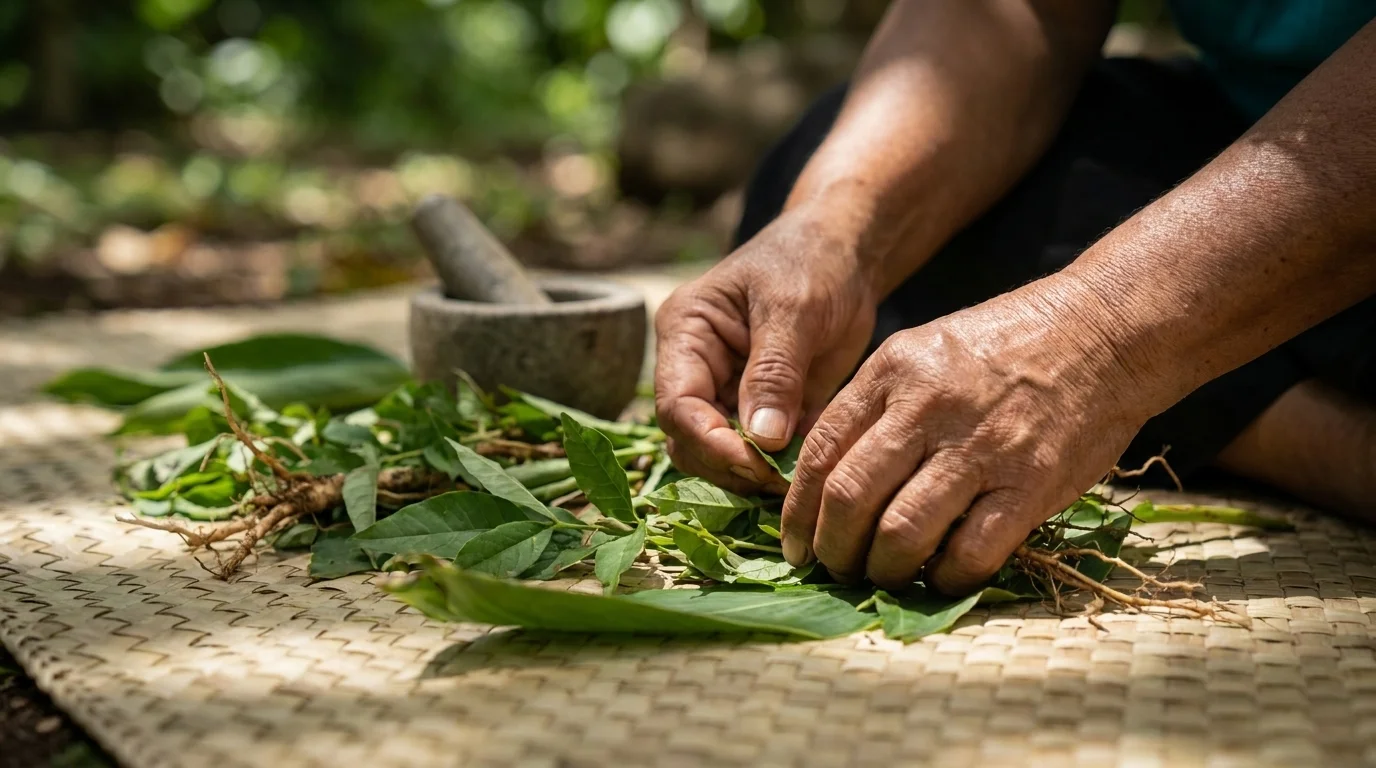
This is the category most flattened by the "global wellness" frame, and the one that most deserves specificity. Native Hawaiian lomilomi and laʻau lapaʻau, conducted in the Hawaiian language and carrying obligations of reciprocity, are not a spa massage — and a practice that survived a century of active suppression is not the same thing as the weekend-certified version on a resort menu. The same caution applies to Oaxacan curanderismo, to Sámi healing, to any of the hundreds of distinct systems carried by specific communities. The respectful move is to name the community and the practitioner, and to notice when a "wellness" version has been severed from both.
A Cross-Tradition Comparison
| Tradition | Origin & language | Core principle | Signature practices | Mainstream/evidence status |
|---|---|---|---|---|
| Ayurveda | Indian subcontinent (Sanskrit terms) | Balance of three doshas; individual constitution | Herbal materia medica, diet, panchakarma, yoga | ICD-11 coding; active genomics/AI integration research |
| Traditional Chinese Medicine | China | Qi, yin-yang, meridians | Acupuncture, herbal formulas, qigong | Acupuncture mechanism mapped by neuroimaging; WHO's most-used TCIM intervention |
| Kampo | Japan (from Chinese medicine) | Standardized herbal formulas for symptom patterns | Granulated extracts, pharmacist dispensing | Prescribed under Japan's national health insurance |
| Indigenous systems (e.g. lomilomi) | Specific communities and languages | Reciprocity, embodied and communal knowledge | Bodywork, plant medicine, ritual — community-specific | Largely outside biomedical frameworks; revitalization-led |
The table is a starting point, not a verdict. Its real use is to make visible how different these systems are — in cosmology, in institutional status, in what counts as evidence — before anyone files them under a single "holistic wellness" heading.
What the Evidence Actually Says
Here it helps to hold two ideas at once, without collapsing either into the other: a practice's cultural efficacy (what it does in and for a community) and its biomedical efficacy (what a randomized trial can measure). They are different questions, and a practice can score very differently on each.
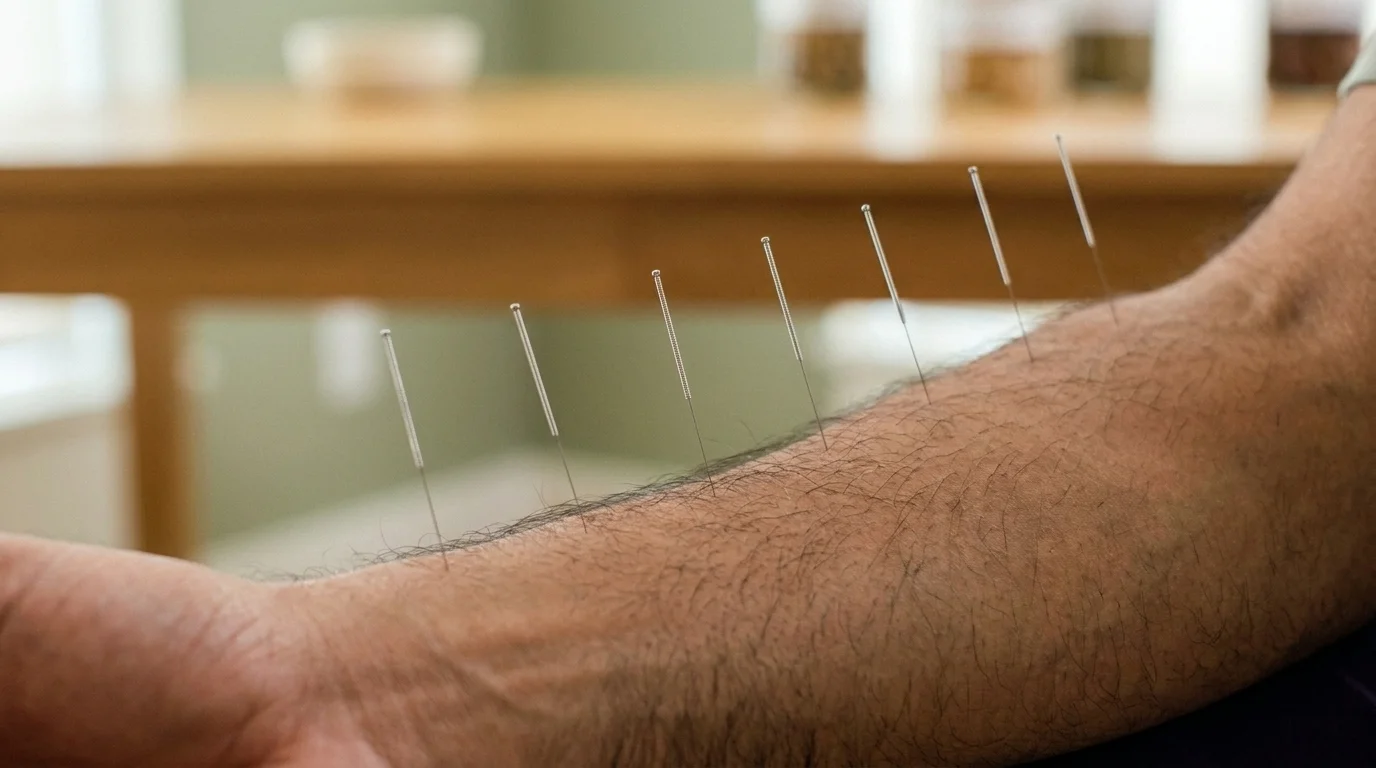
Acupuncture is the clearest case where biomedical research has caught up somewhat. 2025–2026 neuroimaging meta-analyses describe a multi-level mechanism — needling signals travel to the brainstem, trigger endogenous opioid and monoamine release, and reconfigure pain-modulation networks. That is a real, measurable pathway. The same researchers are candid that placebo and non-specific effects are substantial, so the honest version is "plausible mechanism, genuine but partly non-specific effect," not "ancient cure validated."
A necessary caution, and one I'd make about biomedicine too: traditional does not mean safe, and natural does not mean harmless. Ayurvedic, TCM, and kampo herbal preparations are pharmacologically active — they can interact with prescription drugs, and their quality and dosing vary widely once they leave their regulated home systems. These practices are best used to complement, not replace, conventional care. If you have a medical condition, are pregnant, or take prescription medication, talk to a licensed clinician before adopting an herbal remedy.
How to Engage Without Extracting
For a reader who genuinely wants to learn from these traditions, the question isn't "which one should I try?" so much as "how do I engage with it on terms that respect the people who carry it?" A few orientations:
- Seek the practitioner, not just the product. A capsule severed from diagnosis is the cheapest, least faithful version of a tradition. Where a system is diagnostic — Ayurveda, TCM, kampo — the consultation is the substance.
- Notice provenance. Who taught the person you're learning from? In which language and lineage? A weekend certificate and a generational transmission are not the same credential.
- Let the community benefit. When you can, route your money and attention toward practitioners from the originating community rather than toward brands that have merely borrowed the vocabulary.
- Keep both efficacies in view. Value a practice for what it offers without overstating what a trial has shown — and without dismissing what a community knows because a trial hasn't measured it yet.
The Question Worth Sitting With
The mainstreaming of traditional medicine is not, in itself, good or bad news. The WHO strategy could genuinely strengthen safety, evidence, and access; the wellness market could just as easily continue stripping these systems down to their billable parts. Both are happening at once. So rather than close with a slogan about a "global wellness wave," it's more honest to leave the open question the whole topic turns on: when a tradition becomes "wellness," who ends up holding the value it created — the community that spent centuries developing it, or the revenue line that learned to spell its name?
Frequently Asked Questions
Increasingly. The WHO's 2025–2034 Traditional Medicine Strategy and 2025 Global Summit prioritize building the evidence base, and recent neuroimaging research has mapped plausible mechanisms for acupuncture. However, scientists stress that evidence quality varies and placebo effects are significant, so these practices should complement — not replace — conventional care.
Both are holistic systems emphasizing balance, but they come from different cultures and cosmologies. Ayurveda (from the Indian subcontinent) organizes health around three doshas and individual constitution (Prakriti), while TCM (from China) works with qi, yin-yang, and meridians through tools like acupuncture and herbal formulas. They are not interchangeable.
The Global Wellness Institute projects traditional and complementary medicine as the second fastest-growing wellness sector through 2029, expanding at roughly 10.8% annually within a wellness economy heading toward $9.8 trillion.
No. Kampo is Japan's adaptation of classical Chinese herbal medicine, but it developed its own diagnostic framework and is integrated into Japan's national health insurance system, dispensed by licensed pharmacists in standardized doses — an institutional status TCM herbalism generally does not have in the West.
Not always. Ayurvedic, TCM, and kampo herbal preparations are pharmacologically active and can interact with prescription drugs, and their quality and dosing vary once they leave their regulated home systems. If you take medication, are pregnant, or have a medical condition, consult a licensed clinician before adding an herbal remedy.