
Revolutionizing Patient Care: The Impact of Data Analytics in Health and Wellness


Hospitals are drowning in information and using almost none of it. Healthcare organizations generated roughly 30% of the world's data in 2025, yet an estimated 97% of hospital data still goes unused (Knowi). Data analytics in healthcare is the work of closing that gap — turning all that stored information into something that actually changes your care. And when it works, you feel it from the patient's chair, even if no one ever says the word "analytics" to you: it's the reason a nurse catches an infection before it turns dangerous, or the reason your post-discharge follow-up call isn't random. Here's what the field actually is, what the evidence shows it does, and where the hype outruns the proof.
What is data analytics in healthcare?
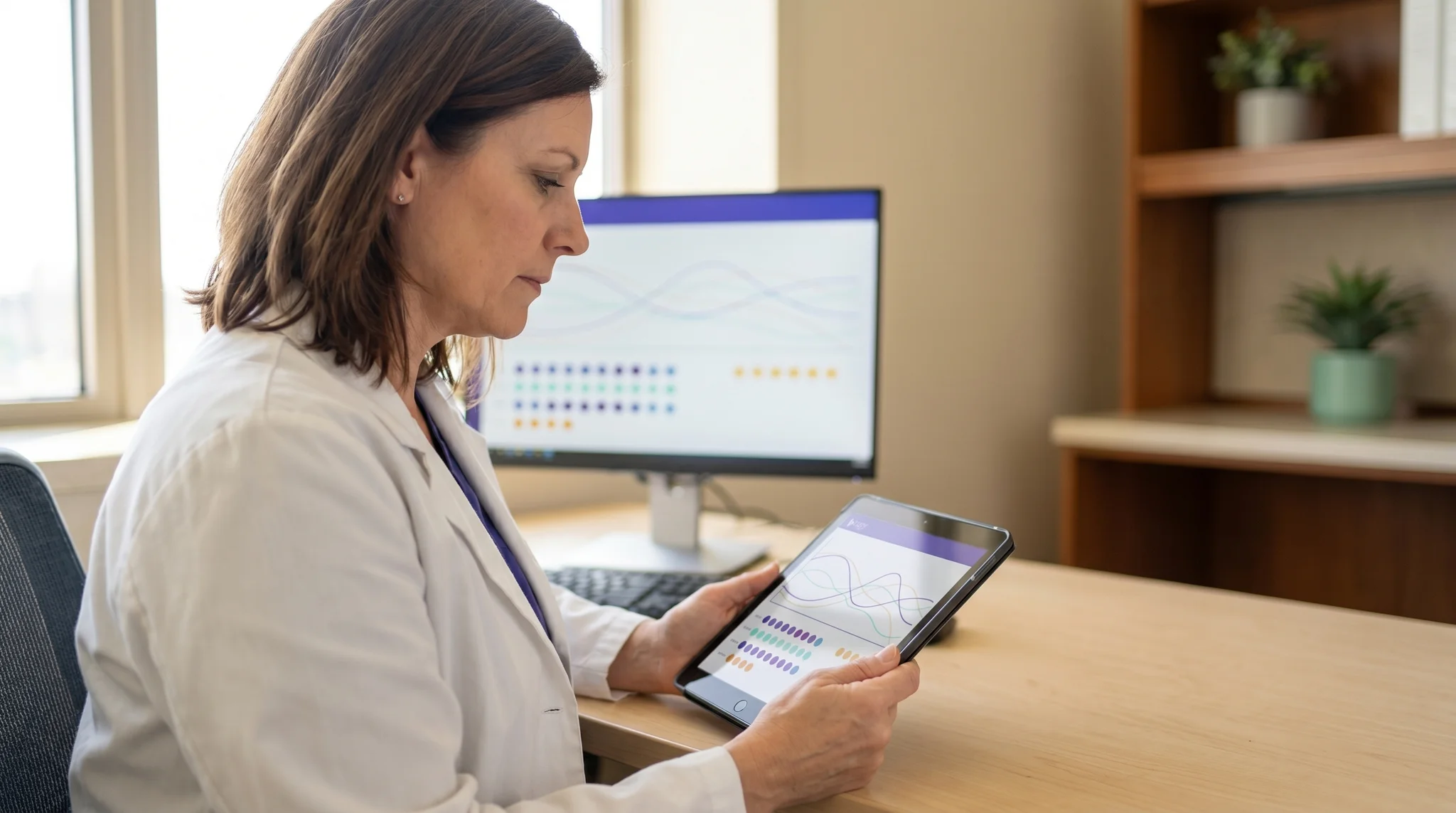
Healthcare data analytics is, in one line, the systematic analysis of health data to improve patient care, optimize operations, and guide decisions (Park University). The raw material is everything a health system records — electronic health records (EHRs), lab results, imaging, vitals, billing codes (ICD-10), even data from wearables — pulled together and analyzed with tools ranging from SQL databases and dashboards (Power BI, Tableau) to machine-learning models. The global market for it is enormous and growing fast: roughly $93 billion in 2025, heading toward $110 billion in 2026 (Roots Analysis). But market size isn't the interesting part. What the analysis does is.
The four types of healthcare analytics
Almost every serious treatment of this topic organizes it the same way, because the four types map to four questions, escalating in usefulness:
- Descriptive — what happened? Reporting on past events: readmission rates last quarter, infection counts by ward.
- Diagnostic — why did it happen? Digging into the drivers behind a pattern: which factors predicted those readmissions.
- Predictive — what will happen? Forecasting risk for an individual or population before it materializes — the type with the most dramatic clinical payoff.
- Prescriptive — what should we do about it? Recommending an action: flag this patient for an earlier follow-up, adjust this staffing level.
For your own care, predictive and prescriptive are where it gets real — the difference between a system that records that you got sick and one that helps your clinician act before you do.
Related Article: AI-Powered Personalized Fitness: Revolutionizing Workout Regimens Through Data-Driven Insights
What it looks like from the patient's chair
Here is where I'd rather show you real studies than promises, because this is a field that attracts a lot of promises. Two examples, both peer-reviewed, both labeled honestly.
The first is sepsis — a fast-moving, often-missed killer. Johns Hopkins built a machine-learning early-warning system called TREWS, and in a prospective study of 590,736 patients across five hospitals, published in Nature Medicine, patients whose alert was confirmed by a provider within three hours had "a reduced in-hospital mortality rate with an 18.7% adjusted relative reduction" (Nature Medicine). That's not a marketing figure; it's a large, prospective, multi-site result. From the patient's chair, it's the difference between an infection caught early and one caught late.
The second is more ordinary but just as real: hospital readmissions. A 2025 study in the American Journal of Managed Care found that using a predictive algorithm to guide which discharged patients got proactive follow-up cut readmissions from 27.9% to 23.9% at a safety-net hospital (SR Analytics, citing AJMC). That's why a follow-up call after you leave the hospital isn't random — a model flagged you as worth checking on.
I'll add the dietitian's caveat I apply to any "this technology works" claim: these are specific, well-designed studies of specific tools, not proof that all healthcare AI delivers. The evidence is strongest exactly where it's been measured.
AI is already in the room
When this kind of article was first written, AI in healthcare was filed under "future trends." It isn't anymore. The clearest example is the ambient AI scribe — software that listens to a visit and drafts the clinical note, so the doctor can look at you instead of a keyboard. By early 2026, about one-third of providers had access to one, and at Kaiser Permanente alone, 7,260 physicians used them across more than 2.5 million patient encounters (NEJM Catalyst). A JAMA Network Open study tied them to a 31% drop in reported physician burnout. More broadly, 66% of physicians reported using some form of health AI in 2024, up from 38% a year earlier. The honest framing: AI here is mostly doing the documentation and pattern-spotting drudgery, which is genuinely valuable, and is not — yet — making your diagnosis on its own.

Is your health data safe?
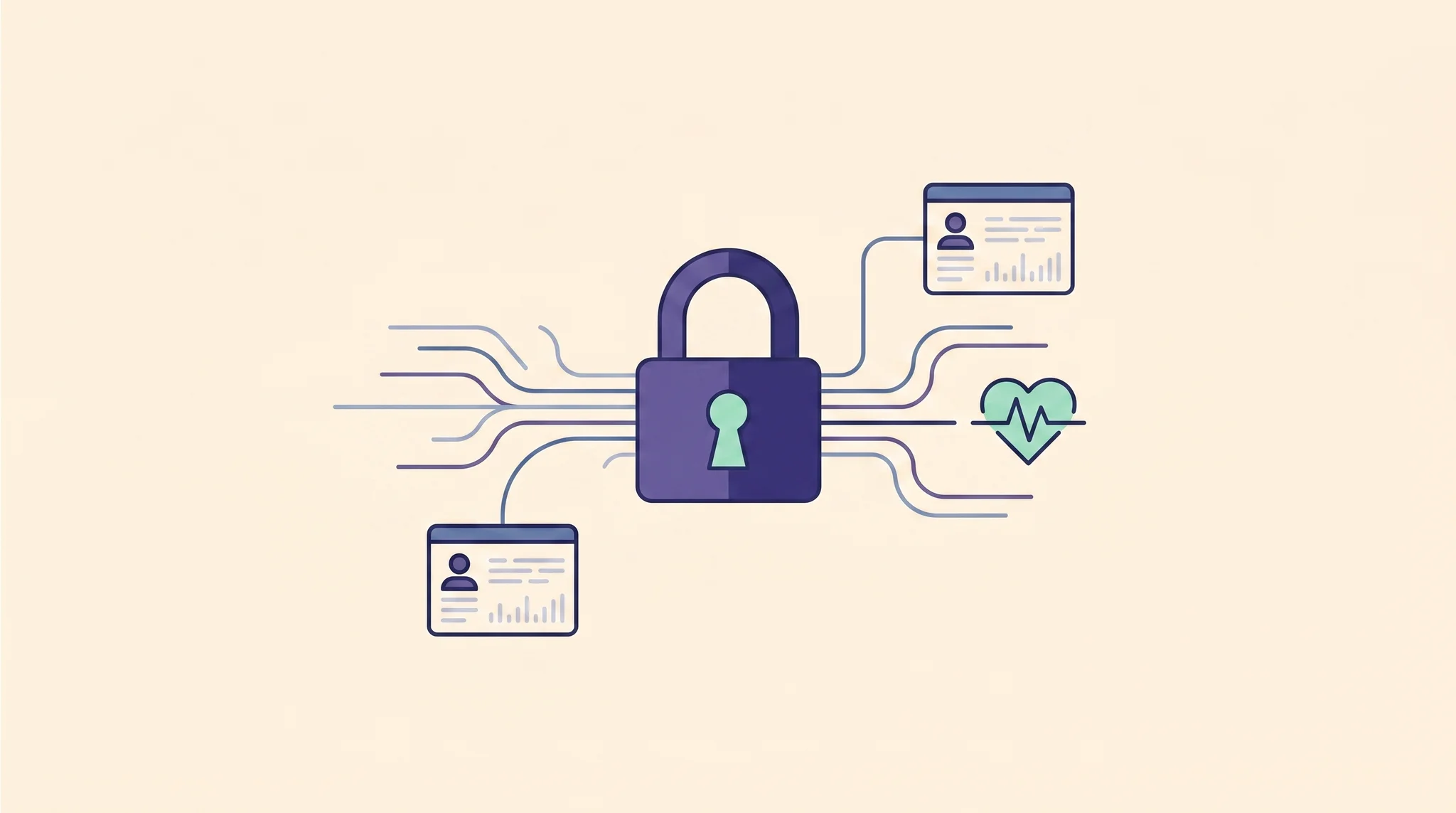
This is the part that should make you slightly uneasy, and it should. The same analytics that help you depend on pooling deeply personal information, and the stakes of getting security wrong are high: the average healthcare data breach cost $7.42 million in 2025, and breaches took an average of 279 days to detect and contain (per IBM's 2025 Cost of a Data Breach report). The encouraging development is technical: synthetic data — realistic but artificially generated datasets that let researchers build and test models without exposing real patient records — is increasingly used as a privacy-preserving workaround (Merative). Regulations like HIPAA set the floor. As a patient, the reasonable posture isn't refusal — it's knowing your data is being used, and expecting the systems holding it to be held to a high bar.
The gap that's still open
For all the progress, that opening statistic is the honest summary: 97% of hospital data still goes unused, and the benefits are unevenly distributed. The fastest-growing application is population health analytics — using data to manage chronic disease across whole communities, growing at roughly 22.9% a year — but the infrastructure to do it well is concentrated in well-resourced systems. Rural and underserved areas, with thinner technology budgets and connectivity, risk being left out of exactly the data-driven care that could help them most. The technology is real and improving. Whether it reaches everyone is a separate question, and not a technical one.
Related Article: Digitizing Wellness: Navigating the Future of Health and Wellness in the Digital Age
The usable takeaway
Data analytics in healthcare isn't magic and it isn't vaporware — it's a real toolset with a few well-measured wins (catching sepsis earlier, targeting follow-up to cut readmissions) and a lot of unproven hype around the edges. As a patient, you don't need to understand the algorithms. It's enough to know that the quiet system reading your records can genuinely make your care sharper and safer, to expect your data to be protected, and to keep the same healthy skepticism you'd bring to any claim that a new technology will fix everything. Ask what it's been shown to do. The honest answers are encouraging enough on their own.
Frequently Asked Questions
The systematic analysis of health data — from EHRs, labs, and wearables — to improve patient care, optimize operations, and guide clinical and strategic decisions.
Descriptive (what happened), diagnostic (why it happened), predictive (what will happen), and prescriptive (what to do about it). Predictive and prescriptive carry the most clinical payoff.
Predictive models flag high-risk discharged patients for proactive follow-up. A 2025 American Journal of Managed Care study cut readmissions from 27.9% to 23.9% at a safety-net hospital this way.
AI already powers predictive risk models, pattern detection across EHR data, and ambient documentation scribes — the last in routine use by about a third of providers as of early 2026.
By analyzing lifestyle, genetic, and clinical data to flag health risks before symptoms appear — for example, Johns Hopkins' TREWS sepsis system was linked to an 18.7% relative reduction in in-hospital mortality when alerts were confirmed within three hours.
It carries real risk — the average healthcare data breach cost $7.42 million in 2025. Protections like HIPAA set a floor, and privacy-preserving techniques such as synthetic data let researchers work without exposing real patient records.
Check Out These Related Articles

The Technological Future of Holistic Healing: Innovations Reshaping Well-Being Practices

Revolutionizing Fitness Regimens with Smart Gym Equipment

Democratizing Wellness Tech: Ensuring Equal Opportunities for Digital Health Adoption