
Reforming Healthcare Through Digital Innovation Policies


In the first week of January 2026, the FDA commissioner stood on a stage at CES — a consumer-electronics show, not a medical conference — and announced that the agency was loosening its oversight of AI-enabled clinical software and wellness wearables. "FDA needs to adapt with the times," Martin Makary said (STAT News). The same year, the European Union's high-risk AI rules came into force and the U.S. Department of Health and Human Services moved to mandate hardline hospital cybersecurity. Healthcare interoperability — the quiet rewiring of how your medical records move — is the thread that matters most here. But it's only one front: digital health policy in 2026 is not one trend, it's a divergence, with regulators pulling in opposite directions and real winners and losers.
Who regulates what in 2026
Before the details, the map. Five bodies do most of the steering, and they don't always agree:
| Body | What it governs | 2026 direction |
|---|---|---|
| FDA | AI/software-as-medical-device, wellness wearables | Loosening (Jan 2026 CDS & wellness guidance) |
| ONC / ASTP | Health-data standards, info-blocking, FHIR | Standardizing (TEFCA, USCDI) |
| CMS | Payer/provider data-exchange & prior-auth APIs | Mandating (FHIR API deadlines in 2026) |
| OCR / HHS | HIPAA privacy & security | Tightening (Security Rule overhaul) |
| EU (AI Act) | High-risk AI, incl. medical devices | Tightening (high-risk obligations live Aug 2026) |
What is healthcare interoperability — and why is 2026 the turning point?
Healthcare interoperability is the ability of different health systems, hospitals, and apps to exchange and actually use patient data. For decades it was the field's broken promise — your records trapped in whatever system your last doctor happened to use. In 2026 that's changing structurally, not rhetorically. As one industry analysis put it, interoperability is "evolving from a compliance obligation to a strategic driver of patient care" (Invene).
The machinery is concrete and dated. TEFCA — the Trusted Exchange Framework and Common Agreement — designated its first data-exchange networks (QHINs) in late 2023 and moved to live FHIR-based exchange through 2025. FHIR (a modern data standard) plus the USCDI data set are now the common language. And CMS has put teeth behind it: payers covering Medicare Advantage, Medicaid, and ACA plans must expose FHIR-based Patient Access and Prior Authorization APIs, with key deadlines landing across 2026, and "FAST Security" required for TEFCA FHIR exchange as of January 2026 (EHR Source). The scale is already real: in a single recent year, roughly 745 billion data exchanges flowed through Epic's public APIs, with more than 1,000 hospitals and 22,000 clinics connected to TEFCA (Healthcare IT News).

The 2026 regulatory divergence: the FDA loosens while others tighten
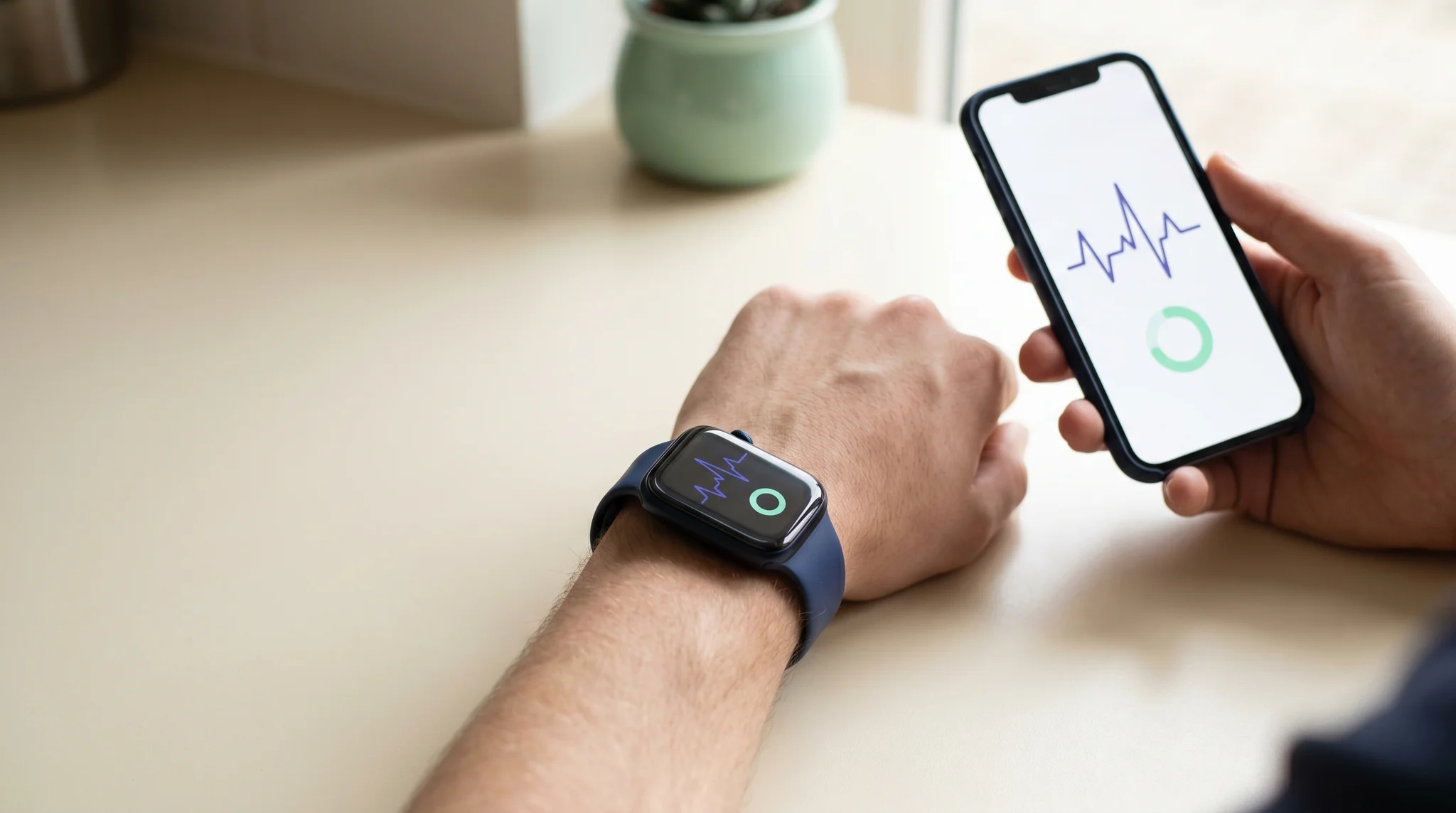
Here's the thread worth pulling, because it tells you who's bearing the risk. On January 6, 2026, the FDA issued revised final guidance on Clinical Decision Support software and on general-wellness products. The headline change: software that presents a single clinically appropriate recommendation for a clinician to review can now fall outside premarket review in more cases — a retreat from the agency's earlier insistence on multiple options and tighter scrutiny (Ropes & Gray). The practical effect is that more AI tools and consumer wearables reach the market without FDA clearance. That's a win for device makers and a faster pipeline; whether it's a win for patients depends entirely on what slips through.
Now contrast the other direction. The European Union's AI Act brought the majority of its high-risk obligations into force on August 2, 2026 — though CE-marked AI medical devices get a carve-out until August 2027 under existing device rules (EU AI Act). So in the same calendar year, a diagnostic-AI company faces a looser U.S. regime and a tighter European one for essentially the same product. That transatlantic split is the defining policy fact of 2026, and any company — or patient — operating across both markets has to hold two contradictory rulebooks at once.
What does the 2026 HIPAA cybersecurity overhaul require?
The third front is data security, and here the U.S. is tightening hard. HHS has proposed the first major overhaul of the HIPAA Security Rule since 2013, with a final rule expected in 2026. The substance is a sharp break from the old "do it if reasonable" posture: it removes the long-standing "addressable versus required" distinction and moves to mandate encryption of electronic health information at rest and in transit, multi-factor authentication, annual penetration testing, biannual vulnerability scans, and a 72-hour window to report large incidents to HHS (Medcurity; HHS NPRM fact sheet).
Follow the money on this one. HHS's own estimate puts the first-year industry cost at roughly $9 billion, which is exactly why rural and small hospitals — the ones with the thinnest IT budgets and, not coincidentally, the worst breach exposure — are pushing back hardest. Stronger security is unambiguously good; the open question is whether the mandate arrives with the funding to let under-resourced providers actually meet it, or whether it becomes one more cost that widens the gap between well-capitalized health systems and everyone else.

From policy to practice: what this looks like on the ground
The case for interoperability stops being abstract the moment you see what it does for a specific patient. Sanford Health used an open data-connection API to identify roughly 12,000 veteran patients in its system and link them to VA benefits they hadn't been using (Healthcare IT News). Tufts Medicine has used veteran-record connections to route patients arriving in the ER in a mental-health crisis to VA follow-up care instead of letting them fall through the gap. And the 745-billion-exchange figure isn't a vanity metric — it's that many moments a clinician somewhere could see a record that used to be invisible to them. This is the layer the policy debates are actually about: not standards for their own sake, but whether the right data reaches the right clinician at the right time.
What is digital health policy, and what should you watch?
Digital health policy is the body of laws, agency rules, and standards governing how technology — telehealth, wearables, AI, and electronic records — is built, secured, and reimbursed in healthcare. In 2026, the three things actually worth tracking are: the interoperability deadlines (because they determine whether your records follow you), the HIPAA Security Rule's final form and whether it's funded (because it determines who can afford to comply), and the FDA's deregulatory turn (because it determines how much unreviewed AI ends up in your care). The framing the industry sells you — "innovation versus regulation" — is too simple. The real question, as always, is who benefits from each rule and who absorbs the risk when it's wrong. Read the regulation, not the press release.
Frequently Asked Questions
It's the ability of health systems and apps to exchange and use patient data. In 2026, TEFCA plus FHIR APIs and CMS payer mandates make nationwide real-time exchange the new baseline — so your records can finally follow you.
In January 2026 the FDA loosened its Clinical Decision Support and general-wellness guidance, letting more AI tools and wearables reach market without premarket review.
The proposed overhaul makes encryption of health data, multi-factor authentication, annual penetration testing, biannual vulnerability scans, and 72-hour breach reporting mandatory — removing the old 'addressable' flexibility.
Yes — most high-risk AI obligations applied from August 2026, though CE-marked AI medical devices have until August 2027 under the existing medical-device carve-out.
Regulatory sandboxes let developers test new health technologies under supervision before full market entry, giving regulators a controlled way to evaluate novel tools without exposing patients to unvetted products.
After the FDA's January 2026 guidance, many low-risk consumer wearables fall outside premarket review, speeding them to market — which puts more weight on data-privacy rules and on buyers checking what a device has actually been validated to measure.