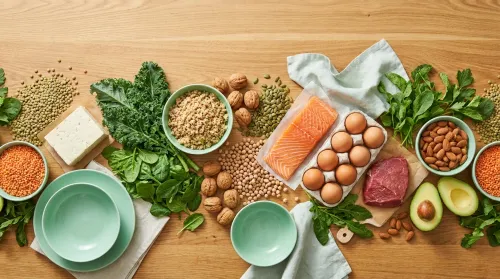
Nourishing Your Body: The Essentials of Holistic Nutrition


If a friend calls me after seeing a post promising that "holistic nutrition" will detox their body and fix everything wrong with it, my first answer is usually: slow down, and let's separate what's real from what's branding. Holistic nutrition — eating with attention to the whole person and the overall dietary pattern rather than a single nutrient or calorie count — is a useful idea with genuine science behind parts of it and marketing draped over the rest. The job of this guide is to tell you which is which, with numbers and study types attached, so you can decide what actually changes about dinner.
What is holistic nutrition?
Holistic nutrition is an approach that looks at your whole dietary pattern — the foods you eat most weeks, how they fit your life and culture, and how they affect body and mind together — rather than optimizing one nutrient in isolation. That framing is reasonable and, in fact, matches where the evidence points: dietary patterns, not hero ingredients, are what move health outcomes. The trouble is that "holistic" is also used to sell certifications, supplements, and detox protocols, so the word carries both real meaning and a lot of noise.
Is holistic nutrition evidence-based?
Partly — and being specific about which parts is the whole point. On the well-supported side, a 2023 study in Nature Medicine following more than 205,000 U.S. health professionals found that closer adherence to healthy dietary patterns was associated with 16–32% lower risk of cardiovascular disease, type 2 diabetes, and cancer (via AANMC). Label that honestly: it's a large prospective cohort, so it shows association, not proof of cause — but it's a big, consistent signal, and it lines up with decades of similar findings.
On the overhyped side sits most of the vocabulary that gets attached to "holistic" eating: "superfood," "clean," "detox," "toxins." None of those has a scientific or regulatory definition. They're marketing categories, not nutrition ones. So the honest verdict is: the underlying principle — eat mostly whole foods, lean plant-forward, get enough fiber — is supported. The branding around it usually isn't. Hold on to the first part and ignore the second.
Macronutrients, with actual numbers
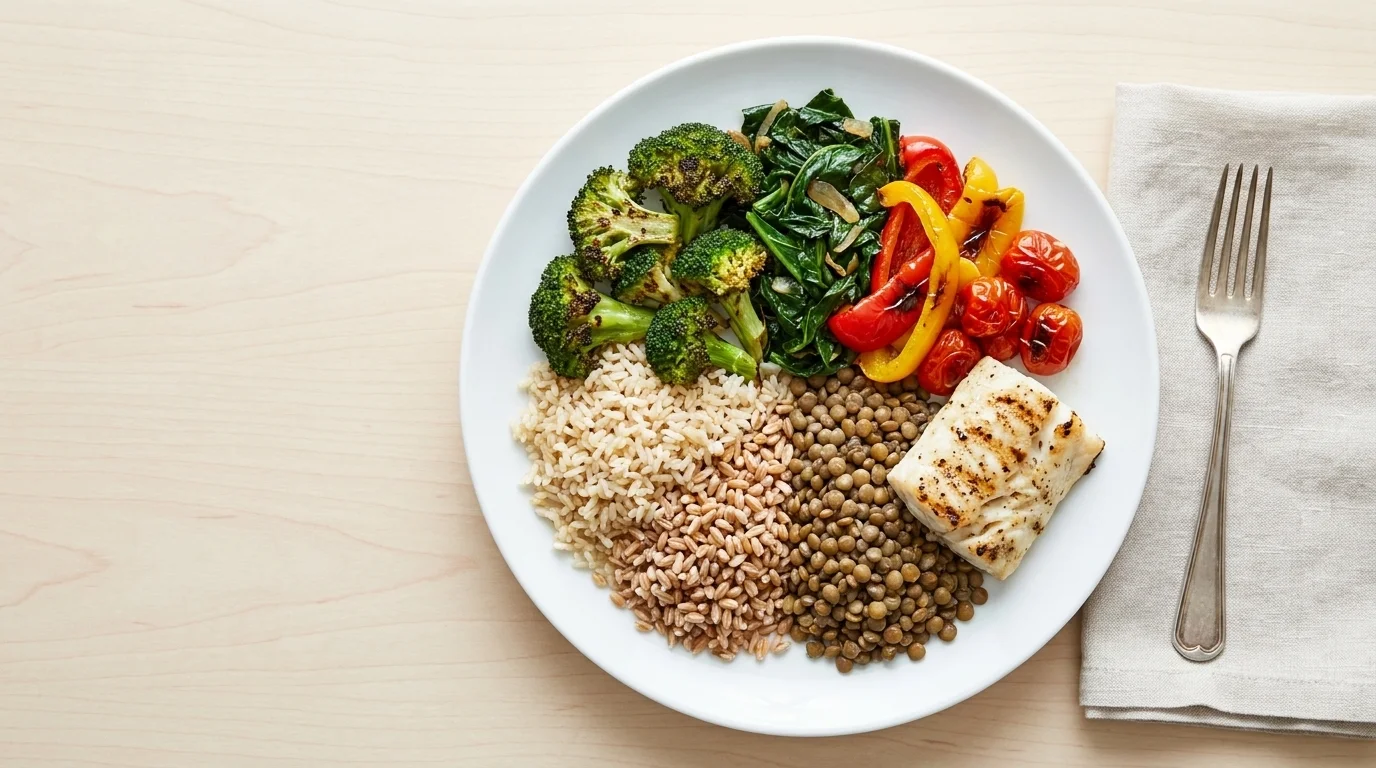
Here is where most "holistic" explainers go vague, so let's be concrete. Macronutrients are protein, fat, and carbohydrate, and the 2025–2030 Dietary Guidelines for Americans give usable targets (Harvard Nutrition Source):
- Protein: roughly 1.2–1.6 g per kilogram of body weight per day for most active adults — higher than the old minimum RDA framing. For a 70 kg adult that's about 85–112 g a day.
- Saturated fat: cap it at about 10% of daily calories, which is roughly 22 g on a 2,000-calorie diet.
- Added sugar: the guidelines are blunt now — "no amount of added sugars or non-nutritive sweeteners is recommended or considered part of a healthy or nutritious diet," and the advice to avoid added sugars in childhood was extended to age 10.
A note on the "grass-fed beef, wild-caught fish, grass-fed everything" framing the original draft leaned on: those can be fine choices for reasons of taste, environment, or animal welfare, but the evidence that they're metabolically superior gram-for-gram is thin. The guidelines' actual emphasis is different and worth quoting: "evidence continues to suggest that plant-based proteins and fish are associated with more favorable health outcomes than diets high in red meat."
Micronutrients and the fiber gap
Micronutrients — vitamins, minerals, and the plant compounds that come bundled with them — do the regulatory work of the body, and the most reliable way to get a broad spread is to eat a wide range of plants rather than chase any single one. But the micronutrient most Americans are actually missing isn't exotic. It's fiber.
The target is about 25 g/day for women and 38 g/day for men, or roughly 14 g per 1,000 calories (Healthline; Tufts Now). Almost nobody hits it: roughly 90% of women and 97% of men fall short, and U.S. diets average about 8.1 g of fiber per 1,000 calories — only 58% of the recommendation (Healthline; USDA ERS). Fiber isn't one thing, either: as a USDA scientist at Tufts puts it, "soluble fiber attracts water into your gut and forms a gel-like substance" (Tufts Now) — that's the kind that helps with cholesterol and blood-sugar response, while insoluble fiber mostly helps things move. If you change one thing after reading this, make it more fiber from whole plants.
On "superfoods," "clean eating," and "toxins"
I don't use the words "superfood," "clean," or "toxic" to describe food, and it's worth explaining why, because the original version of this article was built around them. "Superfood" has no scientific definition — blueberries and kale are nutritious, but they are not nutritional saviors, and no single food earns or loses its place in your diet on its own. "Clean eating" implies the rest of your food is dirty, which is moral language dressed as nutrition. And "detox/toxins" framing sells products by implying your liver and kidneys aren't already doing the job they do continuously.
Keep the useful instinct underneath all of it — favor minimally processed foods most of the time — and drop the vocabulary. The thing that determines your health isn't whether a food is labeled "clean." It's the pattern you eat across a week.
Plant-based eating: real benefits, real gaps
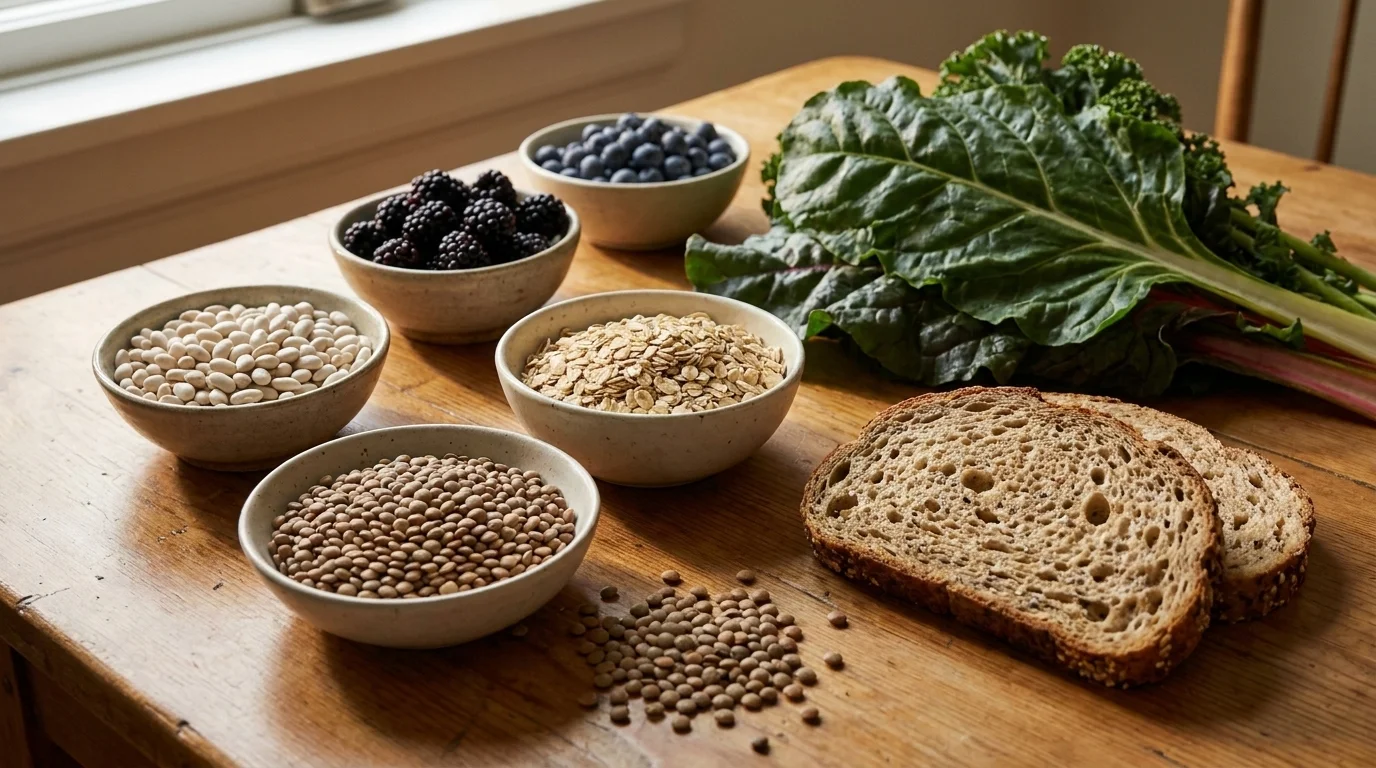
Plant-forward eating earns its reputation honestly: diets rich in vegetables, legumes, whole grains, fruit, nuts, and seeds tend to be high in fiber and phytonutrients and lower in saturated fat, and they line up with the lower-risk patterns in the cohort data above. A single concrete example of how efficient plants can be: one cup of cooked lentils delivers about 18 g of protein and 15 g of fiber with virtually no saturated fat (Harvard Nutrition Source).
The gaps are real too, and naming them is more useful than pretending they don't exist. A fully plant-based diet needs deliberate attention to vitamin B12 (not reliably available from plants — supplementation or fortified foods are standard), and often to iron, zinc, omega-3s, and adequate protein spread across the day. None of that is a reason to avoid plant-based eating; it's a reason to plan it. And if you're managing a chronic condition, that planning belongs in a conversation with your own dietitian or physician, not a blog.
The gut-brain axis: what the evidence actually shows
The gut-brain axis — the two-way signaling between your gut, its microbes, and your brain — is genuinely interesting science, and it's also where wellness marketing gets ahead of itself fastest. So here's a specific, surprising result instead of a vague gesture. In a Stanford randomized trial of 36 healthy adults over 10 weeks, the group that ate more fermented foods (yogurt, kefir, kimchi, kombucha) increased their gut microbial diversity and lowered 19 inflammatory markers. The group assigned a high-fiber diet did not reduce those same markers over that window (Stanford Medicine / Cell). That's counterintuitive — fiber is unambiguously good for you long-term — and it's a good reminder that the microbiome is complicated and time-dependent.
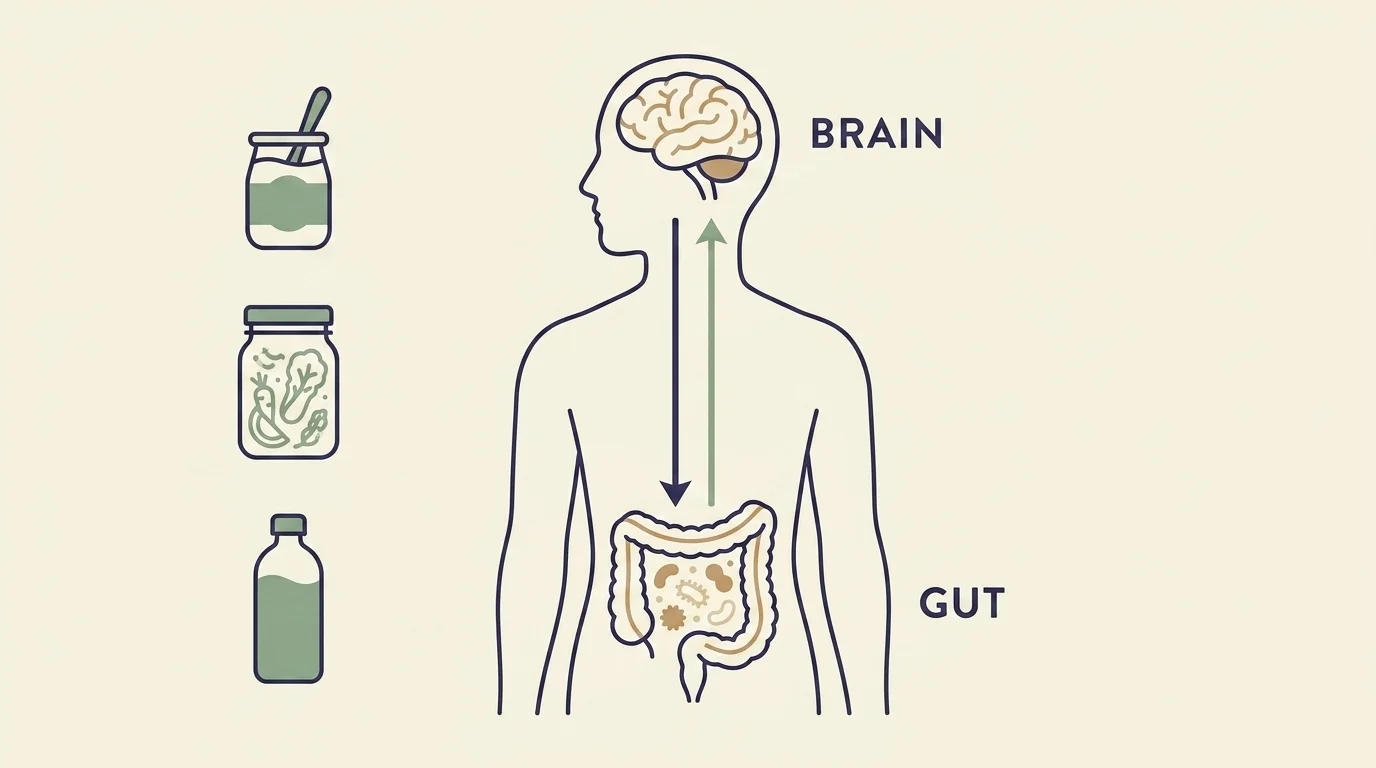
Two caveats keep this honest. First, probiotics are strain-specific: 2025–2026 research has moved toward "psychobiotic" personalization, the recognition that not all probiotic strains help everyone, and that dose and strain matter (Gut Microbiota for Health). Second, most probiotic colonization is transient — the bacteria pass through, do some work, and leave. That's not a flaw; it means gut health is about what you eat every week, not the shot you drank this morning.
Hydration, by the numbers
Hydration matters, but the advice deserves real figures rather than "drink plenty of water." The National Academies set an Adequate Intake of about 2.7 liters of total water per day for women and 3.7 liters for men — and crucially, that's from all beverages and foods, with roughly 20% coming from food (National Academies). So you are not aiming to drink that entire amount; soup, fruit, coffee, and tea all count. Water supports temperature regulation, circulation, and nutrient transport — that's plenty of real benefit without overselling it as a toxin-flush or a skincare routine. Thirst and the color of your urine are decent everyday guides for most healthy adults.
What this changes about dinner
Strip away the branding and holistic nutrition lands somewhere sensible and a little boring: eat mostly whole foods in a pattern you can sustain, get more fiber than you currently do (almost everyone needs to), lean plant-forward without making it a religion, include some fermented foods, and drink to thirst. Those moves have real evidence behind them. The "superfood" powders, the detox teas, and the "clean" labels do not — they're the part you can skip. And because individual needs vary, especially around chronic disease, medication, pregnancy, or an eating disorder history, the specifics belong in a conversation with your own clinician, who knows the rest of your chart.
Frequently Asked Questions
Holistic nutrition looks at your whole dietary pattern and the quality of foods, not just calories — favoring mostly minimally processed foods, plenty of plants and fiber, and an eating style you can sustain, rather than optimizing any single nutrient.
Parts are well-supported: large cohort studies link healthy dietary patterns to 16–32% lower chronic-disease risk, and a Stanford RCT found fermented foods raised microbiome diversity. Other 'superfood' and 'detox' claims are marketing, not evidence.
Aim for about 25 g/day (women) or 38 g/day (men) — roughly 14 g per 1,000 calories. Most Americans get only about 58% of that, so nearly everyone benefits from eating more whole plants.
The 2025–2030 Dietary Guidelines point to roughly 1.2–1.6 g per kilogram of body weight per day for most active adults — about 85–112 g for a 70 kg person — spread across the day, with emphasis on plant proteins and fish.
The gut and brain signal both ways, and diet shapes the gut microbes involved. A Stanford trial linked fermented foods to greater microbial diversity and lower inflammation, but probiotics are strain-specific — not every product helps everyone.