
Bridging Tradition and Modernity: The Integration of Ancient Healing Wisdom into Contemporary Health Practices


Traditional healing is one of those phrases that gets used as if everyone already agrees on what it means. They don't. Depending on who is talking, it can mean an Ayurvedic practitioner taking a forty-minute history, a grandmother's chamomile tea, an acupuncture appointment, or a wellness influencer selling you a powder. So before we talk about how ancient practice fits into modern health care — and it does, in more concrete ways than most articles admit — it is worth being precise about what we are actually discussing. Roughly 40% of Americans already use some form of complementary or alternative medicine alongside conventional treatment, so this is not a fringe question. It is a question about what most people are already doing.
What traditional healing actually means
Traditional healing refers to the knowledge, skills, and practices that cultures have developed over generations to maintain health and treat illness — herbal medicine, manual therapies, mind-body practices, and the diagnostic systems that organize them. The World Health Organization now uses the umbrella term traditional, complementary and integrative medicine (TCIM), and the scale is larger than the word "alternative" suggests: 170 WHO member states report using traditional medicine, and in many countries 40 to 90% of the population uses it, frequently alongside conventional care rather than instead of it.
I want to flag one thing early, because it shapes everything that follows. "Traditional" is not a synonym for "gentle," "natural," or "safe," and it is also not a synonym for "unproven." Those are four different claims, and collapsing them is how people get hurt or get sold things. Some traditional practices have solid evidence for specific uses. Some have none. Some are demonstrably safe; a few interact dangerously with prescription drugs. The honest position is to hold each practice to its own evidence.
The practices people actually mean
When an article says "ancient healing wisdom" and then lists nothing, it has told you nothing. Here are the systems most people are actually referring to, what one core practice in each looks like, and what the evidence currently supports.
Ayurveda
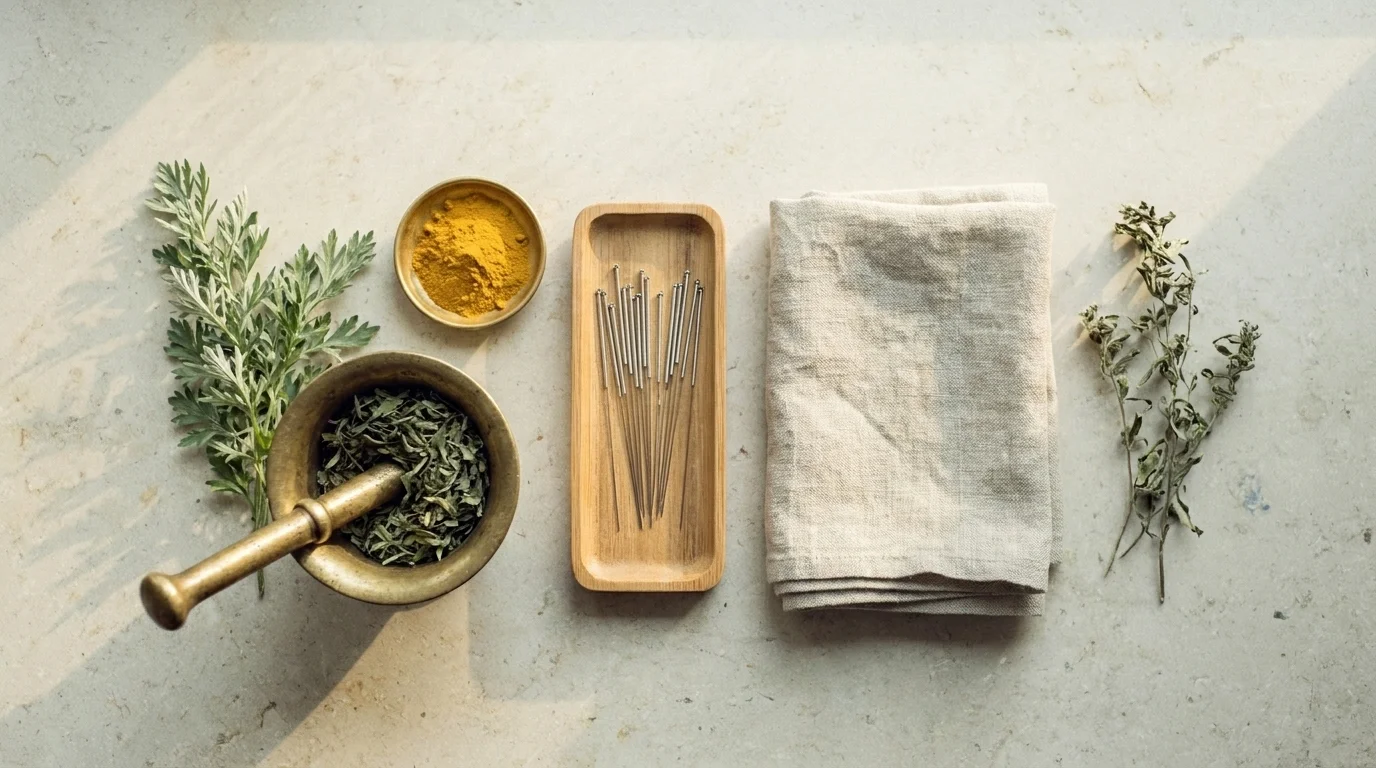
Ayurveda is a roughly 3,000-year-old system from the Indian subcontinent that classifies people by constitutional types (doshas) and treats with diet, herbal preparations, massage, and lifestyle routines. A common entry point is a personalized daily routine (dinacharya) built around sleep, meals, and movement. The reframe of "eat and rest on a consistent schedule" is genuinely supported by circadian-health research; the constitutional-typing claims are not testable in the same way. Treat the practical lifestyle scaffolding as useful and the metaphysics as cultural context, not clinical fact.
Traditional Chinese Medicine
Traditional Chinese Medicine (TCM) includes acupuncture, herbal formulas, and movement practices like qigong and tai chi. Tai chi is the part I recommend most readily as a clinician — it is gentle, low-risk, and in my experience a kind way to work on balance and steadiness, especially for older clients, and a help with stress for almost anyone. The herbal side is more variable and is where drug interactions matter most.
Herbal medicine and natural remedies
Herbal medicine is the largest and most searched corner of this world — "natural remedies" alone draws tens of thousands of searches a month — and it is also the one that most needs a clear head. A plant compound is still a pharmacologically active substance, and some herbs interfere with prescription medications in ways that matter. The fact that something grows in a garden tells you nothing about its dose, its purity, or whether it belongs anywhere near your other medications.
Acupuncture, meditation, and movement
This is the cluster closest to my own work. Acupuncture has reasonable evidence for chronic pain and migraine. Mindfulness meditation — the secular, MBSR-style practice, not a mystical one — has a real evidence base for stress, anxiety, and recurrent depression. I'll say what I always say about mindfulness: it is noticing what is in your mind and gently coming back, not emptying your mind. The coming-back is the practice. And if what surfaces when you sit is more than you can hold alone, that is a signal to talk to a therapist, not a failure of meditation.
From ancient text to modern medicine
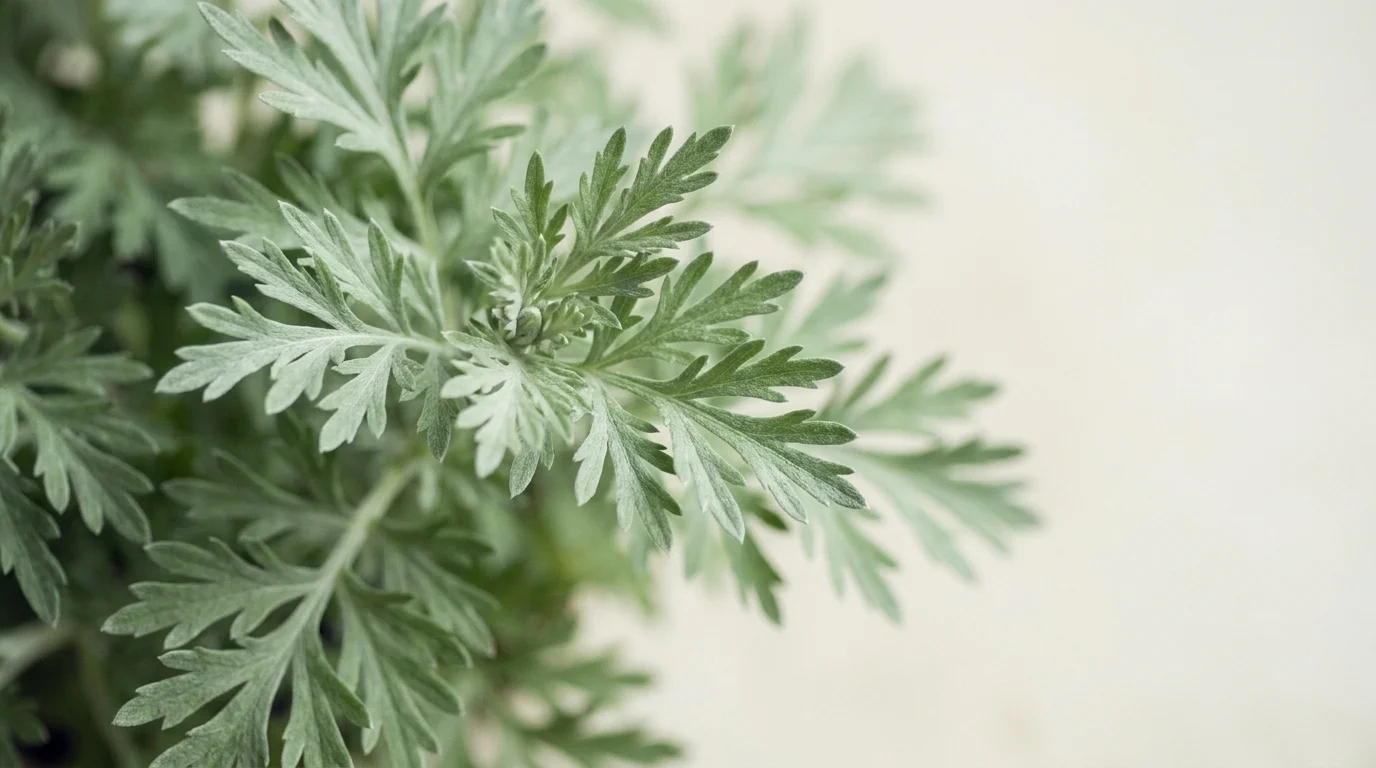
Here is the proof point that most "tradition meets science" articles leave out, and it is the strongest one. In 1971, the Chinese scientist Tu Youyou screened more than 2,000 traditional recipes looking for a malaria treatment. She found a roughly 1,600-year-old remedy using sweet wormwood (qinghao), and a line in the ancient text about steeping it in cold water told her to abandon high-heat extraction. Her low-temperature method isolated artemisinin — now the WHO first-line therapy for malaria, work that earned her the 2015 Nobel Prize in Medicine.
That is not a one-off. Aspirin traces back to willow bark, morphine to the opium poppy, the heart drug digoxin to foxglove. About 40% of modern pharmaceutical products derive from natural sources. Traditional knowledge has repeatedly functioned as a centuries-long catalogue of which plants do something — and modern science as the method for finding out what, and at what dose.
Is traditional healing safe? What the evidence says
This is the section the warm wellness blogs skip, and the one that matters most. The honest summary, in the words of one research review, is that "scientific evidence for these traditional healing practices is considered lacking in most areas because of poorly designed studies." Part of why is structural: less than 1% of global health research funding goes to traditional medicine. Absence of evidence here often means absence of funded study, not proof that something fails.
Three practical rules keep this safe rather than risky. First, traditional healing should complement conventional medicine, not replace it — the same review warns against using it to "delay or substitute for conventional Western medical care". Second, herbal products are the real hazard: contamination and drug interactions are documented, which is why 124 member states now regulate herbal medicines. Third — and this is the one I'd underline — talk to your own clinician before adding an herbal remedy or changing a prescribed treatment. Telling your doctor what supplements you take is not a betrayal of the practice. It is how you keep both kinds of care working together.
Tradition meets technology in 2026

The integration is no longer informal. In 2025 the World Health Assembly adopted the WHO Traditional Medicine Strategy 2025-2034, built on strengthening the evidence base, ensuring safety through regulation, and integrating safe and effective practices into national health systems. The Second WHO Global Summit on Traditional Medicine in December 2025, themed "Restoring balance," carried that work forward, and at the World Health Assembly this May, WHO highlighted AI's role in traditional medicine — pattern recognition, digital preservation of knowledge, and herbal-research support. Quietly, traditional medicine conditions now have standardized diagnostic codes in WHO's ICD-11 system, which for the first time lets health systems collect comparable data across the two worlds.
The framing I'd leave you with comes from Dr. Rabinarayan Acharya, who directs India's national Ayurvedic research council: "Integration does not imply replacement of conventional care, but rather a complementary approach where safe and effective traditional medicine practices are aligned with national health priorities." That is the whole bridge in one sentence. The goal was never to choose ancient or modern. It is to keep what each does well — the long observational memory of tradition, the testing discipline of science — and to be honest, practice by practice, about which is which.
Frequently Asked Questions
Traditional healing practices are significant as they encompass a variety of methods, including herbal remedies and spiritual rituals, that have been passed down through generations. These practices carry cultural importance and historical context, making them relevant in today's health landscape as people seek holistic approaches to well-being.
Ancient healing wisdom benefits modern health care by promoting a holistic approach that recognizes the interconnectedness of mind, body, and spirit. Techniques like yoga, meditation, and acupuncture offer complementary perspectives that enhance contemporary healthcare methods, fostering overall well-being and balance in individuals' lives.
The resurgence of interest in traditional healing modalities reflects a growing desire for natural and holistic health approaches. In a fast-paced world, many individuals are seeking alternatives to conventional medicine, turning to ancient wisdom for inspiration and guidance in achieving better health and wellness.
Some practices, like acupuncture and mindfulness meditation, have supporting evidence for specific conditions, but quality varies and traditional healing should complement — not replace — conventional medical care. Herbal remedies are the main risk, since they can carry contamination or drug-interaction dangers, so tell your clinician about anything you take.
The anti-malarial drug artemisinin was derived from a roughly 1,600-year-old Chinese sweet-wormwood remedy, earning Tu Youyou the 2015 Nobel Prize; aspirin traces to willow bark and morphine to the opium poppy. About 40% of modern pharmaceuticals derive from natural sources.
WHO's Traditional Medicine Strategy 2025-2034 (adopted in 2025) guides evidence-based integration into national health systems; 170 member states report using traditional medicine, standardized ICD-11 diagnostic codes now exist, and AI is being applied to diagnosis and herbal research.