
Meditation vs. Exercise: Finding Your Path to Stress Relief


People want me to settle the great debate — meditation for stress relief versus a hard workout — and I usually start by gently dismantling the question. It's a bit of a false binary — both lower your stress hormones, and as you'll see, the single most effective "exercise" for stress turns out to be a mind-body practice that's half meditation anyway. Still, the honest comparison is genuinely useful, because the two work differently and suit different kinds of stress. So here's what the recent research actually shows about meditation and exercise for stress relief, and a clear way to choose between them — or, more often, to combine them.
Is meditation or exercise better for stress relief?
Neither is universally better, and anyone who tells you otherwise is selling something. Both meaningfully lower cortisol, the body's main stress hormone. The useful distinction is what kind of stress you're carrying: meditation has the edge when your stress is mental and rumination-driven — the looping thoughts, the 3 a.m. spiral — and for restoring depleted mental energy. Exercise has the edge for physical tension and for building long-term resilience. There's even direct head-to-head data: a 2023 randomized controlled trial found that "compared with physical exercise, mindfulness practice showed stronger effects in enhancing vitality and maintaining the improvements" (PMC). So if I had to pick a default for a frazzled, overthinking mind, I'd lean meditation. But keep reading, because the most interesting finding makes the whole "versus" framing wobble.
What the science actually shows
Here's where the evidence has moved since this debate was usually settled by vibes. Two recent, sourced findings matter most.
On the exercise side, a 12-month randomized controlled trial published in March 2026 — the first to track exercise's effect on stress biology over a full year — found that consistent aerobic exercise significantly reduced participants' long-term cortisol (EurekAlert / University of Pittsburgh). As the study's senior author, Dr. Peter Gianaros, framed it, this long-term cortisol effect "could be one of the mechanisms or benefits of exercise that protect against several diseases and some mental health conditions." That's a durability argument for exercise that meditation studies, which tend to be shorter, haven't matched.
On the meditation side, the headline shift is accessibility. You no longer need a class or a guru. Research from Carnegie Mellon's J. David Creswell shows app-delivered meditation reduces stress biomarkers and blood pressure with as little as 10 to 21 minutes, three times a week (ScienceDaily). That's a far smaller ask than the gym, and it's why "I don't have time" has gotten harder to justify for the meditation side of the ledger.

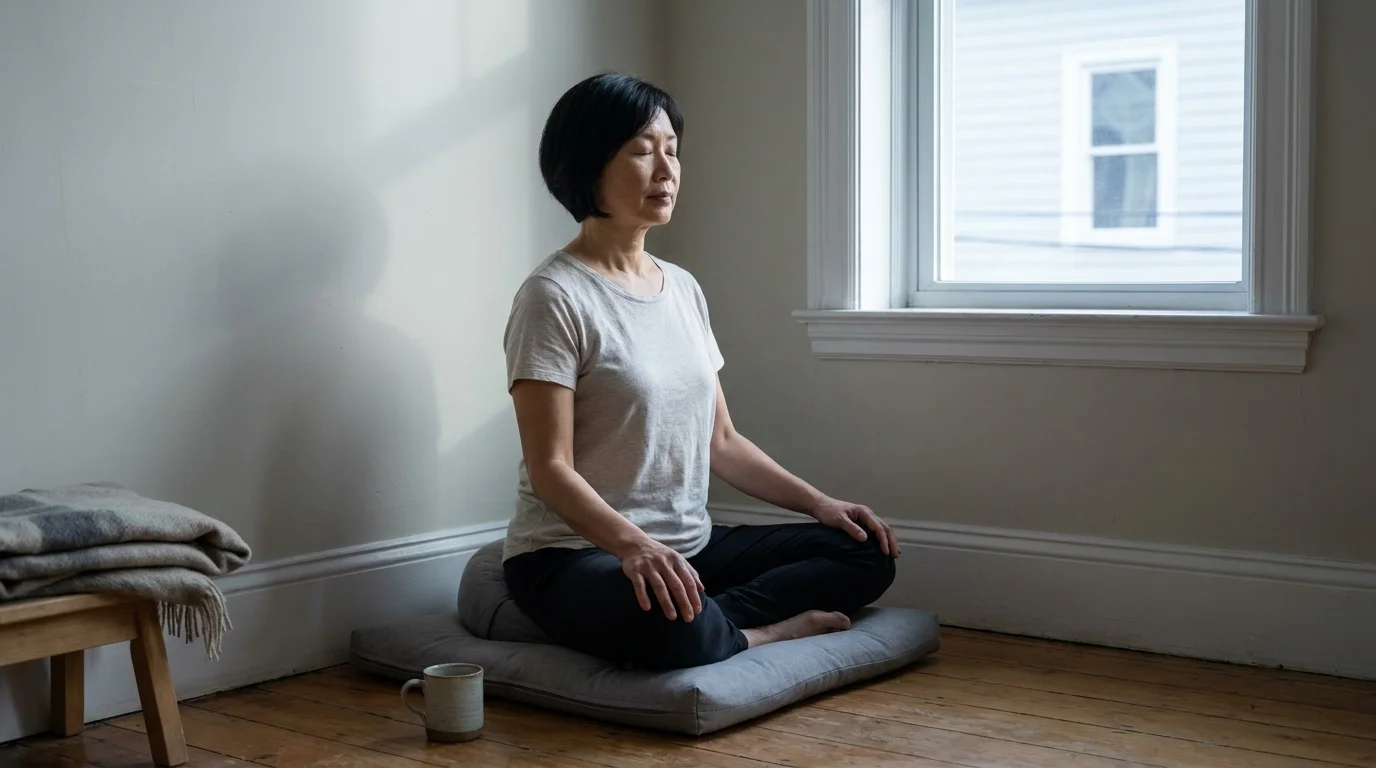
The twist: the best exercise for stress is basically meditation in motion
This is the finding that reframes the whole debate, and almost no one writing about it has caught up. A November 2025 network meta-analysis pooled 44 randomized trials (3,284 people with psychological distress) and ranked exercise modalities by how much they lowered cortisol. The winner wasn't running or HIIT — it was yoga (standardized mean difference −0.59, ranked most effective with a SUCRA of 93%), followed by qigong. Conventional aerobic exercise trailed, and high-intensity interval training actually trended toward raising cortisol (PMC). The authors concluded that "exercise, particularly mind–body practices such as yoga and qigong, can reduce cortisol levels in individuals with psychological distress."
Sit with what that means. The single most effective form of exercise for stress is the one that braids in breath, attention, and mindful movement — in other words, the one that's already half meditation. The "meditation OR exercise" framing dissolves: the best answer is frequently both at once.
Meditation vs. exercise: a side-by-side
| Meditation | Exercise | |
|---|---|---|
| How it eases stress | Calms rumination, regulates attention, lowers cortisol | Burns physical tension, releases endorphins, lowers long-term cortisol |
| Cortisol evidence | Reduces stress biomarkers (app studies) | 12-month RCT: long-term reduction; yoga/qigong strongest |
| Time to benefit | 10–21 min, 3×/week | Regular sessions; durable over months |
| Accessibility / cost | Free apps, no equipment | Varies — free (walking) to gym cost |
| Best for | Mental, rumination-driven stress; vitality | Physical tension; long-term resilience |
| The overlap | — | Yoga & qigong are both |
Which should you choose?
Use the kind of stress you have as the guide:
- Choose meditation if your stress lives mostly in your head — racing thoughts, worry loops, trouble switching off, mental exhaustion. It's also the better fit if time, mobility, or budget are tight.
- Choose exercise if your stress shows up in your body — restlessness, tension, low energy — or if you want the broad long-term health dividend alongside the stress relief.
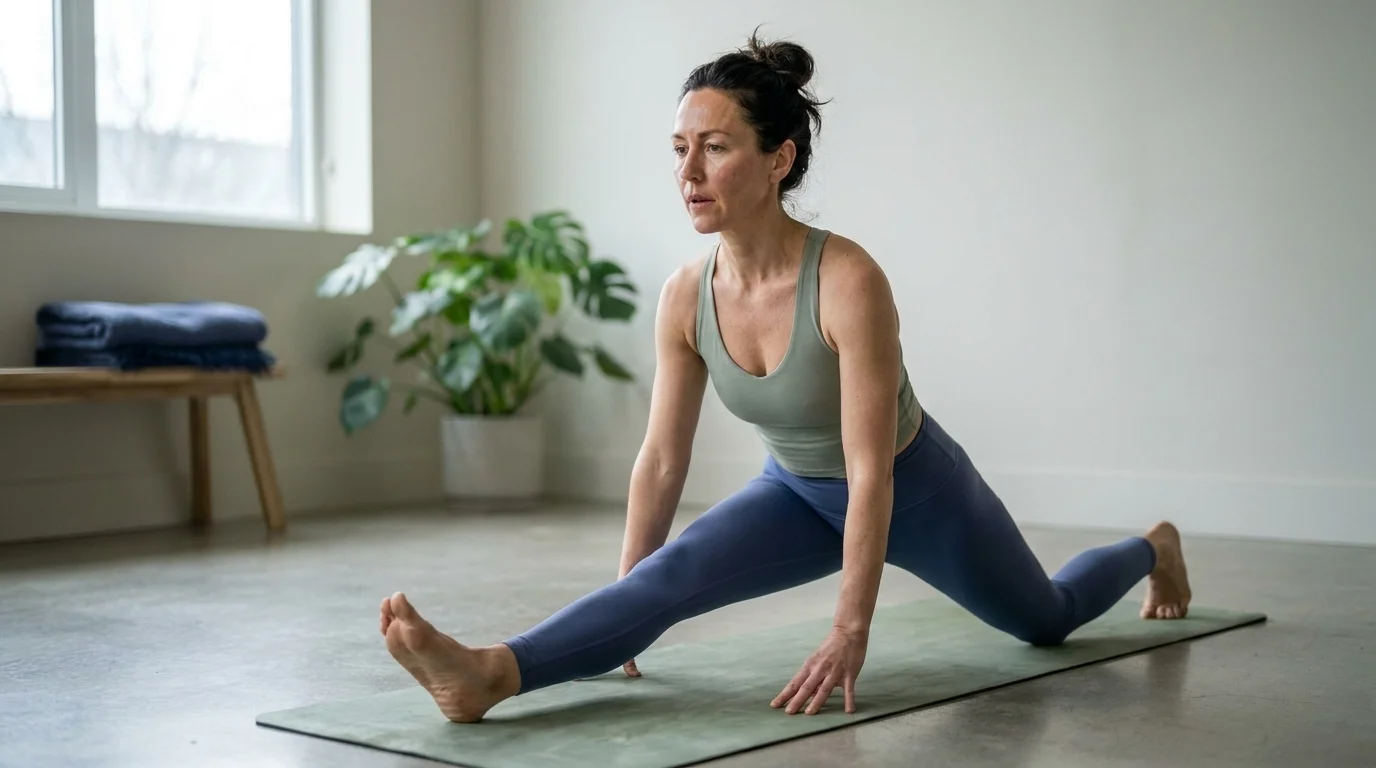
- Choose yoga or qigong if you want both at once; the evidence says this combination is the most effective single thing you can do for the stress hormone.
- Combine them if you can. They're complementary, not competing.
Should you combine them — and in what order?
Yes, and there's a sensible order. For most people, movement first, then stillness works best: a walk, a short workout, or a few yoga flows discharges the physical restlessness that otherwise makes sitting still feel unbearable, so the meditation that follows is calmer and easier to sustain. Yoga and qigong are the elegant shortcut here because they are the combination — but a 20-minute walk followed by 10 minutes of an app meditation is a perfectly good version for anyone who'd rather keep them separate.
A clinical note to close
Both meditation and exercise are excellent tools for the ordinary stress of a demanding life, and for that, you genuinely can't pick wrong — start with whichever you'll actually do this week. But I want to hold the line I always hold: there's a difference between everyday stress and a clinical condition. If what you're carrying is persistent anxiety, depression, or a stress that doesn't lift no matter how much you move or breathe, that isn't a willpower problem and an app won't fix it — it's a sign to talk to a therapist, because therapy is not the opposite of self-care, it's one of its forms. And if you're ever in crisis, contact the 988 Suicide and Crisis Lifeline. For everything short of that: move your body, quiet your mind, and ideally do both. The research is on your side.
Frequently Asked Questions
Neither is universally better — both lower cortisol. Meditation edges ahead for mental, rumination-driven stress and vitality; exercise excels for physical tension and long-term resilience. A 2023 trial found mindfulness outperformed self-chosen aerobic exercise for vitality.
A 2025 meta-analysis of 44 trials ranked yoga highest for lowering cortisol, followed by qigong — both mind-body practices. High-intensity workouts (HIIT) tended to raise cortisol, so gentler, mindful movement wins for stress.
For most people, movement first then meditation works best — light exercise or yoga releases physical tension and steadies the body, making the meditation that follows calmer and easier to sustain.
Meditation calms rumination, regulates attention, and lowers stress biomarkers with as little as 10–21 minutes a few times a week. Exercise burns physical tension, releases endorphins, and lowers long-term cortisol. They address stress from different directions.
Yes — they're complementary, and mind-body practices like yoga and qigong are literally the combination. A practical routine is movement first, then a short meditation, which research suggests is among the most effective things you can do for stress.
Both fit small windows: app-based meditation works in 10–21 minutes a few times a week, and a brisk walk or short yoga flow counts as stress-lowering exercise. Stacking a 10-minute meditation onto a daily walk covers both with minimal time.
Check Out These Related Articles
Global Mindfulness: Meditation Practices from Around the World That Promote Mental Wellness

Cultivating Community Resilience: Collective Efforts in Mental Wellness Support Systems

Visionary Women Driving Mental Wellness Innovations: Their Inspiring Stories