
Innovative Strategies for Overcoming Dietary Challenges in Modern Lifestyles


Most of us do not fail at healthy eating habits because we don't know that vegetables are good for us. We fail because it is 6:40 p.m., we have been in meetings since nine, and the path of least resistance is takeout. So this guide is not another list of foods to fear. It is about building eating habits that survive a real schedule — and being honest, as I try to be with the people I counsel, about which tactics actually have evidence behind them and which are just vibes.
Here is the useful starting point: when researchers ask people what gets in the way of eating well, the answers are remarkably consistent.
The real barriers — and a busy-week system that beats them
A peer-reviewed study of eating-habit barriers and enablers found the obstacles are not mysterious: time constraints, stress, convenient high-calorie food, easy junk-food access, and high prices. The enablers were equally concrete: food knowledge, meal planning, and being involved in preparing your own food. That is genuinely good news, because it means you can build a system that targets the actual barriers instead of relying on willpower.
Here is the whole system, mapped barrier to tactic. You do not need all of it. Pick the two barriers that bite you hardest.
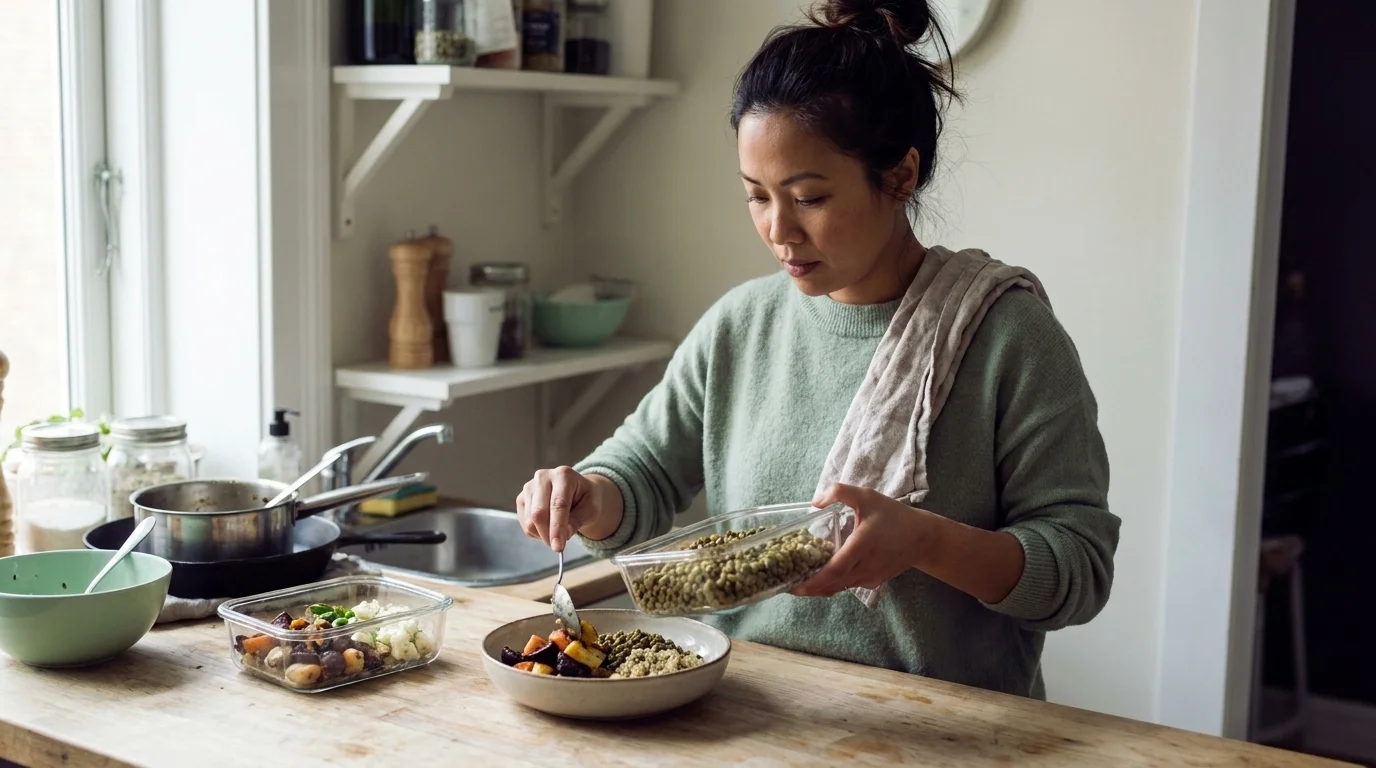
- Time → Batch one protein and one fiber source on a quiet day (a tray of roast chicken thighs, a pot of lentils). Two cooked components turn "cook dinner" into "assemble dinner."
- Stress and decision fatigue → Make one or two meals identical every weekday. Boring breakfast is a feature; it removes a daily decision when your prefrontal cortex is already spent.
- Convenience / junk-food access → Put the food you want to eat where your hand lands first — cut vegetables at eye level, the chips on a high shelf. This is not discipline; it is logistics.
- Cost → Lean on the cheapest nutrient-dense staples (more on this below).
That is the spine. Everything else below is detail on the highest-leverage pieces.
Eat for energy and clarity, not calories (the 2026 reframe)
The most useful shift I have seen in how people think about food is away from calorie-counting and toward how food makes them function. 2026 consumer data shows about 42.9% of people now associate healthy food with energy or physical performance, and roughly 39% with mental clarity. I like this framing because it is harder to weaponize against yourself — "did this meal leave me steady or crashed?" is a better daily question than a number.
One mechanism worth understanding, because it explains a lot of the energy-and-fullness story, is fiber. Roughly 13% of Americans say they want more fiber in 2026, nearly double the year before, and the reason is real: fiber slows digestion and supports the gut's release of satiety hormones, which is why a bowl of lentils keeps you full in a way a refined snack does not. Note the distinction I always draw — this is fiber in food (beans, oats, vegetables, fruit), studied as part of a whole dietary pattern. That is a different and stronger body of evidence than a fiber supplement in a tub.
Mindful eating, minus the mysticism
Mindful eating gets dressed up in a lot of language it does not need. Stripped down, Harvard's "Seven Practices of Mindful Eating" are practical and unmystical: engage your senses, eat modest portions, chew slowly, stop around 80% full, and don't skip meals. The mechanism is simple — fullness signals take time to register, so eating slowly lets them arrive before you've overshot.
You do not have to do all seven. The single highest-yield version is one phone-free meal a day. Not because phones are "toxic" — they are not — but because eating while scrolling reliably means eating past the point you'd otherwise stop. One attentive meal is a habit you can actually keep, which beats a perfect practice you abandon by Thursday.
What the tech can (and can't) do for you
Personalized-nutrition tech is having a real moment: 60% of a U.S. News expert panel named real-time metabolic-feedback wearables the top health-technology trend for 2026. Continuous glucose monitors and the apps around them can genuinely show you that your own body spikes harder on white rice than on, say, oats — which is useful, personal information.
Two honest caveats. First, much of this is marketed to people without diabetes, where the evidence that acting on those readings improves long-term health is still thin. Second, as Chicago dietitian Samar Kullab put it, there's "a growing shift toward viewing food as medicine, with fewer people relying solely on supplements and instead prioritizing whole nutrient-dense foods." That is the right instinct. A tracker can inform your habits, but the food on your plate is doing the work — not the device.
A sustainable diet you'll actually keep
A sustainable diet, in both senses of the word, is one that is good for the planet and one you can stick with. The practical overlap is large: eating more plants and less ultra-processed food tends to be both lower-impact and nutrient-dense. You do not need to go all-or-nothing — reducing food waste, buying produce in season, and treating beans and lentils as a regular protein rather than a side dish covers most of the benefit without a wholesale identity change.
I'd flag one thing: "sustainable" is not a moral score on you as a person. It is a direction you can move a little at a time. A diet you grimly endure for three weeks and quit is not sustainable by any definition.
Eating well on a budget
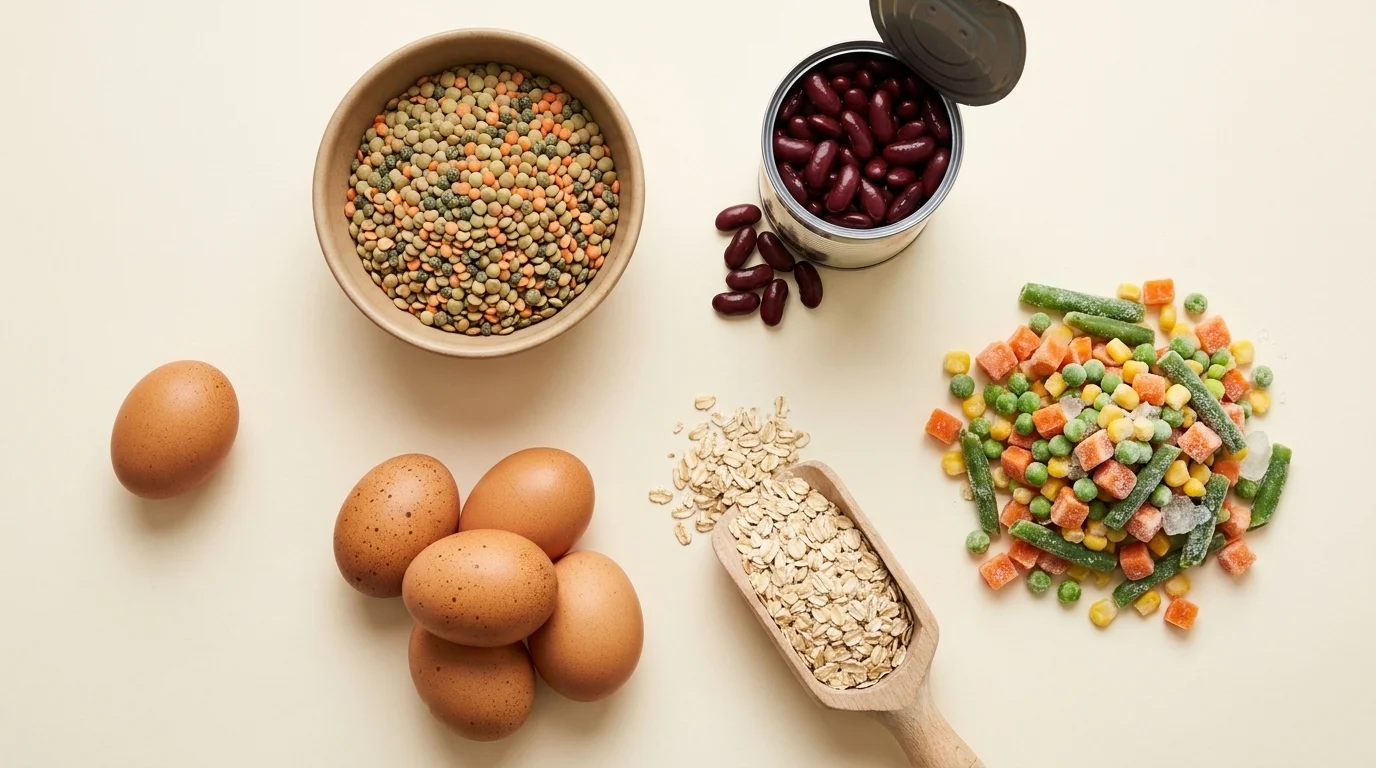
Cost is one of the documented barriers, and it is the one wellness writing most often ignores. The good news is that some of the most nutrient-dense foods are also the cheapest: beans, lentils, eggs, frozen produce (frozen at peak ripeness, often as nutritious as fresh), and whole grains. 2026 trend data even shows a cost-driven shift toward beans and lentils as everyday plant protein. If you batch-cook a pot of lentils on Sunday, you have hit the time barrier and the cost barrier with one move.
Bring your own food culture to the table
The advice to "eat a varied, plant-forward diet" lands very differently depending on whose kitchen you grew up in, and the institutional guides rarely acknowledge that. Many traditional cuisines already encode the patterns nutrition science keeps rediscovering — the legumes and olive oil of the Mediterranean table, the fermented vegetables of Korean cooking, the dal-and-rice combinations of South Asian home meals. Building healthy eating habits does not have to mean abandoning the food you love for a beige "wellness" plate. More often it means leaning into the home version of your own cuisine and easing off the highly processed convenience layer that got added on top.
The sober takeaway: healthy eating habits that last are systems, not heroics — a couple of repeatable moves aimed at the barriers that actually slow you down. None of this is medical advice for a specific condition. If you're managing diabetes, heart disease, or any chronic condition, the changes that matter most for you belong in a conversation with your own clinician, who knows your full picture in a way no app or article can.
Frequently Asked Questions
To maintain dietary diversity, individuals can incorporate a wide variety of colorful fruits and vegetables into their meals. Embracing plant-based options not only enriches the diet with essential nutrients but also supports sustainable eating practices, making meals more enjoyable and healthful.
Technology plays a crucial role in personalizing nutrition by allowing individuals to tailor meal plans based on specific dietary needs. Mobile apps and online platforms provide guidance that accommodates personal preferences, allergies, and dietary restrictions, ensuring that nutritional requirements are met effectively.
Embracing cultural cuisine enriches one's diet by introducing a variety of nutrient-dense foods from different culinary traditions. This approach not only enhances dietary diversity but also fosters cultural appreciation, allowing individuals to explore new flavors while promoting overall health through balanced nutrition.
Start with one repeatable system — batch-prep one protein and one fiber source on a quiet day, keep cut vegetables visible, and protect one phone-free meal daily. Time is the number-one documented barrier to eating well, and meal planning is the number-one enabler.
Eat one meal a day without your phone, chew slowly, and stop around 80% fullness. Mindful eating focuses on how and why you eat rather than what you cut out — slowing down lets fullness signals register and curbs impulsive snacking.
Lean on beans, lentils, eggs, frozen produce, and whole grains — nutrient-dense, low-cost staples. High food prices are a documented barrier to healthy eating, and 2026 trends show a cost-driven shift toward beans and lentils as everyday plant protein.