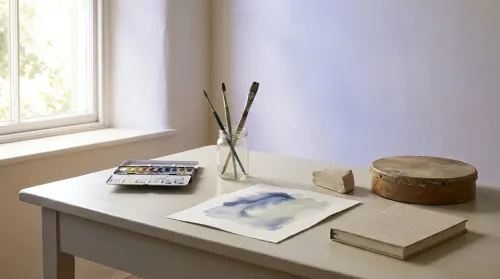
The Art of Healing: Exploring the Therapeutic Potential of Art Therapy


There is a particular kind of stuckness that words cannot reach. You know something is wrong, or heavy, or unfinished — a grief you cannot narrate, a tension you cannot name — and every attempt to talk it out flattens it into something smaller than it is. This is the territory where art therapy does its most interesting work, and it is worth being precise about what that work actually is, because "art therapy" gets used loosely to mean anything from a credentialed clinical treatment to a relaxing afternoon with watercolors. Those are both worth having. They are not the same thing.
Let me walk through what art therapy is, what is actually happening in the brain when it helps, what the 2026 research can and cannot claim, and where the line sits between a self-care practice you can try tonight and the kind of support that belongs with a professional.
What is art therapy?
Art therapy is, in the words of the American Art Therapy Association, "a mental health profession that enriches lives through active art-making, creative process, applied psychological theory, and human experience within a psychotherapeutic relationship." The phrase that matters most there is psychotherapeutic relationship. Clinical art therapy is conducted by a credentialed art therapist who helps you make meaning of what emerges — it is a form of psychotherapy that happens to use images instead of, or alongside, words. Coloring a mandala on your couch to decompress is genuinely good for you, but it is art-making for self-care, not art therapy. I'll come back to that distinction, because confusing the two is where people get either disappointed or, occasionally, in over their heads.
How art therapy works in the brain
This is the part most explainers skip, and it's the part I find most reassuring, because it demystifies something that can sound mystical. A January 2026 narrative review in Frontiers in Psychology synthesized the neuroscience, and the plain-English version goes like this. When you make art with focused attention, you quiet the brain's default mode network — the self-referential system that runs the endless internal commentary, the rumination, the 3 a.m. rehearsal of everything unresolved. As that chatter softens, attention shifts outward, onto color and texture and the physical act of making, and you drop into something close to a flow state. Meanwhile the salience and executive networks help you notice and regulate what you're feeling rather than be flooded by it. As the review puts it, "creative freedom in art therapy allows patients to externalize and process emotions and experiences that may be ineffable through verbal means."
There are measurable correlates, too — studies have recorded reductions in cortisol and shifts in heart-rate variability during and after art-making. I'll add the honest caveat the reviewers add themselves: most of the neuroimaging work so far uses small samples, often under 50 people, so treat the brain story as a well-supported model rather than a settled fact. It explains why this feels meditative. It does not turn a coloring book into a cure.
Related Article: Transformative Potential of Psychedelic Therapy: Breakthroughs in Mental Health Treatment Paradigms
Does art therapy actually work?
Here is where I want to be careful, because this is a mental-health claim and you deserve the real shape of the evidence, not a slogan. The 2025 meta-analyses are genuinely encouraging. A pooled analysis of 35 randomized trials with 3,167 participants found a large reduction in adult anxiety (a standardized mean difference of −1.31) — though the authors themselves rate the overall evidence quality as "very low." A 2025 meta-analysis in youth found a significant effect on depression (SMD −0.72) across 12 trials, and a review of women with breast cancer found large effects on both anxiety (−1.43) and depression (−1.23).
So: real, repeated, sometimes large effects — and, across these reviews, small samples, few comparisons against active treatments, and short follow-up. That combination means "promising and increasingly evidence-based," not "proven equivalent to first-line care." Saying that openly is not hedging; it is what honest clinical writing looks like.
What art therapy helps with
In practice, art therapy is used most for the conditions where verbal processing alone tends to stall:
- Trauma and PTSD. Because traumatic memory is often stored in ways that resist narration, the nonverbal route can reach material talk therapy circles around. A 2025 systematic review found randomized evidence for reducing the severity of PTSD, depression, and even suicidal-ideation symptoms in young people.
- Anxiety. The flow-state mechanism above is part of why; the effect sizes are among the strongest in the literature.
- Depression. Often used as an adjunct — alongside therapy and, where appropriate, medication — rather than on its own.
- Coping with chronic or serious illness, where it supports quality of life and gives people a way to hold experiences that are hard to say out loud.
Related Article: Uncovering Herbal Wisdom: Harnessing the Power of Traditional Remedies for Holistic Well-Being
Techniques you can try at home (and the line that matters)
You do not need a therapist to use art for emotional self-care, and several practices have real grounding. A few to try:
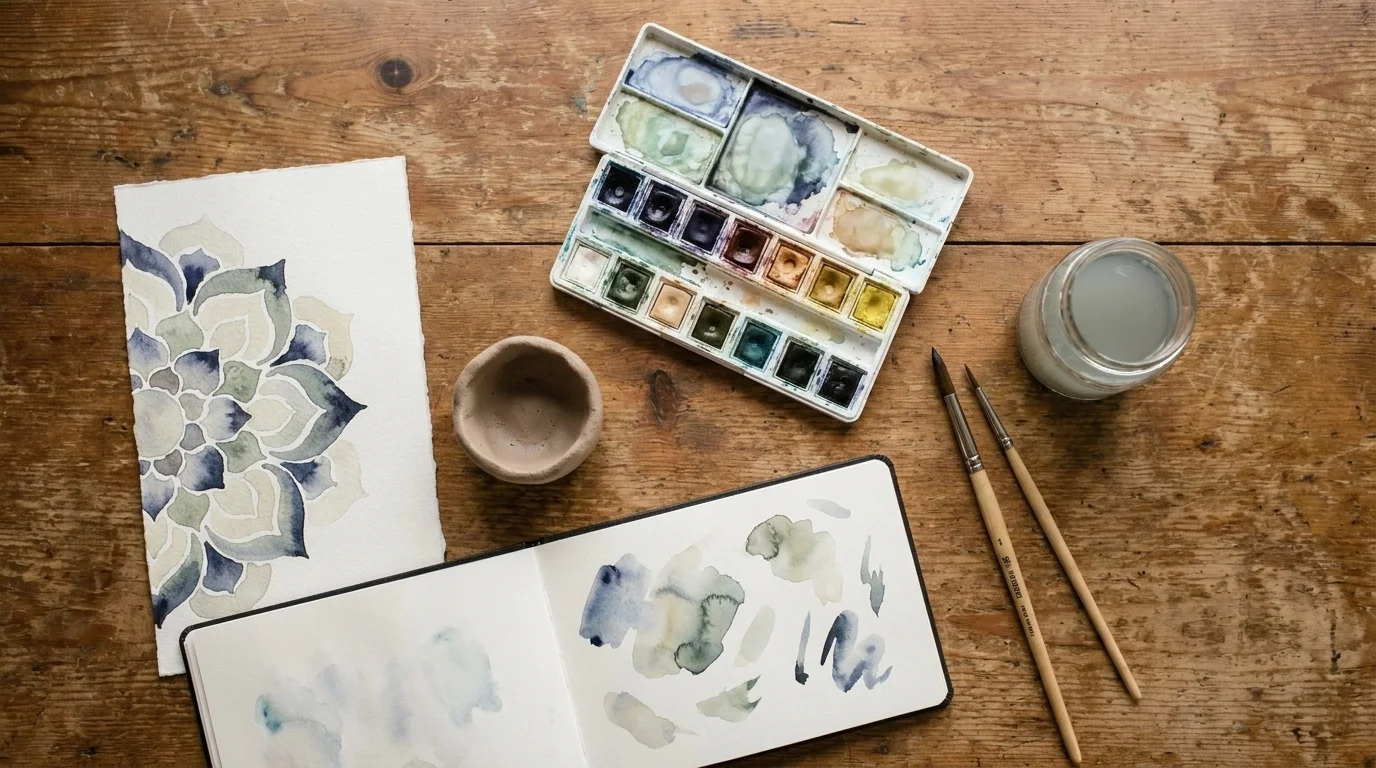
- Mandala coloring — a circular, repetitive focus that's good for winding down an anxious evening.
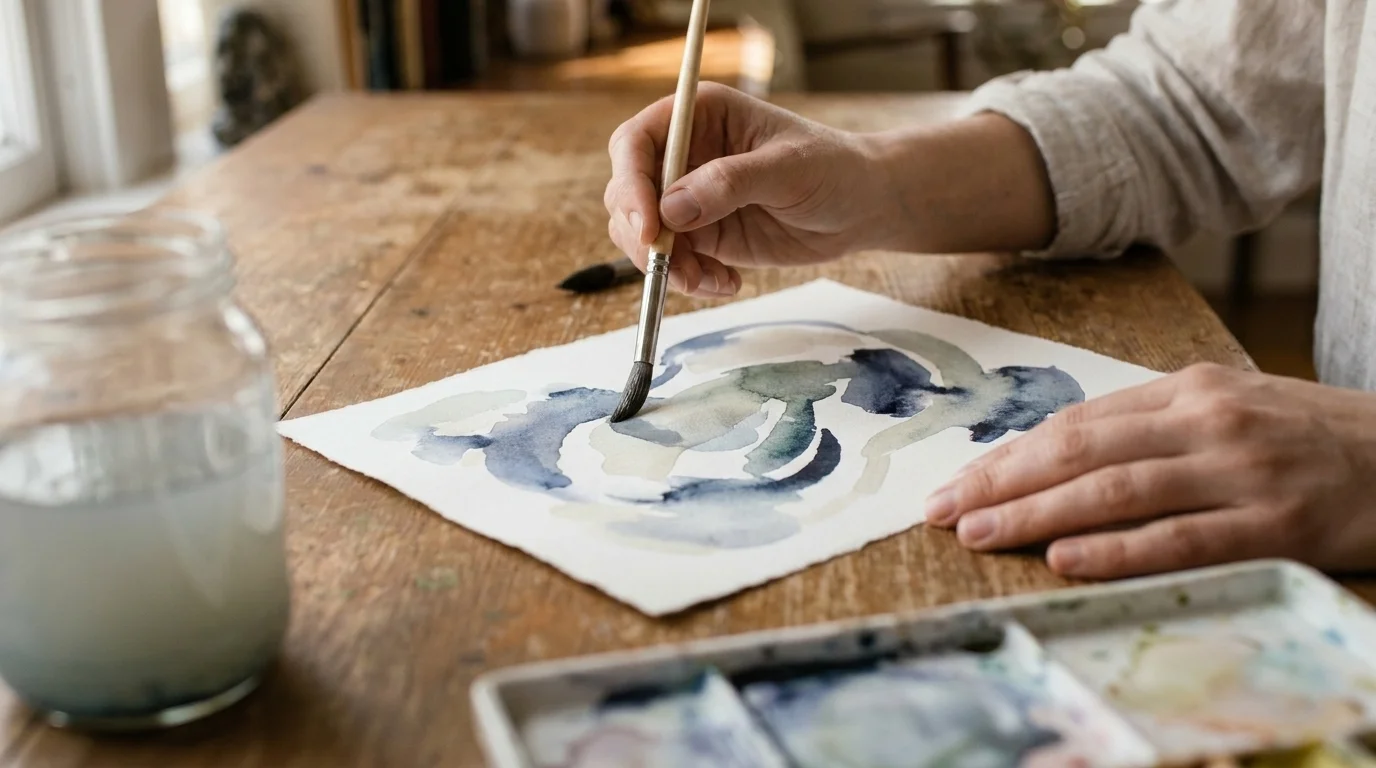
- Mindful painting — paint to how a feeling looks rather than to make something "good"; best for naming an emotion you can't quite locate.
- Working with clay — the tactile resistance is grounding when you feel scattered or dissociated.
- Collage — assembling images is lower-pressure than a blank page; useful for sorting through a decision or a transition.
- Expressive journaling with drawing — pairing a few words with a quick sketch when writing alone feels too direct.
Here is the line, and I hold it carefully. These are self-care practices: they can lower stress and help you process an ordinary hard week. They are not a substitute for clinical art therapy or for treatment when something is more than a rough week — when grief won't lift, when anxiety is reorganizing your days, when an old trauma keeps surfacing. If making art opens something larger than you can hold alone, that is not a failure of the exercise. It is a signal to bring it to a professional.
"But I can't draw"
This is the most common reason people give for not trying, and it's based on a misunderstanding. Research consistently finds that artistic ability has no correlation with therapeutic benefit — in fact, people who describe themselves as "not artistic" often report the most meaningful breakthroughs, precisely because they're not performing skill. The point is not the picture. It is the externalizing — getting something out of your head and onto a surface where you can look at it from a small, survivable distance. A scribble counts.
Related Article: Unraveling the Power of Herbal Remedies: Integrating Nature's Healing Wisdom into Daily Life
When to work with a professional
Art-making is a real, evidence-supported way to care for your own mind, and I'd encourage anyone to keep a sketchbook the way they might keep a journal. But art therapy proper — the clinical kind — is something you do with a credentialed art therapist, and it belongs in the picture when you're dealing with trauma, persistent depression or anxiety, or anything that's disrupting your ability to live your life. You can find credentialed practitioners through the American Art Therapy Association, and a primary-care doctor or mental-health professional can help you decide whether it's a fit alongside other care. Therapy is not a luxury, and reaching for it is not an admission of weakness. And if you are ever in crisis, please contact the 988 Suicide and Crisis Lifeline, available 24/7 in the U.S. The art will still be there when you're safe.
Frequently Asked Questions
Art therapy is a mental-health profession in which a credentialed therapist uses active art-making within a psychotherapeutic relationship. It works in part by quieting the brain's self-referential 'default mode' rumination and shifting attention outward into a flow state, helping you externalize and process feelings that are hard to put into words.
Clinical art therapy is guided by a credentialed art therapist who helps you make meaning of the work. Coloring or painting on your own for relaxation is beneficial self-care, but it isn't art therapy — the psychotherapeutic relationship is what makes it clinical.
The 2025 evidence is encouraging: meta-analyses report large reductions in anxiety (SMD −1.31 across 35 trials) and significant effects on depression. But authors note small samples and short follow-up, so it's best described as promising and increasingly evidence-based — often used alongside other care, not as a replacement.
No. Research consistently finds artistic ability has no correlation with therapeutic benefit, and people who consider themselves 'not artistic' often experience the most meaningful breakthroughs. The point is externalizing what's inside, not the quality of the picture.
For self-care you can try mandala coloring to wind down, mindful painting to name a feeling, working with clay for grounding, collage for sorting through a decision, or pairing a quick sketch with journaling. These ease an ordinary hard week — but they're self-care, not a substitute for clinical treatment.
It's used most for trauma and PTSD, anxiety, depression, and coping with chronic or serious illness — situations where talking alone tends to stall and a nonverbal route can reach material more directly.
If grief won't lift, anxiety is reorganizing your days, or old trauma keeps surfacing, work with a credentialed art therapist (via the American Art Therapy Association) or a mental-health professional. If you're ever in crisis, contact the 988 Suicide and Crisis Lifeline.
Check Out These Related Articles
The Healing Art of Sound Therapy: Harnessing Vibrational Frequencies for Holistic Wellness

The Power of Hydrotherapy: Transformative Benefits for Physical Rehabilitation & Relaxation

The Magic of Equine-Assisted Therapy: Harnessing Horse Power for Rehabilitation