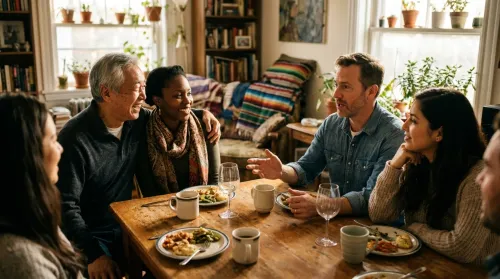
Empowering Wellness through Resilience: Stories of Overcoming Adversity in Health and Wellness


There is a specific kind of quiet that follows a hard diagnosis — the appointment is over, the waiting room is behind you, and you are standing in a parking lot wondering whether you will ever feel like yourself again. I have sat with a lot of people in some version of that moment, and I want to start by saying what resilience is not. It is not gritting your teeth, refusing to struggle, or "triumphing" by sheer force of spirit. Those stories of resilience make good posters and bad guidance. The real thing is quieter and, fortunately, more learnable: it's the process of adapting to adversity over time — and overcoming adversity in health, when it happens, almost never looks like a single heroic act. It looks like a long series of ordinary, supported, sometimes-clumsy adjustments.
So let me do something more useful than inspiration. Here is what the research actually says resilience is, whether hardship really makes you stronger, a few real people worth knowing about, and a concrete framework for building your own.
What resilience actually is
The American Psychological Association defines resilience as "the process of adapting well in the face of adversity, trauma, tragedy, threats, or significant sources of stress — such as … serious health problems." Two words in that definition do a lot of work. Process: resilience is something you do over time, not a trait you either have or lack. And adapting well, not feeling fine — resilient people still hurt, grieve, and fall apart on Tuesdays. The current research consensus reflects this: resilience is increasingly understood as a learnable skill rather than an inborn toughness. That reframe matters clinically, because "be more resilient" lands as shame if you think it's a personality you were or weren't born with. It isn't.
Can adversity really make you stronger?
This is where I want to be careful, because the "what doesn't kill you makes you stronger" slogan is half-true in a way that can do harm. A landmark study by Seery and colleagues, published in 2010 and tracking a national sample of 2,398 people, found a U-shaped relationship: people with low-to-moderate lifetime adversity reported better mental health — less distress, fewer PTSD symptoms, higher life satisfaction — than people with either no adversity or a lot of it.
Read that carefully. Some manageable hardship can build coping capacity. A great deal of hardship does not; high cumulative adversity predicted worse outcomes, not better. So adversity is not a gift, and trauma is not a teacher. If you are in the high-adversity zone, the takeaway isn't "this is making me stronger" — it's "this is a load that deserves real support." I'll add the honest caveat researchers themselves make: a 2025 review of 193 longitudinal studies covering over 800,000 people found the science of resilience is still maturing, with even the definition inconsistently applied. The U-shaped finding is robust and useful; it is not a license to romanticize suffering.
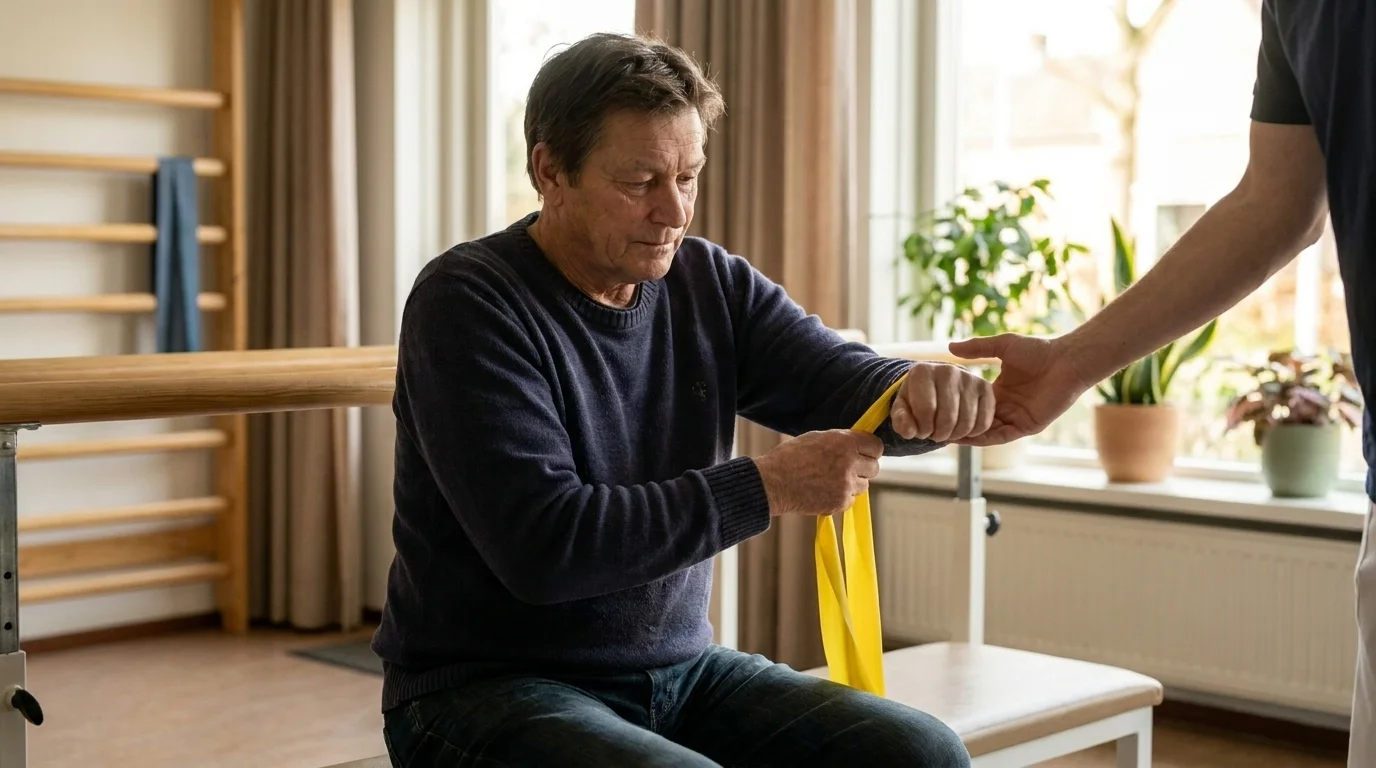
A few real stories worth knowing
Inspiration is fine as long as it's honest, which means real and verifiable rather than invented. Two often-cited examples:
- Bethany Hamilton, the professional surfer who lost her arm in a shark attack at thirteen and returned to competitive surfing. What I'd point to isn't the "never gave up" headline but her own framing — "when I lost my arm I was just thankful to be alive, and that propelled me." Gratitude and a reframed baseline, not denial of the loss.
- Stephen Hawking, who continued decades of groundbreaking physics after an ALS diagnosis given when he was given only years to live. His story is often told as superhuman; it's more accurate, and more useful, to see it as adaptation supported by purpose, assistive technology, and other people.
Notice what both have in common, and what the research below confirms: the resilience wasn't a solo act of will. It was meaning, support, and incremental adaptation. That's the part you can actually borrow.
How to build resilience: the 7 C's
When people ask me how to become more resilient, I point them to a framework that holds up — the 7 C's, developed within the American Academy of Pediatrics and just as applicable to adults facing a health challenge:
- Connection — relationships are the single most protective factor; isolation is the risk multiplier.
- Competence — building real skill in managing your condition restores a sense of agency.
- Confidence — competence, repeated, becomes a believable belief that you can handle this.
- Character — acting in line with your values, even while struggling.
- Contribution — being useful to someone else reliably shifts the relationship to your own difficulty.
- Coping — a stocked toolkit (breathing, movement, professional support) beats willpower.
- Control — focusing on what is actually yours to influence, and releasing what isn't.
You don't build these in order or all at once. Pick the one that's weakest right now — for most people in a health crisis, it's Connection — and start there.
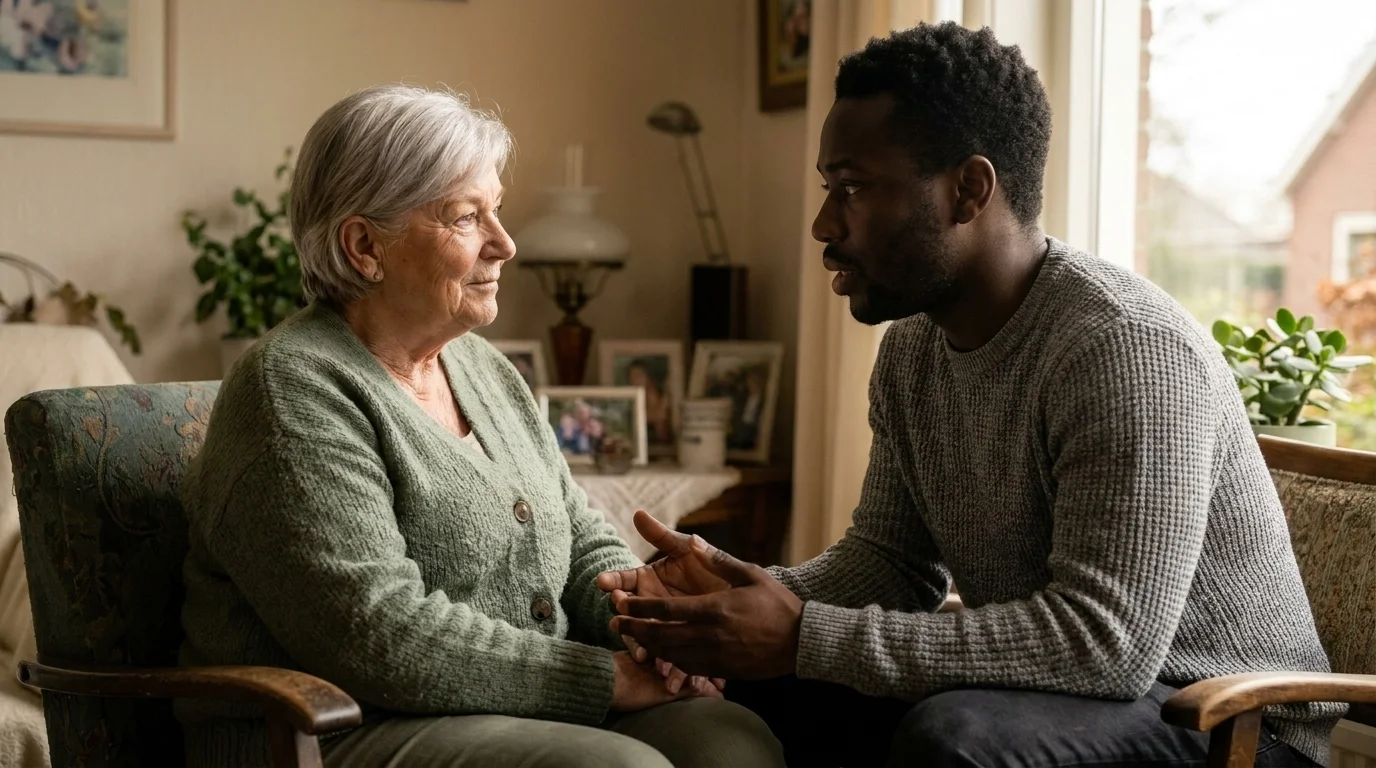
The body-mind connection
Here is the layer the general resilience advice skips, and it matters most for health. Your capacity to cope is not purely psychological — it runs partly on your physiology. Sleep, regular movement, and adequate nutrition measurably strengthen emotional resilience, and practices like mindfulness can lower the body's stress reactivity. This is genuinely good news when you're facing a health challenge, because it means some of the most effective resilience-building is concrete and physical rather than a matter of mindset: protect your sleep, move your body within whatever limits your condition allows, and stay connected. The body and the mind are not coping separately. When one is depleted, the other has less to work with.
When resilience isn't enough
I'll close the way I always do, because this is a health and mental-health topic and the distinction is the whole point. Resilience is real, learnable, and worth building — and it is not the same as "toughing it out alone." If what you're carrying is a rough stretch you can adapt to with support, the tools above are exactly right. But if you're experiencing persistent depression, the specific darkness of postpartum depression, anxiety that's reorganizing your days, or a sense that you can't get traction no matter what you try — that is not a failure of resilience. It's a signal, the same way physical pain is a signal, and the resilient response to it is to get help. Talk to your doctor or a mental-health professional; therapy is not a luxury, and asking for support is one of the most resilient things a person can do. If you are ever in crisis, the 988 Suicide and Crisis Lifeline is available 24/7 in the U.S. Overcoming adversity, in real life, is almost never done alone — and it was never supposed to be.
Frequently Asked Questions
The American Psychological Association defines resilience as the process of adapting well in the face of adversity, trauma, or significant stress — including serious health problems. It's a learnable skill and an ongoing process, not an innate trait, and resilient people still struggle and grieve.
In moderation, sometimes. A landmark 2010 study of 2,398 people (Seery et al.) found a U-shaped curve: those with low-to-moderate lifetime adversity reported better mental health than those with none or a lot. High cumulative adversity, though, predicts worse outcomes — trauma is not a teacher.
Connection, Confidence, Competence, Character, Contribution, Coping, and Control — a framework from the American Academy of Pediatrics for building resilience. Most people facing a health crisis benefit from starting with Connection.
Lean on connection (the strongest protective factor), build real competence in managing your condition, reframe what's in your control, and protect the body — sleep, movement, and nutrition measurably strengthen emotional resilience. And get professional help when you need it.
Surfer Bethany Hamilton returned to competition after losing an arm in a shark attack at 13, and physicist Stephen Hawking continued decades of groundbreaking work after an ALS diagnosis — both supported by meaning, adaptation, and other people rather than willpower alone.