Intersecting Paths: How Different Generations Define Wellness


Generational wellness is not a matter of one cohort simply caring more than another. "Wellness" is a word that means genuinely different things depending on when you were born — and the gap is now measurable. McKinsey's 2025 Future of Wellness work frames wellness as a roughly $2 trillion global market whose growth is increasingly driven by Gen Z and Millennials, a meaningful shift from the spa-and-supplements framing of a decade ago. So the interesting question isn't which generation "cares more." It's how each one defines a healthy life, and what the data says when those definitions meet reality.
A note before the generalizations, because I make this one with clients constantly: population data describes groups, not people. Knowing the average for your cohort tells you almost nothing about your own situation. Read the patterns below as context, not as a verdict on you.
Four Generations at a Glance
| Generation | Born | How they tend to define wellness | Often-cited priority |
|---|---|---|---|
| Baby Boomers | 1946–1964 | Health as the absence of illness and pain | Preventive care, staying active |
| Gen X | mid-1960s–early 1980s | Wellness fit around career and caregiving | Practical, time-efficient solutions |
| Millennials | 1981–1996 | Holistic; mental health as central | Regular exercise, work-life balance |
| Gen Z | after 1997 | Active, daily, social; nutrition + emotional | Mental health, nutrition, community |
The table is the skeleton. The data underneath it is where the real story lives.
How Each Generation Actually Defines "Healthy"
Baby Boomers tend to frame wellness as freedom from ailments — a practical, body-first definition shaped by an era when "health" largely meant the absence of disease. That framing is not naïveté; it reflects the medical culture they grew up in.
Gen X carries the quiet burden of the sandwich years — career at full tilt, often caring for both children and aging parents. Their wellness is less a philosophy than a logistics problem: what can be sustained inside a schedule with no slack.
Millennials moved mental health to the center of the conversation. The shift shows up in behavior, not just talk — 80% of Millennials weigh health benefits when choosing food, versus 64% of Boomers, per the International Food Information Council, and this cohort leads on regular exercise.
Gen Z treats wellness as a daily, holistic, and notably social pursuit, over-indexing on nutrition and on emotional and social well-being. The flat "digital natives who like health apps" characterization misses what's actually distinctive — and somewhat painful — about this generation's relationship to health.
The Gen Z Paradox
Here is the finding that reframes the whole topic. By physical measures, Gen Z is arguably the healthiest generation in modern history: around 20% of 18-to-24-year-olds have obesity, compared with nearly 40% of those aged 45 to 54, and the heaviest drinking has shifted into the 35-to-54 bracket, according to Henry Ford Health. They smoke less, drink less, and move more.
And yet they report the worst mental health of any adult generation. Only 23% of Gen Z adults rate their mental health "excellent," against 34% of Gen X and Boomers, and young-adult "excellent" ratings dropped 14 points between 2019 and 2025 (Gallup). Roughly 27% of adults under 30 report having received a depression diagnosis at some point — more than double the 2017 rate. Deloitte's 2025 survey of more than 23,000 respondents found 40% of Gen Z feeling stressed or anxious most or all of the time, versus 34% of Millennials.
How do you hold both facts? Carefully. Some of the mental-health gap is a real rise in distress; some is a generation far more willing to name and report it than its parents were — and those two things are not in competition. A cohort can be both genuinely struggling more and genuinely more honest about it. Flattening that into either "kids these days are fragile" or "everything's fine, they just talk about it" gets the clinical reality wrong.
A caveat I'd offer to any reader: these are population statistics, not a diagnosis of you or your generation. If your own mental health feels more than uncomfortable — if it's persistent, worsening, or affecting how you function — that's a reason to talk to a licensed professional, not a statistic to wait out. In the U.S., the 988 Suicide & Crisis Lifeline (call or text 988) is free and available 24/7.
The Help-Seeking Gradient
The willingness to act on mental health tracks cleanly by age. Reported rates of having received treatment or therapy step down by generation: about 37% of Gen Z, 35% of Millennials, 26% of Gen X, 22% of Boomers, and 15% of the Silent Generation, per the American Psychiatric Association. This is, in my read, one of the more hopeful numbers in the whole dataset: each younger generation is not only more open about mental health but more likely to seek support for it. Stigma is expensive, and it's falling.
Wellness Spending as a Generational Signal
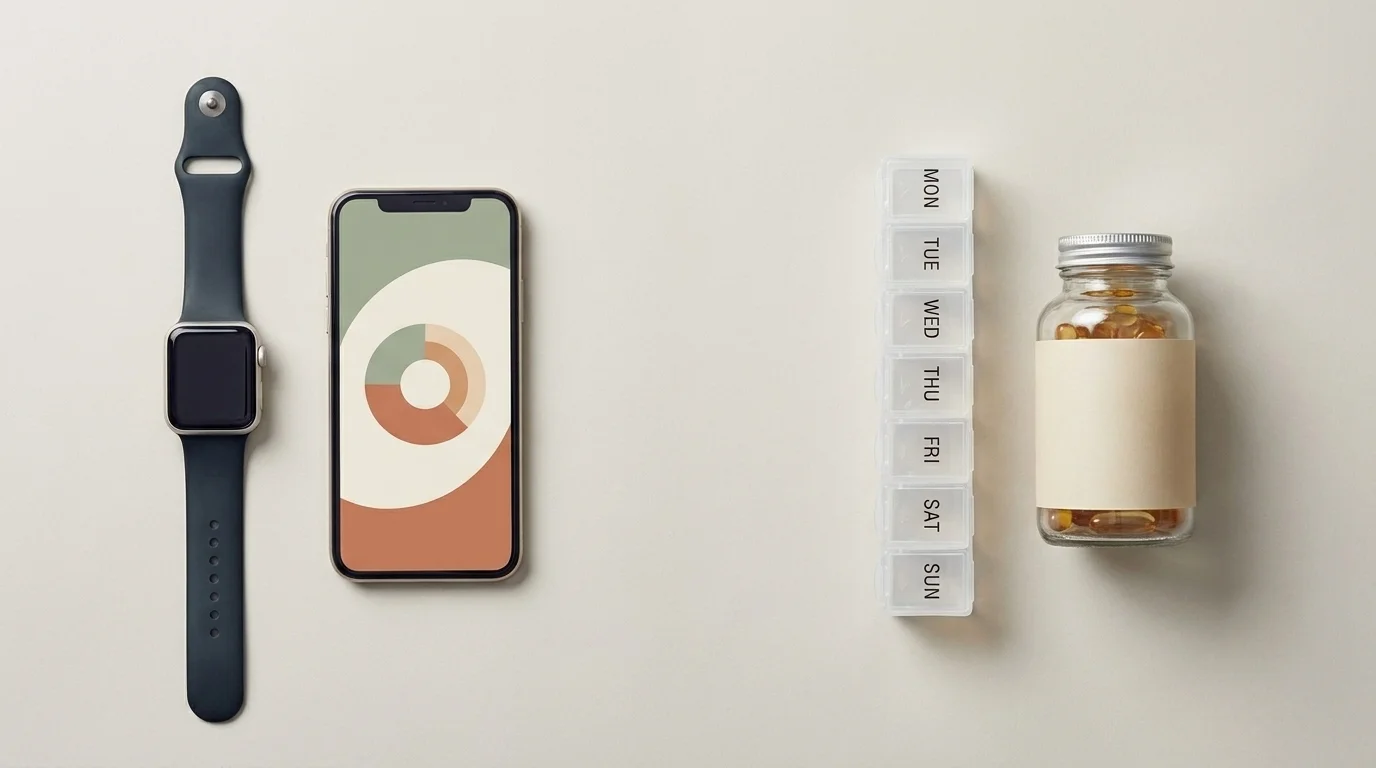
If you want to know what a generation values, look at where its money goes. Gen Z and Millennials make up about 36% of US adults but account for roughly 41% of annual wellness spending, while consumers 58 and older are about 35% of the population yet only 28% of spending (McKinsey, 2025). The composition differs as much as the volume: younger cohorts skew toward wearables, mindfulness apps, sexual health, and skincare; older cohorts toward vitamins, eye care, and essential over-the-counter products. The "tech-savvy" label is real, but the more precise statement is that younger generations are buying tools to track and manage wellness, where older ones are buying remedies for specific concerns.
Bridging the Generations
The temptation, reading all this, is to rank the generations — to crown a winner. The data resists it. Gen Z wins on physical habits and openness; Boomers and Gen X report steadier mental health; Millennials anchored the cultural shift that made any of this discussable. A wellness approach that actually serves a multigenerational family or workplace doesn't pick one definition and impose it. It recognizes that the Boomer asking "am I free of pain?", the Gen X-er asking "can I fit this into Tuesday?", and the Gen Z-er asking "is this sustainable and does it support my mental health?" are all asking legitimate versions of the same question. The most useful intergenerational move isn't harmonizing the definitions into one. It's letting each generation borrow what the others got right — Gen Z's openness, Boomers' preventive discipline, Millennials' insistence that mental health counts. On that, the evidence and the clinic agree.
Frequently Asked Questions
It depends on what you measure. By physical habits, Gen Z leads — they smoke and drink less and have lower obesity rates (about 20% of 18–24-year-olds vs. nearly 40% of those 45–54). But Gen Z reports the weakest mental health: only 23% rate it 'excellent,' versus 34% of Gen X and Boomers (Gallup, 2025). 'Healthiest' is genuinely generation- and dimension-specific. If you're struggling with your own mental health, reaching out to a licensed professional is a strong first step.
Younger generations treat wellness as an active, daily, holistic pursuit — Gen Z emphasizes nutrition and social well-being, Millennials lead on regular exercise, and both prioritize mental health. Older generations more often frame health as the absence of illness. Gen Z and Millennials also drive most wellness spending — roughly 41% of the US total despite being about 36% of adults (McKinsey, 2025).
Yes. Reported treatment or therapy rates step down clearly by generation — about 37% of Gen Z, 35% of Millennials, 26% of Gen X, 22% of Boomers, and 15% of the Silent Generation (American Psychiatric Association). Younger generations are both more open about mental health and more likely to act on it.
It's a real paradox. Gen Z has the best physical habits in modern history — lower smoking, drinking, and obesity — yet reports the highest rates of anxiety, stress, and depression diagnoses. Part of the gap is a genuine rise in distress; part is that younger generations are far more willing to name and report mental-health struggles. Both can be true at once.
Younger cohorts skew toward wearables, mindfulness apps, sexual health, and skincare; older cohorts toward vitamins, eye care, and essential over-the-counter products. Broadly, younger generations buy tools to track and manage wellness, while older generations buy remedies for specific concerns (McKinsey, eMarketer, 2025).