
Strategic Innovations in Holistic Health: Building Sustainable Wellness Businesses


Walk through any airport and you will pass a half-dozen wellness business ideas with a storefront: cold-plunge studios, IV-drip lounges, $14 adaptogenic lattes, a vending machine selling mushroom gummies. The demand underneath them is real. The global wellness economy is worth roughly $7.8 trillion in 2026 and is projected to reach about $9.8 trillion by 2029, and 82% of consumers rated wellness a top or important life priority in 2024, rising to 84% in 2025. People are not going to stop spending. The question for anyone thinking of building in this space is narrower and less flattering: which of these businesses actually makes money, what does it cost to start, and which ones are a margin story dressed up as a calling. This is a guide to the answers, with the numbers attached.
The wellness business ideas worth starting
Most "wellness business ideas" lists are inspiration with no price tags. Here is the same set with the economics, because the economics are what decide whether you have a business or an expensive hobby.

The lowest-overhead models are service and digital: health and wellness coaching bills $75 to $200 for a 60-minute session, needs almost no capital, and is the easiest to start and the easiest to stall, because you are selling your own hours. Digital products — courses, programs, paid communities — carry the best margins precisely because they decouple revenue from your time; the catch is customer acquisition, not delivery. At the higher-touch, higher-ticket end, wellness retreats run $135 to $850 per participant per day, and physical product lines (supplements, skincare, equipment) can hit dropship margins of 50 to 70% — but a product line drags you into FDA and good-manufacturing-practice territory the day you make a health claim on the label.
One thing to be honest about up front: a product's margin in this category does not come from sourcing. Most D2C supplement brands buy from the same handful of contract manufacturers. The margin comes from marketing and pricing, which is the actual product. Pick the model whose cost structure you can survive, not the one with the best founder story.
What it actually costs to start
This is the number nobody publishes, so here it is. A boutique studio or small wellness center runs roughly $20,000 to $150,000 to open. A product line lands between $3,000 and $60,000+ depending on inventory and compliance. A full-scale wellness center — multiple treatment rooms, staff, lease — needs $600,000 or more in minimum cash before it breaks even. Digital and coaching models start at the bottom of that range, which is exactly why they are crowded.
Then there is the regulatory line, which the cheerful guides skip. Licensure is real and varies by state: massage practice requires 500 training hours in California and 1,000 in New York. Anything you ingest or apply with a health claim falls under FDA jurisdiction and good-manufacturing-practice rules. "FDA-compliant" on a supplement page does not mean the FDA reviewed it — under current supplement law, it means the agency has not yet told the company to stop. Budget for the license, the compliance, and a lawyer, or budget for the warning letter later.
The wellness technology that actually moves the needle
"Wellness technology" is the highest-volume, fastest-rising term in this whole category, and the market behind it is not small: USD 64.99 billion in 2026, projected to USD 208.36 billion by 2035 at a 13.82% CAGR. For an operator, though, "technology" mostly means a stack of specific tools, and naming them is more useful than admiring the trend.

For memberships and courses, the platforms are Kajabi, Teachable, Thinkific, Circle, and Mighty Networks; for coaching, Trainerize, TrueCoach, and My PT Hub; for selling digital products directly, Gumroad, Substack, and Patreon. Telehealth platforms handle remote consultations. The personalization layer that gets the breathless coverage — fusing wearable data into individual scores — runs on devices like Oura, WHOOP, Eight Sleep, and InsideTracker; wearables already account for 48.6% of the wellness-tech market. Note what these tools have in common: they are mostly subscriptions. That is not an accident, and it is the bridge to the part that actually determines survival.
The revenue models that make a wellness business survive
A wellness business does not become sustainable by being inspiring. It becomes sustainable by having revenue that recurs. The models that show up again and again in the businesses that last are memberships, subscriptions, and digital products — and, increasingly, corporate contracts, which are the fastest-growing segment of the wellness-tech market at a 12.6% CAGR. The B2B pitch is well-funded for a reason: employers report roughly $6 saved for every $1 invested in workplace wellness, and 85% of US workers now have access to an employer wellness program, up from 78% three years earlier.
Here is the part the corporate-wellness sales decks leave out, and it matters whether you are building one of these programs or buying one. A benefit that reimburses gym memberships and meditation apps looks progressive on paper, but the workers who most need support — shift workers, caregivers, hourly contractors with no schedule control — usually cannot use it. A program that hands a wellness stipend to salaried staff and nothing to the contract cleaners is not a wellness policy. It is a tax-advantaged perk for the people who already have the least bad jobs. If you sell corporate wellness, that gap is your product's real-world limit; if you are honest about it, it is also your differentiation.
What people are actually buying in 2026
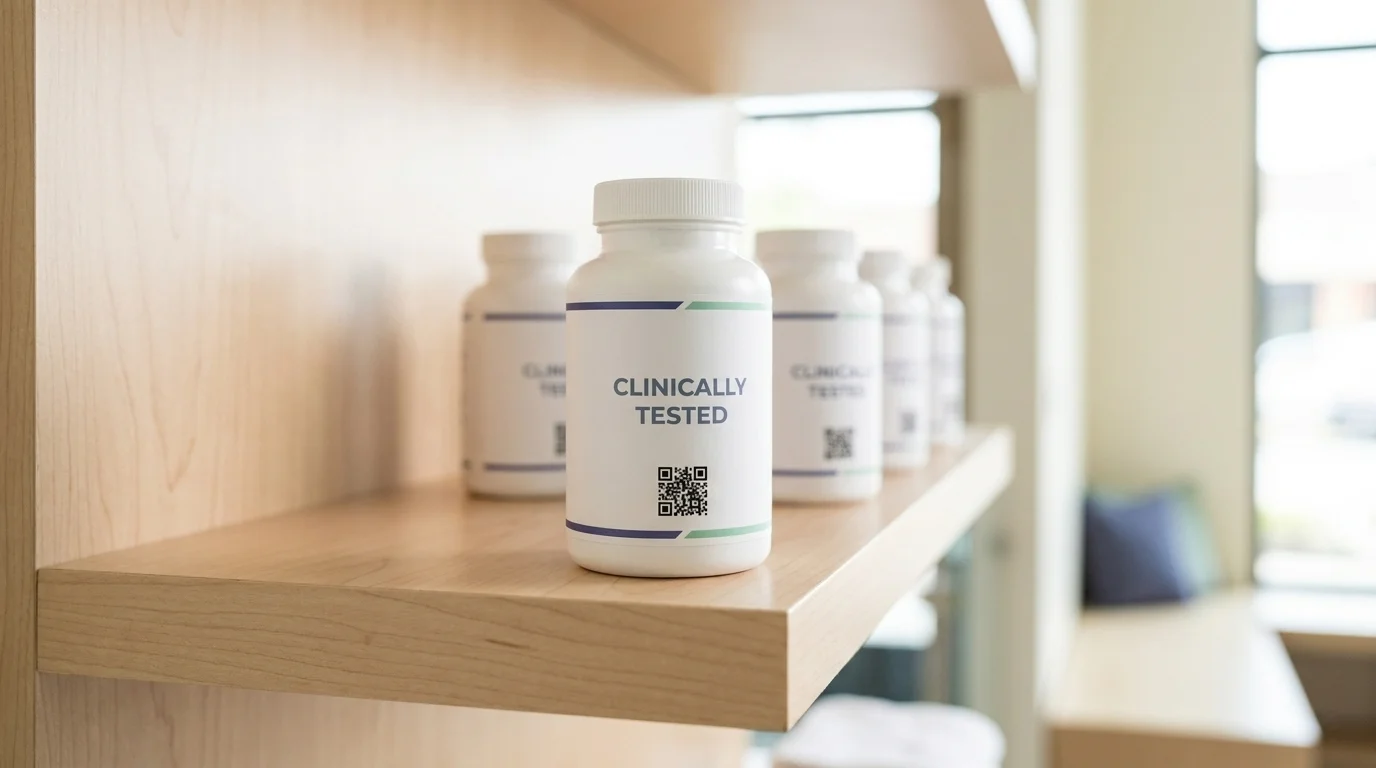
The old wellness pitch was aesthetic and ethical: natural ingredients, eco-friendly packaging, a calm brand. That alone no longer sells. The defining shift of 2026 is from "clean" to "clinical" — 91% of consumers now rank product efficacy as important, and 64% actively seek out clinical studies before buying. "Eco-friendly" and "natural" have become table stakes, not a value proposition, and a sustainability claim with no efficacy data behind it reads, increasingly, as marketing.
This is where the "ancient wisdom" framing earns its scrutiny. A $68 tea does not work better because the marketing copy invokes a tradition; if there is a clinical claim, there should be a study, and if there is no study, the claim should be smaller. Customers are starting to ask for the evidence on their own. As Shopify's 2026 trends report put it, "consumers view wellness as essential, not discretionary, and prove it with their wallets" — which means they are also willing to walk when the wallet stops matching the claim. Design your product around something you can actually substantiate.
What a reasonable person should actually do
The wellness economy is genuinely large and genuinely growing, and that is exactly why it attracts both real businesses and extraction dressed as self-care. If you are building one, the discipline is unglamorous: pick a model whose startup cost you can survive, build revenue that recurs rather than revenue that depends on constantly finding the next customer, name your regulatory obligations before they name you, and make claims you can back. The founders who last in this industry are not the ones with the best origin story. They are the ones who could read their own balance sheet before they read their own press release.
Frequently Asked Questions
A boutique studio or small center runs about $20,000–$150,000; a product line $3,000–$60,000+; a full-scale center needs $600,000+ in minimum cash before breakeven. Digital and coaching models start at the lowest end, which is also why they are the most crowded.
Recurring-revenue models — memberships, subscriptions, digital products, and corporate wellness contracts (the fastest-growing segment at a 12.6% CAGR) — deliver the most predictable income. Revenue that recurs, rather than revenue that depends on constantly finding the next customer, is what makes a wellness business sustainable.
For memberships and courses, Kajabi, Teachable, Thinkific, Circle, or Mighty Networks; for coaching, Trainerize, TrueCoach, or My PT Hub; telehealth platforms for remote consultations; and wearables like Oura or WHOOP for data-driven personalization. Most are subscriptions, which is also why they support recurring revenue.
Yes. The global wellness economy is roughly $7.8 trillion in 2026, projected to reach about $9.8 trillion by 2029, and the wellness technology market alone is growing at a 13.82% CAGR. Demand is real and rising — which is also why the field is crowded and competitive.
Technology in a wellness business is mostly a stack of specific subscription tools — booking and membership platforms, coaching software, telehealth, and wearables for personalization. It enables remote delivery and recurring billing, but naming and choosing the right tools matters far more than the abstract promise of 'going digital.'
Adding services around a core offering — workshops, retail, corporate contracts, digital products — diversifies revenue and smooths cash flow. The most valuable additions are recurring rather than one-off, and corporate B2B contracts are the fastest-growing of these streams, though they reach salaried staff far more easily than hourly or contract workers.
By backing its claims with evidence. The 2026 shift is from 'clean' to 'clinical' — 91% of consumers rank efficacy as important and 64% seek clinical studies before buying. 'Natural' and 'eco-friendly' are now table stakes; a substantiated, measurable result is the real differentiator.