The Technological Future of Holistic Healing: Innovations Reshaping Well-Being Practices


There is a house in the longevity-tech press kit — its builders call it The Estate — where the bathroom mirror reads your biomarkers, the lighting tracks your circadian rhythm, and the scale logs more about your body each morning than your last physical did. It is an impressive machine. It is also worth asking, before we admire it, what the machine is for. Wellness technology — the digital tools, from wearables and artificial intelligence to telemedicine and virtual reality, that promise to monitor and improve how we feel — has become a roughly USD 57.1 billion market, and Precedence Research projects it will reach USD 208.36 billion by 2035 at a 13.82% annual rate. That is a great deal of money riding on a single premise: that the way to feel better is to measure more.
In 2026 that premise started to crack. The Global Wellness Summit named the year's defining mood an "over-optimization backlash," arguing that "wellness is no longer about optimizing harder—it's about feeling safer, more connected and more alive." I want to use that tension as a lens. For each technology reshaping holistic health right now, the useful question is not only "does it work?" but a translation question I keep returning to in my own fieldwork: what does this tool actually carry across from a practice that helped people, and what does it quietly leave behind?
What is wellness technology?
Wellness technology is the use of digital tools — wearables, artificial intelligence, telemedicine, virtual reality, and connected devices — to monitor, personalize, and support physical and mental well-being. That is the clean definition, and it is worth holding onto, because the category is broad enough to contain both a blood-pressure cuff that talks to your phone and a meditation program that talks to your nervous system. The six technologies below all sit under that umbrella. What separates them is not how advanced they are. It is how much of the original, human practice survives the move onto a screen.
Telemedicine: care at a distance, and what it carries
Telemedicine — remote consultations, virtual check-ins, remote monitoring — is the least exotic item on this list and the most established. Its case is straightforward and real: a video window genuinely widens access for people who live far from a clinic, cannot take a half-day off work, or find a waiting room physically difficult. As a piece of health technology, it has earned its place.
What I would not do is mistake access for the whole of care. A consultation conducted through a screen carries the conversation faithfully and leaves behind the parts of an examination that happen in a shared room — the unhurried physical presence, the things a clinician notices that the patient never thought to report. That is not an argument against telemedicine. It is an argument for being clear-eyed about which half of medicine it transmits and which half stays on the other side of the camera.
Related Article: AI-Powered Personalized Fitness: Revolutionizing Workout Regimens Through Data-Driven Insights
AI in wellness: from data to dinner
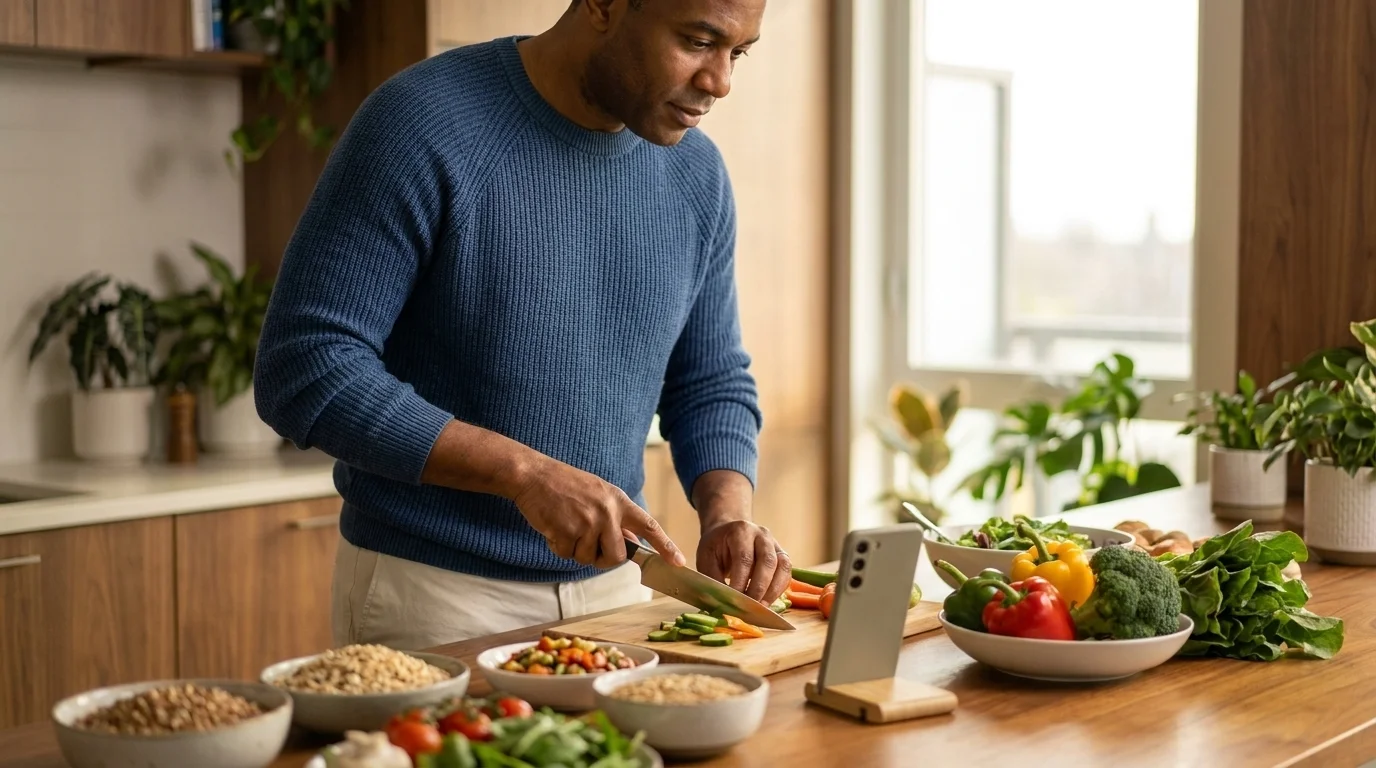
Artificial intelligence is where the "personalize everything" promise lives. The most concrete 2026 example is food: apps like Noom, Zoe, and AlterMe now ship AI-driven food tracking and dietary guidance, turning the abstract "AI virtual assistant" of a few years ago into a tool that reads your plate and talks back. Used well, AI in wellness can surface patterns a person would never catch on their own.
The anthropologist's caution is small but worth stating: an algorithm does not give you neutral advice. It gives you the encoded nutritional norms — and the commercial incentives — of whoever trained and funded it. The guidance feels personal because it uses your data; it is not personal in the sense that a clinician who knows your history is personal. Knowing the difference is part of using the tool well.
Precision medicine and nanotechnology: the molecular layer
Most gadget roundups never reach this layer, which is exactly why it is worth naming. Precision medicine and nanotechnology in medicine work below the surface of any wearable: targeted drug delivery, molecular-level diagnostics, treatments tuned to an individual's genetic profile rather than a population average. This is the part of the field with the most scientific promise and, in my reading, the widest gap between the press release and the bedside.
So I will hold this section to the standard the field holds itself to: a randomized trial, not a brochure, decides whether a precision or nano-enabled therapy actually helps a given patient. The direction is genuinely exciting. The honest posture toward any specific product is patience — let the molecular promise prove itself in the clinic before it shows up in a wellness catalogue.
Related Article: Democratizing Wellness Tech: Ensuring Equal Opportunities for Digital Health Adoption
Virtual reality for mental health: from promise to regulated medicine
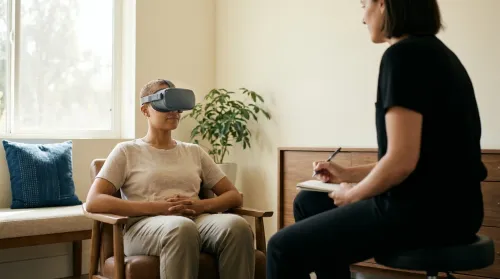
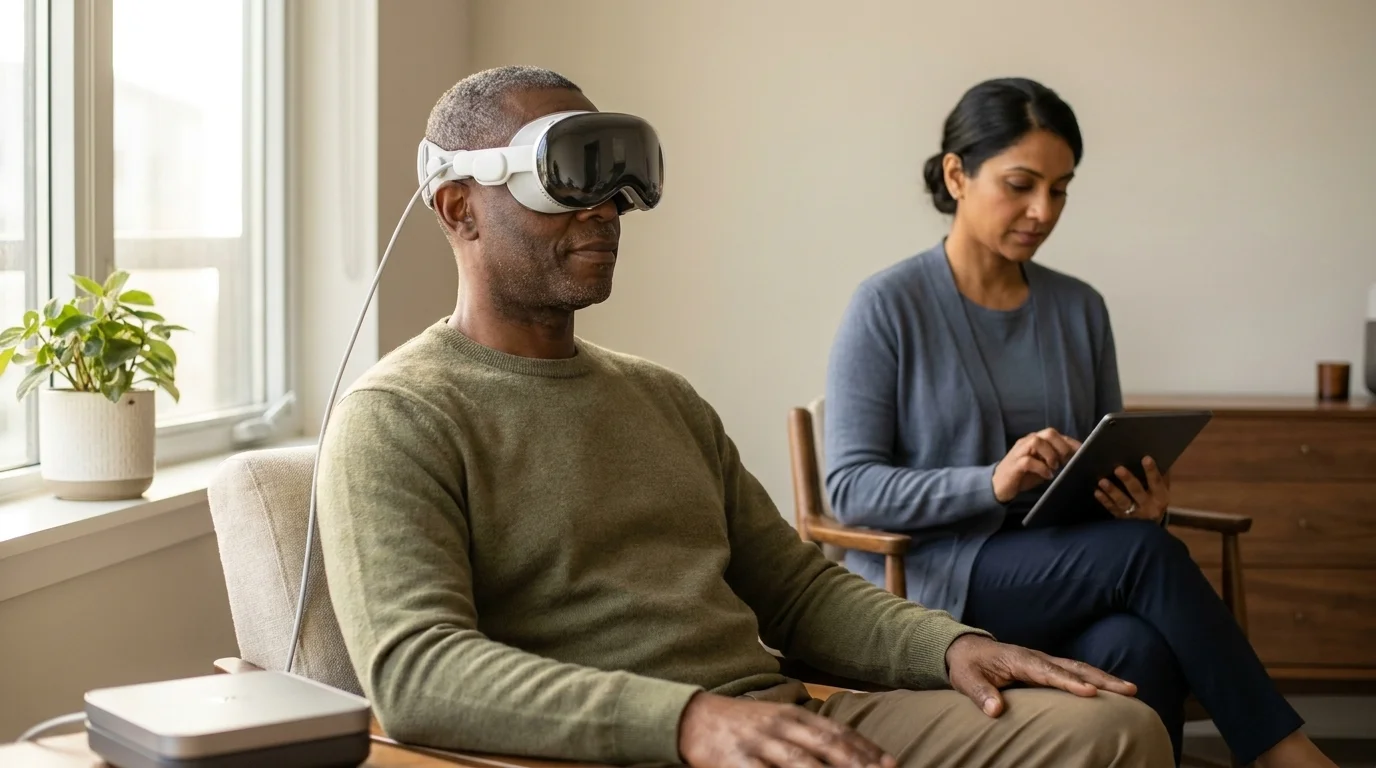
VR for mental health is the clearest case of a technology that crossed a line between "promising" and "medicine." A few years ago, writing that "VR-based CBT is proving effective" would have been a hopeful generalization. In 2026 it is closer to a regulatory fact. The U.S. Department of Veterans Affairs has deployed the Bravemind VR program for PTSD nationally, and AppliedVR's RelieVRx — FDA-authorized in November 2021 for chronic back pain — had treated more than 60,000 patients as of 2025. In 2024, Rejoyn (for major depressive disorder) and DaylightRx (for generalized anxiety disorder) became the first prescription digital therapeutics approved for those conditions. The VR-in-healthcare market sits near USD 7.6 billion in 2026 and is projected past USD 66 billion by 2034.
Here is where I distinguish what a trial can measure from what a marketer can claim: the evidence is strongest for PTSD and exposure-based therapy, and thinner for other conditions. "VR helps mental health" is too broad. "Clinician-controlled VR exposure has real, regulated evidence for specific diagnoses" is the accurate, and still remarkable, version.
Neurowellness: the 2026 nervous-system frontier
The newest category did not exist in this article's original 2024 framing. The Global Wellness Summit calls it the rise of "hard-care" neurowellness: consumer hardware aimed directly at the nervous system, including vagus-nerve stimulation devices like Pulsetto, EEG-guided sleep tools like Elemind, and neurofeedback platforms like Myndlift. It is a fast-growing space — mental health and mindfulness is the fastest-growing wellness-technology segment, at a 12.4% CAGR through 2035.
These devices borrow a real clinical lineage. Vagus-nerve stimulation has a serious history in medicine; neurofeedback has a research literature. The translation question is whether the at-home consumer version borrows the mechanism and the vocabulary while leaving the supervised, dosed clinical context behind — the same pattern I have watched play out with herbal traditions that arrive as capsules stripped of the diagnosis that gave them meaning. Promising hardware, worth watching, worth not overclaiming.
Related Article: Digitizing Wellness: Navigating the Future of Health and Wellness in the Digital Age
Integrative health tech: when a tradition becomes an app
This is the section I care about most, and it is where the original article reached for a phrase I will not use — it called this fusion the marriage of "ancient wisdom" and modern technology. That framing is exactly the problem. A living tradition does not become wiser because it is old, and it does not survive intact because an app adopted its vocabulary.
Consider what "integrative health tech" usually means in practice: digital acupuncture maps, app-dispensed herbal protocols, biofeedback tools that borrow the language of meditation. Some of this is genuinely useful. But a herbal formula that, in its home tradition, is prescribed after a forty-minute diagnostic by a trained practitioner becomes, on the way into an app, a generic recommendation with the diagnostic context — half of what the tradition actually was — quietly removed. The newest entrant here is AI diagnostics aimed at the body's surface: L'Oréal's Cell BioPrint brings AI-driven skin analysis to consumers. Impressive engineering. The question I would ask of any such tool is the same one: what did it carry across, and what did it leave on the clinic floor?
Wearable wellness tech: more data, or more well-being?
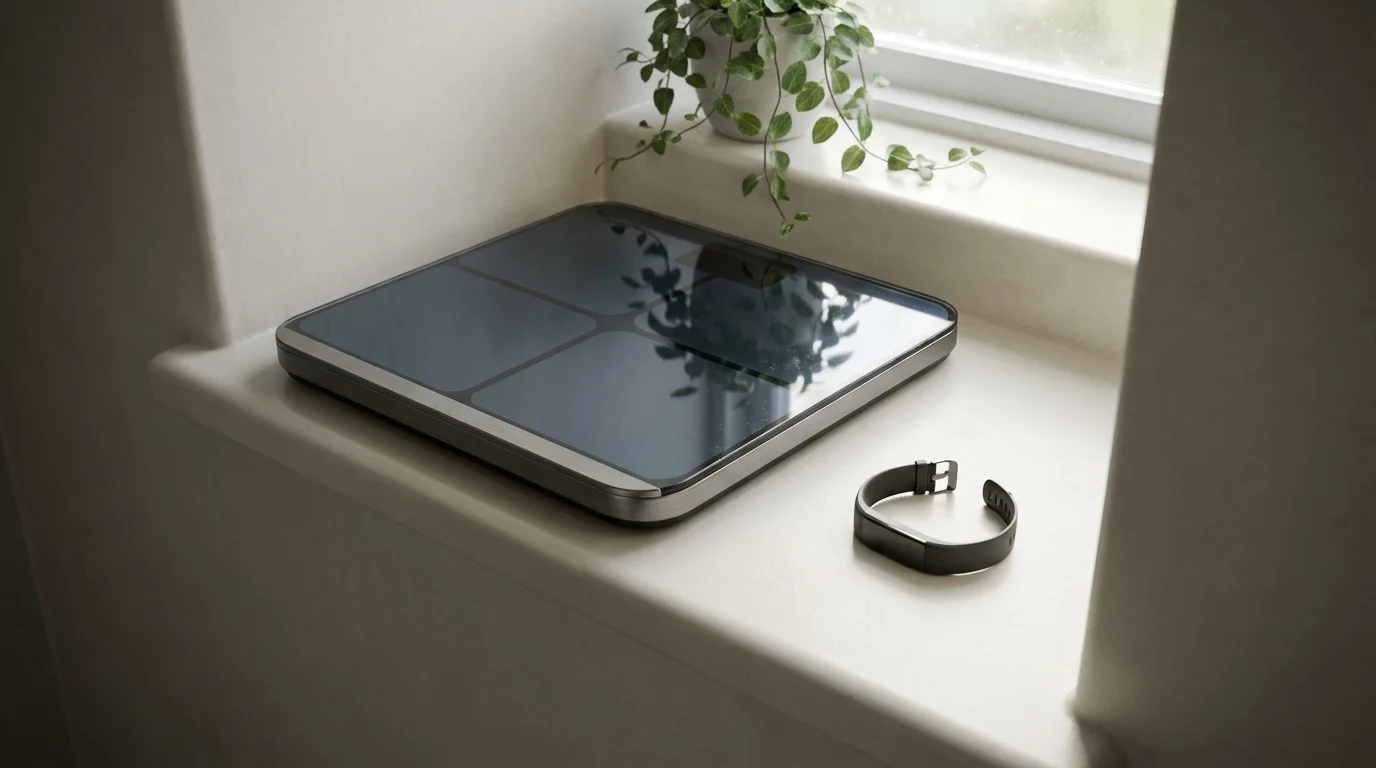
Wearables have moved well past step-counting. The 2026 frontier is the home itself: biomarker-tracking scales and mirrors, AI health monitoring built into living spaces — the longevity residence I opened with. The technical achievement is real. Continuous monitoring can catch a genuine signal early.
But this is exactly where the over-optimization backlash bites. A wearable that turns a poor night into an anxious morning, a recovery score into a source of dread, has subtracted from the very thing it claims to measure. The Global Wellness Summit's line is the right corrective: the goal is feeling safer and more alive, not optimizing harder. The most useful wearable is the one you can take off.
So who is the translation for?
Every technology on this list translates something — a clinic visit, a diagnosis, a herbal protocol, a moment of rest — into a form that fits on a screen or a wrist. Some translations are faithful and genuinely widen access; VR therapy and telemedicine, used honestly, carry a great deal across. Others keep the vocabulary and lose the context that made the original worth having.
So I will close, as I tend to, with a question rather than a verdict. As wellness technology grows into a USD 208-billion industry, the measure of any new tool is not how much it can track about you. It is who the translation is finally for — your well-being, or the revenue line that depends on you measuring more. Keep asking it, device by device. It is the most holistic thing you can do with any of them.
Frequently Asked Questions
Wellness technology is the use of digital tools — wearables, AI, telemedicine, virtual reality and connected devices — to monitor, personalize and support physical and mental well-being.
VR is now regulated, evidence-backed therapy for specific conditions. Clinician-controlled programs like the VA's Bravemind (PTSD) and FDA-authorized tools such as RelieVRx, plus prescription apps Rejoyn and DaylightRx, deliver controlled exposure and CBT — though the evidence is strongest for PTSD and thinner for other conditions.
The global wellness technology market reached about USD 57.1 billion in 2025 and is projected to hit USD 208.36 billion by 2035, growing at a 13.82% CAGR, according to Precedence Research.
Telemedicine now spans video consultations, virtual check-ins and remote monitoring, widening access for people far from a clinic or unable to travel. It faithfully carries the consultation, while the hands-on parts of an in-room examination remain harder to replicate remotely.
AI surfaces patterns in personal health data and powers tools like AI food-tracking apps (Noom, Zoe, AlterMe) and predictive monitoring. The guidance feels personal because it uses your data, but it reflects the norms and incentives of whoever trained it — useful, but not a substitute for a clinician who knows your history.
Wearables and connected home devices track vital signs, sleep, recovery and a growing list of biomarkers, enabling early detection of potential issues. The 2026 caution is over-optimization: a device that turns a metric into a source of anxiety has subtracted from the well-being it set out to support.
Check Out These Related Articles
Revolutionizing Patient Care: The Impact of Data Analytics in Health and Wellness
Revolutionizing Fitness Regimens with Smart Gym Equipment

The Fusion of Wellness Tech and Fashion: Wearable Innovations Revolutionizing Health and Style