
Health and Wellness Tourism: Economics and Opportunities


In Kuopio, Finland, an elderly host I once stayed with would walk down to his savusauna on Saturday afternoons — a wood-fired smoke sauna his father built generations ago — heat it for four hours, sit in it for two more with neighbors, and end the evening with a swim in the half-frozen lake. He was not "doing wellness." He was doing the thing his family had done every week for as long as anyone remembered, and yet his Saturday ritual is now counted, by the people who measure such things, inside the global wellness tourism economy. Two hundred miles south, in Helsinki, an infrared booth in a hotel basement bills 70 euros for forty-five minutes. Both transactions are inside what the Global Wellness Institute calls wellness tourism, a category whose 2024 global spend hit a record $894 billion and which is projected to cross $1 trillion in 2026, growing at roughly 9.3 percent annually (GWI 2025 Wellness Economy Monitor, Grand View Research).
Both transactions are also doing different things. One is the maintenance of a community practice; the other is a high-margin consumer product. The wellness-tourism economy depends on both, and the part of this article that matters most is the part that distinguishes them.
What follows is the working economics of the sector in 2026 — market size, where the money flows, where the next dollar is going, named destinations with honest context, and the part the trade-association literature usually leaves out: what to vet before you book, before you invest, and before you assume the practice you are paying for is the practice the destination community recognizes as theirs.
Wellness tourism in 2026: by the numbers
A reference block. All figures are the most recent published values as of late 2025 / early 2026.
- Wellness tourism expenditures (2024): $894 billion (GWI 2025 Wellness Economy Monitor)
- 2025 market size estimate: ~$978-990 billion (Grand View Research)
- 2026 projected milestone: >$1 trillion — the sector crosses the trillion-dollar mark this year
- CAGR (forward): ~9.3 percent annually (Grand View Research)
- Global wellness economy (parent category, 2024): $6.8 trillion, forecast $9.8 trillion by 2029 (GWI 2025 Monitor)
- International wellness tourist spend per trip (2022, latest GWI): $1,764 — 41 percent more than the typical international tourist spends (Copper Well 2025 report citing GWI)
- Domestic wellness tourist spend per trip: $668
- Trip composition (GWI definition): ~8 percent of trips are "primary" wellness tourism (the wellness purpose is the reason for the trip); ~92 percent are "secondary" — wellness activity layered onto a trip taken for other reasons. The secondary segment accounts for roughly 85 percent of total spend (Wikipedia / Wellness tourism, citing GWI)
- Largest single market by revenue share (2024): North America at ~42 percent (Grand View Research)
- Fastest-growing region (2019-2023): Middle East & North Africa — wellness trips grew +8.1 percent annually, spending +11.6 percent annually (Hotelbeds 2024 trend report citing GWI)
The shape of these numbers is what matters most. The category is not just large; it is structurally over-performing the broader travel economy on both spend per trip and growth rate. A wellness traveler is worth roughly 1.4 to 2.7 typical travelers depending on segment, which is why hotel groups, resort operators, and a growing list of sovereign-wealth-backed developers are pricing the trillion-dollar threshold into their 2026 capital plans.
What wellness tourism is — and what it isn't (medical tourism, specifically)
A working definition: wellness tourism is travel undertaken to maintain or enhance personal well-being through proactive activities — spa visits, yoga retreats, meditation programs, nutrition resets, hot-springs immersion, longevity protocols, sleep-optimization stays, nature-based retreats, fitness retreats, and traditional-medicine experiences such as Ayurveda or onsen. The GWI categorizes both primary (the trip's main purpose) and secondary (a wellness layer on a leisure or business trip) wellness travel inside the sector.
The most common reader confusion is between wellness tourism and medical tourism. They overlap geographically but the intent is different. Medical tourism is reactive: travel to receive a specific clinical procedure (cosmetic surgery, dental work, fertility treatment, joint replacement, advanced cardiac care) often at lower cost or with shorter waitlists than the traveler's home country. Wellness tourism is proactive: travel to maintain health, not to treat a diagnosed condition. Thailand and Costa Rica show up in both categories. Switzerland and Singapore lean medical; Bali and India lean wellness. The two industries share destinations but serve different buyers and different regulatory regimes.
Where the money is going: named destinations
The top-ranking pages on this topic stay generic ("Asia is growing"). Here is the more useful version.
- Thailand — Ayurveda, Thai massage, and a deep meditation-retreat infrastructure built around the monastery system. The wellness sector is a meaningful share of inbound tourism revenue and a structural driver of rural hotel investment.
- Japan — onsen (geothermal hot-spring) tourism, with regulatory and cultural frameworks that long predate the modern wellness category. The onsen ryokan is one of the most durable wellness-tourism products on earth precisely because it is a community institution, not a product.
- Switzerland — medical spas. The Swiss model is a hybrid: clinical-grade infrastructure (genetic screening, IV protocols, longevity workups) wrapped in a hotel experience. Per-trip spend is the highest in the global category.
- Costa Rica — eco-wellness, anchored by the Blue Zone of Nicoya (one of five recognized Blue Zones globally, where unusual longevity is documented). The country has explicitly positioned around sustainable wellness; the policy environment supports it.
- Bali — yoga and retreat tourism. The market here is the most commodified version of any Asian destination, with serious tensions between resident communities and the price points the wellness market sets.
- India — Ayurveda, primarily Kerala. The depth of training, the diagnostic context, and the connection to source traditions are strongest here; the global-wellness export version of Ayurveda often does not include any of these elements.
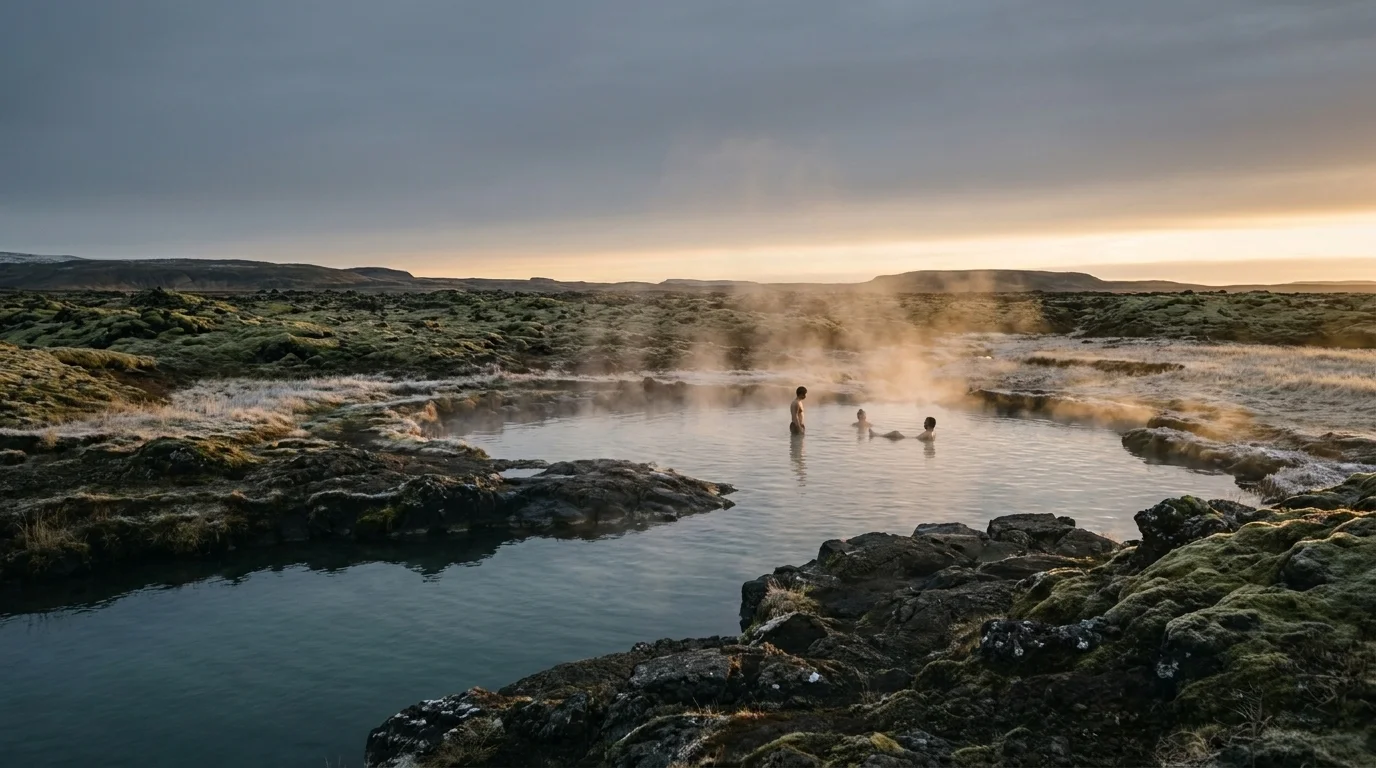
- Iceland — geothermal wellness tourism, anchored by the Blue Lagoon and a constellation of public-bath traditions. Government-coordinated visitor management is unusually careful.
- Bhutan — sustainable-wellness destination by national policy, with a per-tourist daily fee designed to limit volume and protect the practices being visited.
- Saudi Arabia and the UAE — the fastest-growing wellness-tourism investment story in the world. Saudi Arabia is building wellness-anchored mega-developments at NEOM and Red Sea Global scales. The UAE has emerged as a regional hub for both wellness and medical tourism.
The honest read on this list: the destinations that maintain integrity over time tend to be the ones where the source community is the primary economic beneficiary, where regulation limits volume, and where the practice has a recognizable lineage. The destinations that hollow out tend to be the ones that expand fastest, where price points exclude residents from their own traditions, and where the "wellness" version of a practice has lost the diagnostic context that gave it meaning. Both kinds of destinations are inside the $894 billion number.
Regional flow: who is gaining share
A short tour of the regional economics.
North America holds roughly 42 percent of global wellness tourism revenue, driven by a high domestic spend per trip, a mature spa and retreat industry, and an unusually large secondary-wellness segment (American business and leisure travelers layering wellness onto trips they were already taking). The growth rate here is moderate; the absolute size makes the region the structural anchor of the category.
Europe is roughly second by revenue, anchored by the Swiss medical-spa cluster, German thermal/Kneipp traditions, Iceland, Finland, and a dense network of small-format wellness operators across the Mediterranean. Growth is steady; per-trip spend is high.
Asia-Pacific contributes the deepest tradition base in the world — Ayurveda, TCM, onsen, Thai-massage, yoga, Indonesian healing — and the most varied price tiers, from local-community-priced thermal baths to ultra-luxury international resorts. The region's growth is structurally tied to expanding middle-class outbound travel.
Middle East and North Africa is the surprise story of 2019-2024 and the part most coverage underweights. Wellness trips grew +8.1 percent annually and spending +11.6 percent annually in the region from 2019 through 2023 — the fastest rates of any region on either dimension (Hotelbeds / GWI). The capital is sovereign-wealth-scale; the development timelines are decade-long; the implications for the category's center of gravity are substantial.
Latin America is led by Costa Rica's eco-wellness and Blue Zone positioning, with Mexico (Yucatán and Baja) and Argentina growing inside specific segments (cenote-based wellness; Patagonian nature retreats).
2026 wellness travel trends worth taking seriously
Three shifts are doing most of the work in the trend press, and all three have observable market signals behind them.
Longevity travel and Blue Zones. The 2025-2026 trend cycle named "longevity" the defining wellness-tourism category, anchored around the five Blue Zones (Sardinia, Okinawa, Nicoya in Costa Rica, Ikaria in Greece, Loma Linda in California) where unusually long, healthy lifespans have been documented. Mainstream resorts are installing biohacking suites — red-light therapy, infrared saunas, cryotherapy, hyperbaric oxygen, personalized supplementation, genomic-informed protocols — and partnering with longevity clinics. Per-trip spend in this segment is several multiples of the GWI average; demand is concentrated in the 45-65 demographic (Belmond 2026 trends, Healing Holidays 2026).
Sleep tourism. "Sleep retreats" — programs with circadian-rhythm lighting, smart beds, room-air optimization, and structured sleep-hygiene curricula — are now bookable products at several mainstream hotel groups and stand-alone properties. National Geographic's 2026 travel-trends coverage names sleep retreats as one of the most-booked wellness holiday types of the year (National Geographic 2026). The product builds on a real consumer-health problem (30+ percent of US adults sleep under 7 hours), which is what gives the category its durability versus more faddish wellness travel categories.
Climate-aware / quiet-luxury wellness. The 2026 GWI Wellness Tourism Initiative trend forecast highlights "softcare" — a consumer pushback against the hyper-commodified, high-cost wellness market in favor of slower, more sustainable, more nature-integrated wellbeing experiences. Costa Rica, New Zealand, and Bhutan emerge as canonical destinations in this framing. The economic story here is that the next premium tier may be defined by quiet and ecological integrity rather than by amenity-stacking (GWI 2026 Wellness Tourism trends).
Where the next investment dollar flows
If you are reading this article with operator or investor intent — which a meaningful share of wellness-tourism readers do — the most useful summary of where the money is currently moving:
MENA mega-developments. Saudi Arabia's NEOM and Red Sea Global projects are wellness-anchored at unprecedented scale. The UAE is consolidating as a regional wellness and medical tourism hub. The capital here is patient and the timelines run decade-plus, which fundamentally changes which operators can credibly compete.
Longevity retrofits inside existing resorts. The trend is "biohacking suites installed in mainstream resorts," not "new standalone longevity resorts." The retrofit margin is high, the construction risk is low, and the demand demographic is over-indexed on disposable spend.
Small-format eco-resorts in climate-aware destinations. Costa Rica, Bhutan, parts of New Zealand and Patagonia, and a growing slate of European nature-first operators are absorbing the "softcare" tier of demand. Unit economics work at a smaller room count than the legacy spa-resort model required.
Blue Zone destination plays. Sardinia, Okinawa, Nicoya, Ikaria, and Loma Linda are all seeing investment in destination wellness infrastructure that aligns with the longevity-tourism narrative. The risk is overrunning the communities whose longevity is the entire premise; the operators that win durably here are the ones that take that risk seriously.
The structural advantage of wellness tourism as an investment thesis is the 41-percent per-trip spend premium versus typical travel, combined with the categorical tailwind of a $6.8T parent economy growing at 7.6 percent annually. The structural risk is the same risk that runs through this entire piece: the value created by these destinations depends on the integrity of the practices and communities being visited, and a sector that grows faster than the communities can absorb tends to hollow out the source of its own appeal.
What to vet — before you book, before you invest
A short reader-protection section that the trade-association coverage skips entirely.
For travelers: more than 60 percent of wellness retreats globally lack any certification beyond basic health and safety checks (Wikipedia / Wellness tourism, citing GWI). The wellness category is lightly regulated, which is part of why it grows so fast and part of why incident reports — particularly around ayahuasca ceremonies, extended fasting protocols, and some sweat-lodge operators — surface every year. Before you book a high-intensity retreat:
- Verify the credentials of the named lead facilitator (not just "the retreat staff")
- Ask which clinical professionals are on-site or on-call for the program's specific risks
- For traditional-practice retreats, ask whether the lead teacher is part of a recognized lineage or community, and whether part of the retreat's revenue returns to the source community
- For longevity / biohacking offerings, ask which medical professional oversees protocols and whether their training matches the interventions on offer
For operators and investors: the regulatory tightening that the wellness-tourism sector is starting to see (in Costa Rica around ayahuasca, in Indonesia around foreign-led wellness businesses, in several US states around supplement and IV protocols) is going to continue. Operators who build certification, community partnership, and clinical oversight into the unit economics from day one will trade through this transition more durably than those who do not.
A closing question
Wellness tourism is on track to cross a trillion dollars in 2026, growing at roughly 9.3 percent annually, with a per-trip spend premium that makes it one of the more attractive travel segments by economic metric. The category is real and the trajectory is up.
The question I keep returning to — and the one the trade-association literature usually does not — is who carries the practice, and who benefits from the trillion dollars. A savusauna in Kuopio and an infrared booth in a hotel are both inside the $894 billion. They are not the same thing, and the difference between them — community practice on one side, consumer product on the other — is the variable that determines whether the destination communities being visited maintain their integrity or hollow out over a decade.
For travelers, the practical version of that question is the simple one: when you spend on a wellness experience, where does the money go, and who is teaching the practice you are paying for? For operators and investors, the long-horizon version is whether the unit economics you are underwriting depend on the integrity of a community you have not yet meaningfully partnered with. The $1 trillion 2026 milestone is real. The decisions made around it will shape what is left of the practices it depends on a decade from now.
Frequently Asked Questions
Wellness tourism expenditures reached $894 billion in 2024 according to the Global Wellness Institute's 2025 Wellness Economy Monitor, and the sector is projected to cross $1 trillion in 2026, growing at approximately 9.3% CAGR. It is one of 11 sectors inside a global wellness economy that hit $6.8T in 2024 and is forecast to reach $9.8T by 2029.
International wellness tourists spent an average of $1,764 per trip in 2022 — about 41% more than typical international travelers — while domestic wellness tourists spent around $668 per trip. The 41% premium is one of the structural reasons hotel and resort operators are investing heavily in wellness amenities.
Established leaders include Thailand (Ayurveda and Thai massage), Japan (onsen geothermal hot springs), Switzerland (medical spas), Costa Rica (Blue Zone Nicoya, eco-wellness), Bali (yoga retreats), India (Ayurveda, primarily Kerala), Iceland (geothermal), and Bhutan (sustainability-first). The Middle East and North Africa — led by Saudi Arabia and the UAE — is the fastest-growing region, with wellness trips expanding 8.1% annually since 2019.
Wellness tourism is proactive travel to maintain or enhance well-being through activities like spa visits, yoga, meditation, nutrition retreats, or hot-springs immersion. Medical tourism is reactive — travel to receive a specific clinical procedure or treatment, often at lower cost or with shorter waitlists. The two often share destinations (Thailand and Costa Rica appear in both) but serve different intents and different regulatory regimes.
Wellness travelers spend 41% more per international trip than typical tourists, the global wellness economy is forecast to grow from $6.8 trillion in 2024 to $9.8 trillion by 2029, and demand is shifting toward higher-margin offerings — longevity programs, sleep retreats, biohacking suites inside mainstream resorts, and small-format eco-wellness destinations. MENA is the fastest-growing region; Blue Zones are the fastest-growing destination category.
Three trends are doing most of the work: longevity travel anchored around the five Blue Zones (Sardinia, Okinawa, Nicoya, Ikaria, Loma Linda) with biohacking and personalized-supplementation protocols; sleep tourism, with dedicated sleep retreats now bookable at mainstream hotel groups; and climate-aware 'softcare' wellness, with Costa Rica, New Zealand, and Bhutan emerging as canonical destinations. All three are observable in operator capital plans for 2026, not just in trend-press coverage.
Lightly. More than 60% of wellness retreats globally lack certifications beyond basic health and safety checks, according to GWI-cited research. The wellness sector is structurally under-regulated relative to its size, which is part of why incident reports — particularly around ayahuasca ceremonies, extended fasting protocols, and some sweat-lodge operators — surface every year. Before booking a high-intensity retreat, verify the lead facilitator's credentials, ask which clinical professionals are available for the program's specific risks, and for traditional-practice retreats, check whether the lead teacher is part of a recognized lineage and whether revenue returns to the source community.