
Holistic Approach to Workplace Wellness: Balancing Employee Health and Corporate Demands


The phrase "workplace wellness program" covers two very different practices and it is worth saying which one this piece is about. One version is a serious organizational design problem: how do you build the conditions under which people can do good work for a long time without breaking themselves? The other is a marketing layer: branded apps, step challenges, on-site smoothie bars, and a leadership team that does not participate. The corporate wellness market is now valued at over $70 billion globally and projected to reach $128 billion by 2033, per Wellable's 2026 industry analysis, and a meaningful slice of that money is being spent on the second version of the practice. This piece is about how to design and run the first one.
What follows is a five-pillar framework with a budget-tiered idea matrix, an honest account of how wellness programs fail (because most of the published guidance pretends they do not), a section on hybrid and remote design that takes the equity question seriously, and a 30-60-90 day rollout plan. The sibling piece in this collection — Wellness Program ROI — handles the dollar question. This piece is about what to build.
The five pillars of a 2026 workplace wellness program
Modern program design has converged on four or five pillars that a serious program should touch. The version below is the one I find most usable. Each pillar has named program elements rather than abstractions.
Physical wellness
The basics, but specifically: ergonomic stipends or assessments, fitness reimbursements that work for remote staff (gym, ClassPass, home equipment), preventive health screenings, walking-meeting norms, and standing-or-stretch breaks built into the calendar. The walking element matters more than it sounds; Wellable's reporting notes that walking stimulates creative thinking by up to 60 percent compared with sitting. The cheapest pillar element in your program is a codified norm that meetings under 30 minutes can be walked.
Mental and emotional wellness
This is where the modern program lives or dies. An Employee Assistance Program (EAP) is now used by roughly 73 percent of employers worldwide per SHRM's design toolkit — meaning a 2026 program without one is below table stakes. Pair the EAP with: mental health days that are visibly used (and used by leadership), a mindfulness or therapy app subsidy (Headspace, Calm, Spring Health, Lyra), and a manager-training module that teaches people-leaders to spot burnout signals and run wellbeing-aware 1:1s.
Forty-four percent of US employees report daily stress per Wellable's 2026 data. This is not a population that needs occasional workshops. It needs ongoing infrastructure.
Social and culture wellness
This is the pillar most often dismissed as soft. The evidence says otherwise. Sixty-three percent of women who have a workplace best friend report being engaged at work, compared with 29 percent of those who do not, per Wellable. The mechanisms are not mysterious: belonging predicts retention, retention predicts institutional knowledge, and institutional knowledge predicts performance.
Program elements that respect the pillar without veering into forced fun: peer-recognition programs (used carefully, not as a surveillance metric), Employee Resource Groups with real budget, structured onboarding buddies for new hires, and codified no-meeting blocks that give teams time to actually work together without performing it.
Financial wellness
This pillar has matured fastest in the last three years. Sixty-six percent of employees report feeling financially stressed, and 76% believe living costs are outpacing their income, per Wellable. Financial stress correlates with both physical and mental-health outcomes; this is not a separate problem from health.
Program elements: financial-literacy workshops, HSA/FSA education that explains how to actually use them, sessions with a fiduciary financial planner on retirement and student-debt strategy, paycheck-flexibility options where legally permitted, and transparent compensation bands. Transparent comp is the cheapest financial-wellness intervention available and most companies refuse it on cultural grounds rather than evidentiary ones.
Environment and ergonomics
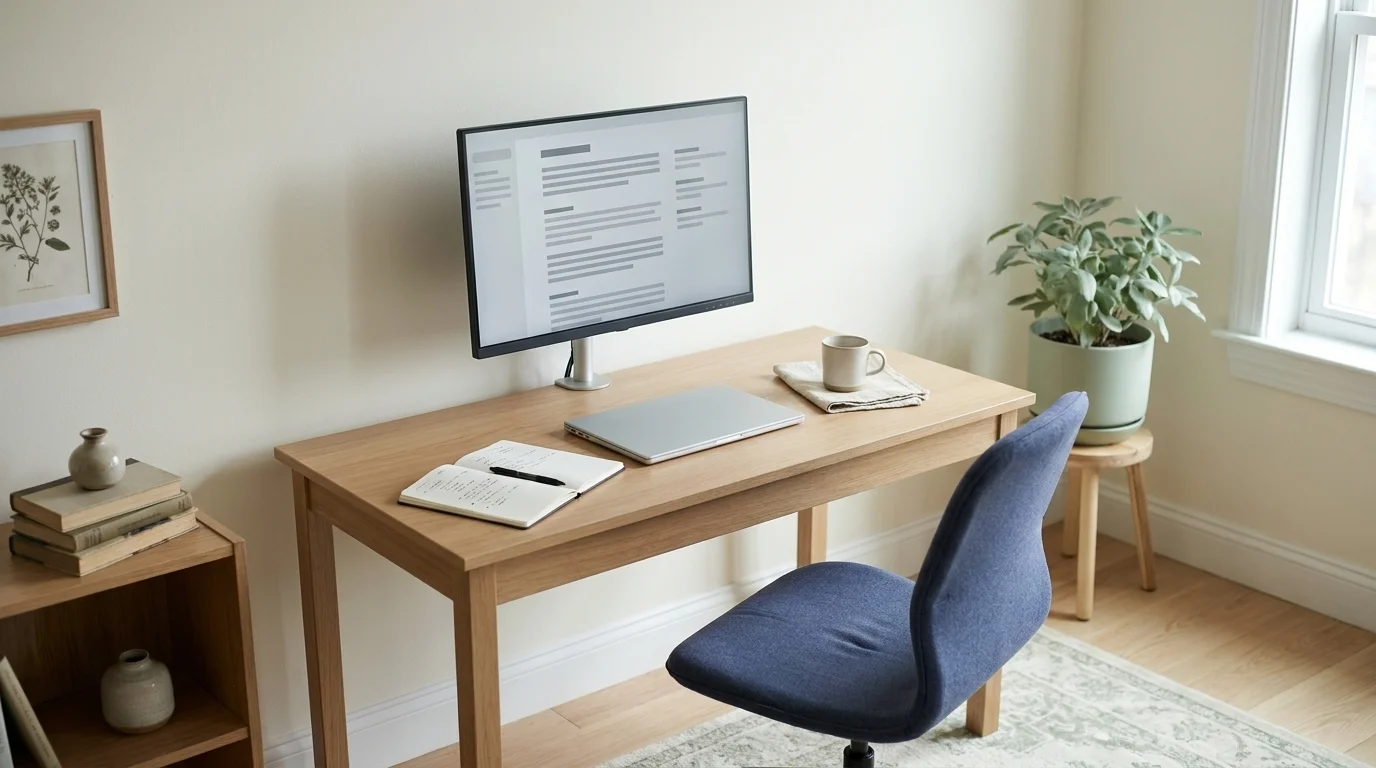
The fifth pillar emerged in the post-pandemic redesign. Hybrid and remote work moved a substantial fraction of employees' workdays out of company-controlled environments and into kitchens, basements, and shared housing. Program elements for 2026: home-office ergonomic stipends ($300 to $1,000 typical), virtual ergonomic assessments via video, lighting and air-quality guidance, and screen-time guardrails (default no-meeting blocks, written-comms-over-video defaults for routine updates).
The five-pillar × budget-tier idea matrix
What follows is the single most useful artifact in this piece — a matrix that lets you find the cell that fits your budget and pillar. Each cell is tagged for hybrid and remote compatibility.
| Pillar | $0 (policy / norm) | Under $500 / employee | $500–$5,000 / employee | $5,000+ / employee |
|---|---|---|---|---|
| Physical | Walking-meeting norm; codified stretch breaks; meeting-free Wednesdays | Fitness reimbursement; pedometer challenge; ergonomic accessories stipend | Gym/ClassPass membership; biometric screenings; on-site fitness | On-site clinic; comprehensive physical assessments; physical-therapy access |
| Mental & emotional | Visible PTO use by leadership; written manager-training norms | Headspace/Calm subsidy; mental-health day policy | Therapy app (Spring Health, Lyra) with sessions; EAP with expanded counseling | On-staff licensed therapist; mental-health stipend ($1k+) |
| Social & culture | Peer-recognition norm; onboarding buddies; ERG charter | $200 team-bonding budget per quarter | $1,000 quarterly team off-sites; recognition platform subscription | Annual retreat; sabbatical micro-doses; ERG full programming |
| Financial | Transparent compensation bands; published raise structure | Financial-literacy workshops; HSA/FSA education | 1:1 financial planner sessions; student-debt counseling | Employer student-loan contribution; equity coaching for grants |
| Environment & ergonomics | Written async-first meeting norms; no-meeting blocks codified | $300 home-office stipend; virtual ergonomic review | $800–$1,500 home-office buildout; lighting + air-quality kit | Hybrid office redesign; full home-office for remote staff |
This matrix is meant to be lifted into a benefits-committee deck. Pick one cell per pillar that fits your budget. Launch those five things first. Add the rest as you learn what your specific workforce actually uses.
Designing for hybrid and remote: the equity-of-access test
Most 2026-current rankers still write program guidance as if every employee will be in an office on Tuesday afternoon when the chair-yoga session happens. The data says otherwise. Only 31 percent of hybrid workers and 23 percent of fully remote workers report being engaged at work, compared with higher numbers in fully on-site populations, per Wellable. Remote workers report daily loneliness at 25 percent (vs. 16 percent in-office) and stress at 45 percent (vs. 38–39 percent in-office). The population most in need of the program is the one office-first program designs leave behind.
The design rule I would build into any 2026 program review is the equity-of-access test:
If a fully remote employee in a different time zone cannot participate in a wellness offering on roughly equal terms with an in-office colleague, redesign or remove the offering.
Applied to common program elements:
- On-site fitness center. Fails the test. Replace with fitness stipend.
- Wednesday 3 pm chair-yoga session. Fails for half the country. Replace with on-demand subscription.
- Wellness "step competition" with company-provided wearables. Fails on data-collection grounds (surveillance) and on access (some employees have medical conditions that make step-counting wrong). Replace with optional activity stipend.
- On-site mental-health-day events. Fails. Replace with one named mental-health day per quarter that does not require attendance at a thing.
- Annual on-site biometric screening. Fails geographically. Replace with at-home kit subsidy or partnership with a national lab chain.
The cleanest single design move available to most companies is replacing as much of the program as possible with flexible wellness stipends ($300 to $600 per year is typical per Wellable and Benely) that employees can self-direct to gym memberships, ergonomic gear, fitness apps, therapy apps, or financial coaching. Stipends pass the equity test by construction. They also respect autonomy, which the data and the persona both endorse.
Managers are the lowest-cost wellness lever
Most wellness program guidance lists initiatives that exist for individual contributors. A 2025 systematic review of workplace mental-health interventions published in PMC concluded the opposite: organization-level interventions — workload design, schedule design, leadership support, and explicit manager training — consistently outperform individual-level offerings on burnout outcomes. The implication is uncomfortable for most program designers: the highest-leverage line item in the budget is not the meditation app subscription. It is teaching managers to do their job.
A four-module manager training curriculum that is in scope for almost every program:
Module 1: Spotting burnout signals. Cognitive (fragmented attention, missed handoffs), behavioral (working late but producing less, withdrawal from conversation, cancelled 1:1s), and performance signals (quality regression on previously routine work). Free clinical screeners exist; the Maslach Burnout Inventory and the OLBI are reasonable starting points for self-assessment, not diagnosis.
Module 2: Running wellbeing-aware 1:1s. One open question every week — "what's the part of your work this week that has been hardest?" — without surveillance, without performance-tying, without writing it into a performance review. The skill is listening to the answer.
Module 3: Modeling recovery. Taking visible PTO. Not pinging on weekends. Naming when you are tired or short on capacity. Managers who hide their own limits train teams to do the same. The data on this is now strong enough that it should be in every leadership-development program.
Module 4: Escalation pathways. When a 1:1 surfaces something a manager is not qualified to handle, what is the explicit handoff? EAP referral mechanics, HR partner contact, and the line between "I am here to listen" and "you should be talking to someone with a clinical license." Most managers want this clarity and rarely get it in writing.
This curriculum is the cheapest line item in your program and probably the highest leverage. It is also, in my experience, the one most likely to be cut for budget.

When wellness programs fail: the five wellness-theater failure modes
A piece of writing about workplace wellness that does not engage with the well-documented skepticism around it is missing half the conversation. The Reddit threads and the HBR commentary are not wrong: most wellness programs fail in a small number of recognizable ways. Naming them is the first step in not repeating them.
Failure mode 1: Leadership doesn't participate. The CEO does not use the EAP. The CFO works through the mental-health-day window. The wellness-committee deck is shown at all-hands and the senior team is checking phones. Employees read leadership behavior, not leadership pronouncements. Engagement averages 44 percent when executive participation is below 30 percent — and 80 percent when it exceeds 70 percent, per Wellhub's 2024 Return on Wellbeing Study.
Failure mode 2: ICs are pressured to attend on personal time. The yoga class is at lunch and "voluntary" but the people who do not show up are noticed. This is a tax masquerading as a benefit. The fix: schedule wellness offerings during paid work hours or make stipend-based.
Failure mode 3: The program ignores root causes. No app subsidy fixes a chronically overloaded team, an under-paying salary band, or a manager who is the source of the problem. If you have not addressed workload, manager behavior, and compensation, the rest of the program is treating symptoms.
Failure mode 4: Data is collected but never acted on. Programs that survey engagement quarterly and never publish what changed produce learned helplessness. Either report changes from the survey or stop surveying.
Failure mode 5: Metrics measure participation, not outcomes. "We had high participation in the steps challenge" is not an outcome. Outcomes look like: claims-cost trend, voluntary turnover trend, engagement-survey delta on stress and burnout subscales, EAP utilization rate change, internal-referral rate change. If your program can name a participation rate but cannot name a single outcome it moved, you have a participation-tracking system, not a wellness program.
Five out-of-the-box ideas that are actually unusual
Most "creative wellness ideas" lists recycle the same dozen items (sound baths, plant walls, walking meetings, secret kindness pals). Five ideas I would actually call unusual:
- Codified no-meeting blocks. Not "we try not to schedule on Fridays" — codified policy that calendars block out 12–4 pm on Wednesdays and meetings during the block require explicit override. Hybrid-equity passing.
- Async wellness check-ins. Replace mandatory live wellness sessions with async tools where employees self-report mood and capacity weekly, with the manager seeing aggregate trends only, not individual data. Respects privacy by construction.
- Sleep stipends. Cover a quality mattress, blackout curtains, or a sleep-tracking subscription. Sleep is the highest-evidence recovery intervention available and almost no program funds it directly.
- Sabbatical micro-doses. One Friday off per quarter, no questions asked, in addition to PTO. Costs roughly four days of payroll per employee per year. Reliably reduces the kind of burnout that builds when no single week is bad enough to take a real vacation.
- Manager office hours for wellbeing only. Codified time on every manager's calendar — say, 30 minutes a week — explicitly for wellbeing conversations, not project status. The simple act of naming it makes it easier for both sides to use.
A 30-60-90 day rollout plan
For HR teams launching a program for the first time, a working sequence:
Days 0–30 — Listen and commit. Survey employees (10 questions, max, with the survey itself codified as not a year-long study). Get visible C-suite commitment — written, with one C-suite participant per pillar. Form a small wellness committee with cross-functional representation including someone from a frontline role and someone fully remote.
Days 31–60 — Three quick wins, one comms cadence. Launch one program element per pillar, ideally one $0 norm-change (e.g. codified no-meeting blocks), one stipend-based offering (e.g. $300 wellness allowance), and one EAP relaunch with new comms. Establish a quarterly communication cadence with a single owner. Baseline metrics: engagement-survey stress/burnout subscales, EAP utilization rate, voluntary turnover.
Days 61–90 — First measurement and second wave. Run the first feedback loop on the three quick wins. What is being used. What is being ignored. What employees asked for that you did not ship. Decide on second-wave additions. Report outcomes (not participation) to leadership.
One legal note: if your program incentivizes participation, the ACA wellness program cap remains at 30% of coverage cost (50% for tobacco cessation). The thresholds have not moved since 2013, and exceeding them takes you out of HIPAA safe harbor. ERISA counsel before launch is not optional.
Who benefits
The question I would close with is the one that has shaped this article. A program that takes wellness as a serious organizational design problem — workload, manager behavior, compensation, autonomy, equity of access — produces measurable outcomes for employees and for the company. A program that takes wellness as a marketing layer over those same unaddressed conditions produces a quarterly newsletter, a participation metric, and a deck. Both will be called workplace wellness in 2026. They are not the same thing.
The most useful test I have found for telling them apart is this: if you removed every piece of wellness branding and every program element from the company, would the work itself still be tolerable for the people doing it? If the answer is yes, the program is the cherry. If the answer is no, the program is what is being asked to do the work that the organization itself refuses to do. The cherry is fine. The substitute is not. Which one are you building?
Frequently Asked Questions
A workplace wellness program is a structured set of employer-supported initiatives designed to improve employees' physical, mental, emotional, financial, and social wellbeing. In 2026 most serious programs organize offerings around five pillars (Physical, Mental & Emotional, Social & Culture, Financial, Environment & Ergonomics), integrate them into operations and manager training, and treat them as design problems rather than perks. The market is now valued over $70 billion globally and projected to reach $128 billion by 2033.
A modern program should cover all five pillars with at least one named offering each: physical (fitness reimbursement, ergonomic stipend, walking-meeting norms), mental (EAP — now used by roughly 73% of employers worldwide, therapy app subsidy, mental-health days), social (peer recognition, ERGs, codified no-meeting blocks), financial (financial literacy, HSA/FSA education, transparent comp bands), and environment (home-office stipends, virtual ergonomic review). Manager training on burnout signals and wellbeing-aware 1:1s is the highest-leverage, lowest-cost addition most programs skip.
A working 30-60-90 day rollout: Days 0-30, survey employees, secure visible C-suite participation with one executive per pillar, form a small cross-functional wellness committee. Days 31-60, launch three quick wins (one $0 norm change like codified no-meeting blocks, one stipend-based offering, one EAP relaunch), establish a quarterly comms cadence, baseline engagement-stress metrics. Days 61-90, run the first feedback loop, decide on second-wave additions, report outcomes (not participation) to leadership.
Five ideas worth more than the standard listicle fare: codified no-meeting blocks (policy-level, not 'we try not to'); async wellness check-ins with aggregate-only reporting (privacy-respecting); sleep stipends covering a quality mattress or sleep-tracking subscription (sleep is the highest-evidence recovery intervention available); sabbatical micro-doses (one Friday off per quarter beyond PTO); and codified manager office hours dedicated specifically to wellbeing conversations rather than project status.
Apply the equity-of-access test: if a fully-remote employee in a different time zone cannot participate in a wellness offering on roughly equal terms with an in-office colleague, redesign or scrap it. Replace on-site amenities with flexible wellness stipends ($300 to $600 per year is typical), schedule live events in time-zone-equitable windows, and codify async-first meeting norms. Remote workers report 25% daily loneliness (vs 16% in-office) and 45% stress (vs 39%) — they are the population most in need of the program.
Yes — but only when designed against root causes (workload, manager behavior, compensation) rather than as performative perks. A 2025 systematic review of workplace mental-health interventions found that organization-level changes (manager training, schedule design, leadership modeling) consistently outperform individual-level offerings on burnout outcomes. The five recognizable failure modes — leadership doesn't participate, ICs pressured to attend on personal time, root causes ignored, data collected but never acted on, metrics measure participation not outcomes — are how most programs fail. Avoid those and the program works.
Five $0 policy-level moves that punch above their weight: codified walking-meeting norms, codified no-meeting blocks, visible PTO use by leadership, transparent compensation bands, and a written manager-training expectation for spotting burnout and running wellbeing 1:1s. On a modest budget under $500 per employee, a $300 wellness stipend, a Headspace or Calm subsidy, an EAP relaunch with new comms, and a $200 quarterly team-bonding budget land in the right territory. None of these requires a vendor pitch deck.
Wellness theater is what happens when a program exists to be marketed rather than to work. The recognizable signs: leadership doesn't use the EAP or take mental-health days, the steps challenge is celebrated but voluntary turnover is up, the engagement survey runs but its findings never produce a published change, and the success metric is participation rather than an outcome like burnout-subscale delta or claims-cost trend. A real program addresses workload, manager behavior, and compensation alongside the perks. A theater program treats the perks as a substitute.
Useful applications: therapy and mindfulness apps (Headspace, Calm, Spring Health, Lyra) that let employees access support privately and asynchronously; wellness stipend platforms that let employees self-direct their own benefit; ergonomic-assessment tools that work over video for distributed teams; async survey tools that let managers see aggregate engagement trends without surveilling individuals. Less useful applications: mandatory wearables-driven biometric programs that fail both the equity-of-access test and the privacy test, and AI-driven 'wellness coaching' that surveils more than it supports.
Check Out These Related Articles

Pioneering a Holistic Wellness Practice: Breaking Barriers as a New Entrant

The Business of Healthy Living: Monetizing Mind-Body Well-Being

The Compassionate Conductor: How Empathy Drives Success in Health Leadership