Culinary Wellness: Redefining Nutrition with the Culinary Arts


Every few months a reader sends me some version of the same question: Is fusion food actually healthy, or is it just an excuse to put kimchi on a quesadilla? It's a fair thing to ask. Fusion cuisine — the deliberate blending of two or more culinary traditions into one dish — has a reputation for being more about novelty than nutrition. So let me do what I usually do with a food question: walk through what the evidence actually says, name where it's thin, and end with something you can use at dinner tonight.
The short version: fusion cooking is neither healthy nor unhealthy by definition. What it is — and this is genuinely useful — is a flexible frame for getting more variety, more vegetables, and lighter cooking methods onto one plate, if you build it that way.
What is fusion cuisine?
Fusion cuisine combines ingredients, techniques, or flavor traditions from two or more distinct cuisines in a single dish. It isn't new — French-Asian and Chinese-American fusion go back decades — but the named examples most people picture are recent: Korean tacos, the sushirrito, kimchi grilled cheese, butter-chicken pizza, matcha tiramisu, maple-soy glazed salmon. Some are restaurant gimmicks. Some are quietly excellent nutrition. The category tells you nothing about which is which; the ingredients and the cooking method do.
Is fusion food actually healthy? What the research says
Here is the most interesting development, because it moves this out of food-blog opinion and into something studied. A 2024 paper in the International Journal of Applied Science designed and analyzed Chinese-Western fusion dishes and reported "significant reductions in fat, salt, and sugar intake, coupled with enhanced dietary fiber and micro-nutrient levels." That is a real, directional finding — the kind of result that supports the food-as-wellness claim this topic usually just asserts.
Two honest caveats, because that's the job. First, the precise effect sizes sit behind the paywalled full text, so I'd treat this as a directional study, not a settled number — it tells us fusion can improve a dish's profile, not by how much for you specifically. Second, the mechanism is the part you can actually act on, and it has nothing to do with the word "fusion." The same paper notes that "the cooking method of steaming instead of frying can reduce the content of trans fats and free radicals in food, thereby reducing the risk of cardiovascular disease and certain cancers." In other words: the health win comes from technique and ingredient choices that travel across any cuisine. Fusion is just a pleasant excuse to make them.
Related Article: The Gluten-Free Craze: Is It Actually Healthier?
Nutrient-dense fusion pairings
This is where fusion earns its keep — borrowing a strength from one tradition to fix a gap in another. A few pairings worth knowing, drawn from culinary-nutrition work on the subject (the British Academy of Culinary Nutrition lays out several):
| Fusion dish | Traditions it borrows from | What it adds nutritionally |
|---|---|---|
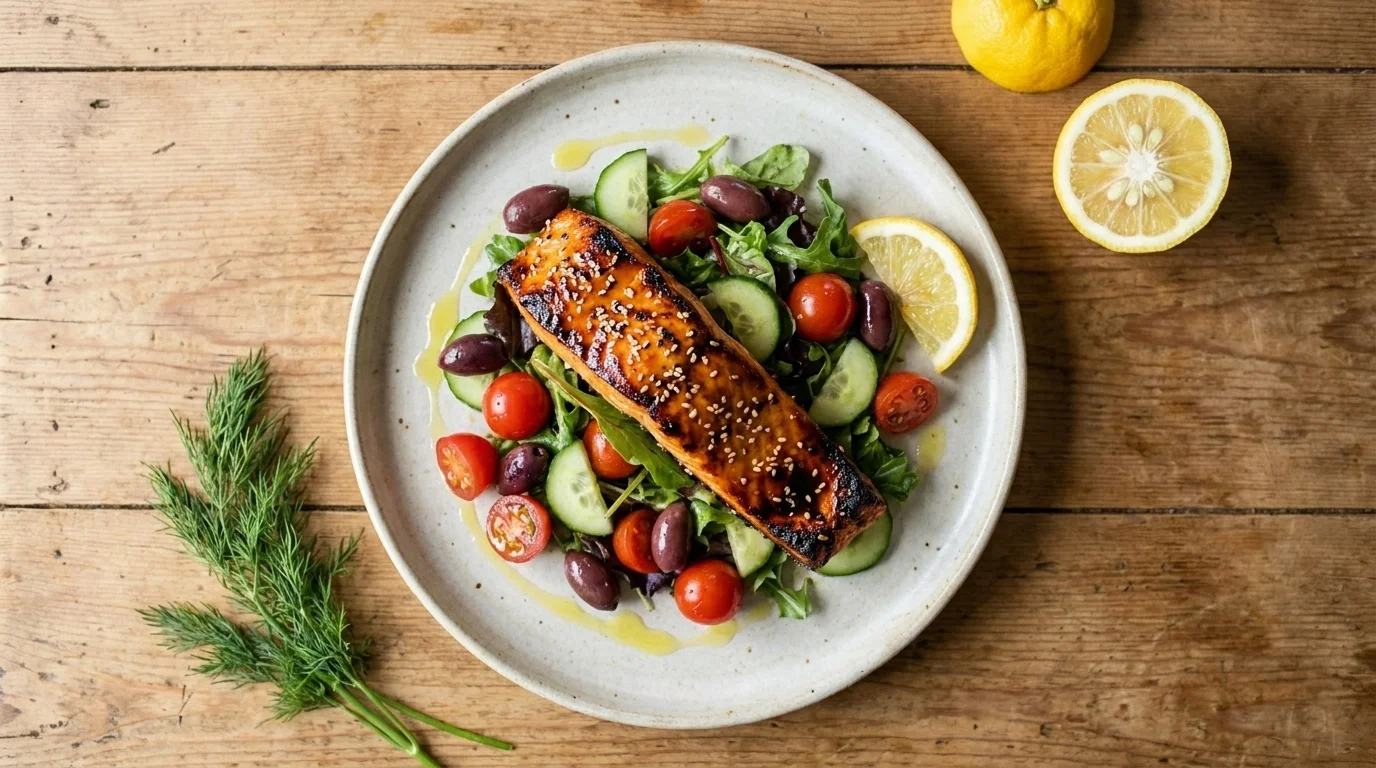
| Yuzu-and-sesame glazed salmon over a Mediterranean salad | Japanese + Mediterranean | Omega-3 fats from the salmon; antioxidants and a little vitamin C from sesame and yuzu; olive oil's monounsaturated fats |
| Kimchi folded into a lean-protein burrito or bowl | Korean + Mexican | Live cultures from fermented kimchi, plus fiber from the cabbage and beans |
| Cauliflower-crust "Thai" pizza with vegetables | Italian + Thai | Lower-carbohydrate base and an extra serving of vegetables and fiber |
| Vegetables steamed with Indian spices instead of fried | Indian + general technique | Keeps the aromatics, drops the added fat of frying |
None of these are magic, and I won't call any single ingredient a miracle. They're sensible swaps that happen to taste like something new.
Culinary medicine: cooking as part of care
There's a name for the field that studies exactly this, and it's worth knowing because it's growing fast. Culinary medicine, as one 2023 research review defines it, "incorporates the science of medicine and the art of food and cooking to create an individualized approach to food choices." It's young as a discipline — that same bibliometric review found roughly 62% of all culinary-medicine research (29 of 47 analyzed papers) was published in just the 2020–2022 window, which tells you it's emerging, not established.
It's also moving into actual trials. The NIH-aligned "Food is Medicine" research agenda now includes interventions like NOURISH, testing nutrient-dense fruits and vegetables, and the CHOP trial (Cooking for Health Optimization and Disease Prevention). I mention these not because they've delivered verdicts yet — they're active, not concluded — but because they signal that "teach people to cook well and watch their health improve" is now a hypothesis institutions are testing, not just a wellness-blog slogan. If you're managing a chronic condition, that's encouraging context, not a treatment plan; those decisions still belong in a conversation with your own clinician.
Related Article: Busting the Myths: Detox Teas More Harm than Harmony
Mindful eating and the 2026 "purposeful fusion" shift
There's a cooking-as-stress-relief angle here too, and it's more grounded than the usual "cooking is therapy" line. Mindful eating — paying deliberate attention to flavor, texture, and your own fullness instead of eating on autopilot — has a real research base, and the act of building a dish from scratch naturally pulls you into that attention. You're tasting, adjusting, noticing. That's the practice, not a metaphor for it.
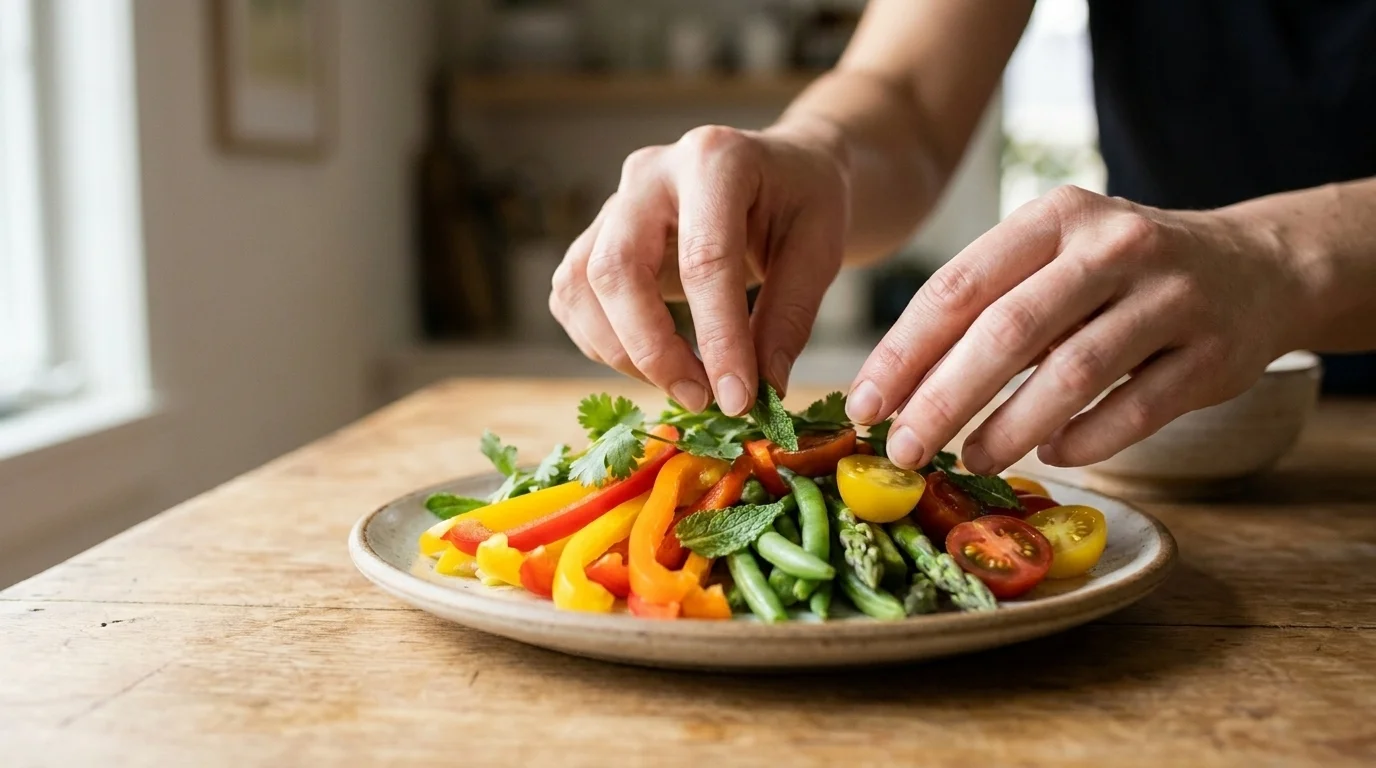
It fits a genuine 2026 trend, too. Food-trend reports this year describe a move toward "purposeful fusion" — dishes that carry a story and a specific cultural identity rather than shock-value mashups, a direction the Michelin Guide's inspectors echo. A nutrition rationale is one kind of purpose. So is honoring the cuisines you're borrowing from rather than flattening them. Plating matters here for one practical reason: a varied, colorful plate tends to mean a varied set of vegetables, and eating slowly enough to enjoy how it looks is most of what "mindful" actually requires.
A sober takeaway
If you like fusion cooking, the evidence gives you no reason to stop and one good reason to lean in: it's an easy, enjoyable way to add vegetables, vary your ingredients, and default to lighter cooking methods like steaming. What it can't do is launder a fried, salt-heavy dish into health food because it has an interesting name. Build the plate with the technique and ingredients in mind, enjoy the result without moralizing about it, and — if you're navigating diabetes, heart disease, or any condition where diet is part of treatment — bring the specifics to your clinician or a registered dietitian who knows your history. That's the part no recipe can do for you.
Frequently Asked Questions
It depends on the dish, not the label. Research on well-designed fusion cooking has shown reductions in fat, salt, and sugar alongside more fiber and micronutrients — but the health gains come from ingredient choices and lighter methods like steaming over frying, which work in any cuisine.
Culinary medicine combines the science of medicine with the art of cooking to guide individualized, health-focused food choices. It's a young but fast-growing field, with most of its research published since 2020.
Widely cited fusion favorites include Korean tacos, the sushirrito, kimchi grilled cheese, butter-chicken pizza, matcha tiramisu, and maple-soy glazed salmon.
The hands-on act of combining flavors pulls your attention to taste, texture, and fullness — the core of mindful eating — which can ease stress and build a more present relationship with food.