Cultivating Community Resilience: Collective Efforts in Mental Wellness Support Systems


I spent seven years in a community mental health clinic before I went into private practice, and it taught me something about the importance of community for mental health that no textbook had. The thing that surprised me most was not what happened in the therapy room. It was what happened outside it — whether a client had anyone to text at 9 p.m., a standing reason to leave the house, a group that noticed when they went quiet. The people who held steady between sessions almost always had some version of that. The ones who unraveled often had a clinical picture no worse than the others, and a far emptier calendar.
We have started, finally, to treat that pattern as data rather than sentiment. In 2025 the World Health Organization's Commission on Social Connection reported that loneliness is linked to an estimated 100 deaths every hour — more than 871,000 deaths a year. The same year, researchers writing in The Lancet Public Health argued for social health as a neglected "third pillar" sitting alongside physical and mental health. The importance of community for mental health is no longer a soft idea you nod along to. It is infrastructure, and it can be built.
What community-driven mental wellness actually means
Community-driven mental wellness is the practice of treating connection, belonging, and shared responsibility as part of mental health care — not a substitute for it, but the surrounding system that makes care work. It spans peer support, cross-sector partnerships, and grassroots programs that reach people clinical services alone miss.
In practice, a strong community does three things for mental health:
- It reduces stigma, because mental illness discussed openly among neighbors stops being a secret to manage alone.
- It builds resilience, because a person embedded in relationships has more to draw on when something breaks.
- It widens access, because community programs reach people who would never walk into a clinic.
That is the whole case in three lines. The rest of this piece is the evidence underneath it and the work of actually building it.
Why community measurably affects mental health
Here is what the recent data shows, and I want to be precise about it because the numbers are doing real work, not decoration.
The WHO Commission found that 1 in 6 people worldwide is affected by loneliness, with social isolation reaching up to 1 in 3 older adults and 1 in 4 adolescents — and that teenagers report some of the highest rates of all. This is not a fringe condition. It is closer to a baseline.
It is also not benign. Lonely people are roughly twice as likely to experience depression, and isolation is associated with higher anxiety and self-harm risk. In the United States, the American Psychological Association's November 2025 survey found that 54% of adults felt isolated at least some of the time and 69% needed more emotional support than they received in the past year. As the APA's chief executive, Arthur C. Evans Jr., put it, "a sense of isolation and social fragmentation can have real consequences for our ability to manage stress and stay healthy."
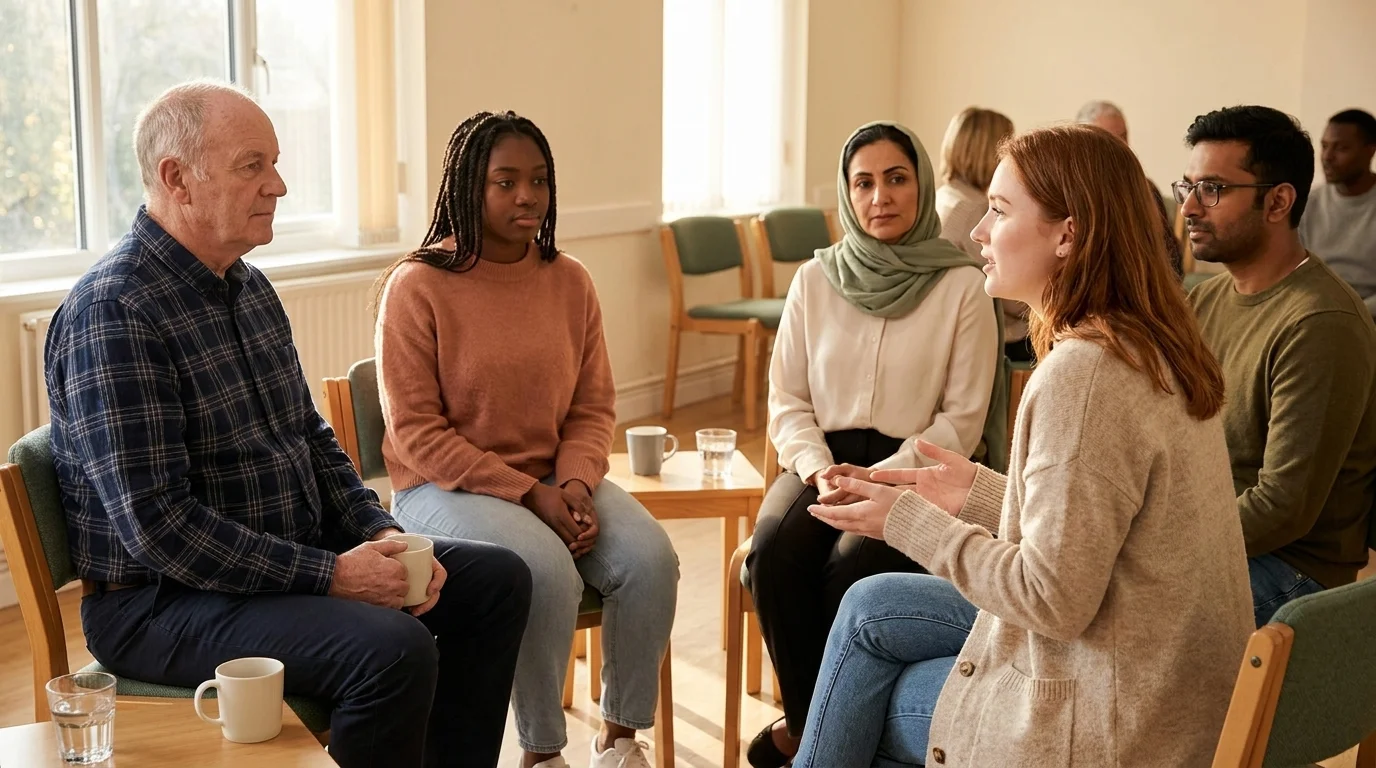
I'll add a clinical caveat, because correlation invites overreading: isolation and depression travel together in both directions — feeling low makes you withdraw, and withdrawing deepens the low. That loop is exactly why community matters as a lever. You can sometimes interrupt the spiral from the outside, through connection, when interrupting it from the inside feels impossible.
Peer support: connection as a clinical mechanism
"Join a support group" is the advice everyone gives and almost no one explains. So let me explain the mechanism, because it is more robust than its tone suggests.
Peer support pairs people with trained individuals who have their own lived experience of mental illness — in many places now formalized as Certified Peer Specialists. The evidence behind it has matured: scoping reviews summarized by Mental Health America associate peer-led interventions with better treatment adherence, reduced hospitalization, and improved long-term outcomes. The active ingredient is not advice. It is the specific relief of being understood by someone who has been where you are — a kind of co-regulation a clinician, for all our training, cannot fully provide because we have not lived it.
This is the part of community work I trust most, and the part most underused.
How communities actually build this
Belonging does not appear because we wish for it. It is built, deliberately, and usually across more than one sector at once. A 2025 scoping review of community-engaged mental health initiatives — 35 studies across 29 distinct programs — found that "programmes with high community engagement, including community-led initiatives, consistently reported positive mental health and well-being outcomes," improving depression, anxiety, PTSD, stigma, and help-seeking. The word that matters there is community-led — not only clinician-delivered. The people affected are not just recipients of the system; they help design it.
What that looks like on the ground:
- Cross-sector partnerships. Healthcare, schools, workplaces, and faith communities coordinating instead of operating in silos, so a struggling person doesn't fall through the seam between two services.
- Peer-support networks embedded in the places people already are, rather than gated behind a clinical referral.
- Grassroots programs that target the actual local drivers of distress — isolation, discrimination, the cost and difficulty of getting care.
- Stigma-reduction outreach, which is less a campaign than the cumulative effect of mental health becoming an ordinary thing neighbors talk about.
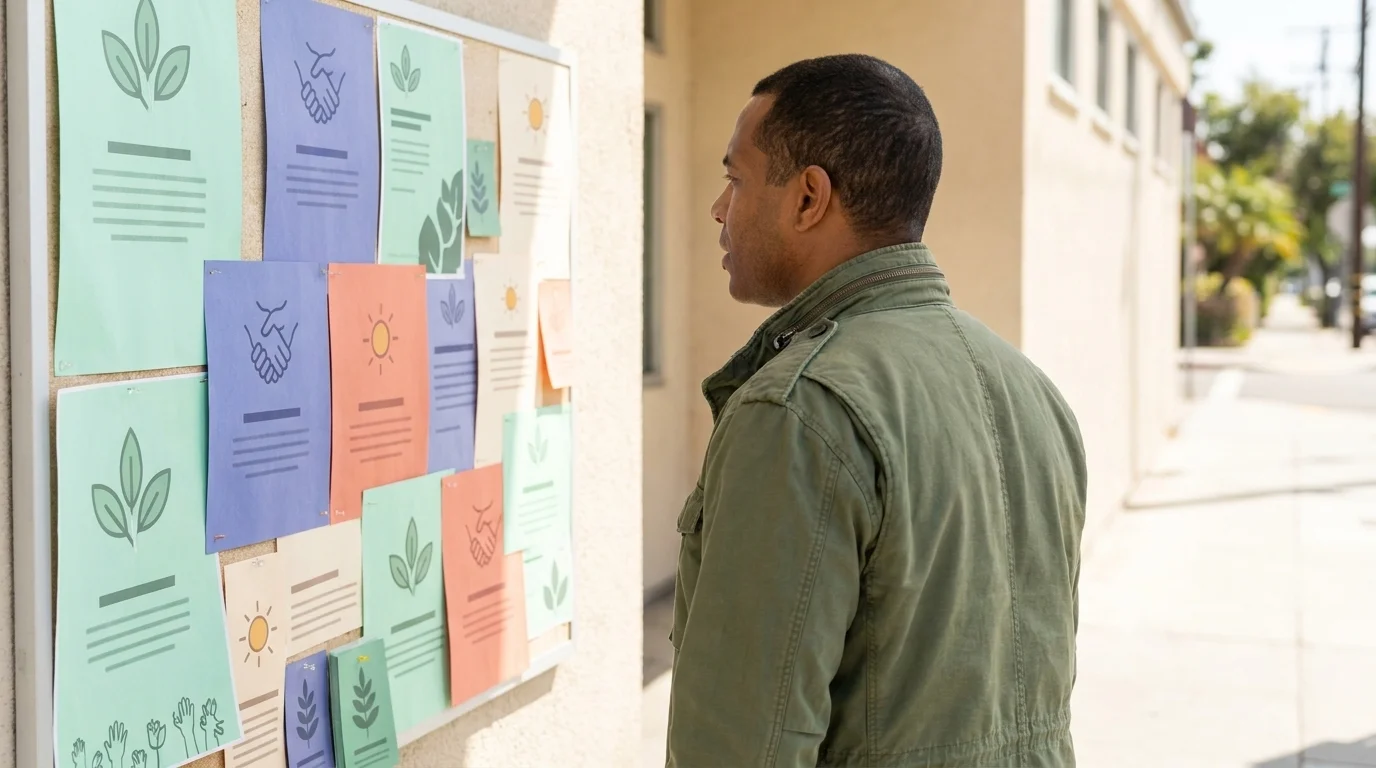
None of this replaces individual treatment. It surrounds it. The clinic and the community are not competitors for the same job — they are two halves of a working system.
Where to find support
If you are looking for connection or care right now, these are good front doors in the US:
- NAMI (National Alliance on Mental Illness) — local affiliates, support groups, and education for individuals and families.
- SAMHSA — a free, confidential national helpline (1-800-662-HELP) for treatment referrals and information.
- The 988 Suicide and Crisis Lifeline — call or text 988 in the US for immediate, free, confidential support in a crisis.
I'll say plainly what I tell clients: building community is real work and it takes time, and it is not a substitute for treatment when you need treatment. If what you are carrying is more than connection alone can hold, that is not a failure of willpower or a sign you didn't try hard enough at friendship — it is a signal to bring a professional in. Therapy is not a luxury, and if you are in crisis, please reach out to 988 or your local equivalent before anything else.
The clinic taught me the same lesson over and over: people heal in relationship. The evidence has finally caught up to what the waiting room always showed. The question now is not whether community matters for mental health — that part is settled. It is whether we will build it on purpose.
Frequently Asked Questions
Community provides belonging, social support, and reduced isolation. WHO's 2025 report links loneliness to roughly 871,000 deaths a year, while community-led initiatives have been shown to reduce depression and anxiety and improve help-seeking.
Lonely people are about twice as likely to experience depression, and isolation raises anxiety and self-harm risk. The American Psychological Association found 54% of U.S. adults felt isolated at least some of the time in 2025.
Peer support connects people with trained individuals who have their own lived experience of mental illness, often as Certified Peer Specialists. Studies associate it with better treatment adherence, lower hospitalization, and improved long-term recovery.
Through cross-sector partnerships across healthcare, schools, and workplaces; embedded peer-support networks; grassroots programs targeting local drivers of distress; and stigma-reduction outreach — the multi-sectoral approach WHO now frames as social-connection infrastructure.
Check Out These Related Articles
Global Mindfulness: Meditation Practices from Around the World That Promote Mental Wellness
Meditation vs. Exercise: Finding Your Path to Stress Relief
Visionary Women Driving Mental Wellness Innovations: Their Inspiring Stories