Global Mindfulness: Meditation Practices from Around the World That Promote Mental Wellness


Let me start by retiring the most stubborn myth in this entire genre: meditation is not about emptying your mind. That framing sets beginners up to fail by Thursday. Every one of the types of meditation below is really a way of paying attention — noticing what is already in your mind, holding it gently, and coming back. The coming-back is the practice.
Meditation has also stopped being niche. Roughly 60.5 million U.S. adults now meditate, part of an estimated 275 million worldwide, and the U.S. practice rate has nearly tripled since 2012 (getstillmind; EarthWeb). When people are asked why, the top reasons in 2026 are emotional balance (81.2%) and stress reduction (73.5%) (Mindful Leader 2026 report). So this is not an exotic tour of foreign curiosities. It's a working survey of 12 living traditions, organized by where they come from, with an honest note on what the evidence actually supports and a section at the end to help you choose. One clinical caveat up front: meditation is a self-care tool, not a treatment for a clinical condition. I'll come back to where that line sits.
At a glance: 12 practices compared
| # | Practice | Origin | Family | Best for |
|---|---|---|---|---|
| 1 | Zen (Zazen) | Japan | Seated / focused | Beginners who want structure |
| 2 | Vipassana | India / Theravada Buddhism | Seated / insight | Sitting with difficult feelings |
| 3 | Loving-kindness (Metta) | Buddhism | Seated / compassion | Self-criticism, strained relationships |
| 4 | Transcendental Meditation | India | Seated / mantra | People who like a simple, repeatable anchor |
| 5 | Body scan (MBSR) | Modern (Kabat-Zinn) | Seated / somatic | Tension, sleep, reconnecting with the body |
| 6 | Yoga (Dhyana / Pranayama) | India | Movement / breath | Linking breath to body |
| 7 | Sufi whirling (Sama) | Middle East | Movement / ecstatic | People who can't sit still |
| 8 | Qigong | China | Movement / energy | Gentle, low-impact daily practice |
| 9 | Walking meditation | Buddhism | Movement | Restlessness; integrating into a walk |
| 10 | Forest bathing (Shinrin-yoku) | Japan | Nature | Stress, getting outdoors |
| 11 | Friluftsliv | Scandinavia | Nature | A whole-lifestyle outdoor habit |
| 12 | Vision quest | Native American traditions | Nature / solitude | Deep reflection at a life threshold |
Seated and focused-attention practices
1. Zen (Zazen) — Japan
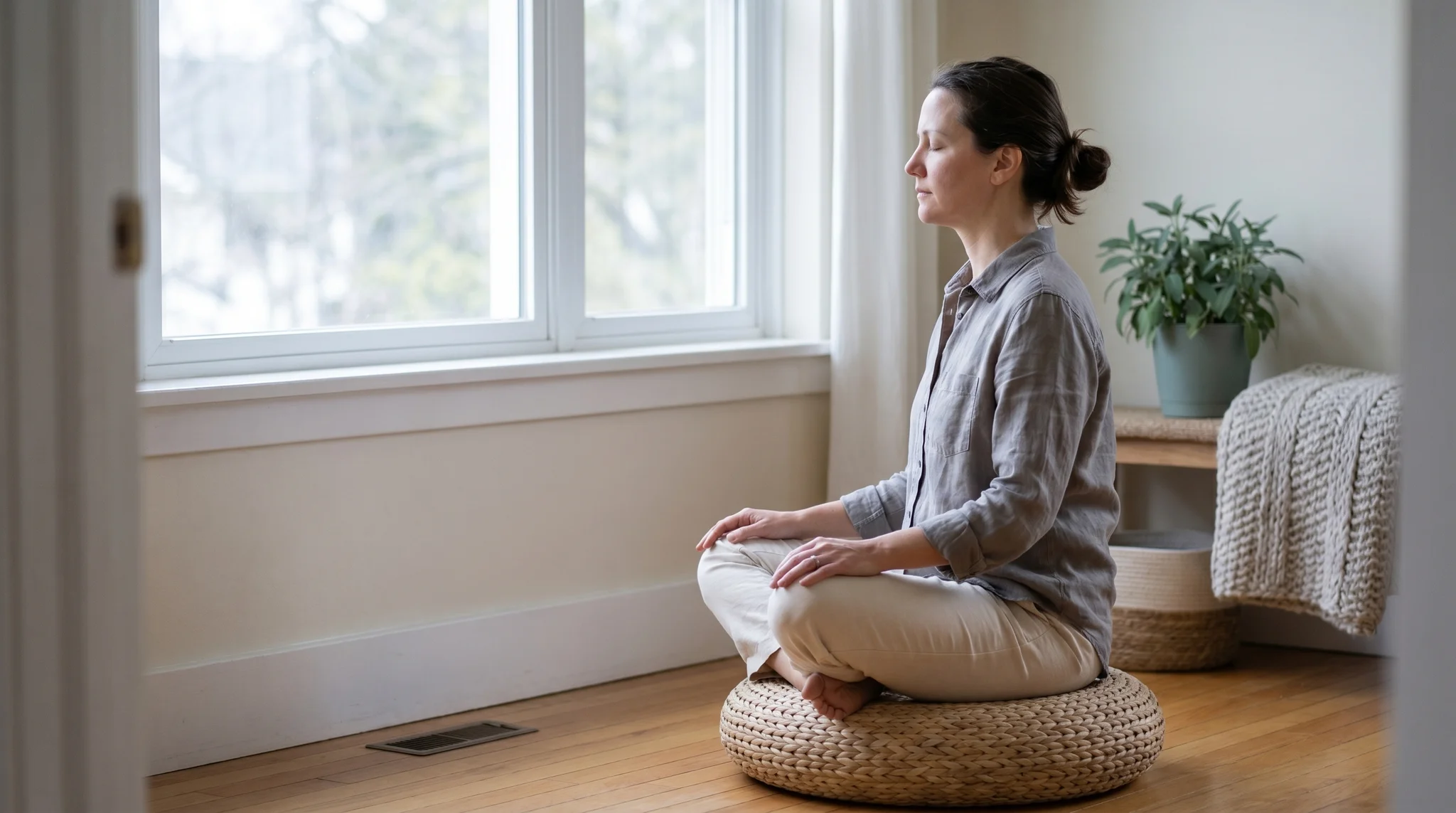
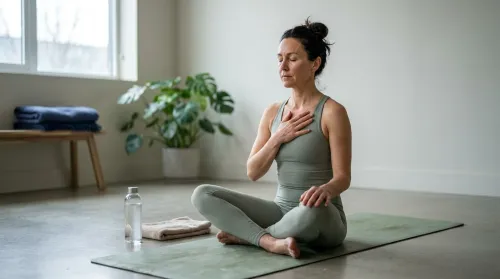
Zen meditation, or Zazen, is sitting in upright stillness and following the breath. Its whole genius is its simplicity: you are not trying to achieve a special state, only to be present and return when your attention drifts. For most beginners this is the cleanest entry point — no equipment, no mantra, just a chair or cushion and five real minutes. I would always rather you sit for five minutes you'll repeat than twenty you'll abandon.
2. Vipassana — India
Vipassana, from the Theravada Buddhist tradition, means "insight." Rather than fixing attention on one object, you observe whatever arises — sensations, thoughts, feelings — and watch them pass without grabbing on. Clinically, this is close to what acceptance-based therapies train: the skill of cognitive defusion, of seeing a thought as a thought rather than a command. It's a deeper practice and can stir up a lot, which is exactly why I'd pair it with support if difficult material surfaces.
3. Loving-kindness (Metta) — Buddhism
Metta is the deliberate cultivation of goodwill — silently extending well-wishes to yourself, then to others, in widening circles. I recommend it most often to people drowning in self-criticism, because it's the closest meditative cousin to the self-compassion work of researchers like Kristin Neff. If "be kind to yourself" has always sounded hollow, Metta gives it a concrete form to practice.
4. Transcendental Meditation — India
Transcendental Meditation (TM) is a mantra-based practice from India: you silently repeat a given sound to settle attention below the surface chatter. It's typically taught in a structured, paid course, which is worth knowing before you sign up. The appeal is its simplicity — a single, repeatable anchor — though you can get much of that benefit from any mantra-style focus without the price tag.
5. Body scan (MBSR) — modern
The body scan is a cornerstone of Mindfulness-Based Stress Reduction (MBSR), the program Jon Kabat-Zinn built by translating Buddhist practices into a secular clinical format. You move attention slowly through the body, part by part, noticing sensation without trying to change it. It builds interoception — your felt sense of your own internal state — and it's one of the better entry points for people who find "watch your thoughts" too abstract, or who want help winding down for sleep.
Movement-based practices
6. Yoga (Dhyana and Pranayama) — India
Yoga is far more than the postures it's famous for in the West. The mindfulness core — Dhyana (meditation) and Pranayama (breath regulation) — is the part most people skip, and it's where much of the nervous-system benefit lives. Slow, deliberate breathing is one of the most direct levers we have on physiological arousal; it's why breath work shows up in nearly every evidence-based anxiety protocol.
7. Sufi whirling (Sama) — Middle East
Sufi whirling, or Sama, is a moving meditation from the mystical traditions of the Middle East, in which practitioners spin in a slow, sustained rotation to reach a state of absorbed awareness. It's a reminder that meditation does not require sitting still — for some people, rhythmic movement quiets the mind far more effectively than stillness ever will.
8. Qigong — China
Qigong, rooted in Chinese philosophy and traditional medicine, pairs slow movement, breath, and attention to cultivate what the tradition calls qi, or vital energy. As a practice it's gentle, low-impact, and easy to sustain daily, which makes it a durable habit for people who want movement without strain.
9. Walking meditation — Buddhism
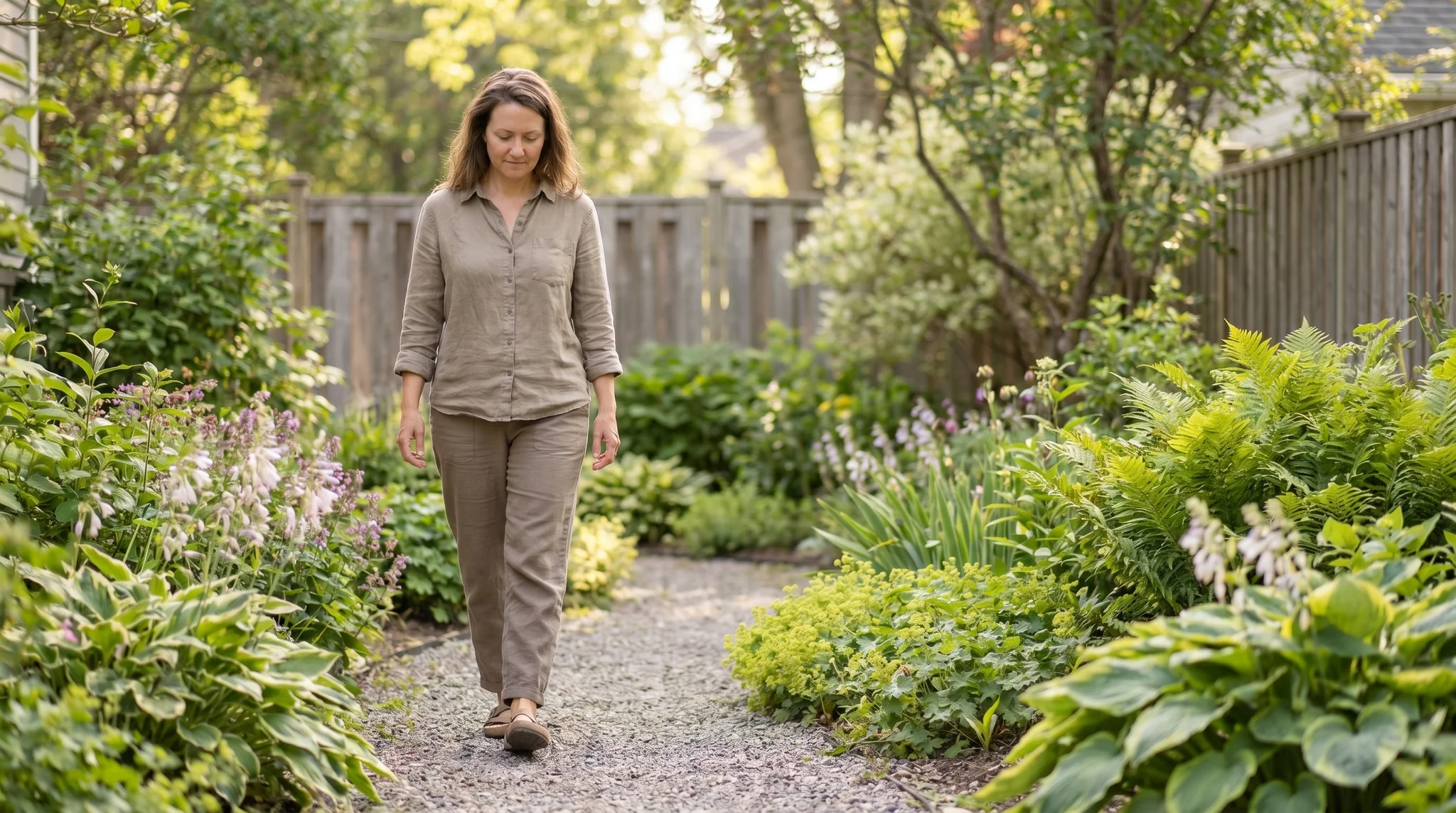
Buddhist walking meditation brings attention to each step — the lift, the placement, the shift of weight — usually synced loosely with the breath. It's my standard suggestion for people who feel too restless to sit, and it folds neatly into a daily walk you already take. The point isn't to get anywhere; it's to actually be in the walking.
Nature-based practices
Here is the genuine gap in most "types of meditation" lists: they leave out the practices built around being outdoors, even though that's where a lot of people most reliably feel better.
10. Forest bathing (Shinrin-yoku) — Japan
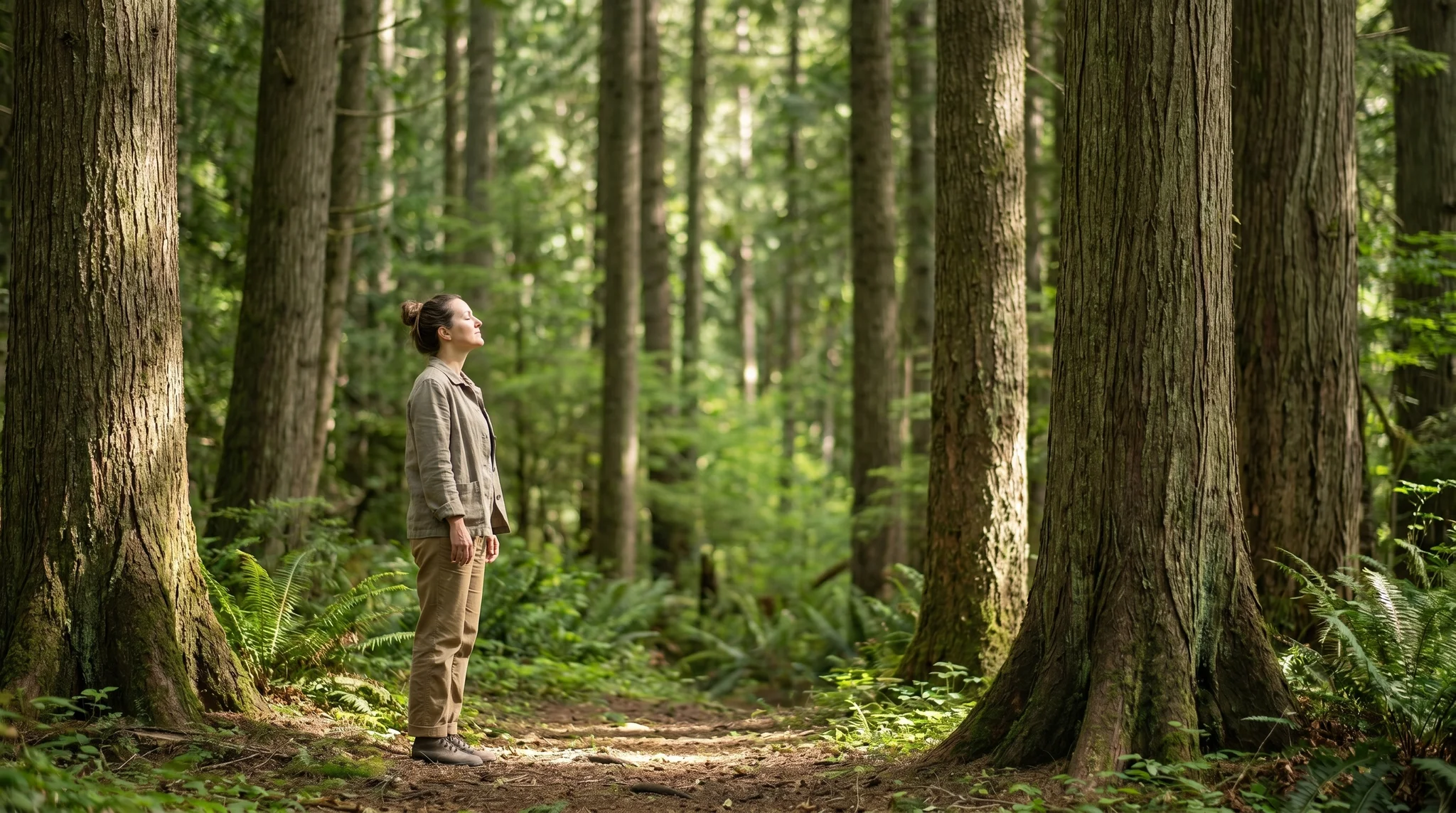
Shinrin-yoku — "forest bathing" — is the Japanese practice of unhurried, sensory immersion in a wooded place: no destination, no step count, just attention to the sights, sounds, and smell of the forest. It has crossed into clinical literature under the name "Forest Medicine." A 2026 meta-analysis of 11 studies in Frontiers in Psychology found forest bathing "was associated with a reduction in heart rate … tension-anxiety … and depression despondency" (Frontiers in Psychology, 2026).
Now the honest part, because it matters: the same authors rate the overall certainty of that evidence as "very low," and frame forest bathing as a potential complementary practice, not a treatment. That caveat isn't a weakness in the case for going outside — it's the difference between a wellness writer and a clinician. The signal is real and the downside is essentially nil; just don't let anyone sell it to you as a cure.
11. Friluftsliv — Scandinavia
Friluftsliv — Scandinavian "open-air living" — is less a technique than a cultural orientation: the assumption that time outdoors, in any weather, is a normal and necessary part of life. Forest walks, sitting by water, camping under open sky. It's the Western sibling of forest bathing, and its value is precisely that it asks nothing fancy of you — just a standing habit of being outside.
12. Vision quest — Native American traditions
The vision quest, found in several Native American traditions, is an extended period of solitude, fasting, and reflection in a remote natural setting, undertaken at a meaningful threshold in life. I include it less for daily use than for what it represents: the oldest human intuition that real reflection sometimes requires stepping all the way out of ordinary life. It's worth approaching with respect for its specific cultural and spiritual context, not as a technique to extract.
How long until meditation actually works?
Faster than the "years of discipline" framing suggests — which is genuinely encouraging news. A 2025 study from UC San Diego, published in Communications Biology, followed 20 adults through a 7-day residential retreat (about 33 hours of guided meditation) and found measurable increases in gray-matter volume and functional brain connectivity afterward (ScienceDaily; SciTechDaily). As the study's senior author, Hemal H. Patel of UC San Diego School of Medicine, put it: "This isn't about just stress relief or relaxation; this is about fundamentally changing how the brain engages with reality and quantifying these changes biologically."
Two honest qualifiers: that was an intensive retreat, not five minutes a day, and 20 people is a small sample. But the direction is clear and consistent with the broader literature — the brain responds to this practice on a timescale of weeks, not decades. You don't need to be good at it to benefit. You need to keep coming back.
Which meditation is right for you?
Start with the obstacle, not the tradition. If you can't sit still, you don't need more discipline — you need a moving practice (walking meditation, Sufi whirling, yoga, qigong). If your mind races, a focused anchor helps (Zen, TM, body scan). If you're hard on yourself, loving-kindness is the targeted tool. If sitting indoors feels like more of the same, the nature practices (forest bathing, friluftsliv) tend to land where seated practice doesn't. And if difficult feelings are what surface when you get quiet — grief, anxiety, old material — that's not a sign you're meditating wrong. It's information.
The cultural-origin point is worth keeping in view here too: these are living traditions, not interchangeable techniques on a menu. You can practice them with respect for where they come from and still make them genuinely yours.
A clinical note before you begin
Meditation is one of the most accessible self-care tools we have, and for ordinary stress, restlessness, and a busy mind, any of these practices is a reasonable place to start. But I want to be careful about the line I'm always careful about with clients: there's a difference between a rough stretch and a clinical condition. If what comes up when you get quiet is more than you can hold alone — persistent hopelessness, panic, intrusive thoughts — please don't file that under "I'm bad at meditation." That's a signal to talk to a therapist. Therapy is not the opposite of self-care; it's one of its forms. And if you are ever in crisis, contact the 988 Suicide and Crisis Lifeline, or your local equivalent, right away.
Frequently Asked Questions
There's no fixed number — common guides list anywhere from 3 to 22. This guide surveys 12 distinct practices grouped by cultural origin, from technique-based (Zen, walking) to nature-based (forest bathing, friluftsliv).
Focused-attention practices like Zen (Zazen) and breath-based mindfulness are the easiest entry points — no special training, just sitting and following the breath. Five real minutes a day beats twenty you'll abandon.
A 2026 Frontiers in Psychology meta-analysis of 11 studies linked forest bathing to lower heart rate, anxiety, and depression scores — though the authors rate the overall certainty of evidence as "very low." It's promising as a complementary practice, not a cure.
A 2025 UC San Diego study found measurable brain changes after a 7-day intensive retreat (about 33 hours of meditation), suggesting benefits can appear in weeks, not the years of practice often assumed.
Zen meditation, or Zazen, originates from Japan and focuses on mindful breathing and sitting in silence. It encourages practitioners to be present in the moment, cultivating awareness and tranquility. Regular practice can support reduced stress, steadier focus, and greater mental clarity, making it a valuable entry point for mental wellness.
Sufi whirling is a dynamic meditation technique from the Middle East that involves spinning rhythmically in circles. This practice aims to induce heightened awareness and inner peace by intertwining movement with spirituality. Through this absorbing experience, practitioners can connect deeply with their inner selves, supporting emotional balance — useful for people who find stillness harder than motion.
Cultural context shapes how meditation practices are understood and used. Understanding the cultural nuances enhances appreciation for these techniques and enriches their application in daily life. Approaching each tradition with respect for where it comes from — rather than treating them as interchangeable techniques — both honors the practice and deepens its value.
Check Out These Related Articles
Meditation vs. Exercise: Finding Your Path to Stress Relief

Cultivating Community Resilience: Collective Efforts in Mental Wellness Support Systems

Visionary Women Driving Mental Wellness Innovations: Their Inspiring Stories