Cultivating Cultural Diversity in Contemporary Health and Wellness Landscapes


In Waimānalo, on the windward side of O'ahu, a lomilomi practitioner will tell a room of new students the same thing before anyone touches anyone: what they are about to learn is not massage. Lomilomi is a Native Hawaiian healing practice conducted in the Hawaiian language, embedded in family lineage and reciprocal obligation, and it survived a century of active suppression. This is cultural wellness in its truest form — health practiced inside the community that carries it. A resort spa down the road may sell something called "lomilomi" for a couple hundred dollars an hour, performed by someone with a weekend certification. Both exist. They are not the same thing. That gap — between a living tradition and the version of it sold back to us — is what people are really circling when they talk about cultural wellness, and it is worth being precise about, because the global wellness economy hit a record $6.8 trillion in 2024 and is forecast to reach $9.8 trillion by 2029, with traditional and complementary medicine its second-fastest-growing sector.
What is cultural wellness?
Cultural wellness is the awareness and respect for your own cultural identity and others' — and the practices, foods, rituals, and relationships through which a community maintains health. Campus and clinical wellness models name it as one of the recognized dimensions of well-being, sitting alongside physical, spiritual, and social wellness. That framing is useful, but it usually stops at the definition. The more interesting work starts when you ask what specific traditions actually are, who carries them, and what happens to them in translation.
A note I will repeat: "traditional" does not mean "interchangeable." Ayurveda, Traditional Chinese Medicine, lomilomi, and Mexican curanderismo are not regional flavors of one global "wellness." Each has its own cosmology, its own diagnostic grammar, its own language of transmission, and its own internal disagreements among practitioners. Flattening them into a single tapestry is the move this article is trying to undo.
Examples of cultural wellness practices
If you want a concrete starting list rather than abstractions, here are practices people commonly mean — each tied to a specific tradition and community:
- Ayurveda (Indian subcontinent) — constitutional diagnosis, diet, and daily routine
- Traditional Chinese Medicine (China) — acupuncture, herbal formulas, qigong, tai chi
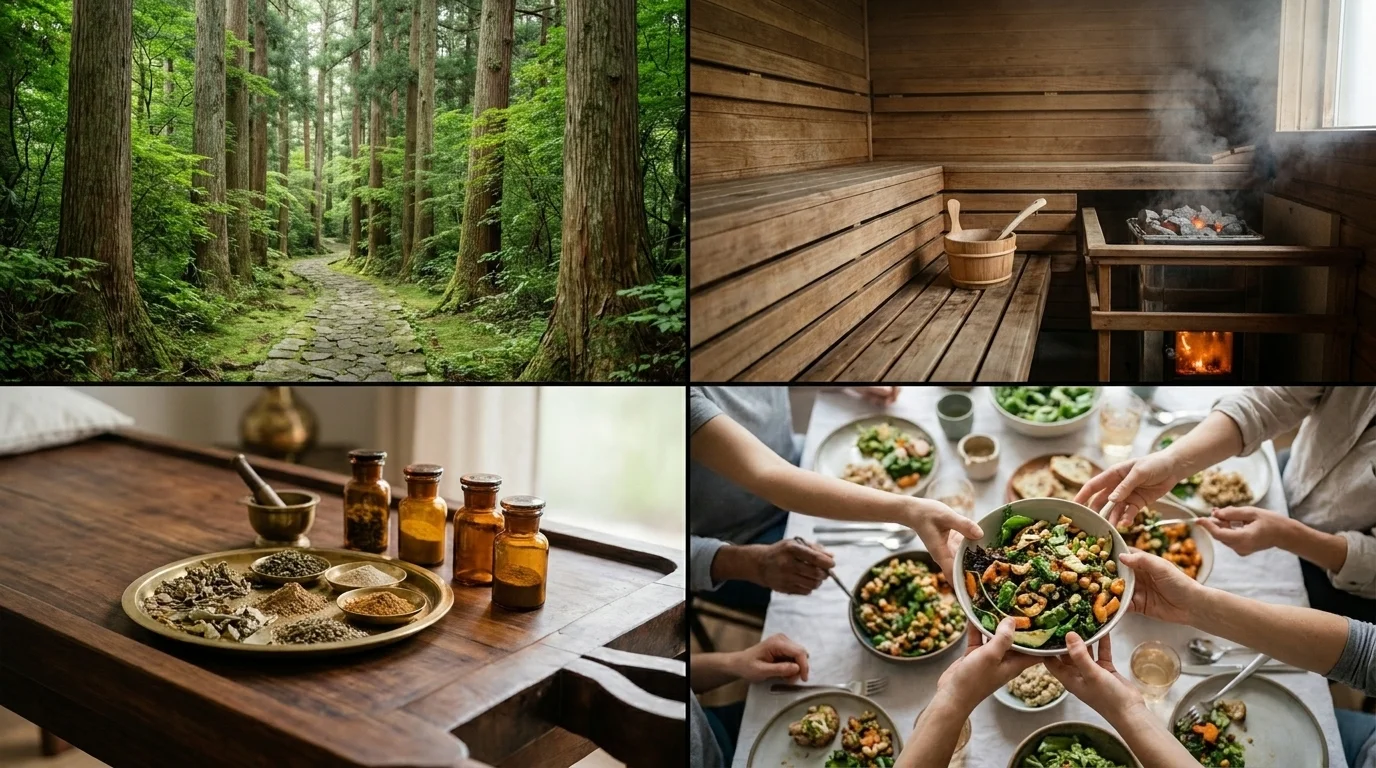
- Forest bathing / shinrin-yoku (Japan) — slow, attentive time among trees
- Heat rituals — Finnish sauna, Russian banya, Middle Eastern hammam, Mesoamerican temazcal
- Communal meals — shared cooking and eating as a way of holding a family or community together
- Indigenous healing — smudging, healing circles, and storytelling, where "culture is a social determinant of health"
The traditions people name — and what they actually are
Ayurveda
Ayurveda is a roughly 3,000-year-old medical system from the Indian subcontinent, practiced in Sanskrit-rooted terminology and built on constitutional types (doshas) treated through diet, herbal preparation, massage, and daily routine (dinacharya). It is worth separating its two kinds of efficacy. The cultural efficacy — the value of an unhurried diagnostic conversation, a consistent daily rhythm, a relationship with a practitioner who knows your household — is real and not something a clinical trial is designed to measure. The biomedical efficacy of specific Ayurvedic herbal compounds is a separate question with a thinner, more variable evidence base, complicated by documented heavy-metal contamination in some imported products. Holding both truths at once is the honest position.
Traditional Chinese Medicine
Traditional Chinese Medicine (TCM) is not one thing either: it spans acupuncture, herbal pharmacopeia, and the movement practices qigong and tai chi. The movement side travels well and tests well — tai chi has solid randomized-trial evidence for balance and fall prevention in older adults. The herbal side is where translation gets lossy. Consider Kampo, the Japanese adaptation of classical Chinese herbal medicine: in Japan it is prescribed under national health insurance, dispensed by licensed pharmacists, and dosed in grams of standardized extract after a diagnostic process that can take forty minutes. Cross the Pacific and the same formula becomes a branded "adaptogenic" capsule on a shop shelf — the molecule maybe, the diagnostic context not at all.
Forest bathing (shinrin-yoku)
Shinrin-yoku — literally "forest bathing" — was coined in Japan in the 1980s as a public-health practice: slow, sensory, unhurried time among trees, no destination. It is one of the more research-friendly traditions on this list, with systematic reviews associating forest time with lower cortisol and lower blood pressure. It is also, instructively, a practice that mostly kept its meaning in translation, because what it asks of you — to walk slowly and pay attention — does not depend on a proprietary product.
The heat-ritual revival: sauna, banya, hammam, temazcal
A grandfather's two-hour weekly ritual in a wood-fired savusauna in Kuopio, built by his father, with its specific silences and a small glass of something afterward, is not the same as a 45-minute infrared booth in a strip mall. Both are real. The Finnish sauna is recognized by UNESCO as intangible cultural heritage, and 2026 wellness-tourism trends have folded it together with the Russian banya, the Middle Eastern hammam, and the Mesoamerican temazcal into a single "heat ritual" revival. The health claims travel between them as if they are interchangeable — which is exactly how a social technology embedded in a community and a climate becomes a consumer product designed to slot into a lunch break.
Cultural wellness as a dimension of health
Set against the broader dimensions-of-wellness model — physical, spiritual, occupational, social — cultural wellness is the dimension that asks whether your sense of belonging and identity is being nourished or eroded. This is not soft framing. The Culture is Prevention Project and a growing body of work treat culture as a social determinant of health: cultural connectedness, particularly among Indigenous communities, is associated with measurable protective effects on mental health. The communal meal, the shared language, the practice you inherited rather than purchased — these are not decorative. They are part of the infrastructure of staying well.
Does cultural engagement actually do anything?
Here is where I want to show the evidence rather than assert it. A 2024 systematic review in Frontiers in Public Health, pooling 11 longitudinal studies, found that monthly cultural engagement was associated with a 48% lower depression risk, roughly a third lower odds of loneliness, and lower frailty incidence. The reviewers' own summary: "The results provide evidence of positive association between cultural participation and better mental health (e.g., cognitive decline, depression, anxiety), frailty, resilience, well-being and social relations." These are observational associations, not proof that any single practice cures anything — but they are a real signal that participation in culture, broadly, tracks with health.
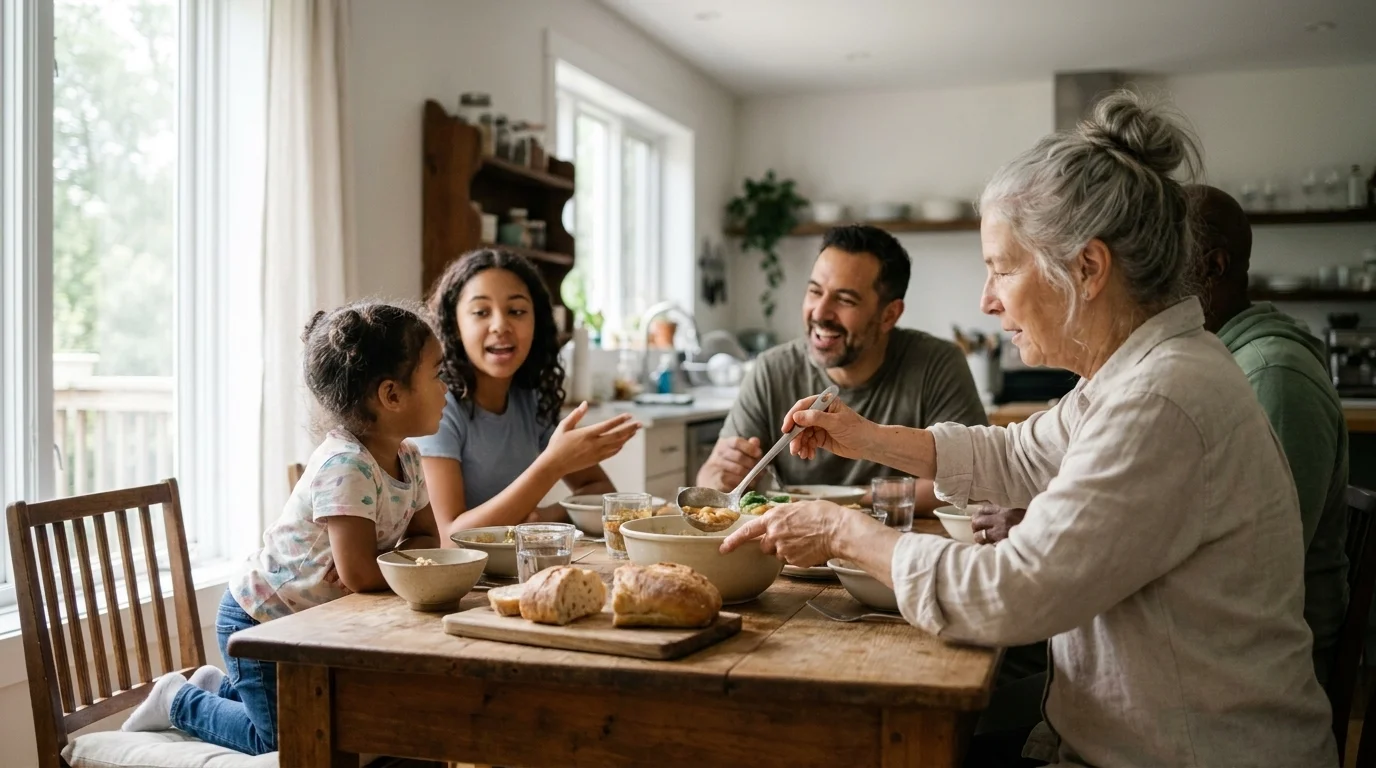
The question I would leave you with is not whether these practices "work" in a trial — some do, some have not been studied, and a few carry real risk. It is the older anthropological question: when a tradition crosses into the global wellness marketplace, who benefits from the translation, and who gets left out of it? Cultural wellness, taken seriously, is partly about answering that honestly — and about keeping the people who carry a practice in the same frame as the practice itself.
Frequently Asked Questions
Embracing global perspectives in health and wellness is crucial for fostering inclusivity. It allows practitioners to integrate diverse cultural beliefs and practices, leading to well-being solutions that resonate with individuals from various backgrounds. This approach enhances understanding and appreciation of different healing modalities, ultimately creating more effective and relatable health strategies.
Diverse traditions enrich modern health practices by offering unique insights into healing, nutrition, and physical activity. For instance, concepts like "forest bathing" from Japanese culture highlight nature's therapeutic benefits. By incorporating these varied practices, contemporary health approaches become more holistic and accessible, promoting a sense of belonging among individuals from different cultural backgrounds.
Cultural diversity plays a significant role in holistic health approaches by acknowledging that well-being encompasses mental, emotional, and spiritual aspects. By integrating cultural insights, practitioners can create personalized health plans that reflect individual backgrounds, enhancing the effectiveness of dietary recommendations and stress management techniques tailored to specific cultural contexts.
Culinary traditions contribute to overall well-being by preserving cultural identity and enhancing nutrition practices. They encapsulate valuable wisdom about ingredients and cooking techniques that promote physical health. Recognizing the cultural significance of foods fosters unity and encourages individuals to explore diverse flavors, enriching their culinary experiences while supporting their nutritional needs.
Celebrating cultural diversity in wellness solutions is essential because it ensures that various perspectives are acknowledged and valued. This inclusivity not only enhances the relatability of health practices but also empowers individuals from different backgrounds to engage actively in their wellness journeys, fostering a sense of community and shared experience in pursuit of better health.
Integrating diverse healing practices can significantly improve individual well-being by providing a broader range of options for self-care and stress management. Each culture offers unique methods for emotional release and balance, which can be tailored to fit personal preferences. This holistic approach acknowledges the complexity of well-being, addressing physical, emotional, and spiritual needs effectively.
Cultural wellness is awareness and respect for your own cultural identity and others' — one of the recognized dimensions of well-being, tied to stronger community connection and self-esteem. It includes the practices, foods, rituals, and relationships through which a community maintains health.
Examples include Ayurveda, Traditional Chinese Medicine, forest bathing, communal meals, storytelling and oral traditions, Indigenous healing circles, and heat-bathing rituals like the Finnish sauna, Russian banya, Middle Eastern hammam, and Mesoamerican temazcal.
Evidence suggests yes — a 2024 systematic review in Frontiers in Public Health found that monthly cultural engagement was associated with a 48% lower depression risk and roughly a third lower odds of loneliness. These are observational associations, not proof, but they are a real signal.