
Cross-Cultural Insights into Dietary Philosophies for Holistic Health


In a kitchen in Nicoya, Costa Rica, a woman in her nineties is soaking black beans she will cook the same way her mother did, and they will appear at nearly every meal she eats. That detail — beans, daily, for a lifetime — turns out to matter more than almost anything sold under the word "superfood." It is also the kind of thing that gets lost when we talk about cultural diets in the abstract, as a "rich tapestry," instead of naming what specific people in specific places actually eat. So let me do the naming. A cultural diet is not a meal plan; it is a way of eating embedded in a place, a community, and a history. Here are several worth knowing, and what each one's evidence actually shows.
This is also, as of late 2024, a question of policy science. The U.S. Dietary Guidelines Advisory Committee's December 2024 report included the first-ever evidence scan on culturally responsive nutrition and proposed reframing federal guidance as "Eat Healthy Your Way" — official acknowledgment that heritage eating patterns are a serious basis for health, not a lifestyle accessory.
What is a cultural diet?
A cultural diet is the habitual pattern of foods, preparation methods, and shared eating customs that a community has developed over generations and still practices. It is defined as much by how people eat — communally, seasonally, slowly — as by what is on the plate. That distinction matters, because the part that travels into the global wellness market is usually the ingredient list, while the social and ritual context, which does half the work, stays home.
The Mediterranean (Greece, southern Italy)
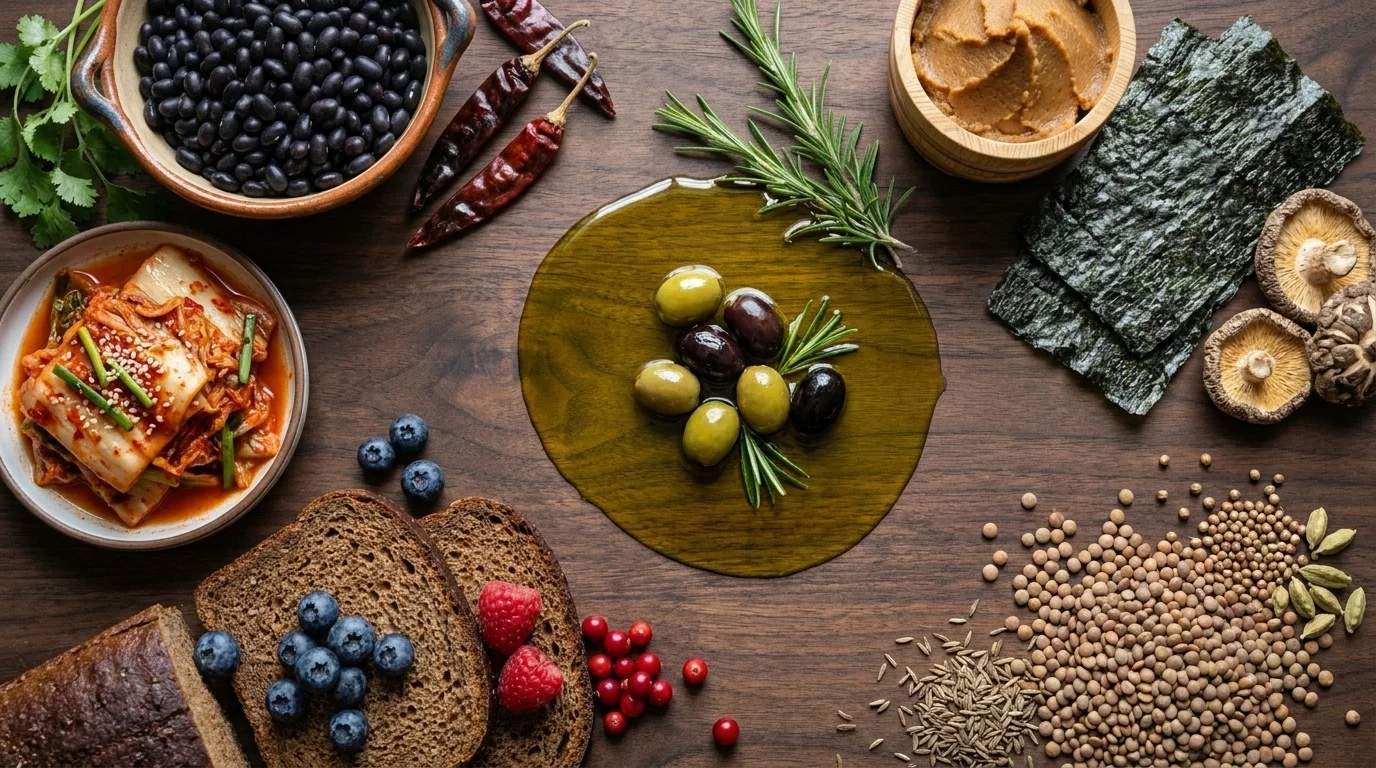
The Mediterranean pattern — olive oil, legumes, vegetables, fish, whole grains, with meat as an occasional guest — is the most-studied cultural diet in the world, and the evidence for lower heart-disease and diabetes risk is genuinely strong. It is worth noting that UNESCO inscribed the Mediterranean diet as Intangible Cultural Heritage in 2010, recognizing it as a social practice and not merely a nutrition profile. The biomedical efficacy is real; so is the cultural efficacy — the long shared midday meal is part of the medicine, and it is the first thing a bottled "Mediterranean supplement" throws away.
Okinawa and Japan
Okinawa is one of the original Blue Zones, and the diet that earned it that status leans heavily on sweet potatoes, vegetables, soy, and seafood, with very little meat. The pattern fits a broader finding: across the five Blue Zones, roughly 95% of centenarians' intake is plant-based, with meat appearing about five times a month. Japan more broadly pairs high life expectancy with low obesity. I will not romanticize it, though: traditional Japanese eating runs high in sodium, which correlates with elevated stroke incidence. A tradition can be excellent and still have a known cost.
India: the Ayurvedic table
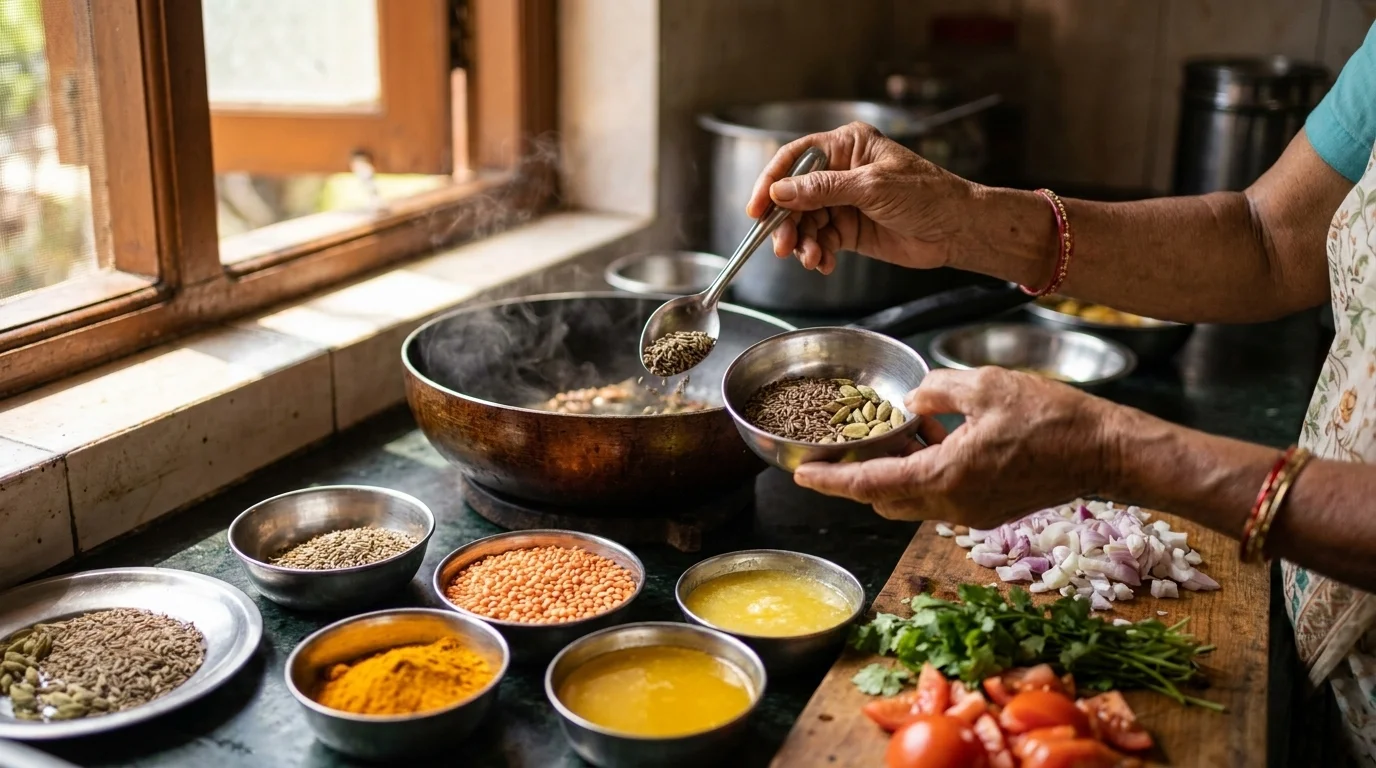
Ayurvedic eating in India organizes food around an individual's dosha, or constitutional type, and prescribes herbs, spices, and food combinations accordingly. Here the two kinds of efficacy pull apart usefully. The dosha framework is a cultural and diagnostic system whose claims a randomized trial cannot really test; the underlying habits it produces — legume-and-vegetable-heavy meals, anti-inflammatory spices like turmeric, attention to digestion and routine — line up well with what nutrition science independently endorses. Take the table seriously without mistaking the cosmology for a clinical result.
Korea: Hansik and fermentation
Korea's Hansik table is the one the popular "healthiest diets" lists almost always skip, which is strange, because its central technology — fermentation — has the freshest science behind it. Kimchi, doenjang, and gochujang are fermented daily staples, and a 2021 Stanford study found that diets rich in fermented foods increased gut-microbiome diversity and lowered inflammatory markers. Koreans live to about 84 on average, roughly six years longer than the U.S. average, a gap frequently tied to a vegetable-, fish-, and legume-forward, low-red-meat pattern. As with Japan, the sodium in the fermented staples is the honest caveat.
The Nordic table
The Nordic or Scandinavian pattern — rye, oats, berries, root vegetables, fatty fish like herring, and rapeseed (canola) oil — is the cold-climate cousin of the Mediterranean, built on what grows and swims that far north. It carries a similar plant-forward, whole-grain, fish-rich profile and a similar evidence base for cardiovascular health. And it carries a similar drawback: the traditional preserving methods lean on salt, so the heritage version is saltier than a modern adaptation needs to be.
Latin America: the Nicoya table
Back to that woman in Nicoya. The Costa Rican Blue Zone diet — corn tortillas prepared with lime (nixtamalization), squash, and the black beans that anchor nearly every meal — is a reminder that the healthiest cultural diets are not exotic and rarely expensive. Beans and legumes are, in fact, the single common denominator across all five Blue Zones: black beans in Nicoya, soy in Okinawa, chickpeas and lentils in the Mediterranean. The University of Michigan's public-health researchers make the point plainly: the healthy-eating models worth studying extend well beyond the Mediterranean, into Latin American, Asian, and African heritage tables.
What the healthiest cultural diets share
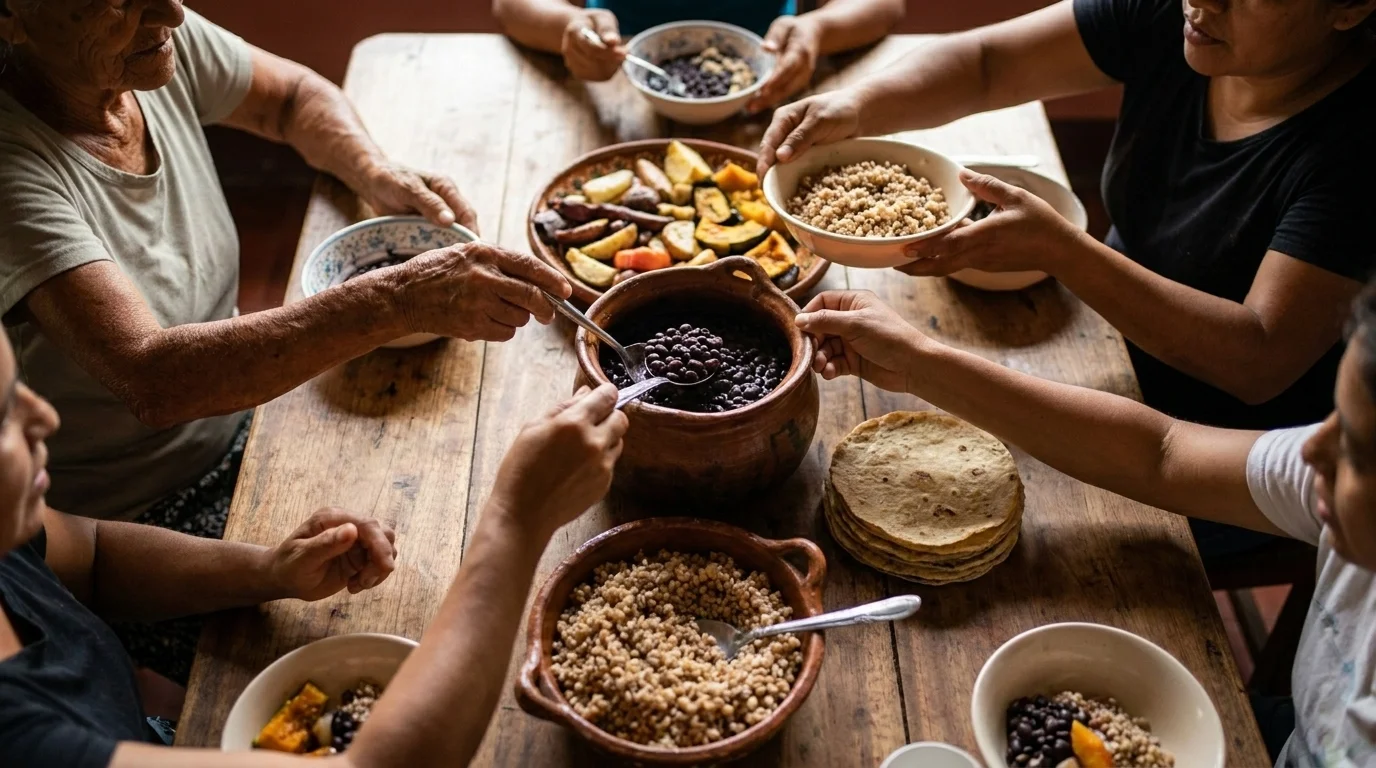
Lay these tables side by side and the same few patterns surface in every one. They are overwhelmingly plant-forward — recall the 95% figure from the Blue Zones centenarians. They put legumes on the plate daily. They keep food minimally processed and seasonal, and they treat meat as occasional rather than central. And — the part the supplement aisle cannot bottle — they treat eating as a shared, unhurried, communal act.
That last point is where the honest answer to "which cultural diet is healthiest?" lives. It is the wrong question. None of these patterns works as a stripped-down ingredient list airlifted into a different life; the Nicoyan beans do their work inside a whole way of living. So the better question, the one I would leave you with, is the one the global wellness market rarely asks: when a community's cuisine becomes a "diet" you can buy — who actually benefits, and what gets left behind in the kitchen it came from?
Frequently Asked Questions
Culture-centric dietary habits refer to the unique food practices rooted in specific cultural traditions that shape nutritional choices and overall well-being. These habits significantly influence comprehensive wellness by promoting healthful eating patterns and lifestyle practices that align with cultural values, ultimately enhancing individual health outcomes through a holistic approach.
The Mediterranean diet promotes holistic health by emphasizing plant-based foods, healthy fats, lean proteins, and moderate wine consumption. This culturally rooted dietary practice is associated with reduced chronic disease risk and increased longevity, reflecting a balanced approach to nutrition that aligns with overall well-being principles.
Ayurvedic dietary traditions focus on personalized nutrition based on an individual's dosha, or mind-body constitution. This approach emphasizes the interconnectedness of health and nature, incorporating specific herbs, spices, and food combinations tailored to optimize health outcomes, thus promoting holistic well-being through mindful eating practices.
Widely studied examples include the Mediterranean, Japanese and Okinawan, Indian Ayurvedic, Korean Hansik, Nordic, and Latin American heritage diets — each pairing region-specific whole foods with traditions linked to longevity and lower chronic-disease risk.
Culture shapes which foods are everyday versus celebratory, how meals are prepared and shared, and which ingredients are staples. In the world's healthiest traditions, those patterns lean plant-forward, minimally processed, and communal — and the shared, unhurried way of eating is part of the benefit, not just the ingredients.
They are overwhelmingly plant-based — about 95% of intake among Blue Zone centenarians — feature legumes daily, rely on minimally processed seasonal foods, keep red meat occasional, and treat eating as a shared, mindful ritual rather than a stripped-down ingredient list.