
Redefining Nutritional Science: The Role of Epigenetics in Personalized Dietary Recommendations


A reader sent me a TikTok last fall in which a wellness influencer announced that eating cruciferous vegetables would "turn off your bad genes" — and offered a monthly supplement she said did the same thing, only faster. The genuinely interesting answer to her question sits inside the actual field of epigenetics and nutrition, and it is much more specific than the TikTok, much more useful than the supplement, and rests on human-trial evidence that did not exist a decade ago.
Here is the version of the field that the marketing has not caught up to. A 2025 reanalysis of an 8-week randomized trial — the Methylation Diet & Lifestyle trial — put 43 men between the ages of 50 and 72 on a plant-centered diet built around dark leafy greens, cruciferous vegetables, beets, seeds, and a small list of polyphenol-rich herbs and teas (turmeric, rosemary, garlic, green tea, oolong tea, berries), plus exercise, sleep hygiene, and a daily meditation practice. The intervention group reversed their Horvath-clock biological age by 2.04 years in eight weeks. Controls aged 1.10 years over the same period. The between-group difference was 3.14 years, and it reached statistical significance (p = 0.043). Crucially, intake of those polyphenol-rich foods — the trial calls them "methyl adaptogens" — explained roughly 44% of the variance in age reduction, independent of weight loss.
That is a small trial. It is the first human evidence that a defined dietary pattern measurably reverses an epigenetic clock, and it is the right place to start, because the field of epigenetics and nutrition has spent fifteen years explaining mechanism without showing humans the outcome. Now we have at least one outcome. Let me show my work.

How we know this is real: three evidence touchstones
Before the human RCTs, the case for nutrition-influenced gene expression rested on three pieces of evidence that any honest survey has to engage with.
The first is the agouti mouse. Two genetically identical mice — same DNA, same parents, same litter — can look completely different depending on what their pregnant mother ate. As the Utah Genetics consumer-education project documents, maternal supplementation with methyl donors (folate, B12, choline, betaine) silences the agouti gene in offspring, turning what would otherwise be yellow, obese, diabetes-prone mice into brown, lean, healthier ones. The DNA is identical. The gene expression is not.
The second is the Dutch Hunger Winter cohort. Babies conceived during the 1944–1945 famine in the Netherlands — when their mothers' caloric intake was severely restricted — have measurably different DNA methylation patterns sixty years later, and elevated rates of cardiovascular and metabolic disease compared with siblings conceived before or after. Nutrition at a single developmental window left a chemical signature on the genome that persisted into adult life.
The third is the Överkalix Swedish harvest records. A 19th-century Swedish village kept meticulous records of harvest yields. Researchers later linked the food access of grandparents during specific childhood years to health outcomes in their grandchildren — transgenerational, sex-specific, and statistically robust. Not the food the grandchildren ate. The food their grandfather had access to when he was nine.
You do not need to memorize any of this to use the field. You need to know that it exists, because it is the reason the human-trial evidence we now have was even attempted.
The methyl adaptogen pattern (and the 2025 RCT behind it)
The pattern the Methylation Diet & Lifestyle trial used is not exotic. It is, almost exactly, the dietary pattern that comes out of every long-term cardiovascular cohort: plant-forward, anti-inflammatory, fibre-rich, polyphenol-rich. What the trial adds is specificity about which plants matter most for methylation chemistry.
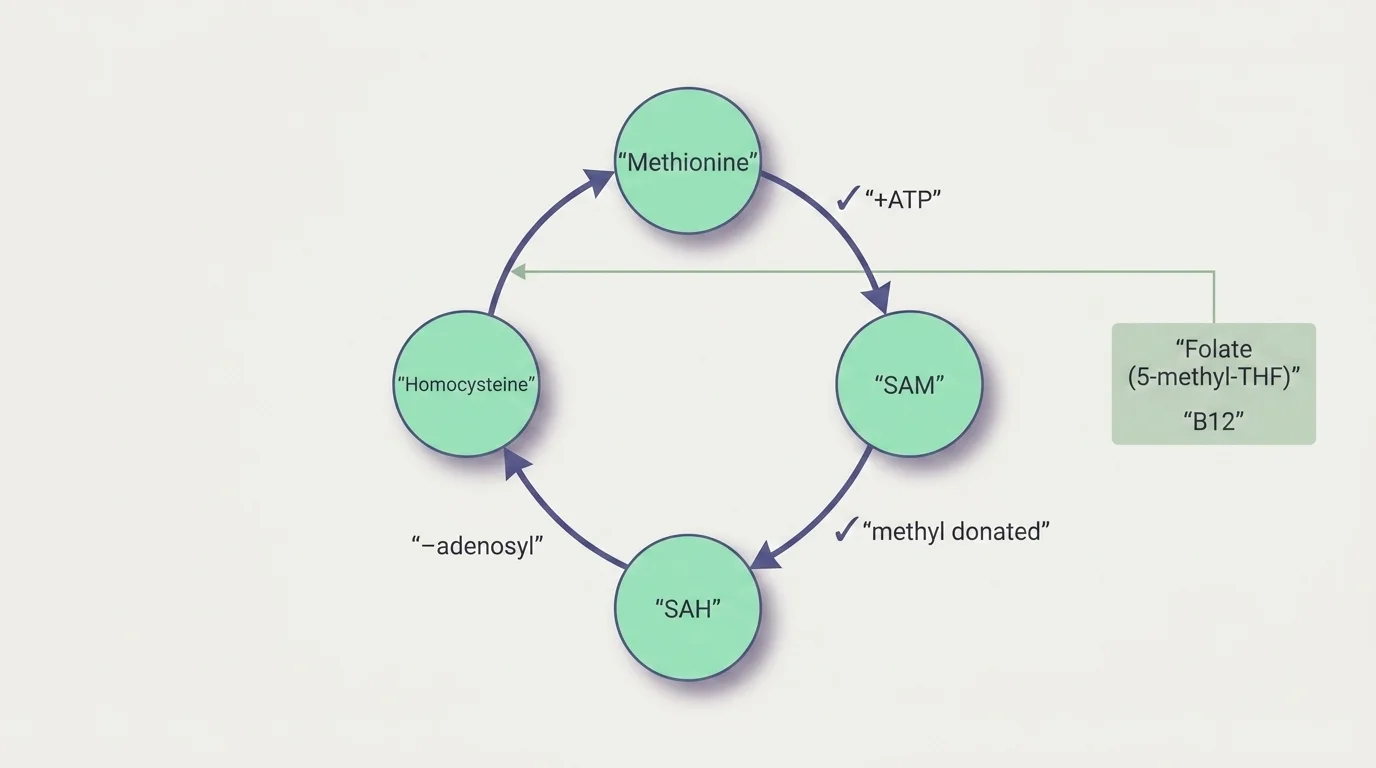
The active ingredients fall into two categories. The first is methyl donors — nutrients that supply the chemical group (CH₃) that cells use to silence or activate genes. The best food sources are dark leafy greens (folate), cruciferous vegetables (sulforaphane, methyl donors), eggs and liver (choline, B12), beets (betaine), sunflower seeds (methionine), and legumes (folate, methionine).
The second is methyl adaptogens — polyphenol-rich foods and spices that the MDL trial implicated as the largest single contributor to age reduction. The trial's list is short and specific: turmeric, rosemary, garlic, green tea, oolong tea, blueberries, and other berries. None of these are exotic. None require a powder or a capsule. Several of them — turmeric especially — show up in nearly every other cohort study as well, which is the kind of replication that nutrition research rarely gets and should always note.
A reasonable next question is whether this is just "eat your vegetables" dressed up in epigenetic language. Partly. The honest answer is that the dietary pattern is conventional — what is new is that we now have human evidence that this specific subset of the conventional pattern moves a biological-age biomarker on a timescale measured in weeks.
Nutrient, mechanism, food, gene: a working table
Most explainers of this topic name nutrients and stop. The useful version is to know the mechanism each nutrient acts through, the food that delivers it, and the gene context that makes the connection actionable. The table below pulls from the Frontiers in Nutrition 2025 review and the DNA Methylation & Personalized Nutrition review.
| Nutrient | Epigenetic mechanism | Food source | Gene context |
|---|---|---|---|
| Folate | One-carbon methylation (DNA & histones) | Dark leafy greens, legumes, asparagus | MTHFR variants change response size |
| B12 | Methylation cofactor with folate | Eggs, fish, dairy, fortified plant milks | Vegan/older adults often low; required for folate to function |
| Choline | Methyl donor for PEMT pathway | Eggs, soybeans, liver, broccoli | PEMT variants shift requirement |
| Methionine | Substrate for SAM (universal methyl donor) | Eggs, fish, sesame, Brazil nuts | Restriction has effects too — not "more is better" |
| Sulforaphane | Histone deacetylase inhibition | Broccoli sprouts, kale, cabbage | NRF2 pathway; cruciferous-tolerant gut microbiome matters |
| EGCG (green tea catechin) | DNA methyltransferase inhibition | Green tea, oolong tea | Methyl adaptogen — MDL trial implicated |
| Curcumin | Histone modification, DNA methylation | Turmeric (with black pepper for absorption) | Bioavailability is the limiting factor |
| Resveratrol | Sirtuin (SIRT1) activation | Red grapes, blueberries, peanuts | Trial doses far exceed food doses |
| Omega-3 (EPA/DHA) | Promoter methylation of inflammatory genes | Fatty fish, algae oil | Conversion from ALA is poor; food source matters |
| Butyrate (short-chain fatty acid) | Histone deacetylase inhibition | Produced by gut bacteria from fibre | Diversity of plant fibre drives production |
Two notes the marketing tends to skip. One: every nutrient in this table acts as part of a dietary pattern, not in isolation. The reason the methyl adaptogen trial worked was the pattern, not the turmeric. Two: doses used in supplement trials are typically multiples of what food delivers, and the food results — the ones that map onto the cohort data — are usually the more durable result.
If you have seen MTHFR on a DNA test
Of all the gene-by-nutrient stories in this field, the one with the most consumer attention is MTHFR. The MTHFR gene encodes an enzyme that converts dietary folate (and synthetic folic acid in supplements and fortified foods) into its biologically active form, L-5-methyltetrahydrofolate. The common MTHFR C677T variant, present in up to 40% of the U.S. population per the Allergy Research Group's clinical summary, reduces that conversion. Two copies of the variant reduce it more than one.
Here is the part the consumer DNA-kit marketing tends to flatten. The MTHFR variant does not mean folate "doesn't work" for you. It means your response to folate is different in size, and probably in the form that works best. People with the C677T variant tend to benefit more from food folate (dark leafy greens, asparagus, lentils, beets) and from methylated B-vitamin supplements (L-5-methylfolate and methylcobalamin) than from generic folic-acid-fortified foods and supplements. A 2025 review of DNA methylation and personalized nutrition reports that C677T carriers show measurably greater DNA methylation changes after folate supplementation than CC carriers — direct evidence that genotype changes the size of the dietary response, not whether to follow the advice in the first place.
A practical note. If you are planning a pregnancy and you have an MTHFR variant, this is exactly the kind of conversation to have with a clinician rather than the internet. Folate requirements during pregnancy are non-negotiable for neural tube development, and the form, dose, and timing of supplementation should be individualized.
Related Article: The Alchemy of Essential Oils: Unveiling the Science Behind Aromatherapy’s Therapeutic Effects
Is a nutrigenomic test worth buying right now?
This is the question most readers actually want answered, so let me try to give a clean version of the answer.
The case in favor: trials like PREDICT, FOOD4ME, and PRECISION-HEALTH have shown that genotype-guided dietary advice produces statistically significant improvements in weight, glycemic control, and dietary adherence compared with standard advice. Computational models now predict individual metabolic responses to specific foods with greater than 90% accuracy in lab conditions. The science is real and improving.
The case against, in 2026 specifically: the 2024 NIH All of Us Research Program release identified 1,247 genetic variants influencing dietary responses across diverse populations. That number is the reason the field is moving away from single-gene advice (e.g., "your FTO variant means...") and toward polygenic risk scores. Most consumer nutrigenomic kits still report on a handful of single genes. A 2024 Polish cohort study found no significant interaction between FTO variants, diet patterns, and metabolic syndrome in young healthy men — a useful counter-data point against any DNA-kit promising large lifestyle changes from a small panel of variants.
My read: for most people, a consumer nutrigenomic test is not yet a first-line purchase. Adopt the methylation-supporting dietary pattern first — it overlaps almost entirely with the cardiovascular pattern the field has been recommending for decades, so it costs you nothing to be wrong. If you are working with a clinician for a specific reason (suspected MTHFR variants and pregnancy planning, a chronic condition where personalization has documented value, or genuine curiosity backed by the budget), nutrigenomic testing is more useful as a refinement layer on top of an already-good pattern than as a starting point.
There are concrete food-by-gene stories worth knowing about, though. A 2023 study found that increased kimchi intake reduced non-alcoholic fatty liver disease risk specifically in carriers of PNPLA3 risk variants — a real, replicated example of a fermented food whose benefit is partly gene-dependent. The same review documents diet-by-gene interactions across CD36 (fat-taste sensitivity), GDF5 (joint health), and NRF1/LEPR (childhood metabolic response). These are not yet the basis of consumer recommendations. They are the basis of the next generation of them.
What this changes about your plate this week
If you wanted a short version to act on without buying anything:
- Build the plate around plants and pigments: every meal includes at least one dark leafy green and one deeply pigmented vegetable or berry. The methyl adaptogen list is the shopping list — turmeric, garlic, rosemary, green tea, oolong tea, berries.
- Hit folate from food, not just from a supplement: lentils, chickpeas, asparagus, spinach, romaine, beets. If you take a B-complex, the methylated forms (methylfolate, methylcobalamin) are reasonable defaults if you can afford them; food first.
- Cruciferous vegetables four times a week minimum: broccoli, kale, cabbage, Brussels sprouts, broccoli sprouts if you want the highest sulforaphane density per serving.
- Treat exercise and sleep as part of the protocol: the Frontiers 2025 review documents that high-intensity exercise reduces transcriptomic age by roughly 3.59 years and that the epigenome is genuinely plastic — but also that about 60% of exercise-induced changes return to baseline six months after stopping. There is no version of this work that does not depend on consistency.
- Talk to a clinician before you act on a DNA test result, especially if pregnancy, a chronic condition, or a family history of cardiovascular or metabolic disease is in the picture. The information is real; the interpretation is genuinely individual.
A closing word. The epigenome is plastic, not destiny — which is the actually-good news in this entire field. Your genes are the score, your diet (with sleep, movement, and stress) is part of how it gets played, and the gap between the two is bigger than the supplement aisle would like you to believe. Individual nutrition decisions, especially around chronic disease or pregnancy planning, belong in a conversation with your own clinician — not with a TikTok creator or a monthly subscription. Eat the pattern. Let the pattern do most of the work. The rest is refinement.
Frequently Asked Questions
A way of eating that supplies the nutrients your cells use to control which genes are switched on — built around methyl donors (folate, B12, choline, methionine) and 'methyl adaptogen' polyphenols (turmeric, rosemary, garlic, green tea, oolong tea, berries). The 8-week Methylation Diet & Lifestyle trial saw participants reverse their Horvath-clock biological age by 2.04 years on a version of this pattern.
It changes the size of your response, not the direction. People with the common MTHFR C677T variant (up to 40% of the U.S. population) convert folic acid less efficiently into its active form, so they benefit more from food folate (leafy greens, lentils, asparagus, beets) and from methylated B-vitamin supplements than from generic folic-acid fortification. If you're planning a pregnancy and have an MTHFR variant, that's a conversation to have with a clinician.
For most people, not yet as a stand-alone purchase. The 2024 All of Us release identified 1,247 diet-responsive variants — too many for any consumer test to act on confidently. Trials like PREDICT and FOOD4ME show personalized advice outperforms generic guidance, but the gains are modest. Eat the methylation-supporting pattern first; treat testing as a refinement, not a starting point.
Epigenetics is the layer that controls which genes are expressed in which tissues at which times, and diet is one of its strongest inputs. Personalized nutrition uses what we know about your genome and metabolic signals to refine the pattern — but the underlying recommendation (plant-forward, methyl-donor-rich, polyphenol-rich) is the same whether or not you've been tested. Genotype tends to change the size of your response, not whether the advice applies to you.
Through three main mechanisms: DNA methylation (adding methyl groups that silence or activate genes), histone modification (changing how tightly DNA is packed), and microRNA regulation. Folate and B12 supply methyl groups. Sulforaphane (from cruciferous vegetables) and EGCG (from green tea) modify histones. A ketogenic diet has been shown to alter 988 CpG sites across 786 genes related to adipose function and metabolism. The effect is real, replicated, and dose-dependent.
Because individual responses to the same food can differ — sometimes substantially. The PREDICT, FOOD4ME, and PRECISION-HEALTH trials show that genotype-guided advice produces statistically significant improvements in weight, glycemic control, and adherence over generic recommendations. The catch is that consumer testing hasn't caught up with the polygenic shift (1,247 variants identified in the 2024 All of Us release), so for most people the pattern matters more than the panel.
Check Out These Related Articles

The Gut-Brain Connection: Unveiling the Impact of Gut Microbiota on Mental Health

Microbiome Insights: Revolutionary Findings on Gut Health and Its Impact on Mental Well-Being

The Birth of Nutrition Science: From Superstition to Evidence-Based Diets