
Revolutionizing Fitness Regimens with Smart Gym Equipment


The pitch for smart gym equipment is seductive: a personal trainer, a full weight rack, and a coach who never judges you, all folded into one machine in your spare room. The category is real and growing — the global smart home gym market ran about $3.2 billion in 2024 and is projected to hit $4 billion by 2030, with AI-driven strength machines the fastest-growing slice (Athletech News). But most of what's written about it is written by people who get paid when you buy one. So here's the version with the receipts: how these machines actually work, what they really cost over three years, and the honest question of whether you should buy one at all.
How does a smart home gym's AI coaching actually work?
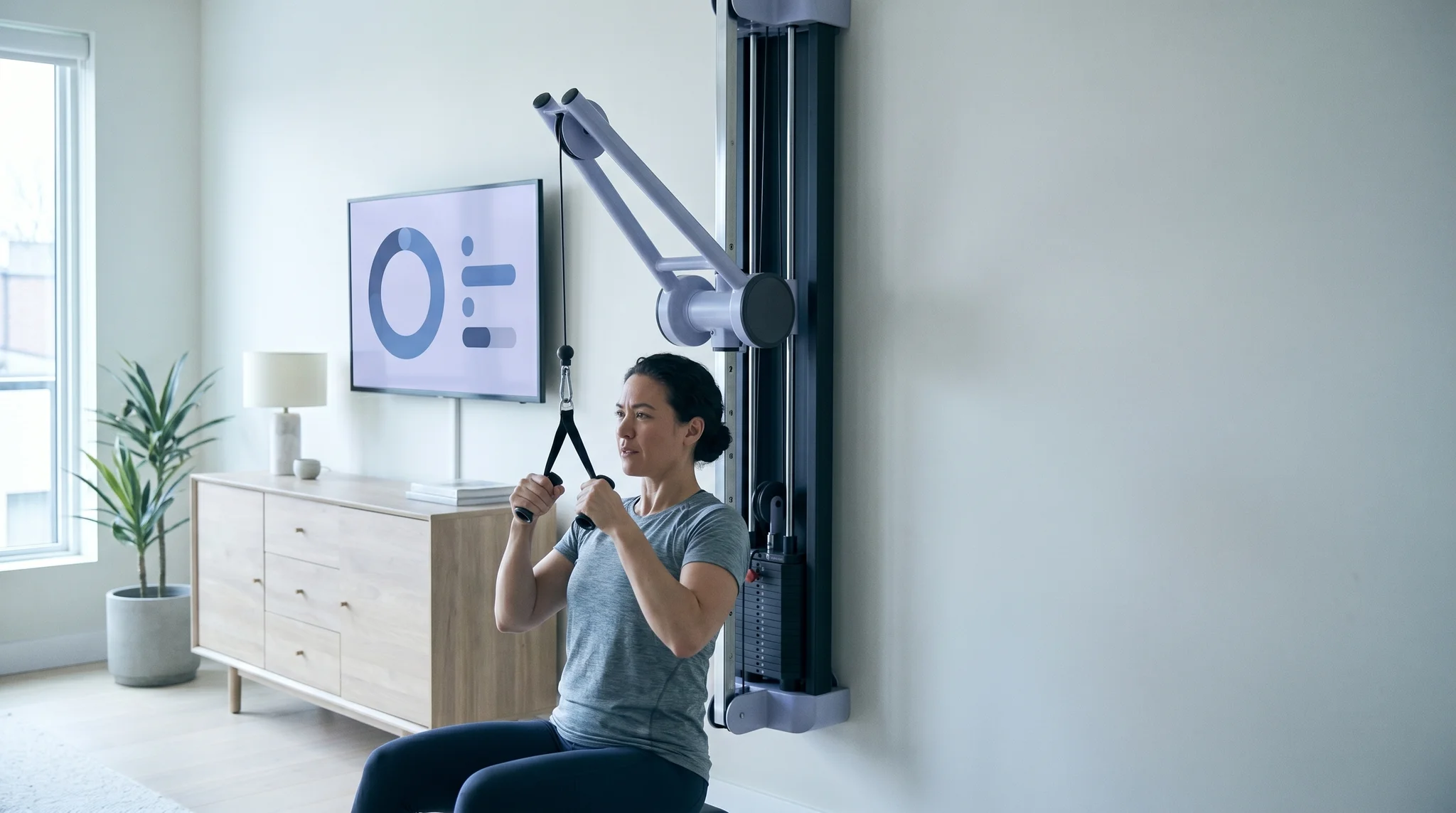
Two technologies do the real work, and understanding them cuts through most of the marketing. The first is computer-vision form tracking. The better 2026 machines no longer just count reps — they watch you. The AEKE K1's 3D camera "tracks 42 skeletal points and 17 key movement markers, detecting posture deviations and form errors within 0.5 seconds," cueing a correction by voice or screen (T3). Tonal 2 added an integrated Smart View camera for the same purpose. That's a genuine advance over the rep-counting wearables of a few years ago.
The second is electromagnetic digital resistance, and it's the one that matters for actually building muscle. Instead of stacking iron plates, these machines generate resistance with electromagnets, which lets the tension stay constant and smooth through the entire range of motion — and lets the software do things gravity can't, like automatically add eccentric overload (more weight on the lowering phase) or run a drop-set without you touching anything (BarBend). This is why "can it build real muscle?" has a yes answer: progressive overload, eccentric work, and drop-sets are legitimate training tools, and the machine just automates them.

The smart home gym categories
"Smart home gym" isn't one thing. There are four broad categories, and which you want depends on what you actually train:
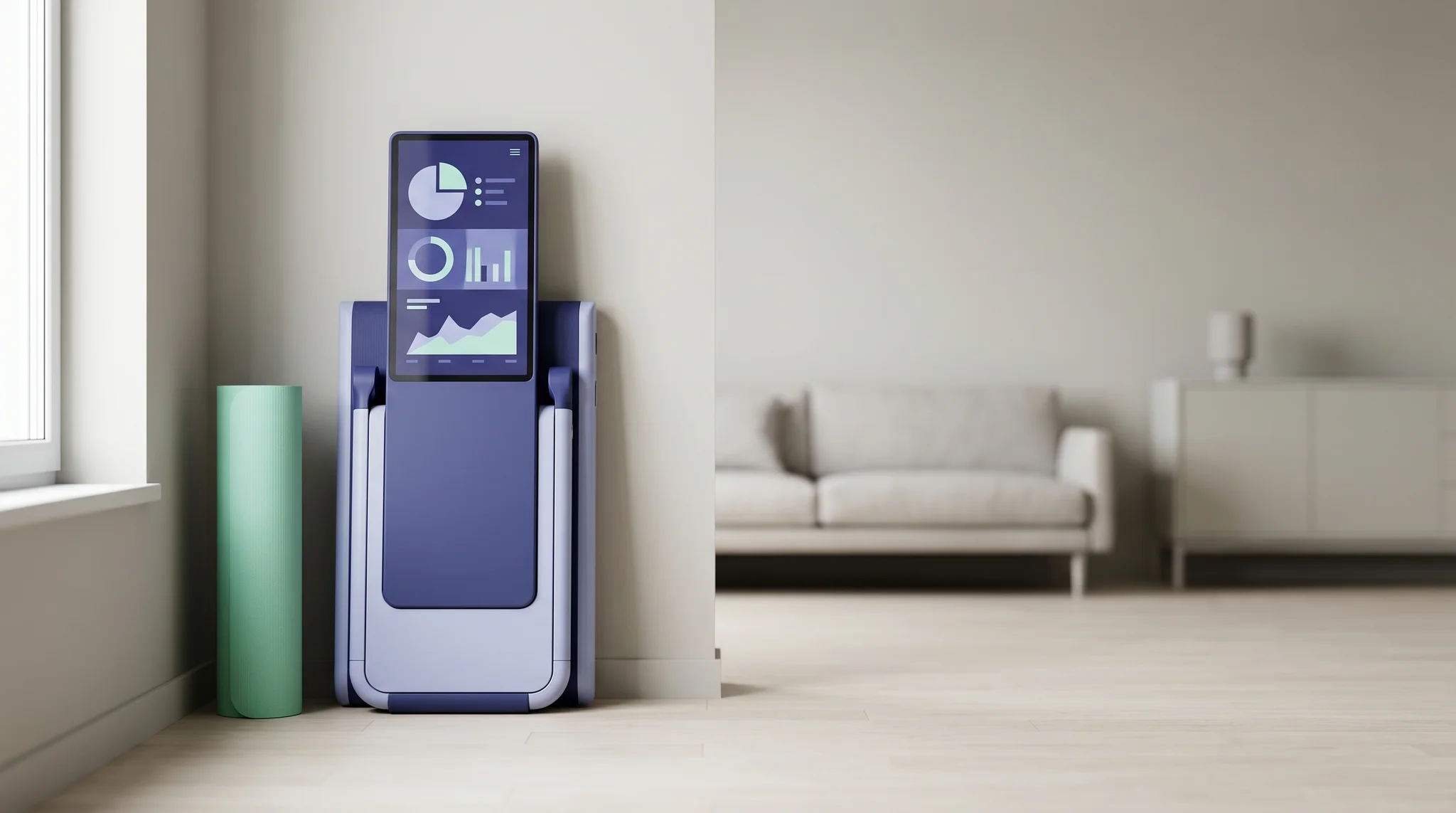
- Digital-weight cable trainers — the flagship category. A wall-mounted or freestanding unit with cables and electromagnetic resistance for full-body strength. Examples: Tonal 2 (wall-mounted, up to 250 lb), Speediance Gym Monster 2 (freestanding, up to 220 lb), AEKE K1 (folds to roughly doormat size).
- Smart adjustable dumbbells — the budget entry. Example: Bowflex SelectTech 552 (~$399), which pairs with free video content for a no-frills smart-ish setup.
- Compact / hybrid units — smaller footprint, screen-led. Example: Tempo Move (~$495), which uses your phone's camera for form feedback.
- Smart cardio (bikes, rowers, treadmills) — the connected-fitness originals, Peloton-style, built around classes rather than strength.
If your goal is strength, the digital-weight cable trainers are the category that matters — and conveniently, they're also the most expensive, which is exactly why the next section exists.
Related Article: AI-Powered Personalized Fitness: Revolutionizing Workout Regimens Through Data-Driven Insights
What does a smart home gym really cost? The 3-year math
Here's the number the brand pages bury: the sticker price is not the price. Several of these machines lock most of their value behind a monthly membership, so the honest comparison is total cost of ownership over the time you'll actually keep it. Three years:
| Machine | Upfront | Monthly fee | 3-year total |
|---|---|---|---|
| Tonal 2 | $4,295 | $59.95 | ~$6,455 |
| AEKE K1 | $4,598 | $0 | $4,598 |
| Speediance Gym Monster 2 | varies | $0 | under half of Tonal's |
| Tempo Move | $495 | $39 | ~$1,899 |
| Bowflex SelectTech 552 | $399 | $0 | $399 |
Prices and the Speediance "under half of Tonal's" comparison from Garage Gym Reviews and BarBend. Tonal gates roughly 95% of its features behind that $59.95/month membership (Smart Home Explorer), which adds about $2,160 over three years on top of an already-premium machine. This is the supplement-subscription business model wearing gym clothes: the hardware is the customer-acquisition cost, and the recurring fee is the actual business. None of that makes Tonal a bad machine — it makes the membership the thing to price in before you fall for the demo.
Which smart home gyms have no subscription?
The most important shift of the last two years is that you no longer have to pay a monthly fee to get a capable machine. Speediance dropped its membership to $0, AEKE's K1 ships with everything included and no subscription, and Bowflex's adjustable dumbbells never had one. As one 2026 buyer's guide put it, for most people who've decided they want a smart home gym, the Speediance Gym Monster 2 "is the most honest recommendation… it offers similar raw resistance to Tonal 2, removes the wall-mount barrier, and saves real money over three-plus years" (Smart Home Explorer). If you're choosing today, the subscription-free machines are where the value is.
Is a smart home gym worth it?
Only if you'll use it — and that's not a throwaway line, it's the whole financial case. The consensus across 2026 reviewers is blunt: if you won't train at least three times a week, a gym membership or free YouTube workouts is the smarter financial choice. Run the cost-per-use math on a four-figure machine and the logic is obvious — at three sessions a week it's a few dollars a workout over a couple of years; at one half-hearted session a month it's the most expensive coat rack you'll ever own.
So the honest buyer's test is two questions. First: do you have a genuine three-times-a-week habit, or are you buying the machine hoping it will create one? (It usually won't; the machine is a tool, not a motivation transplant.) Second: do you actually have the space and the wall? If both answers are yes, a smart home gym can be a real upgrade over a commute-and-wait gym membership. If either is no, keep the money. The machines are good now. That doesn't mean you need one.
A quick word on the "green gym" angle the marketing loves: a few brands tout energy-efficient motors and recyclable materials, and that's fine as far as it goes, but there's no meaningful independent data showing one smart gym is materially greener than another. Don't let it tip a four-figure decision.
The bottom line
Smart gym equipment has genuinely improved — the form tracking is real, the digital resistance builds real muscle, and you can finally buy a good machine without a forced monthly fee. The marketing will sell you a transformation; what you're actually buying is a well-engineered tool whose value is entirely determined by whether you use it three times a week. Price the three-year total, not the sticker. Favor the no-subscription machines. And buy one only if you already are the person who'll train on it — not the person you're hoping it will turn you into.
Frequently Asked Questions
Worth it only if you'll train 3+ times a week — at that cadence it beats a gym membership on cost-per-use. Below it, free workouts win. The machine is a tool, not a motivation transplant.
Speediance Gym Monster 2, AEKE K1, and Bowflex SelectTech require no monthly fee, unlike Tonal, which gates most features behind a $59.95/month membership.
Tonal 2 runs about $4,295 plus roughly $2,160 in membership over three years (~$6,455 total); subscription-free machines like AEKE K1 ($4,598) or Bowflex ($399) cost only the upfront price.
A camera tracks dozens of body points in real time — the AEKE K1 tracks 42 — flagging form errors within about 0.5 seconds, while electromagnetic resistance auto-adjusts to match your strength.
Yes. Electromagnetic digital resistance holds tension constant through the full range of motion and enables drop-sets and eccentric overload — legitimate training tools — so consistent use builds real strength.
Check Out These Related Articles

Revolutionizing Patient Care: The Impact of Data Analytics in Health and Wellness

The Technological Future of Holistic Healing: Innovations Reshaping Well-Being Practices

Democratizing Wellness Tech: Ensuring Equal Opportunities for Digital Health Adoption