Echoes of the Forest: Bringing Indigenous Plant Medicine to Modern Pharmacy Shelves


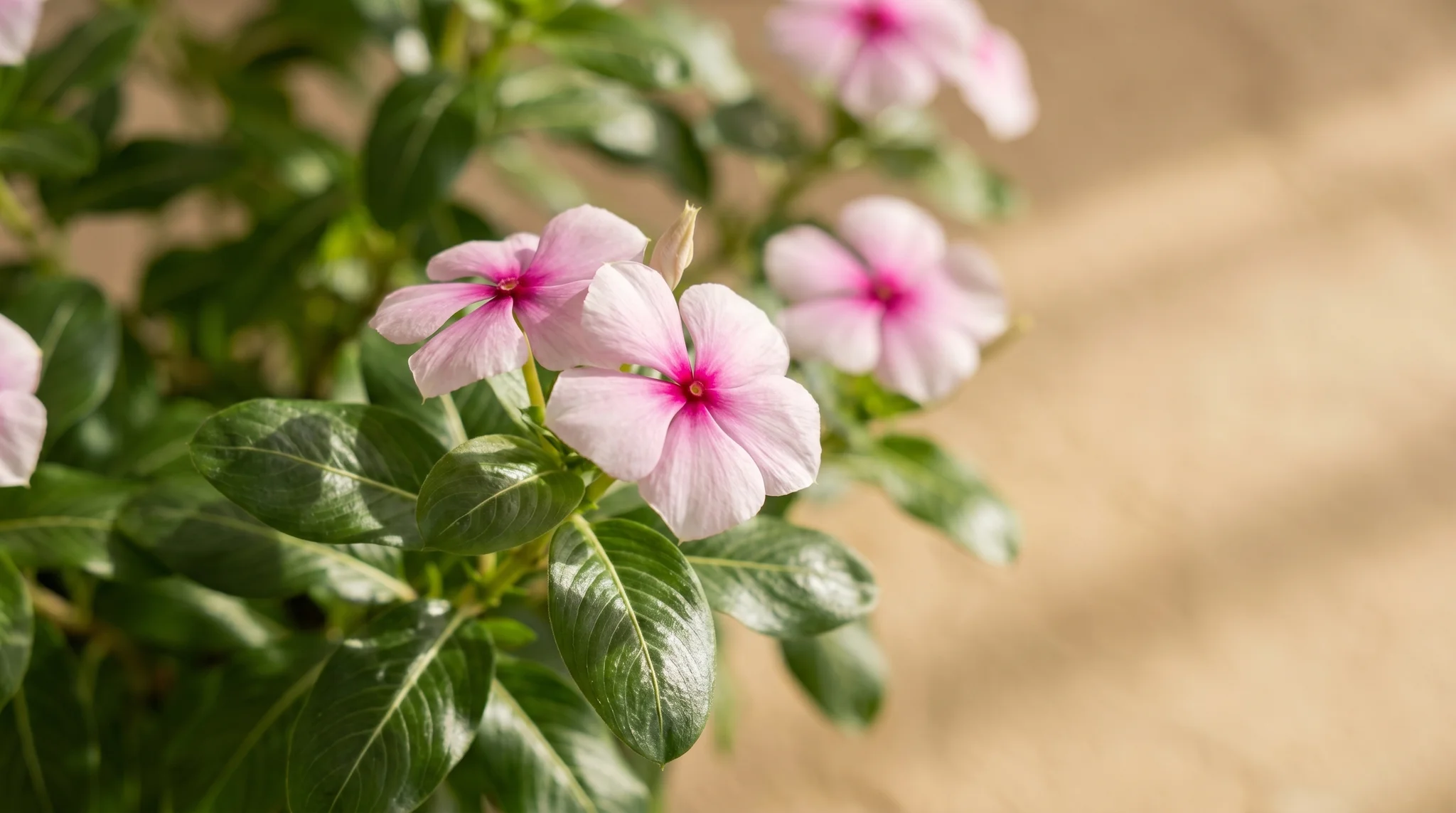
A rosy periwinkle grows wild across Madagascar, where it was used in traditional medicine long before a pharmaceutical company noticed it. From that small flower, mid-twentieth-century researchers isolated two compounds — vincristine and vinblastine — that went on to transform the treatment of childhood leukemia and Hodgkin's lymphoma. The drugs saved enormous numbers of lives. Madagascar, and the healers whose knowledge pointed the way, saw almost none of the profit. That gap — between where a medicine comes from and who is credited and paid for it — is the real story of indigenous plant medicine reaching the modern pharmacy shelf. It is a story of genuine scientific debt, and of an equity problem the last two years have finally started to address.
This is not, as the wellness internet often frames it, a tale of mystical "ancient wisdom." It is something more concrete and more interesting: a documented pipeline in which the plant knowledge of specific peoples, developed over millennia, becomes the standardized drugs in your medicine cabinet. As a 2024 review in Plant Signaling & Behavior puts it, "this repository of information, developed over millennia, underpins numerous contemporary therapies" (PMC).
What are ethnobotany and pharmacognosy?
Two precise words sit underneath this whole subject, and most articles never define either. Ethnobotany is the study of how particular peoples use plants — as food, material, and medicine — and how that knowledge is held and transmitted within a community. Pharmacognosy is the science of medicines drawn from natural sources: the discipline that takes a plant a community has used for centuries, finds the molecule responsible, and turns it into a tested, dosed drug. The first studies the tradition; the second translates it. Both are real sciences, and the bridge between them is where most of the medicines below were born.
How traditional plants became modern drugs
The scale of this is easy to underestimate. Roughly a third to 40% of modern medicines are derived in some form from plants, and by one rigorous analysis, about 56% of all FDA-approved small-molecule drugs from 1981–2019 — 1,059 of 1,881 — trace back to natural products or their derivatives (MDPI Molecules, Newman & Cragg). Crucially, this isn't random luck: drug discovery guided by the knowledge of local communities has a higher success rate than blind screening (PMC). The tradition is, quite literally, a search algorithm refined over thousands of years.
Here are some of the best-documented examples — each a plant, a people who used it, and the drug it became:
| Plant | Traditional / Indigenous use | Modern drug or compound |
|---|---|---|
| White willow bark (Salix) | Cherokee, Iroquois, and Blackfoot peoples used it for pain, fever, and headache | Salicin → aspirin |
| Pacific yew (Taxus brevifolia) | Pacific Northwest coastal forests | Paclitaxel (Taxol) — ovarian and breast cancer (NCI) |
| Cinchona bark | Andean South America, for fever | Quinine — antimalarial |
| Madagascar periwinkle (Catharanthus roseus) | Malagasy traditional medicine | Vincristine / vinblastine — leukemia, lymphoma (John Innes Centre) |
| Sweet wormwood (Artemisia annua) | Traditional Chinese medicine, for fever | Artemisinin — antimalarial (Nobel Prize, 2015) |
| Echinacea (purple coneflower) | Lakota and Cheyenne, for infections and wounds | Immune-support botanical |
| Goldenseal | Cherokee and Iroquois, as an antiseptic | Berberine-bearing antimicrobial botanical |
How does a plant become a pharmacy drug?
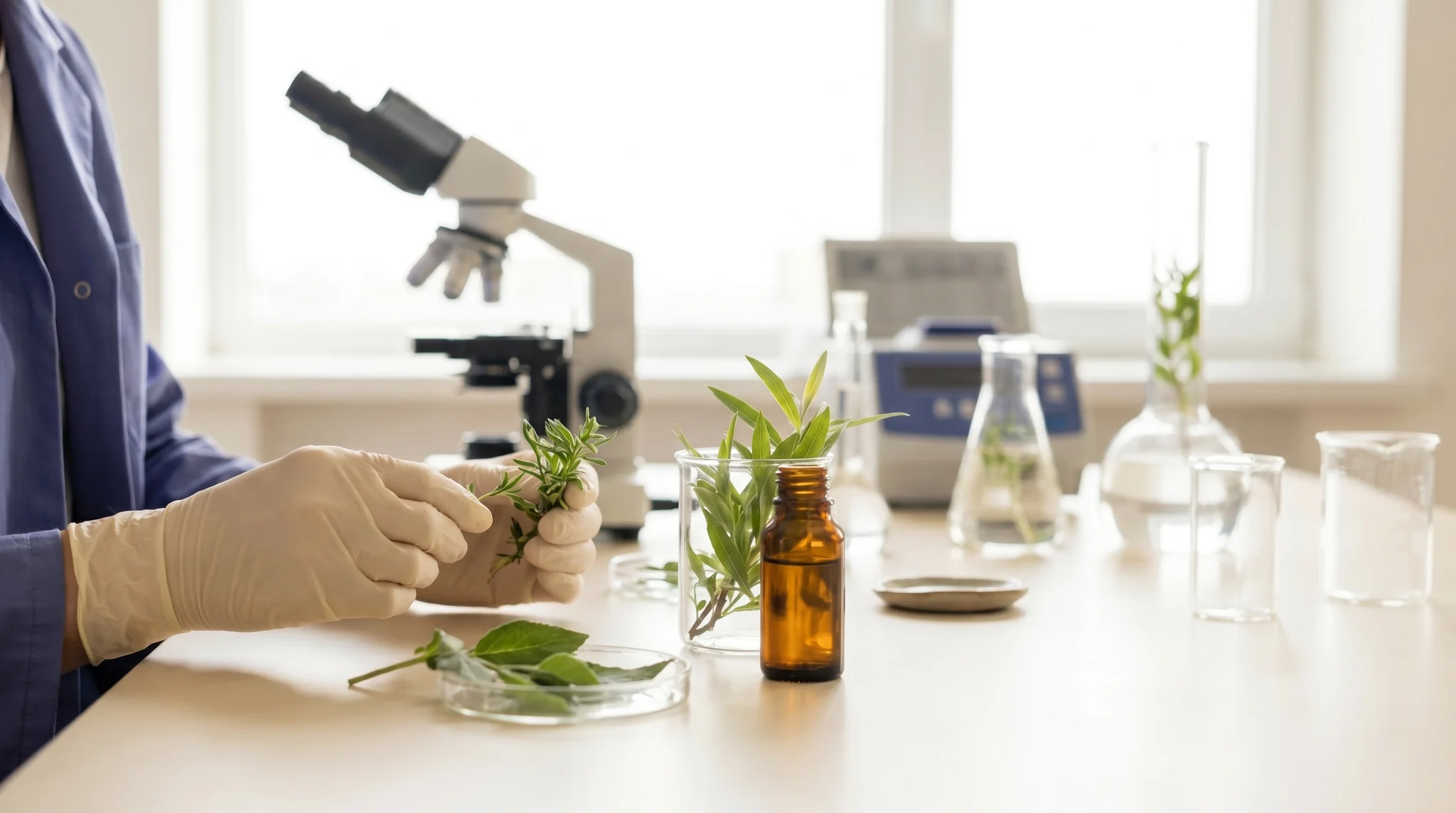
The path from forest to pharmacy runs through isolation and testing, and that step is everything. Researchers identify the active compound in a plant a community has long used, isolate it, verify what it does, establish a safe and effective dose, and then scale up production. Aspirin is not chewed willow bark; it is salicin's refined descendant, in a known quantity. That distinction is the difference between a medicine and a guess.
Historically the bottleneck was supply — the Pacific yew yields only a trace of paclitaxel, which once made the cancer drug agonizing to produce. The newest chapter, and the honest successor to the speculative gene-editing claims that used to fill articles like this one, is laboratory biosynthesis. In January 2026, University of York researchers reported in New Phytologist how a plant produces a potent alkaloid through an unusual, bacteria-like gene — opening a route to reproduce these compounds in the lab rather than stripping rare plants from the wild. "Now that we know how to look for this chemical production," said the study's Dr. Benjamin Lichman, "we have new avenues to explore for the production and discovery of safe drugs" (University of York).
A safety note worth taking seriously
Because the plant-to-drug story is so compelling, it's easy to draw the wrong conclusion from it — that the raw plant is interchangeable with the drug. It is not. The reason willow bark became aspirin is that a wild plant delivers an unpredictable, variable dose of compounds that can be ineffective at one extreme and toxic at the other. Foraging a medicinal plant and self-treating a real illness is not "natural medicine"; it's unmonitored pharmacology. If you're managing a health condition, the responsible path is a qualified healthcare provider and a tested medication — not a substitution of a leaf for a label. Respect for these traditions includes respect for why the isolation and dosing mattered.
Who owns the medicine? Benefit-sharing, not blockchain
This is where the periwinkle's lesson bites. For most of the twentieth century, the flow ran one way: a company harvested a community's plant knowledge, patented the resulting drug, and kept the proceeds — a practice with a name, biopiracy, defined as the "exploitation of knowledge and biological resources of tribes by firms in the pharmaceutical industry or scientists without providing proper compensation" (PMC).
The genuine development of the last two years isn't a digital ledger; it's hardening law. The Nagoya Protocol on Access and Benefit-Sharing is now ratified by 138 countries, and that framework has begun to translate into enforceable national rules — India, for instance, enacted Biological Diversity Rules in 2024 and ABS Regulations in 2025, with a reported roughly $50 million benefit-sharing deal routing royalties back to tribal communities for Himalayan medicinal plants (2025 ABS update). It is slow and imperfect, but it is the first time the answer to "who benefits?" has had real legal teeth.
The Four Sacred Medicines
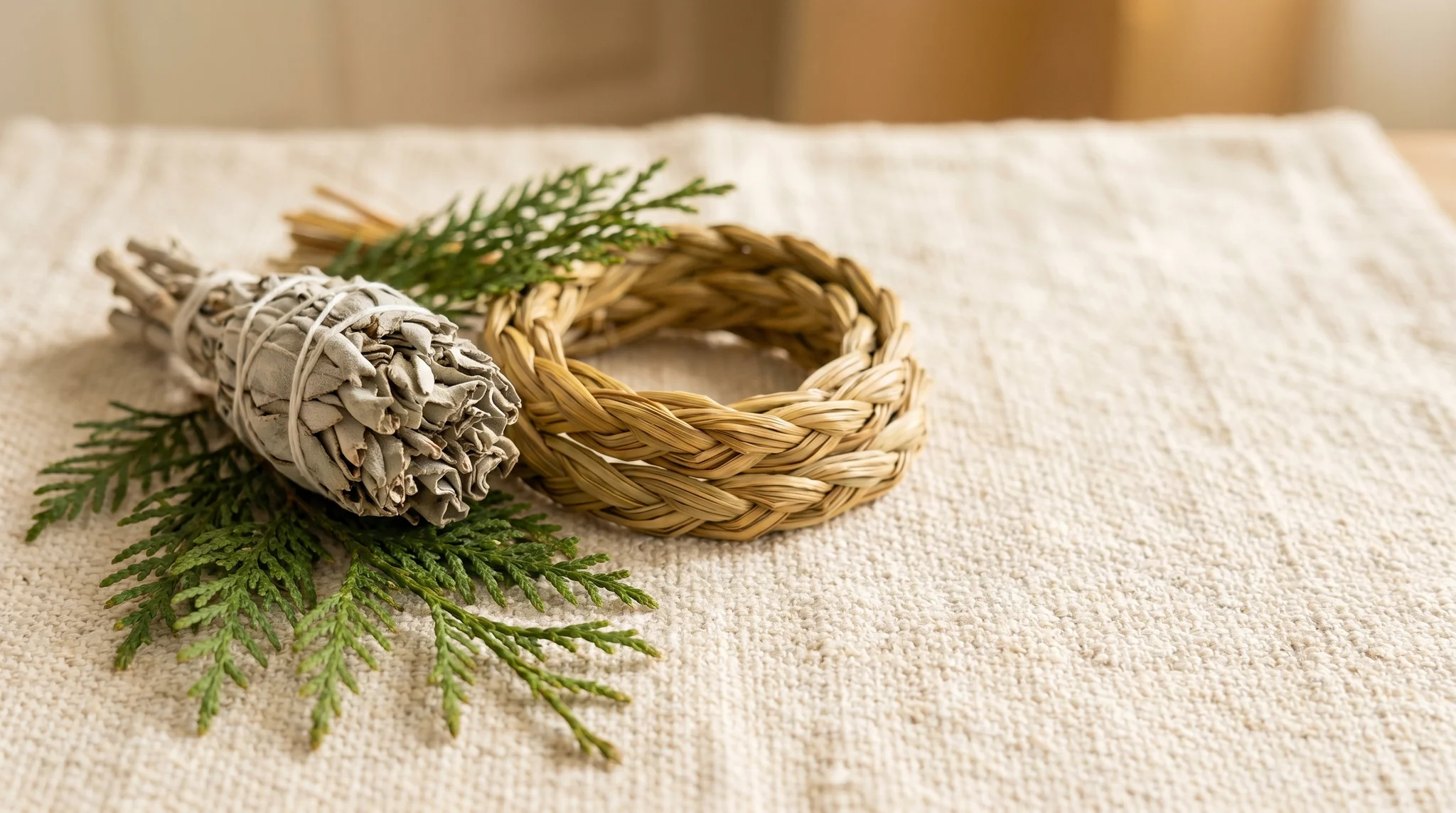
Not every important plant is a drug feedstock, and it matters to say so plainly. To many Anishinaabe and other Indigenous peoples of North America, the Four Sacred Medicines — tobacco, sage, cedar, and sweetgrass — are ceremonial and spiritual, used in prayer, purification, and community life (Britannica).
A closing question
The pharmacy shelf is, in a real sense, a museum of borrowed knowledge — aspirin, quinine, Taxol, artemisinin, the vinca alkaloids, all of them gifts that began as someone's tradition. For most of that history the gift went unacknowledged and unpaid. The science is finally able to reproduce these compounds without exhausting the plants, and the law is finally beginning to route value back to the communities who pointed the way. So the question I'd leave you with is the one that should have been asked all along, and now at last can be: when a tradition becomes a treatment, who is owed — and are we, at last, paying them?
Frequently Asked Questions
Tobacco, sage, cedar, and sweetgrass — the Four Sacred Medicines, especially significant to the Anishinaabe, used in ceremony, prayer, and daily life. They are cultural and spiritual, not pharmaceutical feedstock.
Willow bark for pain and fever (the origin of aspirin), echinacea for infections and wounds, and goldenseal as a natural antiseptic, among many others used across different nations.
Roughly a third to 40% of modern medicines are plant-derived, and about 56% of FDA-approved small-molecule drugs from 1981–2019 trace back to natural products or their derivatives.
Pharmacognosy is the science of medicines from natural sources — the discipline that takes a plant a community has long used, identifies the active compound, and turns it into a tested, standardized drug.
Researchers identify the active compound (for example, salicin in willow → aspirin, or paclitaxel in Pacific yew → Taxol), isolate it, verify what it does, establish a safe dose, and scale up production. The drug is not the raw plant.