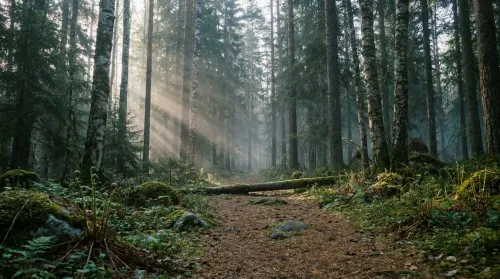
Nordic Nexus: Integrating Nature's Influence in Mental Well-Being Strategies


Two things about Nordic mental-wellness writing need correcting before any of the rest of the framing makes sense.
The first is the language. Shinrin-yoku, often labeled "Scandinavian" in wellness coverage, is not. It was coined in Japan in 1982 by Tomohide Akiyama at the Japanese Ministry of Agriculture, Forestry and Fisheries. What the Nordic countries actually have is friluftsliv — the Norwegian word, literally "free air life," coined by Henrik Ibsen in 1859, describing unhurried daily time outdoors as a public-health practice rather than a leisure pursuit. Forest bathing and friluftsliv are cousins, not synonyms. The 2025 wave of wellness coverage has finally started getting this right.
The second is the credibility frame. The reason it is worth looking at Nordic countries at all on mental wellness is not because lomi-lomi-style aesthetics travel well — they don't — but because the World Happiness Report 2025 still ranks all five Nordic countries in the global top 10, with Finland #1 for the eighth consecutive year (score 7.736), Denmark #2, Iceland #3, Sweden #4, and Norway #7. The Nordic average rank has improved from 4.8 in 2013 to 3.4 in 2025. That is the substrate underneath the practices below.
A note on framing before we start: most of what makes the Nordics rank where they do — universal healthcare, generous welfare, low wellbeing inequality, high social trust — does not transplant in pieces. The friluftsliv walk and the sauna ritual are the visible parts of a deeper system. Knowing what is portable and what is not is the first move.
What changed in 2025–2026
Three things have shifted in this space that most evergreen wellness coverage has not caught up with.
Friluftsliv is being studied as preventative mental health. The Norwegian School of Sport Sciences has an active PhD project framing friluftsliv as preventative mental health, in partnership with Mental Helse Ungdom (Norwegian youth mental-health NGO) and DNT (the Norwegian Trekking Association). A 2025 PMC review consolidating friluftsliv as a public-health tool and a 2025 paper in Taylor & Francis comparing how Norwegian and international students conceptualize the term signal that friluftsliv has moved from cultural curiosity to active research object.
Finnish sauna has its current canonical review. Jari Laukkanen and Setor Kunutsor's 2024 comprehensive review in Temperature is now the citation that supersedes scattered older single-study references. A 2025 cross-sectional study in the International Journal of Circumpolar Health on women's perceived sauna benefits adds a current data point to the otherwise male-skewed Finnish sauna literature.
Cold-water exposure is finally getting rigorous synthesis. A 2025 PMC-registered PRISMA protocol for a systematic review and meta-analysis of cold-water exposure on mental health signals that the Wim Hof / contrast-therapy wellness moment is finally being formally evaluated. The honest framing is that the review is still in protocol stage as of 2025 — meaning the meta-analytic verdict isn't in yet.
These three together change the article's posture from "look how nice the Nordics are" to "here is the current research underneath the practices."
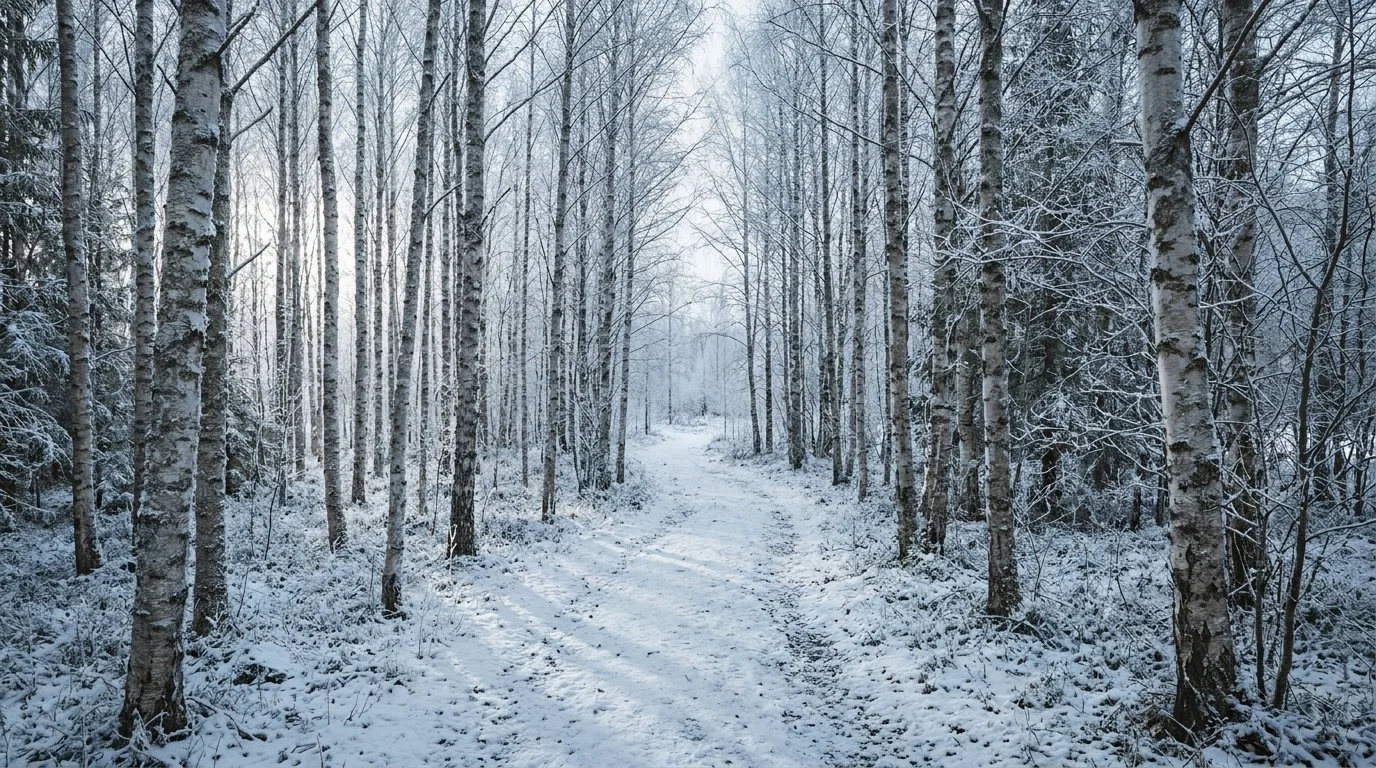
Friluftsliv: the Norwegian outdoor-life philosophy
Friluftsliv (pronounced roughly free-loofts-leev) literally translates to "free air life." Henrik Ibsen used the word in his 1859 poem På Viddene to describe time alone in the mountains as a public good. In modern Norwegian and broader Scandinavian culture, it names a daily and seasonal practice — outdoor time woven into ordinary life rather than scheduled as a recreational outing. The standard image is not a wilderness expedition. It is a Norwegian family walking to the kindergarten in a snowstorm because the kindergarten is held outdoors year-round; an office worker eating lunch at a picnic table at -10°C because that is what the office building has out front; a Sunday tur (walk) regardless of weather.
The defining property is the unhurried, daily, all-weather quality. The Norwegian phrase det finnes ikke dårlig vær, bare dårlige klær — "there is no bad weather, only bad clothes" — captures the cultural baseline.
What 2025 research is testing: the Norwegian School of Sport Sciences PhD project named above is asking whether friluftsliv functions as a measurable preventative-mental-health intervention. The 2025 PMC review consolidates the case for friluftsliv as a public-health tool, drawing on the wider literature on green-space exposure, daily nature contact, and seasonal outdoor activity in Nordic populations.
What is portable for a non-Nordic reader: the daily, low-key, in-all-weather quality is the load-bearing piece. A 20-minute walk every day in whatever weather is currently outside is a closer practice to friluftsliv than a weekend hike. The infrastructure pieces — outdoor kindergartens, civic walking culture, public-trail networks — are not portable individually, but the personal practice is.
What is not portable: the cultural-trust substrate that makes leaving a baby in a stroller outside a café normal in Copenhagen is downstream of decades of welfare-state and public-safety choices that an individual reader cannot recreate. The friluftsliv practice still works without it; the cultural ease does not transfer.
Related Article: The Science of Forest Bathing: Immersing in Nature for Mental & Physical Well-Being
Forest bathing properly attributed (and what the science actually shows)
What is forest bathing?
Forest bathing — known as shinrin-yoku in Japanese — is a structured practice of slow, sensory-engaged time spent in a forest. It was coined in 1982 by Tomohide Akiyama at the Japanese Ministry of Agriculture, Forestry and Fisheries and was developed as both a public-health initiative and a forestry-economic strategy. The Japanese government has since designated more than 60 forest-therapy bases for the practice (62 as of recent INFOM counts, peer-reviewed and managed by the Forest Therapy Society of Japan).
The format, drawn from the canonical sources: a slow walk of typically 2 to 4 hours through a forest, with deliberate sensory engagement (sight, hearing, smell, touch, sometimes taste), no devices, no speed. The point is not exercise. The point is the immersion.
Related Article: Sustainable Wellness Practices: Analyzing the Environmental Impact of Holistic Health Choices
The mechanism (phytoncides and the immune-system signal)
Phytoncides are volatile organic compounds released by trees — substances trees produce as part of their own defense against insects and bacteria. Dr. Qing Li's research group at Nippon Medical School has produced the most-cited body of work on phytoncides and human immune response, including measurements of natural-killer (NK) cell activity increasing after structured forest-bathing exposure. Other mechanisms invoked across the literature include parasympathetic activation (lower cortisol and blood pressure), attention restoration (the recovery of directed attention after time in unstructured natural environments), and improved sleep quality.
What the evidence actually shows
Two pieces of the literature are worth holding together. Mathew White and colleagues, in a 2019 Scientific Reports paper, reported a dose-response threshold: about 120 minutes per week of nature exposure was associated with self-reported health and wellbeing improvement, with no further increase below or above that threshold within the studied range. That is the cleanest quantification the field has produced for a general adult population.
The forest-bathing-specific literature is more variable. Several small studies report short-term cortisol reductions, blood-pressure drops, and improved mood scores after structured forest sessions. The honest summary is that the acute effects are reasonably well-documented, the mechanism via phytoncides and parasympathetic activation is plausible and partially measured, and the longer-term clinical-outcome evidence is thinner than the popular coverage suggests.
Related Article: Urban Gardening for Well-Being: A Beginner's Guide
No forest? No problem
Forest bathing originated in forest-rich Japan and translates straightforwardly in the Nordic countries; for everyone else, the practical question is what to do without a forest. The current evidence supports several adapted forms:
- Urban green-space exposure. Parks count. The White et al. 120-minute weekly threshold was met in studies using ordinary urban green space.
- Window-view greenery. Small studies suggest even visual exposure to plants and natural light reduces stress markers, though effect sizes are smaller than direct outdoor contact.
- Indoor plants and natural light. Lower-tier but accessible. The mechanism overlap is mostly attention-restoration rather than phytoncide exposure.
- Coastal exposure. Blue space (oceans, lakes) shows similar stress-reduction patterns in the broader nature-and-health literature.
The structuring move that makes any of these work is the same as forest bathing: slow, sensory engagement, no devices, no agenda.
Sauna and the mental-wellness frame
The original Peppino article framed sauna as generic heat therapy. The current research framing — particularly Laukkanen and Kunutsor's 2024 Temperature review — is more specifically about cardiovascular and mental-health benefits of repeated passive heat exposure in the Finnish-sauna tradition.
The findings to know:
- Cardiovascular outcomes. Laukkanen's earlier longitudinal work in Finland linked frequent sauna bathing (4-7 times/week) to lower cardiovascular mortality and lower all-cause mortality vs. infrequent use. The 2024 review consolidates this body of work.
- Depressive and mood symptoms. A growing body of small trials suggests acute mood improvements after sauna, with mechanism candidates including heat-shock-protein induction, BDNF release, and parasympathetic rebound after thermal stress.
- Women's-perception research. The 2025 International Journal of Circumpolar Health study is a current data point that the older Finnish sauna literature was sample-skewed toward men.
The Finnish löyly tradition — pouring water on heated stones to produce steam — is the cultural baseline. The wellness-market sauna is usually a downstream product that may or may not deliver the temperatures and humidity the research describes (most home-spa cabin saunas reach 70-80°C; the studied Finnish sauna runs 80-100°C).
Contrast bathing. Adding a cold plunge or cold shower after a sauna session — the "contrast" pattern — is increasingly common in the Wim Hof / wellness-influencer world. The current evidence picture is mixed: anecdotal mood and alertness benefits are widely reported, while the 2025 PRISMA protocol for a systematic review of cold-water exposure on mental health signals that the meta-analytic verdict is not yet in. Cold-water exposure has documented cardiovascular risks; cold-shock response can trigger arrhythmias and is contraindicated for people with existing cardiovascular disease.
Safety considerations. Sauna and contrast bathing are not appropriate for everyone. If you have cardiovascular disease, uncontrolled hypertension, or are pregnant, talk with your clinician before adding either to your routine. Sauna heat can also interact with alcohol (sharply increases sudden-death risk in epidemiological data), with certain medications, and with the body's hydration status.
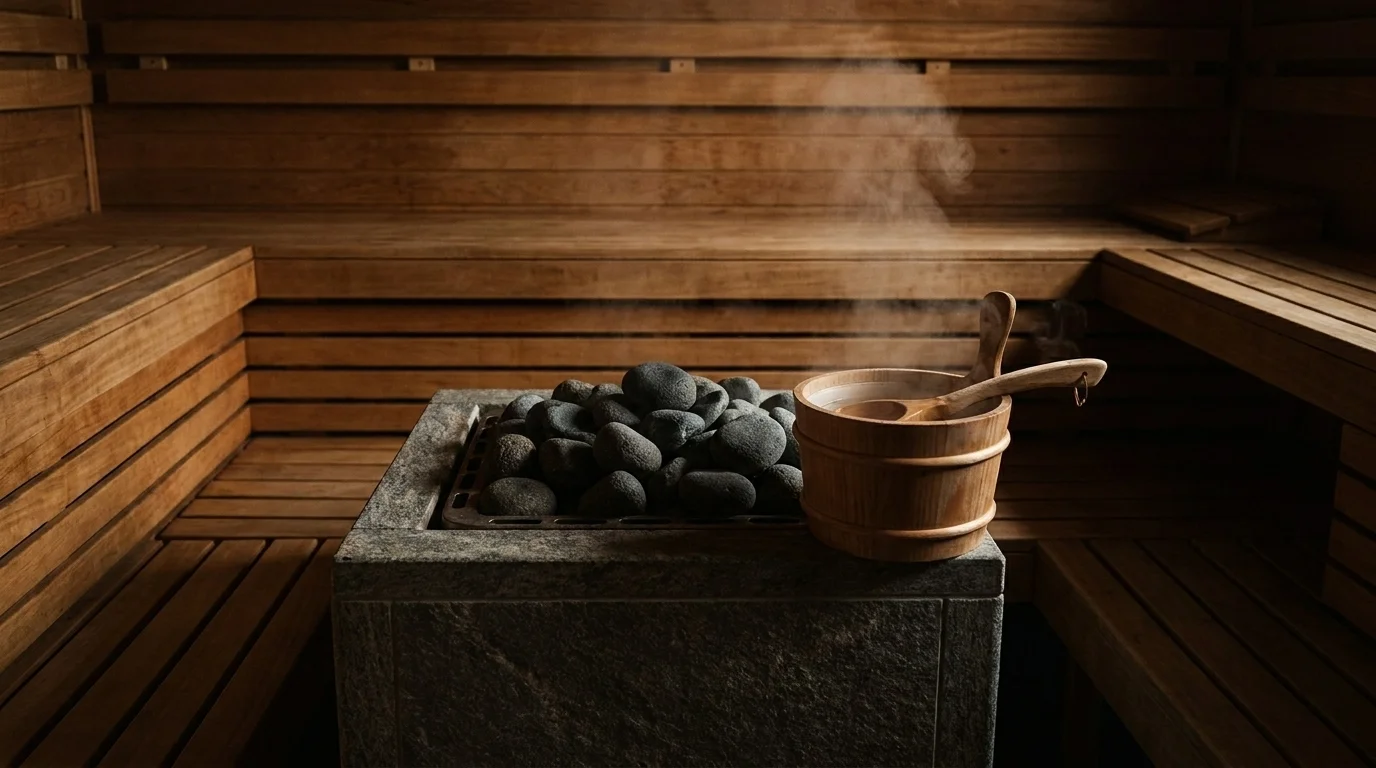
Hygge: the Danish wind-down, in proper proportion
A short section on hygge in the place it actually belongs in this framework.
Hygge (Danish, roughly hyoo-guh) names a quality of cozy, low-stress, often shared indoor time — candlelight, warm food, blankets, the company of people you like. It is paired in everyday Danish life with the outdoor practices above as the wind-down counterpart: friluftsliv and the sauna handle daytime activation; hygge handles evening and winter inwardness.
The hygge wellness market peaked around 2016-2017 and has been deflating since — search volume for "hygge lifestyle" is down meaningfully year over year. The cultural practice is still real in Denmark; the listicle wellness version (buy candles, buy throws, buy cookbooks) was mostly an exported aesthetic.
Three honest hygge elements that actually do something: warm, soft indoor lighting in the evening (consistent with the broader sleep-hygiene literature on blue-light reduction); the social practice of unhurried meals with people you like (well-supported by the loneliness-and-health literature); and the in-doors-in-winter cultural acceptance of slowing down rather than fighting darkness (the Nordic version is meaningfully healthier than the U.S. "push through" pattern).
The marketing aesthetic — chunky knits, fairy lights, single-perfect-mug photography — is not what is doing the work.
A Nordic mental-wellness weekly rhythm
The synthesis that no single source in the SERP puts together — combining the four traditions into one coherent weekly framework — is what the rest of this article has been building toward. A portable version, adapted for someone outside the Nordic context:
Daily (friluftsliv layer). A 20-30 minute outdoor walk in whatever weather is currently outside. Not as an "exercise session" — as the daily baseline. Skip the headphones for at least part of it. Pick the route based on where the trees, water, or green space is, not on convenience.
Two or three times a week (forest-bathing layer). A slower, longer outdoor session — 60-120 minutes if you can find it — with deliberate sensory engagement and no agenda. If you're meeting the 120-minute weekly nature threshold from the White 2019 paper, this is where the math gets there.
Once or twice a week (sauna layer). A sauna session of 15-20 minutes if you have access, followed by gradual cooldown. Contrast (cold finish to a shower, brief cold plunge) is optional and carries its own caveats; if you have cardiovascular concerns, talk to your clinician first.
Daily / weekly evenings (hygge layer). Warmer, lower-stim indoor environments. Soft lighting in the evening. Slower, in-person, unhurried social time over food at least one or two evenings a week.
This is not a Nordic-specific prescription. It is the structuring pattern that the four practices, taken seriously, produce. None of the individual pieces is novel; the integration is what most generic wellness coverage misses.
What the research does not yet show
A short honesty section the rest of the consumer literature skips.
Many forest-bathing studies are small (often n<30), single-session, and not randomized. The acute physiological effects (cortisol, blood pressure) are reasonably documented; the clinical effects (treatment of depression, anxiety, or other diagnosable conditions) are not yet established by large RCTs. The phytoncide mechanism is plausible and partially measured but does not yet have a definitive dose-response curve in humans.
The cold-water exposure literature is even thinner. The 2025 PRISMA-protocol systematic review is the marker that synthesis is underway, not that it has been completed. Until it lands, claims about cold plunge curing depression are over-fit to anecdote.
The friluftsliv research is similarly in active development. The Norwegian School of Sport Sciences project named above is a PhD-level study, not a multi-site definitive trial. The case for friluftsliv as a public-health intervention rests on the broader green-space and daily-nature-exposure literature, which is reasonable but not condition-specific.
The honest summary: the Nordic mental-wellness practices have a real, growing, and credible evidence base. They are not yet — and may never be — substitutes for treatment of diagnosed mental-health conditions. For everyday stress, mood regulation, sleep, and general wellbeing, they are some of the best-supported low-cost interventions available. For depression, anxiety, or PTSD, they are reasonable adjuncts to clinical care, not replacements.
If you have a diagnosable mental-health condition, the right starting point is a clinician — and if you are in crisis, call or text 988 in the US for the Suicide and Crisis Lifeline. The walk, the sauna, and the candle-lit dinner can sit alongside that work. They do not stand in for it.
A sober takeaway
The Nordics rank where they do on the World Happiness Report for structural reasons most readers cannot copy. What is portable: a daily walk in any weather (friluftsliv), 120 minutes of nature exposure a week distributed across slower sessions (the forest-bathing layer), passive heat exposure if available and medically appropriate (the sauna layer), and warmer, slower evenings (the hygge layer).
The integration is the thing. None of the individual practices is novel. The pattern that combines them — daily, weekly, all-seasons — is what the Nordic countries are running, and it is the closest thing to a non-prescription mental-wellness baseline that current evidence supports. Build the version of it that fits your life. The closing rule is the same one across every piece I write on a practice that does something real: name the dose, name the source, and bring any specific medical question to your own clinician.
Frequently Asked Questions
Forest bathing — known as shinrin-yoku in Japanese — is a structured practice of slow, sensory-engaged time in a forest. It was coined in Japan in 1982 by Tomohide Akiyama at the Japanese Ministry of Agriculture, Forestry and Fisheries. The acute physiological effects (lower cortisol and blood pressure, improved short-term mood) are reasonably documented; mechanisms include exposure to tree-produced phytoncides, parasympathetic activation, and attention restoration. Mathew White's 2019 Scientific Reports paper identified about 120 minutes of nature exposure per week as the threshold associated with self-reported wellbeing improvement.
Friluftsliv (literally 'free air life') is a Norwegian philosophy coined by Henrik Ibsen in 1859 describing unhurried, all-weather, daily outdoor time as a public good. The Norwegian School of Sport Sciences is currently running a PhD project framing friluftsliv as preventative mental health, partnered with Mental Helse Ungdom (Norwegian youth mental-health NGO) and the Norwegian Trekking Association (DNT). A 2025 PMC peer-reviewed review consolidates the case for friluftsliv as a public-health tool.
No. Shinrin-yoku ('forest bathing') was coined in Japan in 1982 by Tomohide Akiyama at the Japanese Ministry of Agriculture, Forestry and Fisheries. The Nordic equivalent is friluftsliv, the Norwegian philosophy of outdoor life. Many wellness articles conflate the two; correctly attributed, they are complementary cousins, not synonyms.
The World Happiness Report 2025 ranked Finland #1 for the eighth consecutive year (score 7.736), with Denmark #2, Iceland #3, Sweden #4, and Norway #7. The Nordic average rank has improved from 4.8 in 2013 to 3.4 in 2025. The report attributes this to universal healthcare and education, generous welfare systems, low wellbeing inequality, and high social trust — the substrate that makes the visible practices (friluftsliv, sauna, hygge) sustainable. Most of that substrate does not transplant in pieces.
Jari Laukkanen and Setor Kunutsor's 2024 comprehensive review in Temperature is the current canonical citation on Finnish-sauna passive heat therapy for cardiovascular and mental health. Laukkanen's earlier longitudinal Finnish data linked frequent sauna bathing (4-7 times/week) to lower cardiovascular and all-cause mortality. A 2025 cross-sectional study in the International Journal of Circumpolar Health added a current data point on women's perceived sauna benefits.
Emerging evidence suggests acute mood improvements from passive sauna heat, with mechanism candidates including heat-shock-protein induction, BDNF release, and parasympathetic rebound. Cold-water exposure — the cold plunge after a sauna — is widely reported anecdotally but has documented cardiovascular risks, and a 2025 PRISMA-protocol systematic review on cold-water exposure for mental health is still in the synthesis stage. For diagnosed depression, sauna and cold exposure are reasonable adjuncts to clinical care, not substitutes.
Hygge is the Danish quality of cozy, low-stress, often shared indoor time — candlelight, warm food, blankets, the company of people you like. The wellness elements with actual evidence behind them are warm soft indoor lighting in the evening (consistent with sleep-hygiene literature on blue-light reduction), unhurried in-person meals with people you like (loneliness-and-health literature), and the cultural acceptance of slowing down in winter. The marketing aesthetic — chunky knits, fairy lights — is downstream of the practice, not the practice itself.
The defining frame is friluftsliv — daily, all-weather outdoor time woven into ordinary life rather than scheduled as recreation. Specific activities include daily walks (often via active commuting), cross-country skiing in winter, Nordic walking with poles, hiking, and the Sunday tur. The pattern is the daily-low-key practice, not the equipment.
A portable version: 20-30 minutes of outdoor walking every day in whatever weather (friluftsliv layer); two or three slower 60-120 minute outdoor sessions a week to hit the 120-minute-of-nature weekly threshold (forest-bathing layer); one or two sauna sessions weekly if available and medically appropriate (sauna layer); warmer, slower, in-person evenings with soft lighting at least once or twice a week (hygge layer). None is novel on its own; the integration is the thing.
Check Out These Related Articles
Revolutionizing Spaces: The Transformative Influence of Wellness on Interior Design

The Sustainable Plate: How Plant-Based Diets Contribute to a Healthier Planet
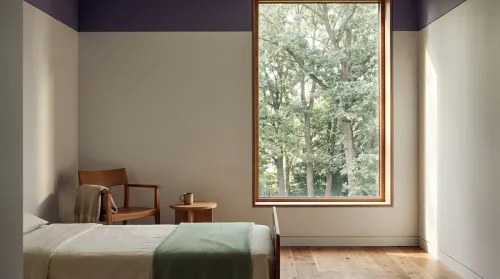
Biophilic Design in Healthcare: Optimizing Healing Environments with Nature-Inspired Spaces