
Urban Gardening for Well-Being: A Beginner's Guide


If you live in a city, you know the particular kind of depletion that comes with it — the noise, the screens, the sense that everything is paved. Urban gardening is one of the simplest, best-evidenced antidotes I know, and I don't mean that as a wellness slogan. Growing a few things in a small city space genuinely changes your stress physiology, and I'll show you the studies that prove it. Urban gardening — growing plants, herbs, or vegetables in a city, whether on a windowsill, a balcony, a rooftop, or a shared community plot — is having a real moment, and it deserves one. Here's what it is, what it actually does for your mind and body, and how to start even if you've never kept a plant alive.
What is urban gardening?
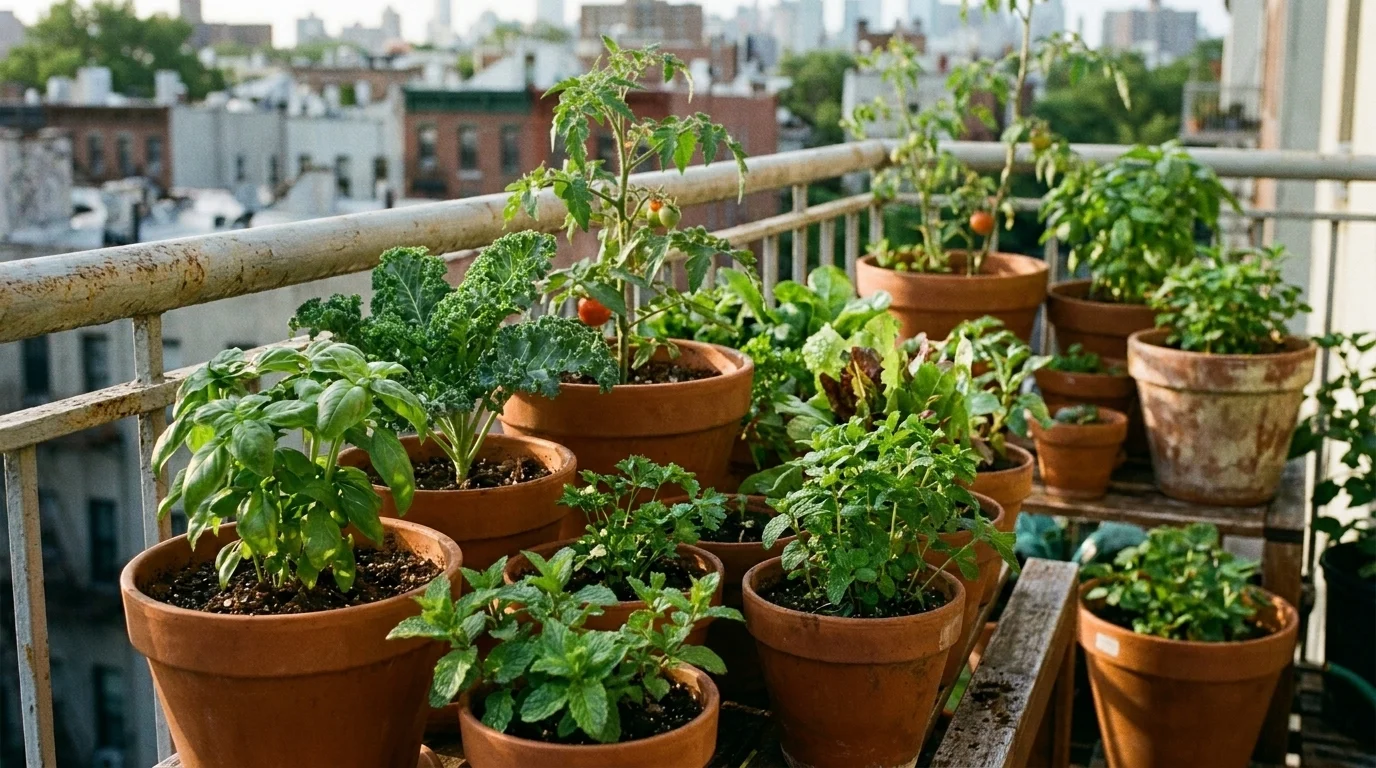
Urban gardening is simply the practice of growing plants in a city environment, working with the space you have rather than the acreage you don't: containers on a balcony, a vertical wall of herbs, a rooftop bed, a sunny windowsill, or a plot in a shared community garden. It's not a fringe hobby — urban agriculture already supplies an estimated 15–20% of the global food supply, and some 2026 projections suggest small-space and urban gardens could provide more than 30% of fresh produce consumed in metro areas. But for most city dwellers, the reason to start isn't food security. It's how it makes you feel — and that part is measurable.
Does urban gardening actually reduce stress?
Yes — and unusually for a wellness claim, there's controlled evidence, not just vibes. In a 2011 experiment published in the Journal of Health Psychology (Van Den Berg & Custers), researchers gave people a stressful task and then had them either garden for 30 minutes or read indoors for 30 minutes. Both lowered the stress hormone cortisol — but, in the authors' words, "decreases were significantly stronger in the gardening group. Positive mood was fully restored after gardening, but further deteriorated during reading." Thirty minutes of dirt and plants beat thirty minutes of resting on a couch.
It's not just the act of gardening, either; it's the green space itself. A 2013 field study (Roe et al.) of residents in deprived urban neighbourhoods found that "higher levels of neighbourhood green space were associated with lower levels of perceived stress and a steeper diurnal decline in cortisol" — meaning a healthier daily stress-hormone rhythm.
Let me be honest about the size of this, the way I would with any client: gardening is a genuine, evidence-backed support for everyday stress and low mood, not a treatment for clinical depression or an anxiety disorder. If you're struggling with something more than a hard week, please treat that as its own thing and talk to a professional. But for the ordinary, grinding stress of city life, tending something green is one of the most reliable small interventions there is. It sounds too simple to matter. It matters anyway.
Related Article: The Science of Forest Bathing: Immersing in Nature for Mental & Physical Well-Being
The easiest methods for small spaces
You do not need a yard. The four most accessible approaches:
- Container gardening — pots and planters on any balcony, step, or sunny floor. The most forgiving place to start.
- Vertical gardening — growing upward on a wall, trellis, or stacked planter. It's the breakout method of 2026 (vertical systems have seen roughly 400% year-over-year growth in search interest) precisely because it turns a tiny footprint into real growing area.
- Windowsill growing — herbs and salad greens on an indoor sill with decent light; the lowest barrier to entry of all.
- Rooftop gardening — if you have access, a rooftop offers light and space most apartments lack (mind the weight and wind).
How to start, even if you've killed every plant you've owned
Here's the whole beginner sequence, kept deliberately small so you'll actually do it:
- Find your light. Watch where the sun falls and pick a spot that gets roughly 6–8 hours. Most edible plants want a lot of light; this single factor decides more than anything else.
- Start with forgiving crops. Herbs (basil, mint, parsley), salad greens, and cherry tomatoes are hard to fail with and give you something to eat or snip within weeks.
- Use a few good containers. Anything with drainage holes works; bigger pots dry out more slowly and forgive inconsistent watering.
- Water consistently, not constantly. More beginner plants die from overwatering than under. Check the top inch of soil; water when it's dry.
- Expect to lose a couple. You will kill a plant. That's tuition, not failure — keep the ones that thrive and plant more of those.
The goal at the start isn't a harvest. It's the ten minutes a day outside with your hands in soil — which, per the research above, is doing more for you than it looks like it is.
Related Article: Sustainable Wellness Practices: Analyzing the Environmental Impact of Holistic Health Choices
Community gardens: gardening as connection
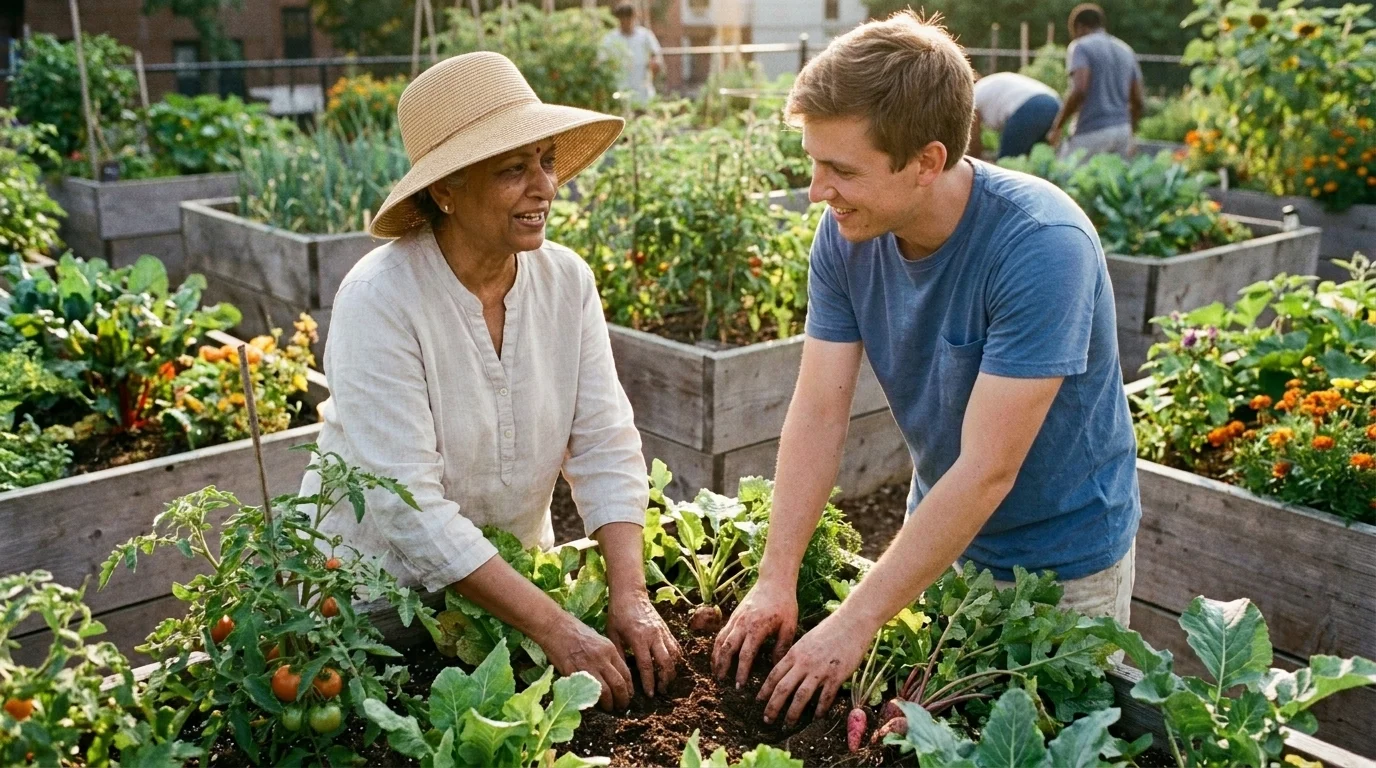
If there's one upgrade to the solo-balcony version, it's a community garden — a shared urban plot where neighbours grow food together. It's worth its own mention because it adds the ingredient that potted herbs can't: other people. Isolation is one of the most reliable drags on mental health, and a community garden quietly solves for it — you show up, you tend your bed, you end up talking to the person tending theirs. The well-being benefit here is as much about co-regulation and belonging as it is about the vegetables.
To find one: check your city's parks or sustainability department, look for neighbourhood or community-garden registries online, or ask at a local nursery. Most offer either a plot of your own or a volunteer slot if you'd rather start without the commitment. If your area doesn't have one, starting a small shared bed with a few neighbours is more doable than it sounds.
What's growing in 2026
If you want to make small-space gardening even easier, the current tools genuinely help: self-watering pots with moisture reservoirs that buy you a couple of weeks between waterings, and inexpensive soil-moisture sensors that take the guesswork out of step four above. On the ecological side, pollinator gardens and no-till practices are surging — a reminder that even a few flowering plants on a balcony do a small bit of good beyond your own stress levels.
Related Article: Biophilic Design in Healthcare: Optimizing Healing Environments with Nature-Inspired Spaces
Start small
Urban gardening is that rare wellness practice where the evidence is as good as the marketing: controlled studies show it lowers cortisol and lifts mood, it costs almost nothing to begin, and it scales from a single windowsill pot to a shared community plot. You don't need a plan, a system, or a green thumb you don't have. Put one forgiving plant somewhere with good light, water it when the soil is dry, and spend a few minutes a day with it. The calm isn't in the harvest. It's in the tending — and that part starts the day you begin.
Frequently Asked Questions
Urban gardening is growing plants, herbs, vegetables, or fruit in a city environment — on balconies, rooftops, windowsills, in containers, or in shared community plots — using methods like container, vertical, rooftop, and community gardening.
Yes. In a controlled 2011 study (Van Den Berg & Custers), 30 minutes of gardening after a stressful task lowered the stress hormone cortisol more than 30 minutes of indoor reading and fully restored positive mood. Greener neighbourhoods also show healthier daily cortisol patterns.
Find a spot with 6–8 hours of sun, start with forgiving crops like herbs, salad greens, or cherry tomatoes in containers with drainage, water when the top inch of soil is dry (overwatering kills more beginners than underwatering), and expand to vertical or rooftop space as you go.
A community garden is a shared urban plot where neighbours grow food together. Find one through your city's parks or sustainability department, neighbourhood groups, or community-garden registries, then sign up for a plot or a volunteer slot — and enjoy the social connection that comes with it.
Container gardening on a sunny balcony or windowsill is the most forgiving start — a few pots with drainage, easy herbs or greens, and consistent watering. Vertical gardening is the best next step when you want more growing area without more floor space.
Check Out These Related Articles
Revolutionizing Spaces: The Transformative Influence of Wellness on Interior Design
The Sustainable Plate: How Plant-Based Diets Contribute to a Healthier Planet

Nordic Nexus: Integrating Nature's Influence in Mental Well-Being Strategies
