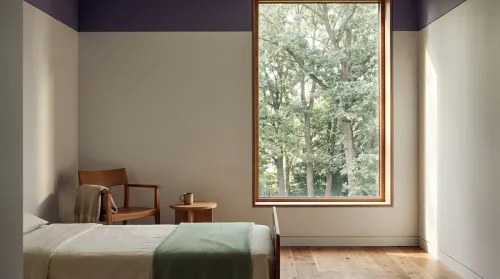
Revolutionizing Spaces: The Transformative Influence of Wellness on Interior Design


The fastest-growing idea in interior design is also one of the oldest: that the room you sit in changes how your body works. The industry has a name for it now — biophilic interior design, the practice of building the human pull toward nature into indoor spaces through light, plants, materials, and layout. It is no longer a niche. By July 2025, the WELL Building Standard for healthy buildings was engaged across 6 billion square feet of space in 137 countries, a twelvefold increase since early 2020 (International WELL Building Institute).
When a category grows that fast, two questions are worth asking before you spend a dollar on it: does it actually work, and who profits from telling you it does? This guide answers both — it walks the real framework, the real evidence, the room-by-room moves, and the budget version, and it flags where the marketing runs ahead of the data.
What is biophilic interior design?
Biophilic interior design applies one principle indoors: humans are wired to respond to nature, so spaces that reintroduce natural light, greenery, organic materials, and natural forms tend to support how we feel and function. "Biophilic design" is the broad concept across architecture and planning; biophilic interior design is its indoor application — what you can actually do to a room. The distinction matters because most of the searchable, doable advice lives at the interior scale, not the building one.
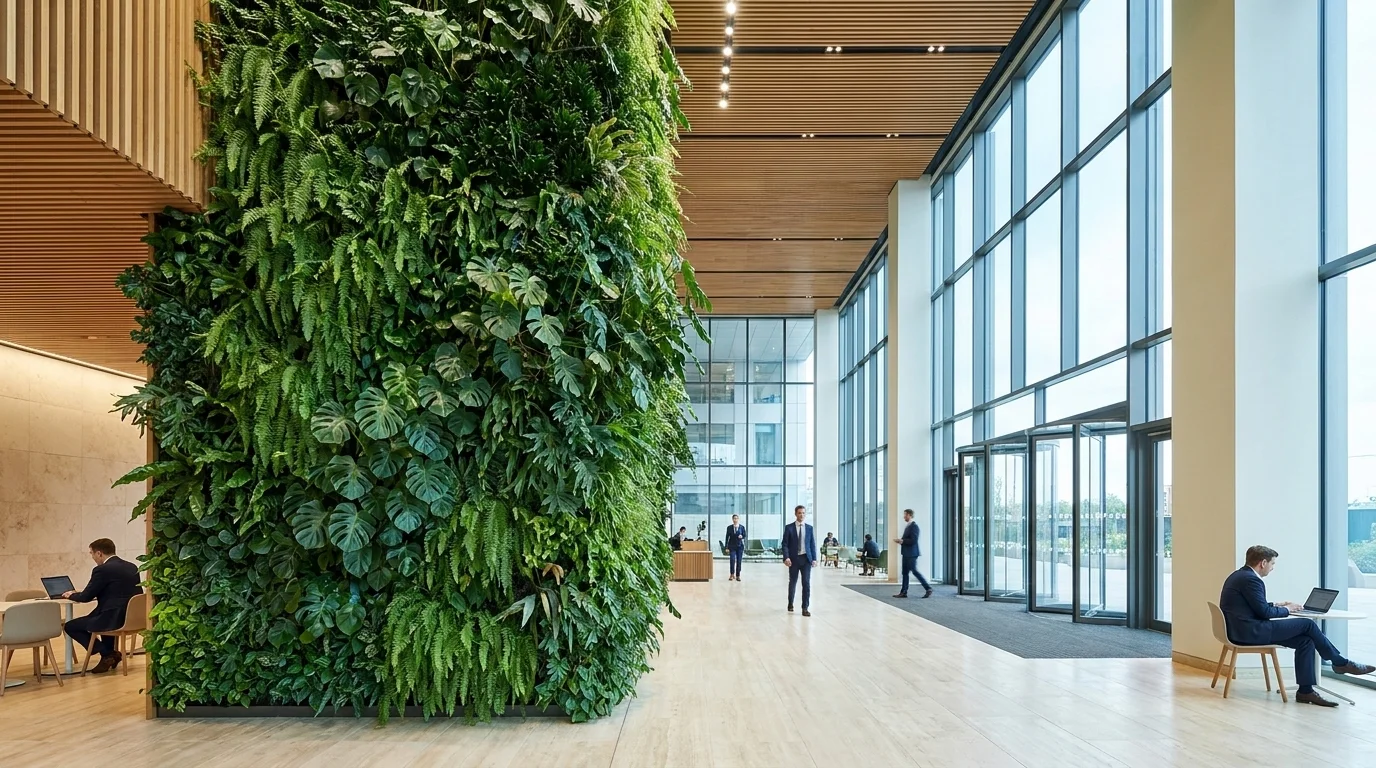
The 2026 version of this has moved past the plant-on-every-shelf cliché. The current direction is multisensory and architectural: how a space sounds, feels, and smells, with greenery built into the structure — living walls, air-purifying moss panels, timber joinery — and "alive" materials like travertine, limewash, and clay finishes, rather than scattered pots (Style Sourcebook; Design Middle East).
The framework everyone cites: Terrapin's 14 (now 15) Patterns
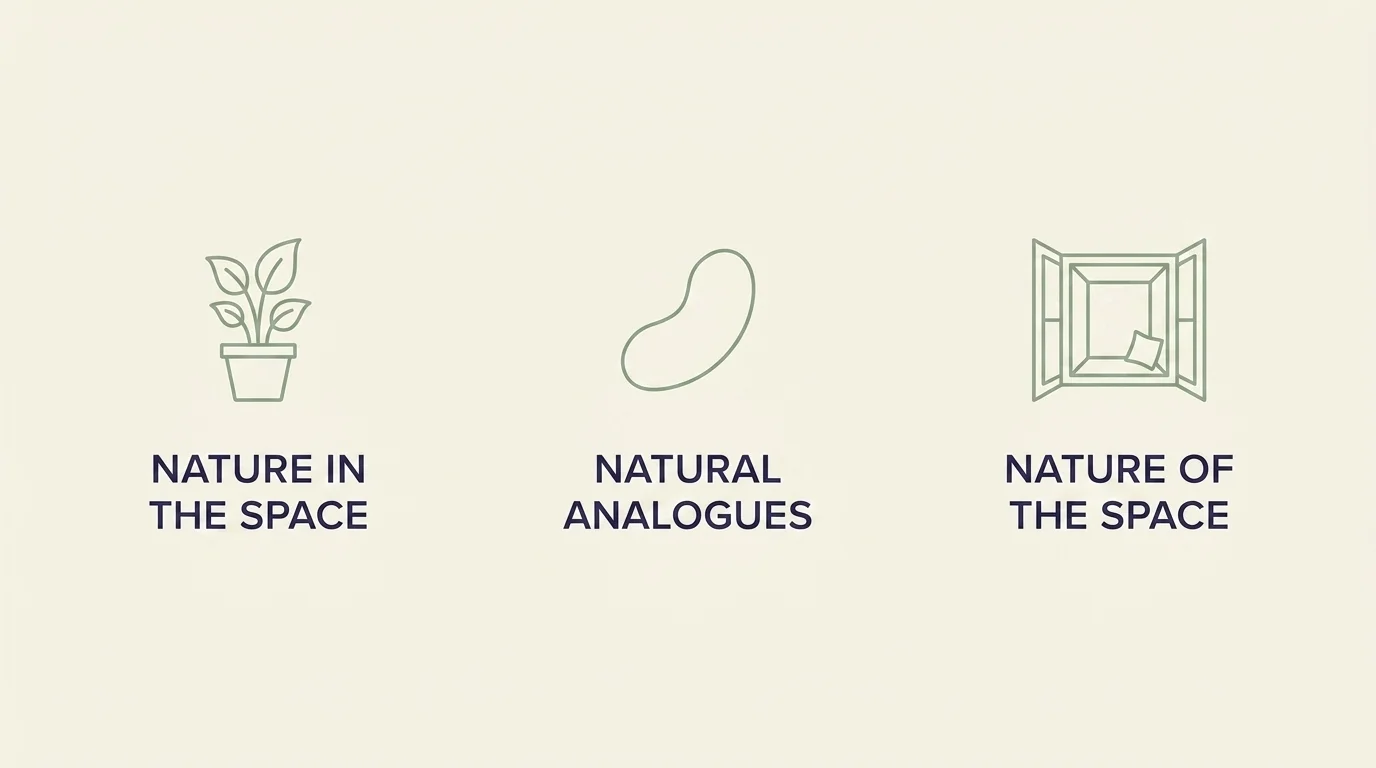
If you read past the trend pieces, almost every credible source traces back to one document: Terrapin Bright Green's 14 Patterns of Biophilic Design, first published in 2014. Its December 2024 tenth-anniversary edition added a fifteenth pattern, "Awe," with its own spatial conditions and health outcomes (Terrapin Bright Green; WorkInMind). The patterns group into three categories, and that grouping is the most useful map a homeowner can carry:
- Nature in the Space — direct contact: plants, natural light, airflow, water, views of the outdoors, and the presence of animals or natural sound.
- Natural Analogues — nature once removed: organic shapes (biomorphic forms), natural materials and textures, botanical patterns.
- Nature of the Space — how the layout feels: "prospect and refuge" (open views from a sheltered spot), mystery, and the new "Awe."
You do not need all fifteen. The framework is a checklist for noticing what a room is missing, not a mandate to install a waterfall.
Related Article: The Science of Forest Bathing: Immersing in Nature for Mental & Physical Well-Being
Does it actually work? Grading the evidence
Here is where most coverage gets lazy, asserting "wellness" benefits with no source. The honest answer is that the evidence is real but uneven, so grade it.
Strong, peer-reviewed. The workplace data is the most robust: in a survey of 7,600 office workers across 16 countries, those in environments with natural elements reported 15% higher wellbeing, 6% higher productivity, and 15% more creativity (Human Spaces report, via University of Minnesota Landscape Arboretum). On the clinical side, a 2024 systematic review found that therapeutic biophilic design in hospitals is associated with reduced hospitalization time, lower patient mortality, less pain, and lower provider stress, and controlled studies report medium-to-large effect sizes for stress reduction and cognitive performance from greenery, nature views, and daylight (Frontiers in Built Environment, 2024; Nature Scientific Reports, 2025). The natural-light effect even has a plausible mechanism: light entering the eye drives a hypothalamic pathway regulating serotonin and melatonin — mood and sleep (LivingEtc).
Weaker, or oversold. Two popular claims deserve a harder look. The idea that a few houseplants meaningfully "purify" indoor air does not hold up at room scale — the often-cited NASA chamber result doesn't translate to a furnished living room, where ventilation, filtration, and source control do the real work; the plants are for the eyes, mostly. And color psychology — the "soft blues calm you, yellows energize you" staple — is widely applied but thinly evidenced; treat palette advice as aesthetic preference with a wellness label, not as pharmacology.
The pattern is the one that recurs across the wellness economy: the genuine effects (daylight, greenery, nature views on stress and cognition) get used to sell the unproven ones. Keep the two piles separate.
Room by room: where it actually goes
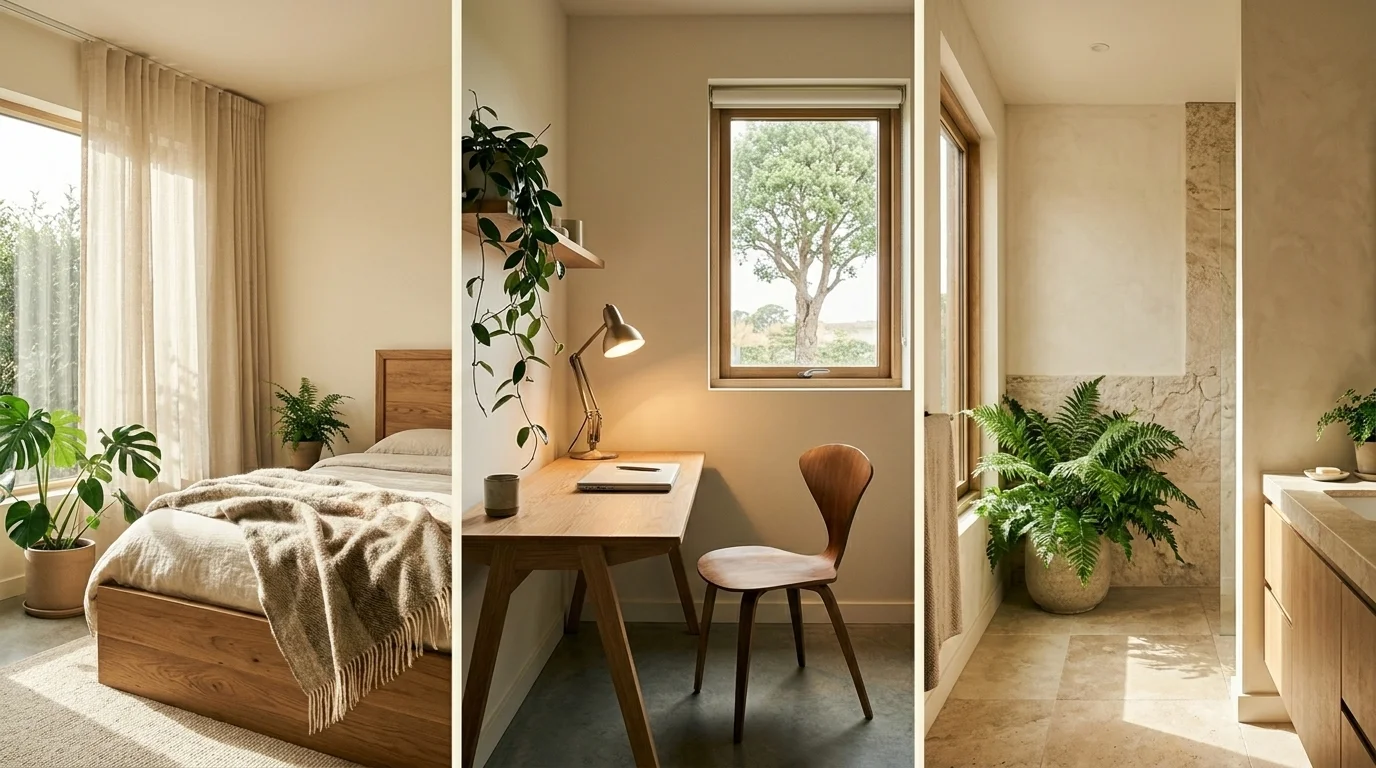
The patterns get concrete fast once you go room by room — and this is exactly the practical layer the trend essays skip (LivingEtc):
- Living room. Maximize daylight (pull furniture off the windows, lose heavy drapes), add a few easy-care plants, and bring in one or two natural-material anchors — a timber surface, a wool or jute textile, a stone or ceramic object.
- Bedroom. Solid-timber furniture and dappled, layered light over a single harsh overhead; the goal is a wind-down room, so prioritize the "refuge" feeling and a clear morning-light source to anchor your circadian rhythm.
- Workspace. Cool, focused task lighting plus organic shapes and a view — even a window onto a single tree beats a blank wall for the creativity and focus numbers above.
- Bathrooms and kitchens (wet rooms). Mold-resistant finishes like lime paint, real ventilation, and humidity-tolerant plants; this is where "natural" has to be practical first.
Color belongs here too, as a finishing choice rather than a health intervention: earthy, muted palettes read as restful to most people, which is reason enough to use them — just don't expect a paint chip to do the work of daylight and sleep.
Related Article: Sustainable Wellness Practices: Analyzing the Environmental Impact of Holistic Health Choices
Biophilic design on a budget
You can capture most of the effect for almost nothing, which is worth saying plainly because the industry would rather sell you the living wall. The low-cost, high-return moves: propagate free plants from cuttings (pothos, snake plant, ZZ are nearly unkillable), swap heavy window treatments for sheer curtains to multiply daylight, use mirrors as "virtual windows" to bounce light deeper into a room, and lean on inexpensive natural materials — seagrass and jute baskets, reclaimed-wood shelving (DIG Interior Design; Decoist).
For contrast, the high end: a plumbed-in living wall runs roughly $150–$250 per square foot (a market estimate, not a regulated price). The single highest-ROI low-spend move isn't a product at all — it's removing a partition or enlarging a sightline to deepen natural daylight.
The business of healthy buildings
Now the money, because there is a lot of it. The WELL standard's 6-billion-square-foot footprint is used by more than 180 Fortune and Global 500 companies, and certified-healthy buildings reportedly command 4.4%–7.7% higher rent per square foot, with one Building and Environment study finding a 28% improvement in occupant workplace satisfaction (IWBI). On the residential side, proptech sources cite biophilic-design property-value uplifts of 7%–15%, and 8%–20% premiums for homes near green space or water (MyKukun).
Read those last figures the way you'd read a brand's own sustainability stat: they are vendor- and proptech-synthesized market estimates, not peer-reviewed findings, and the people publishing them sell biophilic upgrades and certifications. That doesn't make them false. It makes them marketing-adjacent — which is the definition of "wellness washing," the practice (named by designers themselves) of slapping a health premium on ordinary good design. The rent premium is probably real because tenants will pay for daylight and air. The 15% home-value bump is a sales figure until a non-interested party reproduces it.
What a reasonable person should do with this
Biophilic interior design is one of the rare wellness categories where the cheap version is also the evidence-backed one. Daylight, a few plants, real ventilation, natural materials, and a layout that gives you both a view and a sense of shelter — that bundle has peer-reviewed support and costs almost nothing. The living wall, the "air-purifying" houseplant pitch, the color-psychology consult, and the certified-healthy resale premium are the upsells: some legitimate, some oversold, all sold by someone. Build the room you'd want to be in, spend on daylight before gadgets, and treat every health claim attached to a price tag as a number to check rather than a benefit to trust.
Frequently Asked Questions
Biophilic interior design applies the human pull toward nature indoors — through natural light, plants, organic materials and forms, and spatial layout. It is the indoor application of broader biophilic design, focused on what you can actually do to a room.
Terrapin Bright Green's framework groups design strategies into three categories — Nature in the Space, Natural Analogues, and Nature of the Space. The 2024 tenth-anniversary edition added a fifteenth pattern, 'Awe.'
The strong evidence is real: workplace and clinical studies show meaningful stress reduction and cognitive gains (e.g., 15% higher reported wellbeing, 6% productivity). But some marketed claims — houseplant air purification, property-value bumps — are oversold or vendor estimates.
Propagate free plants (pothos, snake plant, ZZ), swap heavy drapes for sheer curtains and use mirrors to multiply daylight, and add cheap natural materials like seagrass and reclaimed wood. The highest-return move is deepening natural light — no living wall required.
Biophilic design is the broad principle of connecting built environments to nature across architecture and planning. Biophilic interior design applies it specifically indoors, through light, plants, materials, color, and the layout of a room.
Check Out These Related Articles

The Sustainable Plate: How Plant-Based Diets Contribute to a Healthier Planet

Urban Gardening for Well-Being: A Beginner's Guide

Nordic Nexus: Integrating Nature's Influence in Mental Well-Being Strategies