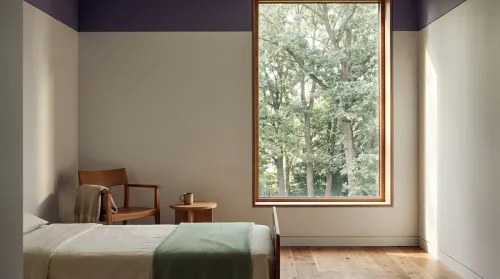
The Healing Power of Nature: Embracing Ecotherapy for Well-Being


The afternoon of a long week — the one where you have answered too many emails and held too many small tensions and are no longer sure if you are tired, anxious, or just over-stimulated — is not a character problem. It is a nervous system asking for input it can sort. Forest bathing, the practice of slow, sense-led time among trees, is one of the most thoroughly studied of those inputs. A 2026 review in Medical Sciences synthesized 116 peer-reviewed studies and confirmed that even a single session measurably lowers cortisol, reduces blood pressure, and elevates natural killer (NK) cell activity for up to a week (Bandyopadhyay et al., Med Sci 2026). It is not the same thing as therapy, and I will say so honestly later in this piece. It is something more specific, and worth understanding for what it is.
This article uses "forest bathing" as the primary term because that is what the research literature uses. The Japanese term shinrin-yoku ("forest bath") is the original, formalized in 1982 by Japan's then-Ministry of Agriculture, Forestry and Fisheries under Tomohide Akiyama as a national preventive-medicine initiative (Nature therapy — Wikipedia). Ecotherapy is the broader umbrella concept that includes forest bathing along with horticultural therapy, wilderness therapy, animal-assisted nature work, and several therapist-facilitated outdoor modalities. We will move between these terms with care — they are related, not interchangeable.
What ecotherapy is, and how forest bathing fits inside it
Ecotherapy is the broad name for any structured therapeutic practice that uses contact with the natural world as the active ingredient. Nature therapy is its most common synonym. Inside that umbrella, forest bathing is the most studied and most specific protocol — a slow, intentional immersion in a wooded environment, eyes off the screen, attention on the senses, no destination in mind.
The distinction matters clinically. If a friend says they are "doing ecotherapy", I want to know whether they mean a self-directed forest walk on Sunday morning or weekly sessions with a licensed therapist who happens to hold them outdoors. Both are real. They are not the same intervention, and the second one is the one that takes the place of indoor talk therapy for some clinical presentations. We will come back to this distinction in the comparison section below.
Origins: shinrin-yoku and Japan's 1982 forest medicine program
Forest bathing is not a 2020s wellness invention. The Japanese term shinrin-yoku was formalized in 1982 as part of a national preventive-medicine campaign aimed at reducing the stress burden on Japan's working population. By the early 2000s, Dr. Qing Li at Nippon Medical School in Tokyo had built the empirical foundation that the rest of the field stands on — measuring cortisol, blood pressure, heart rate variability, and especially natural killer cell activity before and after structured forest exposure (PMC9665958). Li's group's repeated finding — that immune effects from a single forest bathing trip persist for at least seven days — is what shifted the conversation from "this is relaxing" to "this is medicine."
The discipline has a name in Japan: Forest Medicine. There are certified forest therapy bases in Japan; in the United States and Europe, similar certification bodies have emerged (the Association of Nature and Forest Therapy, the International Society of Nature and Forest Medicine). The 2026 Med Sci review's 116-study scope confirms the field has moved from fringe to a recognized preventive-medicine practice.
Related Article: The Science of Forest Bathing: Immersing in Nature for Mental & Physical Well-Being
The science: phytoncides, cortisol, NK cells, and how it actually works
This is the section the wellness blogosphere usually skips. The shorthand is "trees are calming"; the actual mechanism is more interesting, and explains why a city park is not as potent as a conifer forest.
Trees release volatile organic compounds called phytoncides as part of their own immune system — chemical defenses against insects and microbes. The most relevant compounds in human studies are α-pinene, d-limonene, and 1,8-cineole, with species-specific volatiles from hinoki, hiba, and sugi (cedar and cypress family) producing the strongest documented immune effects (Med Sci 2026). When you breathe them in, they activate NK cell function via the ERK and AKT signaling pathways. That is the mechanism. It is not metaphor.
The numbers from peer-reviewed work:
- A 2024 systematic review and meta-analysis in ScienceDirect found NK cell activation from phytoncide exposure had an effect size of 2.50 (95% CI 1.94–3.05, p<0.05) (ScienceDirect 2024). That is a large effect by any biomedical standard.
- A leisurely forest walk has been documented to produce approximately 12 percent lower cortisol levels than an equivalent urban walk, with corresponding reductions in blood pressure and heart rate (Park et al., via News-Medical).
- Elevated NK activity and the anti-cancer proteins NK cells produce (perforin, granulysin, granzymes) persist for at least seven days after a single trip, with immune effects extending up to several weeks in some studies (PMC12921901, PMC9665958).
- A 2025 randomized controlled trial of older adults with essential hypertension found significant reductions in hs-CRP (a key inflammatory marker) and systolic blood pressure after forest bathing in a subtropical evergreen broad-leaved forest (Frontiers Public Health 2025).
What I find clinically interesting about this body of work is not that nature is "relaxing" — every reader knows that. It is that the effect appears to be partly pharmacological, mediated by inhaled compounds with measurable biological action, on top of whatever psychological down-regulation you get from being away from screens. That changes what the practice is for.
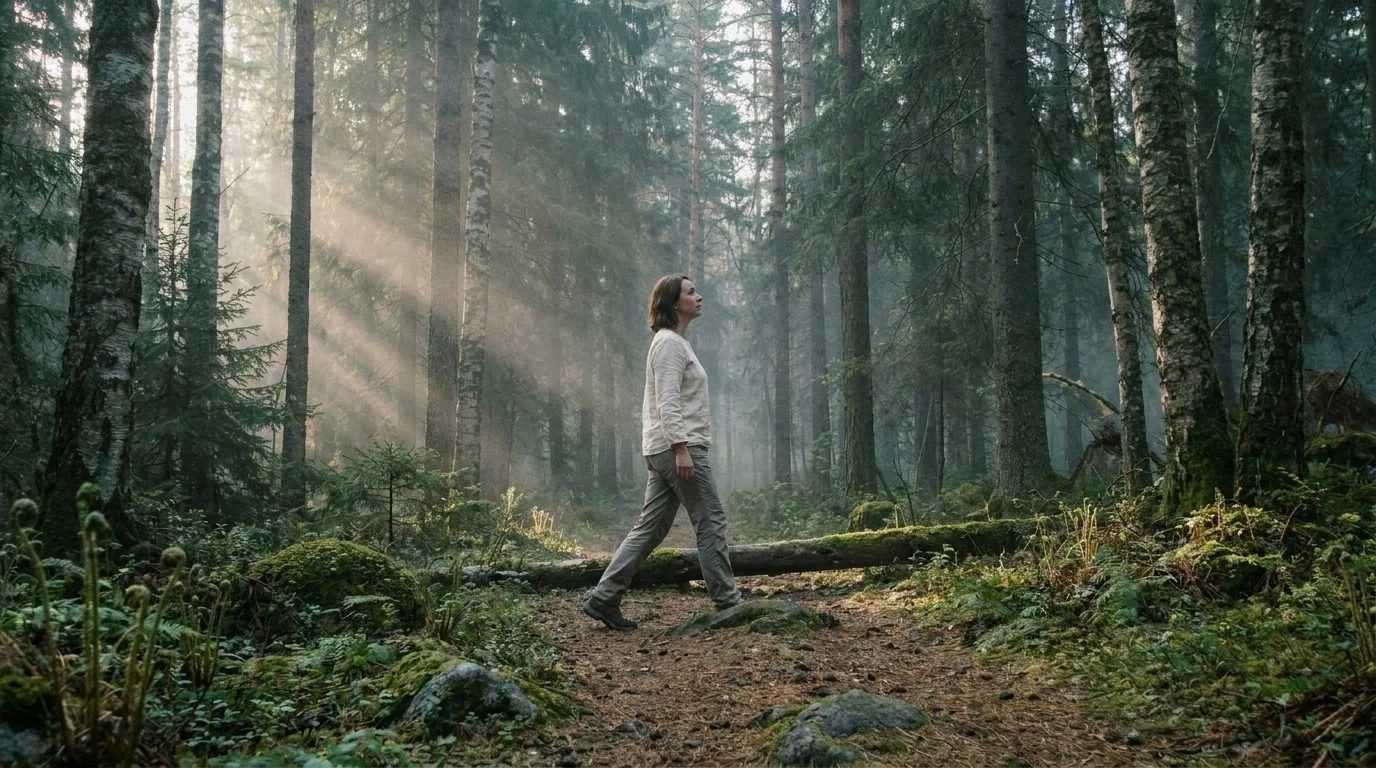
How forest bathing affects mental health
This is the question my clients ask most often: does it help anxiety and depression in the way therapy does?
The evidence is meaningful and bounded. A 2025 narrative review in Frontiers in Public Health examined the mental-health outcomes of structured forest bathing programs and reported clinically significant reductions in Profile of Mood States (POMS) scores — an average 38.8-point reduction in total mood disturbance across studied populations (Frontiers Public Health 2025). The same review documents measurable reductions in anxiety and depressive symptoms at doses as short as a single guided session.
The United Kingdom's Dose of Nature program — which prescribes nature-based interventions through general practitioners for patients with mild-to-moderate mental health concerns — reported a 64 percent recovery rate across its first 1,500 patients, compared with roughly 50 percent for standard talk-therapy benchmarks (Wikipedia / Nature therapy). That is a notable number for a low-cost public-health intervention, and worth taking seriously.
I want to be careful about what these numbers mean in clinical practice. They describe what forest bathing can do for population-level mood, mild anxiety, burnout, and adjustment-period stress — the kind of "uncomfortable but workable" presentations I see often. They do not describe a substitute for therapy in a major depressive episode, complex PTSD, or active suicidality. Several of the studies above explicitly note that effects are most reliable for prevention and for mild-to-moderate distress; the more clinical the presentation, the more the practice needs to sit alongside, not instead of, evidence-based therapy and (where indicated) medication. The literature on mindfulness-based stress reduction has the same caveat for the same reason. Both are useful; both have ceilings.
Related Article: Sustainable Wellness Practices: Analyzing the Environmental Impact of Holistic Health Choices
How to actually do it: a five-sense protocol
The protocol is simpler than the science. The mistake most beginners make is treating it like a hike. It is not a hike. It is closer to a slow meal.
Steps:
- Choose a wooded place you can reach within reason. A dense urban park works; a state forest works; a tree-lined cemetery works. Conifer-heavy environments — cedar, pine, cypress — concentrate the relevant phytoncides, but this is not a deal-breaker.
- Leave the phone in a pocket or the car. If you cannot do this, the practice does not work. The phone is the thing this practice is for, in the sense that it is the thing you are taking a break from.
- Walk slowly enough that you would not be able to make a phone call while walking. That is the right pace. If you would normally cover four miles, plan to cover one.
- Spend the first ten minutes on what you can hear. Birds, wind, your own breath, traffic in the distance. Do not narrate it. Just notice.
- Move to what you can see. Pick small targets — one bark texture, one fern, one beam of light. Watch one thing for thirty seconds.
- Add what you can smell. Damp earth, pine, pollen, decomposing leaves. Most adults are radically out of practice with smell; this is where you will notice the largest perceptual shift.
- Sit for the last ten minutes. Find a place to sit. Let the heart rate finish dropping. Do not check the time. The practice ends when you stand up.
A dose-response callout. Recent reviews suggest two thresholds. For short-term mood and cortisol effects, 15 minutes in a natural environment is enough — which makes lunch-break forest bathing in a city park a viable practice, not a poor substitute. For sustained, health-promoting benefits — immune, cardiovascular, mental-health — the optimal target is at least 2 hours per week, which can be split across multiple shorter sessions (Frontiers Public Health 2025). For a national reference point, Finland's public-health recommendation for nature exposure is roughly 5 hours per month (Wikipedia / Nature therapy).
The single most common reason people fail to start the practice is the perceived two-hour requirement. The research no longer supports that as a barrier.
Forest bathing in the city: urban green spaces and soundscapes
If you live in an apartment in a dense city, this practice is still available to you. A 2025 study by Longman et al. found that brief exposure to forest soundscapes — recorded forest audio, not full forest environments — produced significant improvements in positive affect and cognitive performance compared with urban or industrial soundscapes (cited in Med Sci 2026 review). This does not replace inhaled phytoncide exposure, but it gives a useful floor: even imperfect or partial nature exposure produces measurable mood benefit.
The practical translation is that any of the following count:
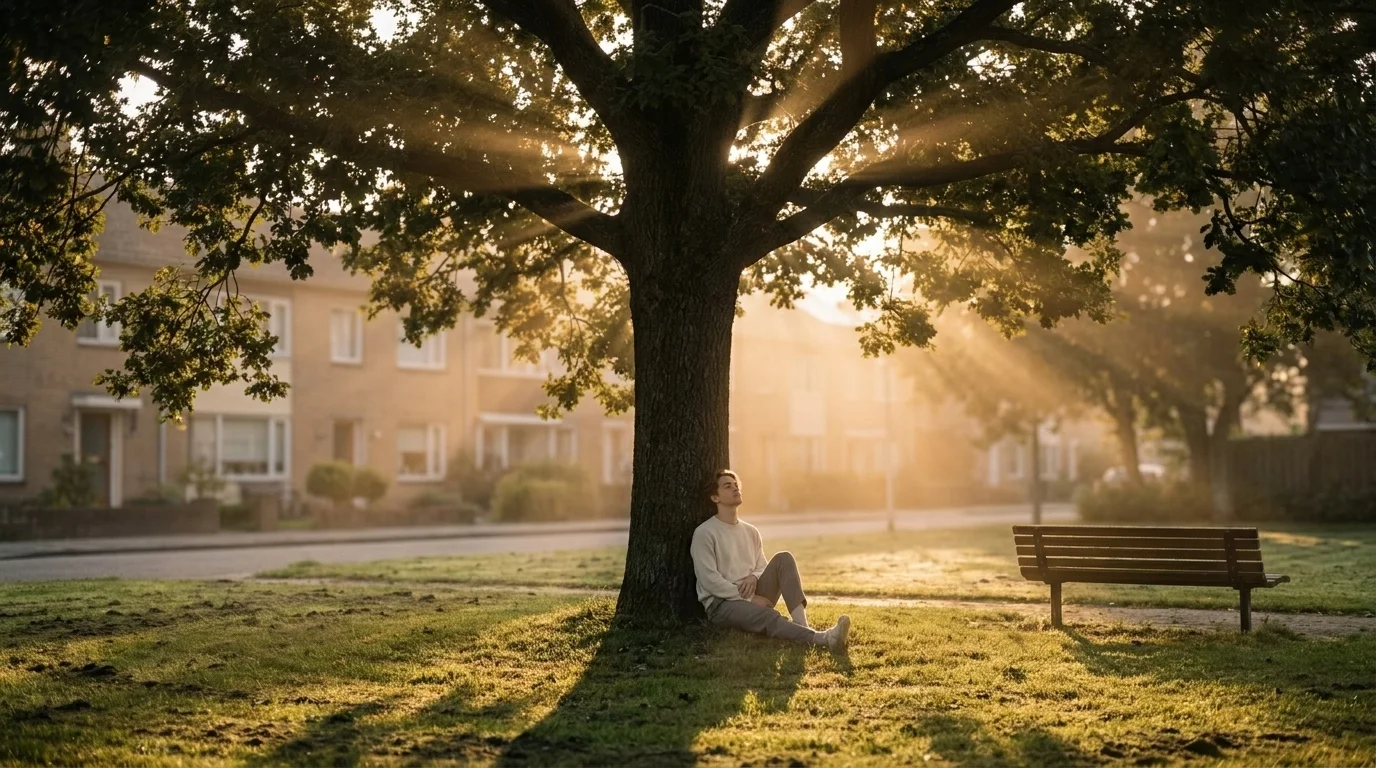
- Twenty minutes in a city park with mature trees, using the protocol above
- A weekly visit to a botanical garden or arboretum where conifer density is higher
- Walking a residential street with substantial canopy at a deliberate pace
- A short break with high-quality forest audio when leaving the building is genuinely impossible
The order of effect size, roughly: dense conifer forest > mixed deciduous forest > urban park with mature trees > forest soundscape only > no nature exposure. But the floor is well above zero. This is good news for the office workers most in need of the practice.
Related Article: Urban Gardening for Well-Being: A Beginner's Guide
Forest bathing vs hiking vs ecotherapy with a therapist
These are not the same thing, and the failure to distinguish them is one of the reasons readers end up disappointed.
| Practice | What it is | What it treats well | Where it falls short |
|---|---|---|---|
| Forest bathing (shinrin-yoku) | Slow, sense-led immersion in a wooded environment; no destination; phone off | Cortisol regulation, mild anxiety, burnout recovery, immune support, sleep quality | Clinical depression, complex trauma, acute crisis |
| Hiking | Goal-directed cardiovascular activity in nature | Cardiovascular fitness, mood, sleep | Many of forest bathing's effects (the relevant ones depend on pace and dose, not distance covered) |
| Nature walk | Casual outdoor walking, often social | General mood, light cardiovascular benefit | The cortisol and NK-cell effects require slower pace and deliberate sensory attention |
| Trauma-informed outdoor therapy | Therapist-facilitated outdoor sessions for trauma, PTSD, grief; specialized credential | Acute trauma processing, complex grief, where indoor offices feel constraining | Requires a credentialed practitioner; not a self-directed practice |
| Ecotherapy with a licensed therapist | Standard talk therapy held outdoors, possibly with horticultural or animal-assisted elements | Whatever indoor therapy treats — anxiety, depression, adjustment — with nature as the setting | Cost and access; clinician availability |
The most common mistake I see is people doing what is technically a brisk hike and wondering why they do not feel the documented benefits. Pace matters more than location. A slow hour in a city park will outperform a fast hour in a state forest for the cortisol and parasympathetic-tone outcomes the research describes.
Reciprocity in practice: the ecology of the practice
The original version of this article had a section on environmental stewardship that was more sermon than practice. I want to recover the idea behind it because it matters, and to make it concrete.
The mental-health benefit of forest bathing is partly a function of care directed outward. There is a literature in the broader nature-and-mental-health field showing that volunteers in environmental restoration projects — invasive-plant removal, riparian planting, urban-tree maintenance — report mood and meaning outcomes that exceed those of passive nature exposure (cited in the 2026 Treeming nature-wellness trends review). My clinical intuition matches the data: the practice that asks something of you is the practice that holds, in a way that consumption-only practices do not.
Concrete versions of reciprocity practice you can run alongside forest bathing:
- A monthly volunteer shift with a local watershed council, land trust, or park stewardship group
- A guided "litter walk" — same five-sense protocol, but with a bag, picking up what you find
- A seasonal tree-planting day through a regional reforestation nonprofit
- Adopting a small patch of nearby green space — a stretch of trail, a creek bank — and visiting it slowly every week
This is the part of the practice that is hardest to commodify, and the most durable.
A clinician's careful close
Forest bathing has stronger evidence behind it than most readers realize, and the effect sizes — a 12 percent cortisol reduction, a 2.50 effect size on NK cell activation, a 38.8-point reduction in mood-disturbance scores, a 64 percent recovery rate in the UK Dose of Nature program — are not small. The research is doing real work, and the practice does what it says it does for the populations it has been studied in.
It is also not therapy. If what shows up when you sit in a forest is more than you can hold alone — if it is grief that has been waiting, or trauma that is unprocessed, or a depression that has settled in — please do not call that a failure of forest bathing. That is a signal to talk to a therapist. Therapy is not the opposite of self-care. It is one of its forms. The two practices belong together, and they hold different ground.
If you or someone you love is in crisis, in the United States, please call or text 988 to reach the Suicide and Crisis Lifeline. Most countries have a local equivalent; if you do not know yours, your local emergency number is the right place to start. Trees, even very good ones, do not replace a person whose job is to help you stay alive.
Frequently Asked Questions
Ecotherapy is the broad term for any structured therapeutic practice that uses contact with the natural world as the active ingredient — it includes horticultural therapy, wilderness therapy, animal-assisted nature work, and therapist-facilitated outdoor sessions. Forest bathing (shinrin-yoku) is the most studied and most specific protocol inside that umbrella: a slow, intentional, sense-led immersion in a wooded environment with no destination in mind. Ecotherapy is the category; forest bathing is one practice within it.
Yes. A 2026 review in Medical Sciences synthesized 116 peer-reviewed studies and confirmed that forest bathing measurably lowers cortisol (around 12% vs. an urban walk), reduces blood pressure, and increases natural killer (NK) cell activity — an immune effect that persists for at least 7 days after a single session. A 2024 meta-analysis in ScienceDirect documented an NK cell activation effect size of 2.50 (95% CI 1.94-3.05) from phytoncide exposure. The mechanism involves volatile tree compounds — α-pinene, d-limonene, and 1,8-cineole — which modulate immune function via the ERK/AKT pathway.
Recent dose-response research suggests two thresholds. For short-term mood and cortisol effects, 15 minutes in a natural environment is enough, making lunch-break forest bathing viable. For sustained, health-promoting benefits (immune, cardiovascular, mental-health), the optimal target is at least 2 hours per week, which can be split across multiple shorter sessions. Finland's public-health recommendation is roughly 5 hours per month in nature as a baseline. Pace matters more than total time — a slow hour outperforms a brisk two hours for the cortisol and parasympathetic-tone outcomes.
A city park or urban greenway delivers most of the benefits, especially when you focus on slow, sensory immersion rather than distance covered. A 2025 study (Longman et al.) found that even brief exposure to forest soundscapes significantly improved positive mood and cognitive performance versus urban audio. For maximum phytoncide exposure, denser conifer cover (cedar, cypress, pine) amplifies the immune-boosting effects, but a city park with mature trees produces meaningful cortisol and mood outcomes. The effect ranking, roughly: dense conifer forest > mixed deciduous forest > urban park with mature trees > forest soundscape only.
Build a five-sense protocol you can repeat. Choose a wooded place you can reach within reason. Leave the phone in a pocket. Walk slowly enough that you could not make a phone call while walking. Spend the first ten minutes on what you can hear, then move to what you see, then what you smell. Sit for the last ten minutes. Aim for at least 2 hours per week split across sessions. Pair it with one piece of reciprocity work — a monthly volunteer shift with a watershed council, a guided litter walk, a seasonal tree-planting day — because the practice that asks something of you is the one that holds.
No. Forest bathing has meaningful effect sizes for stress, mild-to-moderate anxiety, burnout, and adjustment-period distress, and a 2025 Frontiers Public Health review documented an average 38.8-point reduction in total mood disturbance across studied populations. The UK 'Dose of Nature' program reports a 64% recovery rate for mild-to-moderate mental health concerns. But the literature is clear that the more clinical the presentation — major depression, complex trauma, active suicidality — the more forest bathing needs to sit alongside, not instead of, evidence-based therapy and medication where indicated. If you are in crisis in the United States, call or text 988.
Phytoncides are volatile organic compounds that trees release as part of their own defense system against insects and microbes. The most relevant to human studies are α-pinene, d-limonene, and 1,8-cineole, with species-specific volatiles from hinoki, hiba, and sugi (cedar and cypress family) producing the strongest documented immune effects. When you breathe them in, they activate natural killer cell function via the ERK and AKT signaling pathways. This is what makes forest bathing partly pharmacological rather than purely psychological — the inhaled compounds have measurable biological action on top of the down-regulation you get from being away from screens.
Check Out These Related Articles

Revolutionizing Spaces: The Transformative Influence of Wellness on Interior Design

The Sustainable Plate: How Plant-Based Diets Contribute to a Healthier Planet

Nordic Nexus: Integrating Nature's Influence in Mental Well-Being Strategies