Celebrating Every Body: The Power of Size Inclusion in Fitness


Over four in ten plus-size people avoid the gym entirely — not because they don't want to train, but because they're worried about being judged for how they look while they do it (OriGym, a UK survey). I've coached for nine years, and that number tracks with what I've watched walk through the door: the barrier is almost never motivation. It's a fitness culture that has quietly decided some bodies belong and others are here to be fixed. Size-inclusive fitness is the correction to that — and done right, it isn't a feel-good slogan. It's just good coaching that meets a body where it is and trains it well.
What does size-inclusive fitness mean?
Size-inclusive fitness means building training environments and programs that work for bodies of every shape and size — not as a special accommodation, but as the default. A quick note on the term: "inclusive fitness" on its own is a homonym (it's also a concept in evolutionary biology), so I'll keep saying size-inclusive to be clear we're talking about gyms and bodies, not kin selection. In practice, it means equipment that fits, language that doesn't shame, coaching scaled to the person in front of you, and a baseline assumption that showing up is enough to belong.
What is Health at Every Size (HAES)?
Health at Every Size, or HAES, is a weight-neutral framework: it promotes healthy behaviors and self-care for all bodies without making weight loss the goal. Instead of "lose X pounds," the aim is better movement, better food relationships, and better well-being, measured by how you feel and function rather than the scale.
It's also more than a vibe — there's evidence, and I'd rather give you the honest version than the marketing one. A 2024 systematic review of 20 studies in Frontiers in Nutrition found HAES interventions produced real short-term gains: reductions of up to roughly 25% in emotional eating and 20% in uncontrolled eating, plus improvements in body image, intuitive eating, and quality of life (Frontiers in Nutrition). The review concluded that "HAES interventions appear to be a feasible strategy for promoting overall health and wellness, regardless of body size or shape." The honest caveat: the psychological gains held up better over time than weight and diet changes, which often weren't sustained long-term. That's not a knock on the approach — it's the same truth that applies to every fitness program ever sold as permanent. The behaviors are the point; the scale is a poor scoreboard.
Why size inclusion matters
The weight-judgment barrier isn't imagined — it's structural. The same body-stigma that keeps four in ten people out of the gym shows up inside it too; OriGym, reporting a 2018 Obesity Reviews analysis, notes that a large majority of exercise professionals were found to carry weight bias into their work. When the person meant to coach you has already decided your body is a problem, no equipment upgrade fixes that.
The flip side is that getting it right has measurable payoff. A 2023 study in Research Quarterly for Exercise and Sport found that women with larger bodies experienced size-inclusive settings as "an enhancement of well-being, self-worth, and belonging" (RQES). Belonging isn't a soft outcome here — it's the thing that determines whether someone trains for six weeks or quits in three. As a coach, retention is everything, and nobody adheres to a place that makes them feel unwelcome.
Body positivity vs. body neutrality
These get used interchangeably, and they're not the same. Body positivity asks you to love and celebrate your body. Body neutrality takes the pressure off appearance entirely: you don't have to love how your body looks, you just have to respect what it does and let it get on with the work. I mention it because for a lot of people walking into a gym, "love your body" feels like one more thing they're failing at — and "your body is the tool, let's train it" is a far more useful place to start.
Is this gym actually size-inclusive? A checklist
Marketing is cheap; here's how to tell if a gym means it. Walk in (or scan the website) and check for:
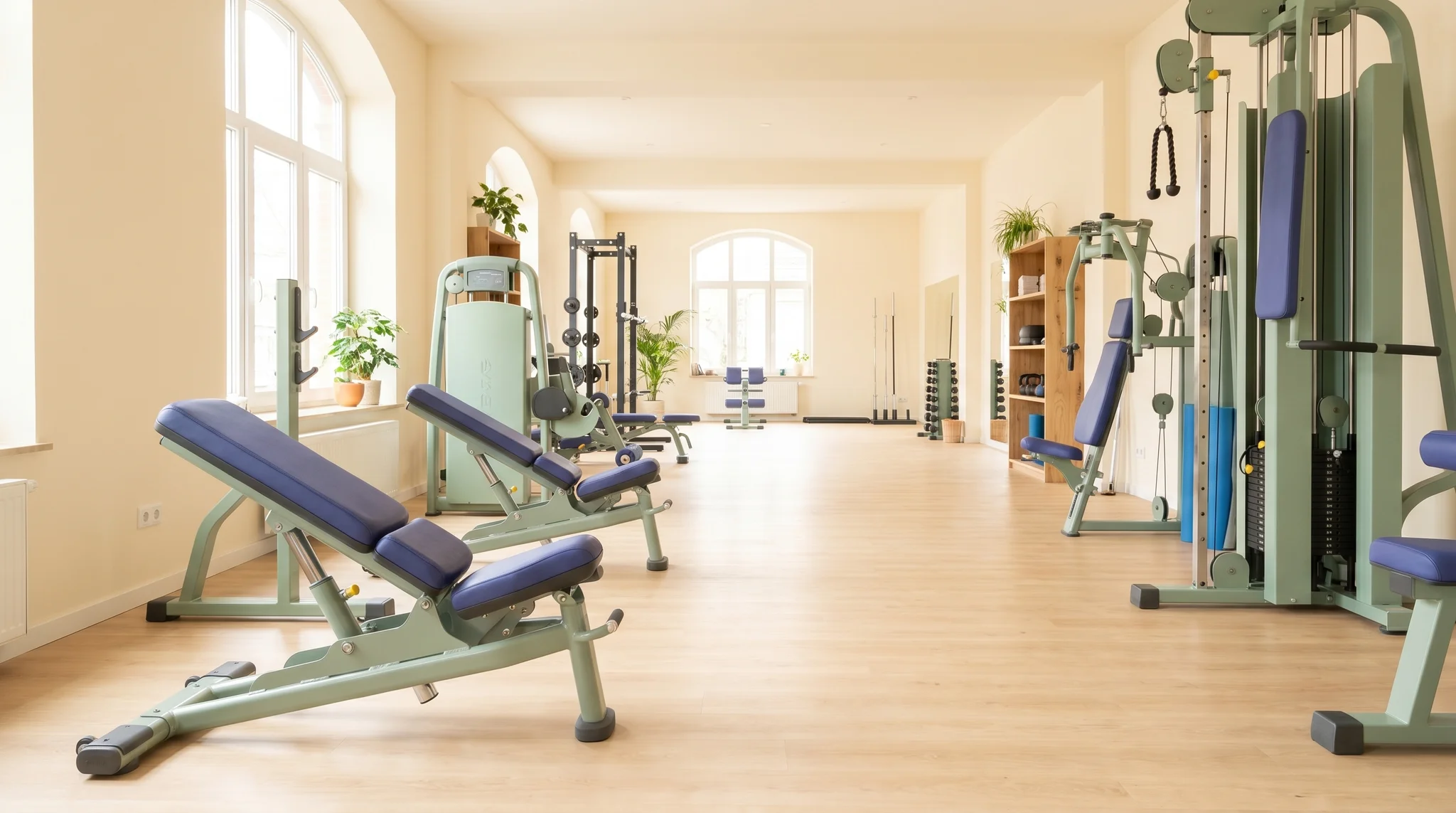
- Equipment that fits. Benches and machines with extended weight capacities and adjustable settings, not just a single body-size assumption built into every station.
- Weight-neutral language. Programming and signage that talk about strength, mobility, and progress — not "torch fat" and "bikini body."
- Diverse imagery. The bodies in the marketing actually look like a range of people, not one silhouette.
- Trauma-informed, judgment-free policies. No weigh-ins as a default, no "before/after" culture, and a genuinely welcoming stance toward queer, disabled, and larger-bodied members.
- Credentialed staff. Trainers who can speak to weight-neutral coaching — ideally with a size-inclusive certification (more on that next).
If a place checks most of these boxes, it's probably real. If it's all hashtags and no equipment, keep looking.
How to spot a credentialed size-inclusive trainer
Here's a concrete lever no gym directory tells you about: the credential exists. The American Council on Exercise (ACE) offers a Size Inclusive Fitness Specialist program — developed by trainer and author Louise Green — that trains professionals to coach clients "toward better health and a positive relationship with exercise, without focusing on weight loss" (ACE). It covers the physiological, psychological, and social barriers larger-bodied clients actually face. You don't have to take a gym's word for its values — you can ask a trainer, directly, whether they hold a size-inclusive certification. Practitioners who've built whole practices on this approach (Louise Green's Big Fit Girl, anti-diet and HAES-aligned coaches like Jenna Doak, fat-positive strength gyms like Portland's All Bodies Strong, and Curvy Yoga) are real, findable, and a good model of what credentialed weight-neutral coaching looks like.
Plus-size workout: where to actually start
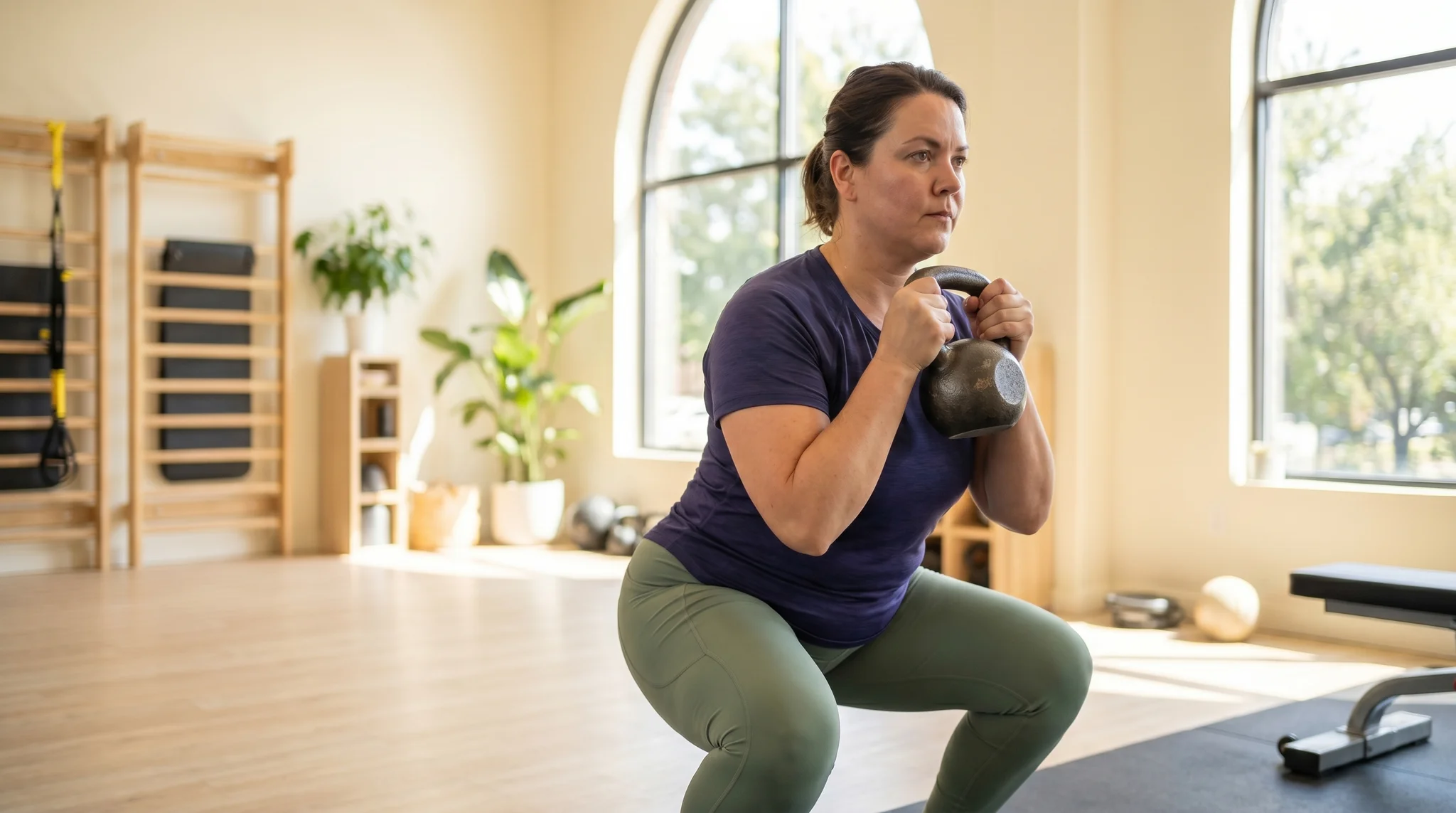
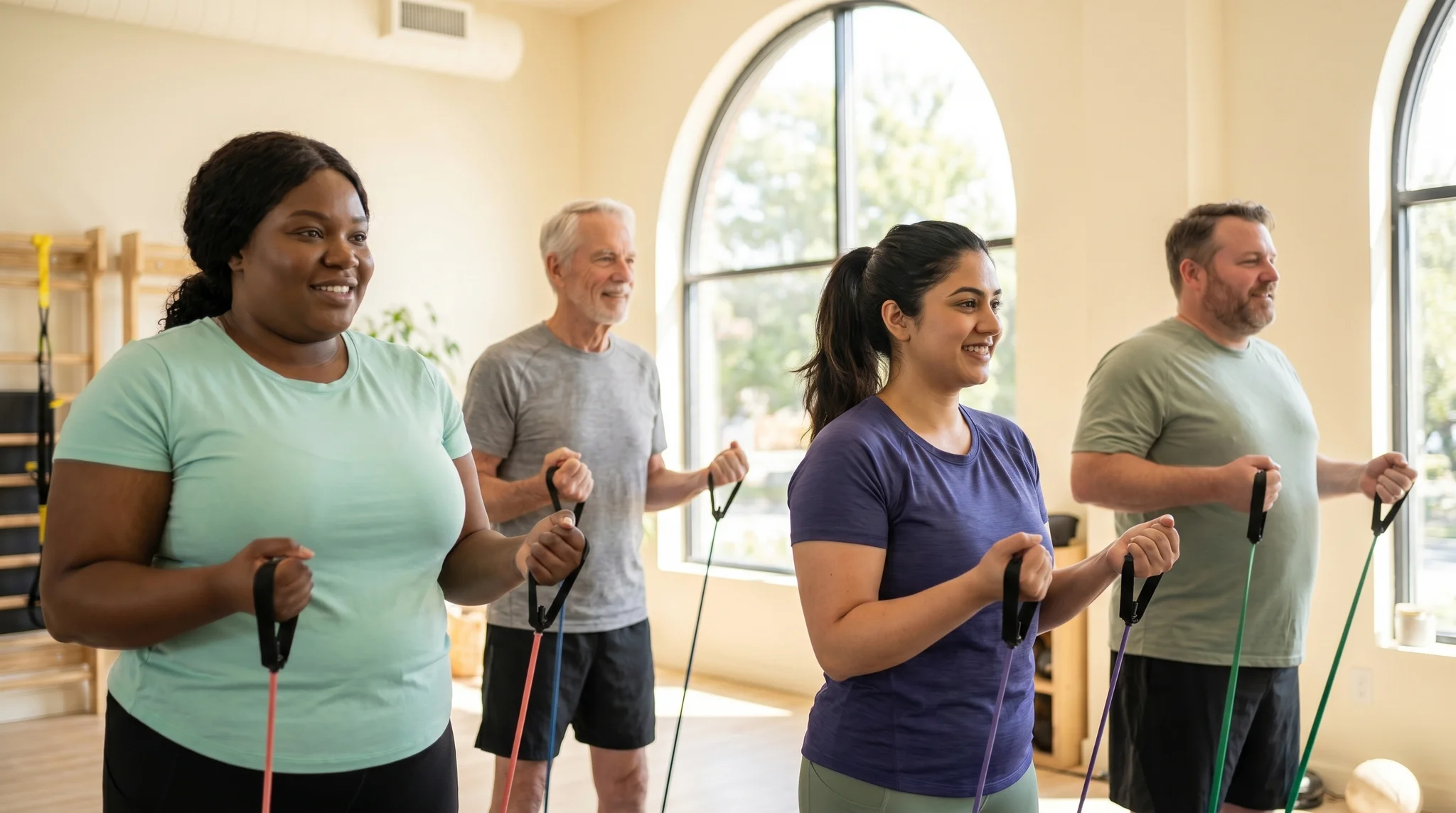
If you're starting out in a bigger body, the programming principles are the same ones I'd give anyone — they just get framed around capability instead of weight loss. Start with movements you can own with good form: bodyweight or supported squats to a box, hip hinges, presses, and rows, two or three sessions a week, 2 sets of 8–12 reps, scaling the range or load to what feels strong rather than punishing. Walking and any low-impact cardio you'll actually repeat builds the aerobic base. The cue I give every beginner regardless of size: pick the version of the movement you can do well today, and add a little next week. The marker of progress isn't a smaller number on a scale — it's a heavier set, a deeper squat, a longer walk, a body that does more than it did a month ago. And give it the honest timeline: six to eight weeks of consistent work before you judge whether it's working. Bodies of every size respond to training. None of them need fixing first.
The bottom line
Size-inclusive fitness isn't charity and it isn't a trend to perform. It's the recognition that a body of any size can train, get stronger, and feel better — and that the job of a good gym and a good coach is to make that possible instead of making people audition for the privilege. Find the room that fits you, train for what your body can do, and let the scale mind its own business. Every body belongs in the gym. The good ones already know it.
Frequently Asked Questions
A weight-neutral framework that promotes healthy behaviors and self-care for all bodies without making weight loss the goal. A 2024 systematic review links it to better psychological and some cardiometabolic outcomes, though weight changes often aren't sustained long-term.
Look for weight-neutral language, equipment with extended weight capacities, diverse marketing imagery, trauma-informed and judgment-free policies, and trainers who hold a size-inclusive certification.
Body positivity emphasizes loving and celebrating your body. Body neutrality focuses on respecting what your body can do without requiring you to love how it looks — often a less pressured starting point.
Yes — the ACE Size Inclusive Fitness Specialist program (developed by Louise Green) trains professionals in weight-neutral, evidence-based coaching. It's fair to ask a trainer directly whether they hold it.
Over four in ten plus-size people avoid the gym out of fear of weight judgment. Size-inclusive environments remove that barrier, and research links them to greater well-being, self-worth, and belonging — which is also what keeps people training.
Invest in equipment with extended weight capacities and adjustable settings, design private and comfortable facilities, use weight-neutral language and diverse imagery, and train staff in weight-neutral, trauma-informed coaching.