
Unveiling the Mosaic of Nutrition: Varied Dietary Philosophies for Well-Being


If you searched for "types of diets" in 2026, you almost certainly arrived here from one of two angles. You watched Netflix's Live to 100, want to live to 100, and are wondering what the Blue Zones people actually eat. Or your doctor mentioned the Mediterranean diet or DASH at your last appointment and you want to know how those compare to plant-based, MIND, paleo, keto, and the half-dozen other named patterns that surface every January.
This is a plainspoken comparison guide built around the 2026 evidence base. The headline picks: the 2026 U.S. News & World Report rankings (published by Pennington Biomedical Research Center) named DASH the #1 heart-healthy diet and the #2 best diet overall, with the Mediterranean diet retaining the #1 best-diet-overall position for the eighth consecutive year. The 2025-2030 Dietary Guidelines for Americans continue to endorse Mediterranean-style and DASH eating patterns as the two evidence-anchored templates for healthy adults. The Blue Zones longevity dataset — questioned in 2024 — was independently re-validated in The Gerontologist in February 2026 by Steven N. Austad and Giovanni Mario Pes, confirming that the demographic baseline is scientifically sound.
Everything below is structured to answer one of two questions: which pattern has the strongest evidence for what I care about, and which one is most likely to actually fit my life.
Comparison at a glance
| Pattern | Core principle | What you mostly eat | Evidence quality | Best for | Cultural origin |
|---|---|---|---|---|---|
| Mediterranean | Plant-forward; olive oil as primary fat; fish over red meat | Vegetables, fruits, legumes, whole grains, olive oil, fish, modest dairy, modest wine | RCT + cohort (strongest body of evidence) | Cardiovascular health, longevity, T2D risk | Southern Europe / North Africa |
| DASH | Low sodium, high potassium/magnesium/calcium | Same plant base as Mediterranean, plus low-fat dairy, sodium ceiling ~1,500-2,300 mg | RCT-anchored | Blood pressure, cardiovascular | Designed by NIH (1990s) |
| Blue Zones | 95-100% plant-based; intermittent meat; ½ cup beans daily | Beans, leafy greens, whole grains, nuts, fish ≤3x/week, meat ≤2 oz five times/month | Large-cohort observational (Adventist Health Study 2 = anchor) | Longevity, lifespan, healthspan | Synthesis of 5 regions |
| Plant-based / Vegan | Plant foods only (vegan); plant-forward (plant-based) | Beans, vegetables, grains, nuts, seeds, fruits; vegan excludes all animal products | Cohort + meta-analysis | Cardiovascular, T2D risk, environmental footprint | Modern synthesis; ethical/religious roots |
| MIND | Hybrid of Mediterranean + DASH targeting brain | 10 brain-supporting food groups (greens, berries, nuts, beans, fish, olive oil) | Cohort evidence in older adults | Cognitive aging | Designed by Rush University (2015) |
| Nordic | Berries, root vegetables, whole grains, fish, rapeseed oil | Rye, oats, barley, cabbage, root vegetables, berries, fish | RCT and cohort | Cardiovascular, weight | Scandinavia |
| Flexitarian | Mostly plant-based with occasional meat | Plant-forward defaults; meat is the exception, not the centerpiece | Cohort | Sustainable adoption | Modern Western framing |
| Okinawan (traditional) | Sweet potato, leafy greens, soy, low calorie density | Purple sweet potato, bitter melon, leafy greens, tofu, modest fish | Cohort (Okinawa Centenarian Study) | Longevity | Okinawa, Japan |
| EAT-Lancet planetary | Health-and-sustainability bridge | Whole grains, legumes, vegetables, fruits, nuts; minimal red meat; dairy/fish modest | Modeled (Commission framework) | Sustainability + health alignment | Commission (Stockholm) |
| Keto / Carnivore | Very low carb (keto); animal foods only (carnivore) | High fat, moderate protein, near-zero carb; animal foods only | Short-term RCTs only; long-term outcomes weak | Specific clinical conditions (refractory epilepsy for keto); not a longevity pattern | Modern Western |
A pattern visible across the rows: the diets with the strongest long-term outcome evidence (Mediterranean, DASH, Blue Zones, MIND, Nordic) converge on the same core — more plants, more whole grains, more legumes, modest fish, modest dairy, modest meat, minimal ultra-processed food. The 2025 comprehensive healthspan review in MDPI Applied Sciences reached this conclusion explicitly: across Mediterranean, DASH, Nordic, MIND, Okinawan, and traditional Asian patterns, the unifying principle is plant-forward and minimally processed. The branding differs; the underlying recommendation is more similar than the diet-book industry needs you to think.
The Mediterranean diet
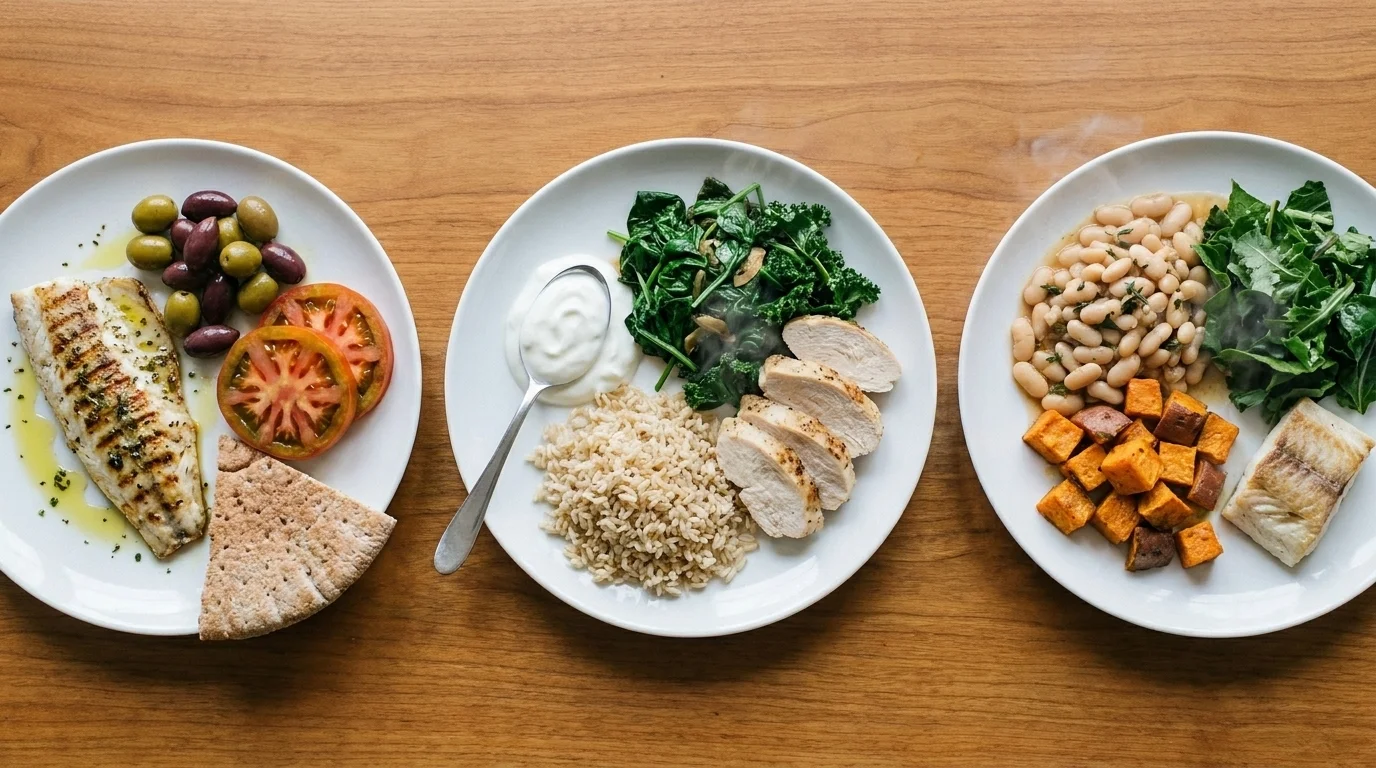
The Mediterranean diet has the deepest evidence base of any named eating pattern. A 2025 umbrella review in PubMed Central — meaning a synthesis of multiple meta-analyses — confirmed Mediterranean adherence reduces both primary and secondary cardiovascular events. A separate 2025 dose-response meta-analysis reported that each 2-point increase in a Mediterranean adherence score was associated with approximately a 13% lower risk of type-2 diabetes. The American Heart Association recommends it; the 2025-2030 Dietary Guidelines for Americans endorse it; U.S. News has named it the best diet overall for eight consecutive years.
What you actually eat: vegetables and fruits at most meals, legumes several times a week, whole grains (bread, pasta, rice in regional forms), fish two or more times a week, olive oil as the primary added fat, dairy in modest amounts (often as cheese or yogurt), nuts daily, modest red wine with meals if you already drink, and red meat as an occasional rather than weekly food.
Who it suits: essentially everyone for whom plant-forward eating is culturally accessible, which is most adults. It is the pattern with the lowest medical-contraindication list and the largest evidence body.
Where it gets oversimplified: the cooking-oil-and-fish marketing version of Mediterranean is not the diet pattern that was studied. The original PREDIMED trial and the cohort studies that inform the AHA position are about the entire food matrix — vegetables, legumes, whole grains, olive oil, fish, modest dairy, modest wine in the cultural context of meals — not olive oil and supplemental fish-oil capsules.
Related Article: The Gluten-Free Craze: Is It Actually Healthier?
The DASH diet
DASH stands for Dietary Approaches to Stop Hypertension and was originally designed in NIH-funded trials in the 1990s specifically to lower blood pressure. It overlaps significantly with Mediterranean — vegetables, fruits, whole grains, plant proteins — and adds a tighter focus on sodium (the standard plan targets ~2,300 mg/day, the lower-sodium variant ~1,500 mg/day) and emphasizes low-fat dairy as a calcium and potassium source.
DASH was named the #1 heart-healthy diet and the #2 best diet overall in the U.S. News 2026 rankings, reflecting its consistent RCT-grade evidence for blood-pressure reduction.
Who it suits: anyone working on blood pressure, anyone with a family history of hypertension or cardiovascular disease, and anyone whose clinician has flagged sodium intake as a target.
Where it gets oversimplified: "DASH" in some popular coverage gets reduced to "eat less salt." The trial design was about a whole pattern shift, not a single-variable intervention. Reducing sodium without the rest of the dietary change is a much smaller effect.
The Blue Zones eating pattern
The Blue Zones are five geographic regions identified by researcher Dan Buettner and collaborators as having unusually high concentrations of centenarians: Okinawa (Japan), Sardinia (Italy), Nicoya (Costa Rica), Ikaria (Greece), and Loma Linda (California — Seventh-day Adventist community). The eating pattern is a synthesis across the five, not a single regional diet.
The Blue Zones longevity data was questioned in 2024 (the Newman critique), and that critique was addressed in a February 2026 peer-reviewed paper in The Gerontologist by Austad and Pes, which independently confirmed the demographic baseline is scientifically sound. That re-validation is the reason this pattern is back on the evergreen-coverage list in 2026 rather than being relegated to "interesting but contested."
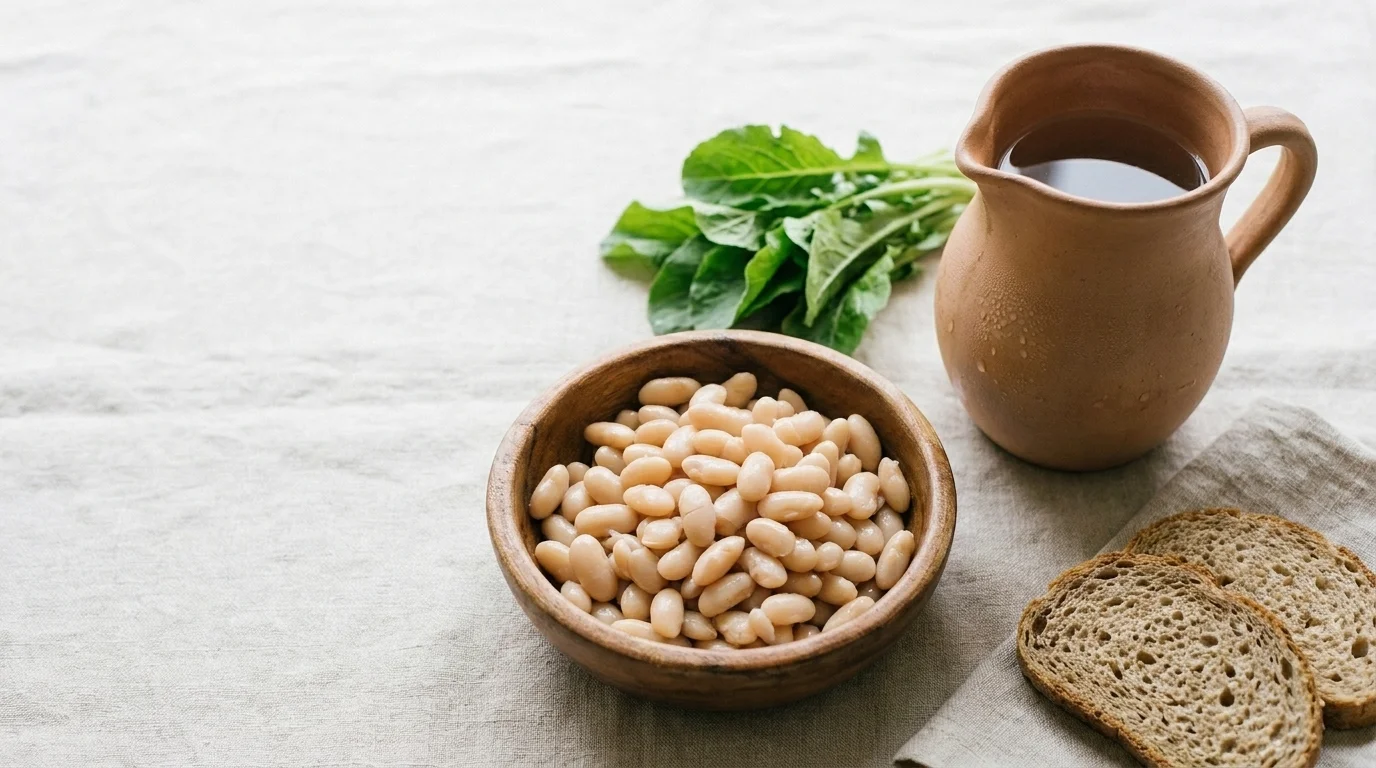
The eleven Blue Zones food guidelines in shortest form: plants make up 95-100% of the diet; meat ≤2 ounces, no more than five times a month; fish ≤3 small servings a week; at least ½ cup of cooked beans daily; one ounce of nuts daily (two handfuls); minimal dairy; up to three eggs per week; ≤7 teaspoons of added sugar per day; whole grains over refined; almost-exclusively water, coffee, tea, and modest wine for beverages; the social context of meals matters.
Loma Linda's evidence anchor: the Adventist Health Study 2 has followed more than 96,000 participants and reports that vegetarians and pescatarians within the cohort live significantly longer than regular meat-eaters, with lower rates of diabetes and hypertension. The Loma Linda Blue Zone is the only one whose longevity data has been continuously tracked through a large prospective cohort, and it is the strongest evidence anchor in the Blue Zones synthesis.
Power 9 — the lifestyle bundle. The Blue Zones research also identified nine non-food behaviors common across the regions: natural movement built into daily life, a sense of purpose, downshifting routines, eating to 80% fullness (the Okinawan principle of hara hachi bu), plant slant, modest wine consumption, belonging to a community, family proximity, and a social circle that reinforces healthy habits. The food guidelines and the Power 9 work together; the food pattern alone is the easiest to copy and the slowest acting on lifespan.
Where it gets oversimplified: "Blue Zones diet" sometimes gets reduced to "eat beans and live to 100." The actual pattern is a tight, mostly plant, low-meat, low-added-sugar template combined with a lifestyle and social framework. The food guidelines on their own are reasonable and overlap heavily with Mediterranean and DASH; the lifestyle context is what gave the populations their outcomes.
Related Article: Busting the Myths: Detox Teas More Harm than Harmony
Other evidence-backed patterns: MIND, Nordic, flexitarian, EAT-Lancet
MIND (Mediterranean-DASH Intervention for Neurodegenerative Delay) is a hybrid of Mediterranean and DASH developed by Martha Clare Morris and colleagues at Rush University, introduced in 2015 in Alzheimer's & Dementia, targeting brain health in older adults. It specifies ten brain-supporting food groups (leafy greens, other vegetables, berries, nuts, beans, whole grains, fish, poultry, olive oil, modest wine) and five to limit (red meat, butter and margarine, cheese, pastries and sweets, fried food). Cohort evidence in older adults associates higher MIND adherence with slower cognitive decline.
Nordic is the New Nordic Diet, a Scandinavian counterpart to Mediterranean built around the foods of that region: rye, oats, barley, root vegetables, cabbages, berries, fish, and rapeseed oil. RCT and cohort evidence supports cardiovascular and weight outcomes; it is essentially the same plant-forward, fish-positive, regional-fat template that Mediterranean uses with a different botanical neighborhood.
Flexitarian is the framing for "mostly plant-based, occasional meat" without the moral or all-or-nothing structure of vegetarianism. It is less a defined diet than a strategy and is the most-cited pattern for sustainable adoption — people who switch to flexitarian eating tend to maintain the change at higher rates than those who attempt full vegetarian or vegan transitions.
EAT-Lancet planetary health diet is the framework published by the EAT-Lancet Commission to align human health and planetary sustainability. The headline numbers are familiar: plant-forward defaults, legumes as a daily protein, fish a few times a week, dairy modest, red meat very limited (~14 g/day on average — about one serving per week). The diet pattern itself reads close to Mediterranean and Blue Zones; the additional argument is that it is the eating pattern the Commission designed to feed a projected 10 billion people by 2050 within safe planetary boundaries.
Cultural and religious dietary traditions
The original article promised a "mosaic of nutrition." Most generalist coverage skips the religious and cultural dietary traditions that meaningfully shape what billions of people actually eat. A short tour:
- Kosher (Jewish) — meat and dairy separated; specific permitted animal categories; pork and shellfish excluded. The whole-foods kosher pattern is essentially compatible with a Mediterranean baseline.
- Halal (Islamic) — specific permitted-animal and slaughter rules; pork and alcohol excluded. The traditional Mediterranean-and-Middle-Eastern halal kitchen overlaps closely with the Mediterranean evidence base.
- Jain vegetarianism — among the strictest plant-based traditions in continuous practice: no meat, no eggs, no root vegetables (onion, garlic, potato are excluded in observant practice). Nutritionally adequate when the pulse-and-grain base is intact; B12 supplementation matters in the stricter variants.
- Hindu lacto-vegetarianism — plant foods plus dairy; the most-practiced vegetarian dietary tradition on the planet by population. Highly compatible with modern dietary-guideline recommendations.
- Buddhist vegetarianism — varies widely by tradition; many monastic and East Asian Buddhist practices are vegetarian or vegan and traditionally low-onion/low-garlic.
- Orthodox Christian fasting — most observant Orthodox Christians follow regular fasting periods (Wednesdays, Fridays, the four major fasts including Lent) during which meat, dairy, eggs, fish, and olive oil are variably excluded — a de facto vegan or plant-based pattern for a meaningful share of the year.
The same 2025 MDPI healthspan review that synthesized the secular patterns above notes that traditional religious diets, followed in their whole-foods form, tend to be nutritionally sound and often anticipate modern dietary-guideline recommendations. The stricter the elimination, the more important targeted supplementation — particularly B12 for strict vegan variants — becomes.
Related Article: Understanding Nutritional Psychology: Decoding the Relationship Between Food and Mood
How to choose: a 5-axis framework
The honest answer to "which is the best diet?" is "best for what?" A short decision framework:
1. What is your primary goal?
- Longevity / healthspan → Blue Zones or Mediterranean
- Blood pressure → DASH
- Cognitive aging → MIND
- Sustained weight reduction → Mediterranean, DASH, or Volumetrics (Mediterranean is the best-evidenced for long-term maintenance)
- Cardiovascular event reduction → Mediterranean (PREDIMED-grade evidence) or DASH
- Type-2 diabetes risk → Mediterranean, plant-based, or DASH
- Sustainability + health → EAT-Lancet planetary or flexitarian
- Refractory epilepsy → ketogenic (only one of the named patterns with FDA-cleared clinical use for a specific condition)
2. Cultural fit. A diet you cannot eat is not a diet. If your family kitchen runs on rice and dal, a Mediterranean template imposed on top of that is more friction than a plant-forward South Asian template that respects the cuisine. The Mediterranean, Blue Zones, and EAT-Lancet templates are all adaptable across cuisines; DASH is the most-American-coded but is genuinely a nutrient pattern, not a regional cuisine.
3. Budget. Beans, lentils, whole grains, cabbage family vegetables, root vegetables, frozen produce, eggs, and modest fish are the durable foundations of every evidence-backed pattern in this guide. The expensive defaults (extra-virgin olive oil, fresh wild-caught fish, fresh berries year-round) are aesthetic preferences, not requirements.
4. Sustainability priority. If reducing the environmental footprint of your eating is a primary goal, EAT-Lancet planetary, plant-based, and Blue Zones all sit at the lower-impact end. Mediterranean is lower-impact than the standard American diet but higher than a fully plant-based pattern.
5. Medical constraint. Chronic kidney disease changes the calculus on protein and potassium. Diabetes changes the carbohydrate distribution. Anticoagulant medication interacts with leafy-green vitamin K intake. Pregnancy changes fish-mercury considerations. None of these makes any of the patterns above off-limits, but the implementation needs to be in conversation with the clinician who is managing the condition.
Where the diet-book industry oversells
Two things worth saying directly because the wellness market does the opposite.
The patterns with the strongest long-term outcome evidence — Mediterranean, DASH, Blue Zones, MIND — agree on the basics. The diet-book industry is partly built on amplifying the small differences between them and selling each as a system. The differences are real and matter at the edges, but if you are eating mostly plants, mostly whole grains, mostly home-cooked, with legumes daily, fish or modest poultry instead of red meat, modest dairy, and minimal ultra-processed food, you are doing the same thing as most of the named patterns.
The very low-carb and animal-only patterns (strict keto, carnivore) have a real clinical place — keto in particular for refractory epilepsy — but the long-term outcome evidence on cardiovascular and all-cause mortality remains weak compared to plant-forward patterns. The short-term weight loss is real; the durability and the long-game effects are not as well-studied. That is the honest summary, not a moral judgment about the foods themselves.
Related Article: Cracking the Code: Do Superfoods Really Exist?
A sober takeaway
You do not need to pick a brand. You need a pattern, and the patterns with the strongest evidence all look more alike than different: more plants, more legumes, more whole grains, more nuts, modest fish, modest dairy, modest meat, minimal added sugar, minimal ultra-processed food, alcohol if at all in modest amounts, and meals that you actually like enough to keep eating.
If you want the most-evidence-anchored single answer, the Mediterranean diet is it. If your specific issue is blood pressure, DASH. If the goal is the longest possible runway in the healthiest possible body, the Blue Zones pattern plus the Power 9 lifestyle bundle is the synthesis. If sustainability is the primary axis, EAT-Lancet planetary or flexitarian.
The last note I would write at the end of every nutrition piece I publish: individual nutrition decisions, especially around chronic disease, belong in a conversation with your own clinician — and a registered dietitian if you can find one in your insurance network. The internet can show you what the patterns look like and where the evidence is strongest. The implementation, in your kitchen and your medical context, is yours.
Frequently Asked Questions
A plant-based diet centers on vegetables, fruits, legumes, whole grains, nuts, and seeds. Fully vegan variants exclude all animal products; plant-forward or flexitarian versions include modest fish, dairy, eggs, or occasional meat. The pattern's cardiovascular and type-2 diabetes evidence is strongest when the base is whole foods rather than ultra-processed plant-based substitutes.
A 2025 umbrella review in PubMed Central confirmed Mediterranean adherence reduces both primary and secondary cardiovascular events; a 2025 dose-response meta-analysis reported each 2-point increase in a Mediterranean adherence score was associated with approximately a 13% lower risk of type-2 diabetes. The American Heart Association recommends it and U.S. News named it the best diet overall for the eighth consecutive year in 2026.
The Blue Zones diet is a synthesis of eating patterns from five regions with unusually high concentrations of centenarians: Okinawa, Sardinia, Nicoya, Ikaria, and Loma Linda. It overlaps with the Mediterranean diet — both emphasize plants, legumes, whole grains, and olive oil — but Blue Zones is stricter on meat (≤2 oz five times monthly) and integrates Asian and Adventist traditions. The Blue Zones longevity dataset was independently re-validated in The Gerontologist in February 2026.
The 2025-2030 Dietary Guidelines for Americans continue to endorse the Mediterranean-style and DASH eating patterns as the two evidence-anchored templates for healthy adults — both centered on vegetables, fruits, whole grains, legumes, and the limiting of added sugar, sodium, and ultra-processed foods.
DASH (Dietary Approaches to Stop Hypertension) was developed in NIH-funded trials in the 1990s specifically to lower blood pressure. It emphasizes vegetables, fruits, whole grains, plant proteins, and low-fat dairy, with sodium targeted at ~2,300 mg/day (standard) or ~1,500 mg/day (lower-sodium variant). U.S. News named DASH the #1 heart-healthy diet and the #2 best diet overall in 2026.
Match the pattern to your primary goal — longevity points to Blue Zones or Mediterranean, blood pressure to DASH, cognitive aging to MIND, sustainability to EAT-Lancet planetary or flexitarian — then filter by cultural fit, budget, medical constraints, and your willingness to maintain the pattern long-term. Most evidence-backed diets share the same core: more plants, more whole grains, more legumes, modest meat, minimal ultra-processed food.
Yes — when followed in their whole-foods form. Hindu lacto-vegetarian and Jain patterns in particular align closely with modern dietary-guideline recommendations. The stricter the elimination, the more important targeted supplementation becomes; B12 supplementation matters in strict vegan variants regardless of religious framing.
Phytonutrients are plant-derived compounds, including polyphenols and carotenoids, that contribute to the antioxidant and anti-inflammatory profile of plant-forward eating patterns. Research on the Blue Zones common thread identifies high polyphenol intake as one of the unifying biochemical features across the five regions. The intake comes from the variety of plants in the dietary pattern, not from supplements.