The Power of Superfoods: Enhancing Your Wellness with Nutrient-Rich Foods


Another month, another headline claiming a single fruit or seed will transform your health. Here is what "superfood" actually means in the technical sense: nothing. The label has no FDA or EFSA regulatory definition (PMC review on superfood information reliability), and it is used by food marketers far more often than by clinicians. The global superfoods market hit $205.2 billion in 2025 and is forecast to reach $217.3 billion in 2026 (Fact.MR), which tells you the marketing works. It does not tell you any particular food is going to fix your health.
That said, the term points at something real: there is a category of nutrient-dense foods that consistently support good outcomes when they show up in your regular diet. Below is a working list of 25 of them, with per-serving nutrient claims you can verify, and an honest framing of what the science actually supports — and what it does not.
What "superfood" actually means (and does not)
A working definition: a superfood is a nutrient-dense food popularly marketed for its health benefits, rich in vitamins, minerals, fiber, or bioactive compounds like polyphenols. The label is not regulated by the FDA or EFSA, and the health benefits attributed to any single food are usually smaller than the benefits of the broader dietary pattern that food sits inside.
This matters because the framing changes the question you should be asking. "Will eating blueberries make me healthier?" is the wrong question. "Will adding blueberries, leafy greens, lentils, and salmon into a dietary pattern I can sustain make me healthier?" is the right one. The answer to the second question is yes, and that is the part the marketing usually skips.
The nutrient-dense foods that earn the label tend to share three properties: high vitamin and mineral content relative to calories, high fiber or healthy fat content, and meaningful amounts of bioactive compounds — polyphenols, carotenoids, anthocyanins, sulforaphane — that have measurable effects on biological systems. That last category is where most of the surviving science lives.
The science behind the label: nutrient density and polyphenols
Two scientific concepts do most of the work behind the superfood label, and only one of them is the antioxidant story you have heard before.
Nutrient density is the science-based term. The USDA defines nutrient-dense foods as those providing high amounts of vitamins, minerals, and beneficial compounds relative to their calorie content. A cup of cooked kale at 36 calories delivers more vitamin K, vitamin C, and folate than most foods on the planet at any caloric size. That is what nutrient density means in practice. A 2025 Frontiers in Food Science and Technology paper formalized the further distinction between "nutrient synthesizers" (plants that produce their own bioactive compounds — leafy greens, berries, herbs) and "nutrient accumulators" (organisms that concentrate nutrients from their environment — fish, seaweed, certain mushrooms) (Frontiers 2025). Both categories matter; they support different parts of a complete diet.
The polyphenol → gut microbiome story is the part of the science that has survived. For roughly a decade, the dominant scientific framing of "superfood" benefits was their antioxidant capacity, measured by a metric called ORAC (Oxygen Radical Absorbance Capacity). The USDA published an ORAC database for years — and then retired it in 2012, citing "mounting evidence that the values indicating antioxidant capacity have no relevance to the effects of specific bioactive compounds on human health" (widely cited, e.g., Nutrition for Change). High antioxidant capacity on a lab test does not mean a measurable benefit in your body.
What did survive the scientific scrutiny was the polyphenol-microbiome connection. A 2020 systematic review and meta-analysis in ScienceDirect found that polyphenol-rich foods and supplements consistently increased the abundance of beneficial Lactobacillus and Bifidobacterium species in the human gut while decreasing pathogenic Clostridium species (ScienceDirect 2020). A 2021 review in Frontiers in Nutrition reinforced the mechanism, describing how dietary polyphenols modulate the gut microbiota and downstream metabolites involved in inflammation, glucose regulation, and immune signaling (Frontiers in Nutrition 2021).
This is the science that should anchor the modern superfoods conversation. The compounds that make blueberries blue, kale bitter, turmeric yellow, and dark chocolate dark are not magical, but they are biologically active in your gut, and the gut microbiome turns out to be one of the more consequential variables for human health that we have learned to measure.
Related Article: Culinary Wellness: Redefining Nutrition with the Culinary Arts
The list: 25 nutrient-dense foods that earn the label
A working list, grouped by category. Per-serving nutrient claims are USDA FoodData Central values for cooked weight where applicable.
Leafy greens
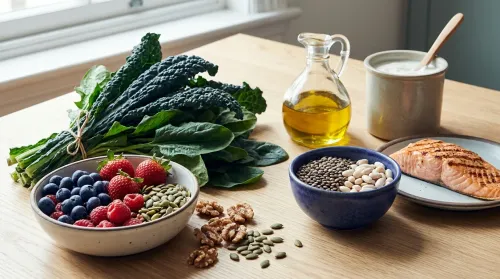
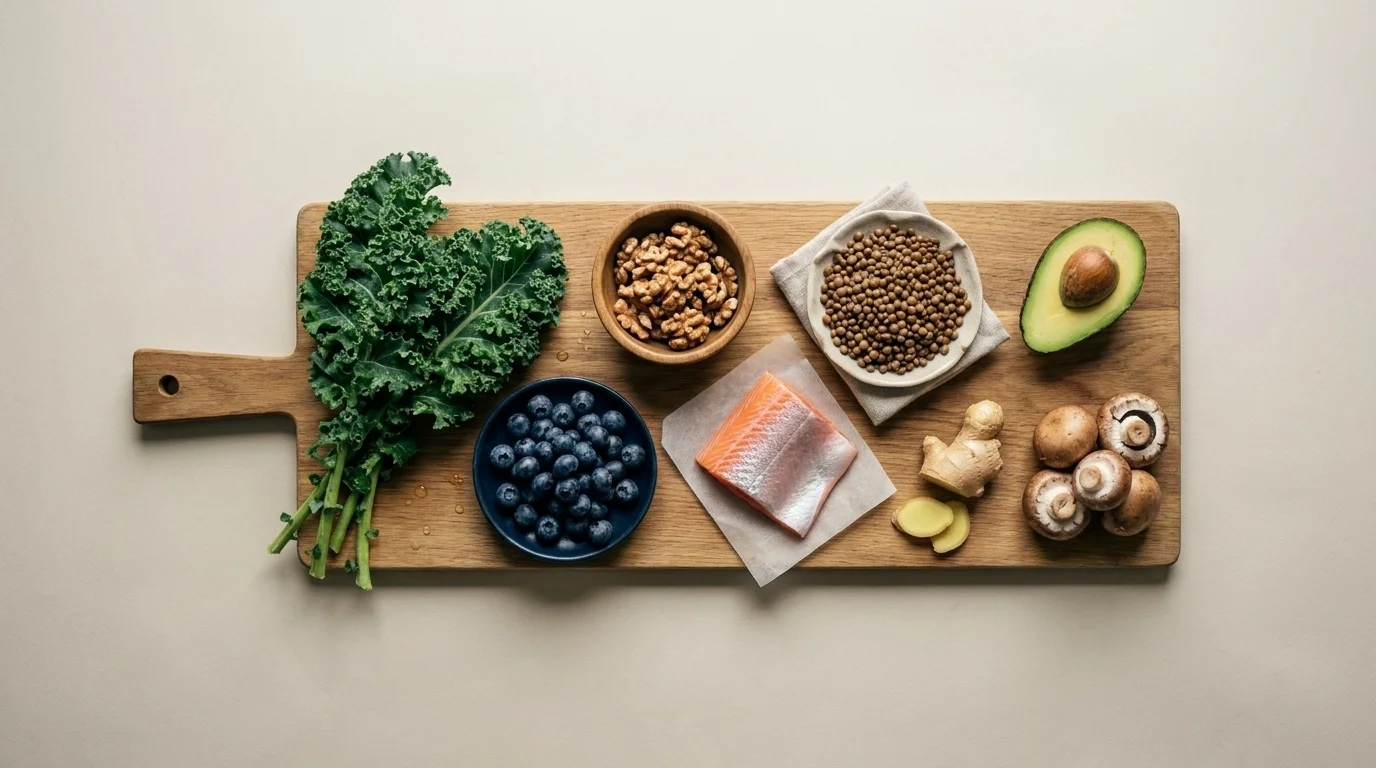
- Kale (1 cup cooked, 36 kcal) — ~684% DV vitamin K, 134% DV vitamin C, sulforaphane precursor. The vitamin K density is genuinely outsized; the polyphenol content is real.
- Spinach (1 cup cooked, 41 kcal) — exceptional vitamin K density, plus folate and 6.4 mg iron. Mealtime workhorse.
- Watercress (1 cup raw, 4 kcal) — tops several published nutrient-density indices; high vitamin K and C density per calorie.
- Swiss chard (1 cup cooked, 35 kcal) — vitamin K, magnesium, potassium; betalain pigments contribute additional polyphenol activity.
Related Article: Understanding Nutritional Psychology: Decoding the Relationship Between Food and Mood
Berries
- Blueberries (1 cup, 84 kcal) — anthocyanin-rich; multiple RCTs on cognitive performance and cardiovascular markers.
- Strawberries (1 cup, 49 kcal) — a full day's vitamin C plus ellagic acid, low glycemic load for fruit.
- Raspberries (1 cup, 64 kcal) — 8 g fiber per cup, anthocyanins; one of the higher-fiber fruits per serving.
- Açaí (100 g pulp, 70 kcal) — high anthocyanin content; remember that açaí bowls are usually high-sugar dessert.
Legumes
- Lentils (1 cup cooked, 230 kcal) — ~18 g protein, 16 g fiber, ~6.6 mg iron. Pound for pound, lentils are one of the best returns on protein-plus-fiber on this list.
- Chickpeas (1 cup cooked, 269 kcal) — 15 g protein, 13 g fiber; foundation for everyday low-cost meals.
- Black beans (1 cup cooked, 227 kcal) — 15 g protein, 15 g fiber, polyphenols from the dark seed coat.
Related Article: Understanding the Basics of Nutrition for Beginners
Whole grains
- Oats (1/2 cup dry, 154 kcal) — beta-glucan fiber with established LDL-lowering effects in clinical trials.
- Quinoa (1 cup cooked, 222 kcal) — ~8 g protein and contains all 9 essential amino acids (complete protein), unusual among plants.
Nuts and seeds
- Walnuts (1 oz, 185 kcal) — ~2.5 g plant-based omega-3 (ALA), polyphenols; cardiovascular evidence is solid.
- Chia seeds (1 oz, 138 kcal) — ~5 g omega-3 ALA, 11 g fiber, high calcium content for a non-dairy food.
- Flax seeds (1 tbsp ground, 37 kcal) — high omega-3 ALA and lignans (a class of polyphenol).
- Pumpkin seeds (1 oz, 163 kcal) — magnesium, zinc, plant protein.
Cruciferous vegetables
- Broccoli (1 cup cooked, 55 kcal) — vitamin C, K, folate, sulforaphane (one of the most studied bioactive compounds in nutrition research).
- Brussels sprouts (1 cup cooked, 56 kcal) — vitamin K, fiber, glucosinolates.
Fatty fish
- Salmon (3 oz cooked, ~175 kcal) — ~1.5 g EPA + DHA omega-3 fatty acids; the form of omega-3 most relevant for cardiovascular and brain outcomes.
- Sardines (3 oz canned, 191 kcal) — high in EPA + DHA, calcium (from bones), vitamin D; among the most underrated foods on this list.
Fermented foods
- Plain yogurt (1 cup, ~150 kcal) — protein, calcium, live cultures (the polyphenol-microbiome story has a direct ally in cultured dairy).
- Kefir (1 cup, ~104 kcal) — more diverse microbial cultures than yogurt; modest evidence on gut barrier function.
- Kimchi (1/2 cup, ~20 kcal) — fermented vegetables, lactic acid bacteria, polyphenol-rich.
One spice that earns it
- Turmeric (1 tsp, ~9 kcal) — curcumin, the polyphenol in turmeric, has meaningful anti-inflammatory effects in clinical work, though bioavailability is poor without piperine (black pepper).
Next-wave picks (evidence: emerging)
A short note on the foods you are about to see everywhere in 2026, with honest evidence labels:
- Seaweed (nori, wakame, kombu): solid evidence for iodine, plant-based omega-3s, and minerals. Mainstream-kitchen ready.
- Moringa: broad vitamin and mineral profile; small studies on glucose and inflammation; evidence: emerging.
- Sea moss: social-media-driven; modest mineral content, dramatic claims (detoxification, weight loss, hormone balance) are not well-supported by clinical trials; evidence: weak for the bigger claims.
- Blue spirulina (phycocyanin extract): high protein, used as a natural blue food coloring; the supplement evidence is small and industry-funded; evidence: emerging.
The principle here: be honest about which foods have decades of clinical evidence behind them (salmon, leafy greens, berries, legumes, oats) and which have recent attention but small studies (sea moss, blue spirulina). Both can be in your kitchen. Only one category should anchor your dietary pattern.
A nutrient-density table — the part the top SERP results forget
A compact reference for nutrient density per serving:
| Food | Serving | Calories | Key nutrient(s) | Notable bioactive |
|---|---|---|---|---|
| Kale (cooked) | 1 cup | 36 | Vitamin K (684% DV), C (134% DV) | Sulforaphane |
| Spinach (cooked) | 1 cup | 41 | Vitamin K (very high), folate | Lutein, zeaxanthin |
| Salmon (cooked) | 3 oz | 175 | EPA + DHA omega-3 (~1.5 g) | Astaxanthin |
| Lentils (cooked) | 1 cup | 230 | Protein 18 g, fiber 16 g, iron | Polyphenols (skin) |
| Quinoa (cooked) | 1 cup | 222 | Complete protein (all 9 EAAs) | Saponins |
| Chia seeds | 1 oz | 138 | Omega-3 ALA 5 g, fiber 11 g | Lignans |
| Walnuts | 1 oz | 185 | Omega-3 ALA 2.5 g | Polyphenols |
| Blueberries | 1 cup | 84 | Vitamin C, manganese | Anthocyanins |
| Plain yogurt | 1 cup | ~150 | Protein, calcium | Live cultures |
| Sardines (canned) | 3 oz | 191 | EPA + DHA omega-3, calcium, vit D | (whole-food matrix) |
| Turmeric | 1 tsp | ~9 | (trace minerals) | Curcumin |
| Broccoli (cooked) | 1 cup | 55 | Vitamin C, K, folate | Sulforaphane |
Sources: USDA FoodData Central values cross-referenced with peer-reviewed nutrition literature.
Related Article: Debunking the Detox Myth: Separating Fact from Fiction
How to actually eat these tomorrow
The integration question is where most superfood content collapses into a smoothie-and-salad cliché. Here is a more practical version.
Add one fermented food to one daily meal. A spoonful of plain kefir or yogurt at breakfast, a forkful of kimchi at lunch, sauerkraut on the side at dinner. The gut-microbiome benefit of polyphenols compounds in the presence of regular fermented-food exposure.
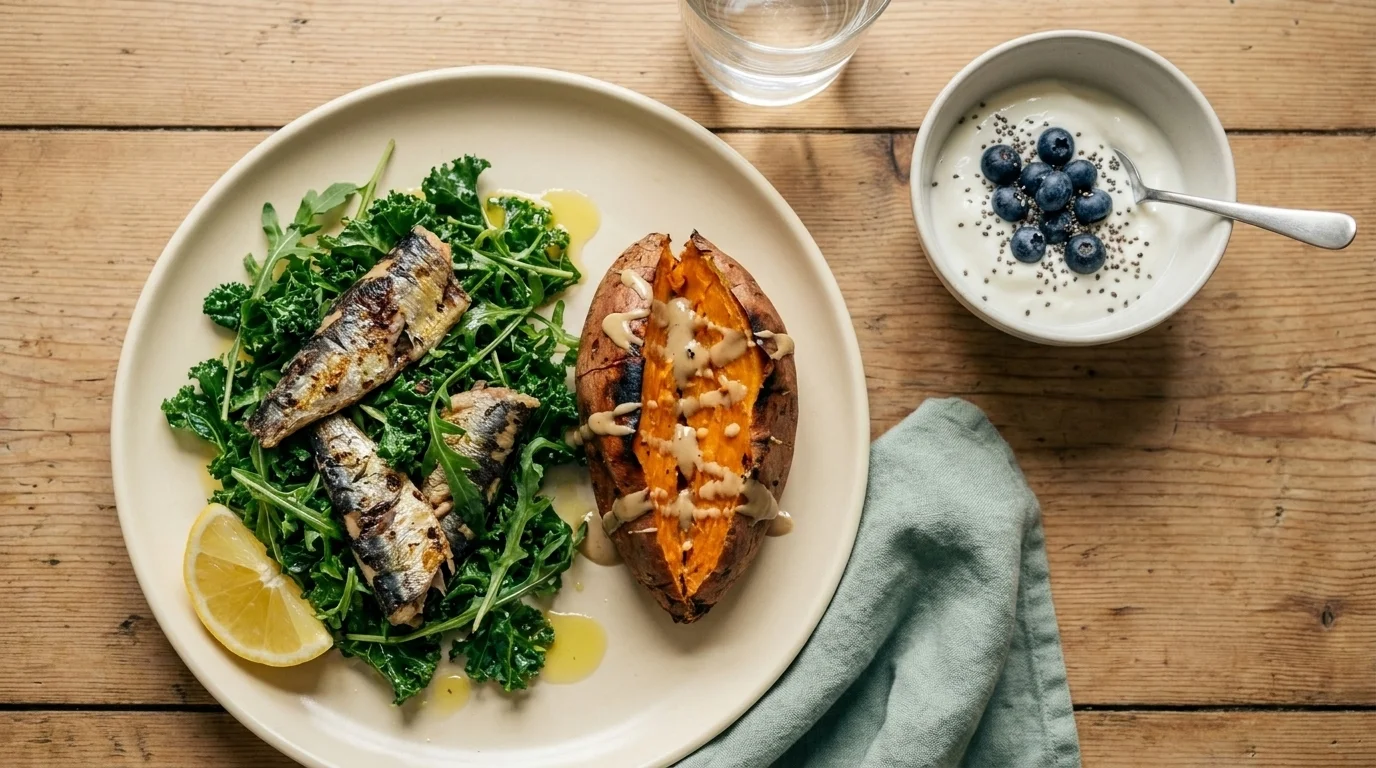
Anchor every week around two servings of fatty fish. Salmon, sardines, or mackerel — fresh, frozen, or canned all work. Canned sardines on toast with olive oil and lemon is one of the best ten-minute meals on this list, and it shows up in Mediterranean-diet research as a consistent pattern.
Use legumes as a main, not a side. A bowl of lentil soup with greens stirred in delivers protein, fiber, polyphenols, and iron in a single inexpensive meal. Dried lentils cost roughly a dollar per cooked cup and deliver more nutrition per dollar than almost any food in the supermarket.
Eat the rainbow — but actually. Anthocyanins (blue/purple), carotenoids (orange), sulforaphane precursors (green), lycopene (red), allicin (white onion/garlic). Different colors signal different bioactive compounds. A dinner plate with three colors will deliver several distinct polyphenol families.
Use turmeric with black pepper and fat. Curcumin's bioavailability is famously poor without piperine and lipids; cook turmeric into oil at the start of a stew or curry, not sprinkled raw on top.
Brain and energy: which of these actually help, and which are oversold
For brain health (superfoods for brain, 210/mo): the evidence is strongest for fatty fish (omega-3 EPA + DHA), leafy greens (folate, vitamin K, lutein), berries (anthocyanins), walnuts (plant-based omega-3, polyphenols), and turmeric (curcumin with piperine). The MIND diet — a blend of Mediterranean and DASH patterns — is the best-studied dietary pattern for cognitive decline prevention, and the foods above are its anchors.
For energy (superfoods for energy, 170/mo): "energy" in the wellness sense usually means stable blood glucose plus adequate iron, B-vitamins, and magnesium. Oats and quinoa (complex carbohydrates), lentils and beans (iron and steady-release protein), nuts and seeds (healthy fats and magnesium), eggs and Greek yogurt (protein) deliver this without the spike-and-crash patterns of refined-carbohydrate snacks.
A note on caffeine: it is a stimulant, not an energy source. The energy you feel from coffee is borrowed against the rest of the day. The foods above produce real energy by supporting glucose stability and mitochondrial function.
Related Article: The Ultimate Guide to Holistic Nutrition for Vibrant Health
A dietary-preference matrix
The same nutrient-density principles apply across diets. Named anchors:
| Dietary pattern | Top picks |
|---|---|
| Plant-based | Lentils, quinoa, tofu/tempeh, leafy greens, berries, walnuts, chia, fortified plant milk for B12 |
| Gluten-free | Quinoa, amaranth, buckwheat, millet (all naturally gluten-free), fish, eggs, legumes, fruits, vegetables |
| Omnivore | Eggs, Greek yogurt, salmon/sardines, leafy greens, berries, legumes, whole grains |
| Budget-friendly | Dried lentils, canned sardines, frozen berries, oats, cabbage, eggs, kale, in-season citrus |
The budget column matters more than most superfoods content acknowledges. A bag of dried lentils, a can of sardines, a bag of frozen blueberries, and a bunch of kale costs less than ten dollars and delivers a meaningful share of this article's nutrition for the week.
Myths and limits
A short closing inventory of what "superfood" is not.
No single food is a cure. The benefits attributed to any one food are smaller than the benefits of the dietary pattern that food sits inside. The Mediterranean diet, the DASH diet, and the MIND diet have decades of evidence behind them as patterns; no single food on this list has comparable evidence as an isolated intervention.
"Superfood" is a marketing term, not a regulatory one. Neither the FDA nor EFSA defines it; it is used to sell products. The label is not always misleading — most of the foods called superfoods are genuinely nutrient-dense — but the label itself confers no scientific status.
The antioxidant story is largely dead. The USDA retired ORAC values in 2012 because high antioxidant capacity in a test tube does not predict in-body benefit. If a product is marketed primarily on antioxidant capacity, you can ignore that claim.
Sea moss, blue spirulina, and most "next-wave" superfoods have small evidence bases. Treat them as additions to a varied diet, not as cures. Read the supplement facts panel, not the packaging claims.
Individual nutrition decisions — especially around chronic disease — belong in conversation with a clinician, not with an article on the internet. If you have a specific medical condition, talk to a registered dietitian or your physician before changing your diet substantially.
Related Article: The Role of Nutrition in Supporting Your Overall Well-Being
What this changes about dinner tonight
The honest takeaway from two decades of superfood research is unromantic: eat more plants, more fish, more legumes, more nuts and seeds, more fermented foods, less ultra-processed food. Cook with the spices you actually like. Eat a dietary pattern, not a hero food.
If you wanted one practical change from this article: add a can of sardines to your shopping list this week, and a bag of dried lentils. Both cost under five dollars total, both keep in the pantry, and both deliver more usable nutrition than most products with the word "super" on the label.
Frequently Asked Questions
'Superfood' is a marketing term, not a scientific or regulatory one — neither the FDA nor EFSA defines it. In practice, the label is applied to nutrient-dense foods rich in vitamins, minerals, fiber, and bioactive compounds like polyphenols. Health benefits come from overall dietary patterns (Mediterranean, DASH, MIND), not from any single food. The label is not always misleading — most foods called superfoods are genuinely nutrient-dense — but the label itself confers no scientific status.
'Nutrient-dense' is a science-based term: foods that deliver high amounts of vitamins, minerals, and beneficial compounds relative to their calorie content. 'Superfood' is a marketing term loosely applied to a subset of nutrient-dense foods that became culturally popular. Every superfood is nutrient-dense; not every nutrient-dense food gets marketed as a superfood. The USDA's framework for nutrient density is the scientifically defensible version of the same idea.
No single food is 'most' nutrient-dense — different foods lead in different nutrients. But leafy greens (kale, spinach, watercress), sardines, salmon, lentils, and seaweed consistently rank near the top across vitamins, minerals, protein, or omega-3 content per calorie. Watercress in particular tops several published nutrient-density indices for vegetables; sardines top several indices for animal-source foods because of their combination of omega-3, calcium (from bones), and vitamin D.
All three are nutrient-dense — moringa for vitamins and minerals, spirulina for protein (~60% by dry weight), sea moss for iodine and trace minerals. The evidence for the more dramatic claims (detoxification, weight loss, hormone balance) is limited or absent in well-controlled clinical trials. Treat them as useful additions to a varied diet if you enjoy them; do not expect them to substitute for foundational foods like fish, legumes, and leafy greens, which have decades of evidence behind them.
For brain health: fatty fish (salmon, sardines) for omega-3 EPA/DHA, blueberries and dark berries for anthocyanins, leafy greens for folate and lutein, walnuts for plant-based omega-3 ALA, and turmeric (with black pepper for bioavailability) for curcumin. The MIND diet is the best-studied dietary pattern for cognitive decline prevention. For energy: oats and quinoa for complex carbohydrates, lentils and beans for iron and steady-release protein, nuts and seeds for healthy fats and magnesium, and eggs and Greek yogurt for protein.
The antioxidant story is largely outdated. The USDA retired its ORAC (Oxygen Radical Absorbance Capacity) database in 2012 because mounting evidence showed lab-measured antioxidant capacity does not predict in-body benefit. The science that has survived is the polyphenol-gut microbiome connection: a 2020 ScienceDirect meta-analysis confirmed polyphenol-rich foods selectively increase beneficial Lactobacillus and Bifidobacterium while decreasing pathogenic Clostridium. So the bioactive compounds in deeply colored plants do work, just through the gut, not through 'free radical neutralization' as marketed.
Practically: add one fermented food to one daily meal (kefir, yogurt, kimchi, sauerkraut); anchor your week around two servings of fatty fish (salmon, sardines, mackerel — fresh, frozen, or canned all work); use legumes as a main course at least twice a week; eat at least three colors of plants on your dinner plate; cook turmeric into oil with black pepper for better bioavailability. The integration question is mostly about dietary patterns, not about any single dish.