
The Fusion of Wellness Tech and Fashion: Wearable Innovations Revolutionizing Health and Style


I want to start with a small confession from someone who spends her days paying attention to what bodies and minds are actually doing: I'm both genuinely interested in smart fabrics and reflexively skeptical of how they're sold. The marketing language — clothing that "seamlessly" knows your stress, fabric that "effortlessly" optimizes your wellness — tells you almost nothing about what the technology measures, how well it measures it, or what you're handing over to get those numbers. So this is the version I'd give a client who asked: what these garments really are, what they can and can't tell you, and what to keep your eyes open about.
It helps to know this isn't a fashion fad. The smart fabrics and textiles market was valued at about USD 9.27 billion in 2025 and is projected to reach roughly 11.16 billion in 2026, on a path to nearly 59 billion by 2035. And the growth is being driven by health and sport monitoring — not by novelty hemlines. The center of gravity has moved from a rigid device on your wrist to sensing woven into the cloth itself.
What are smart fabrics, exactly?
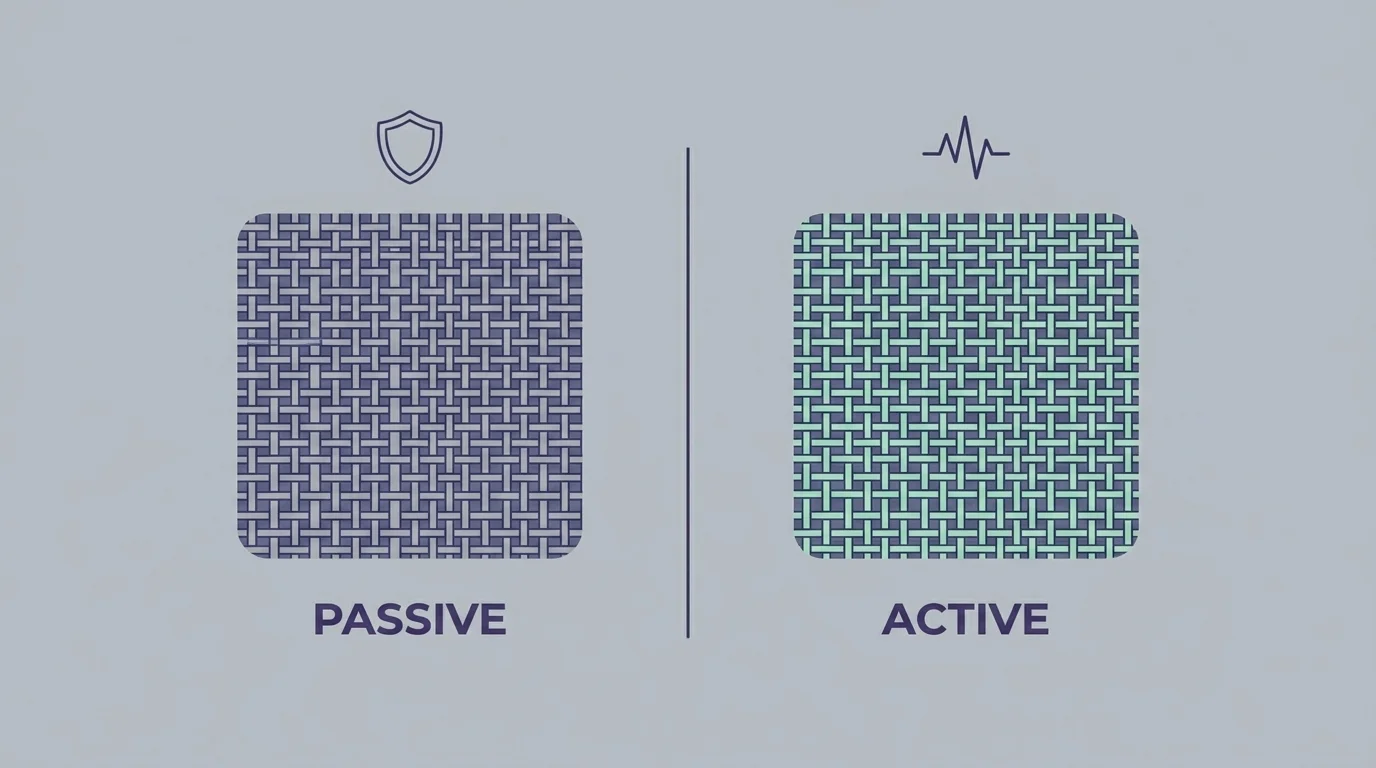
Smart fabrics — also called smart textiles or e-textiles — are ordinary-feeling fabrics with electronics built into the material itself: sensors, conductive threads, and sometimes components that respond to your body or environment. The simplest way to sort them is by what they do. Passive smart textiles add a fixed function — UV protection, antimicrobial finishing — while active ones sense and respond, capturing data or adjusting in real time. When people talk about clothing that "tracks your health," they almost always mean the active kind.
How smart fabrics actually work
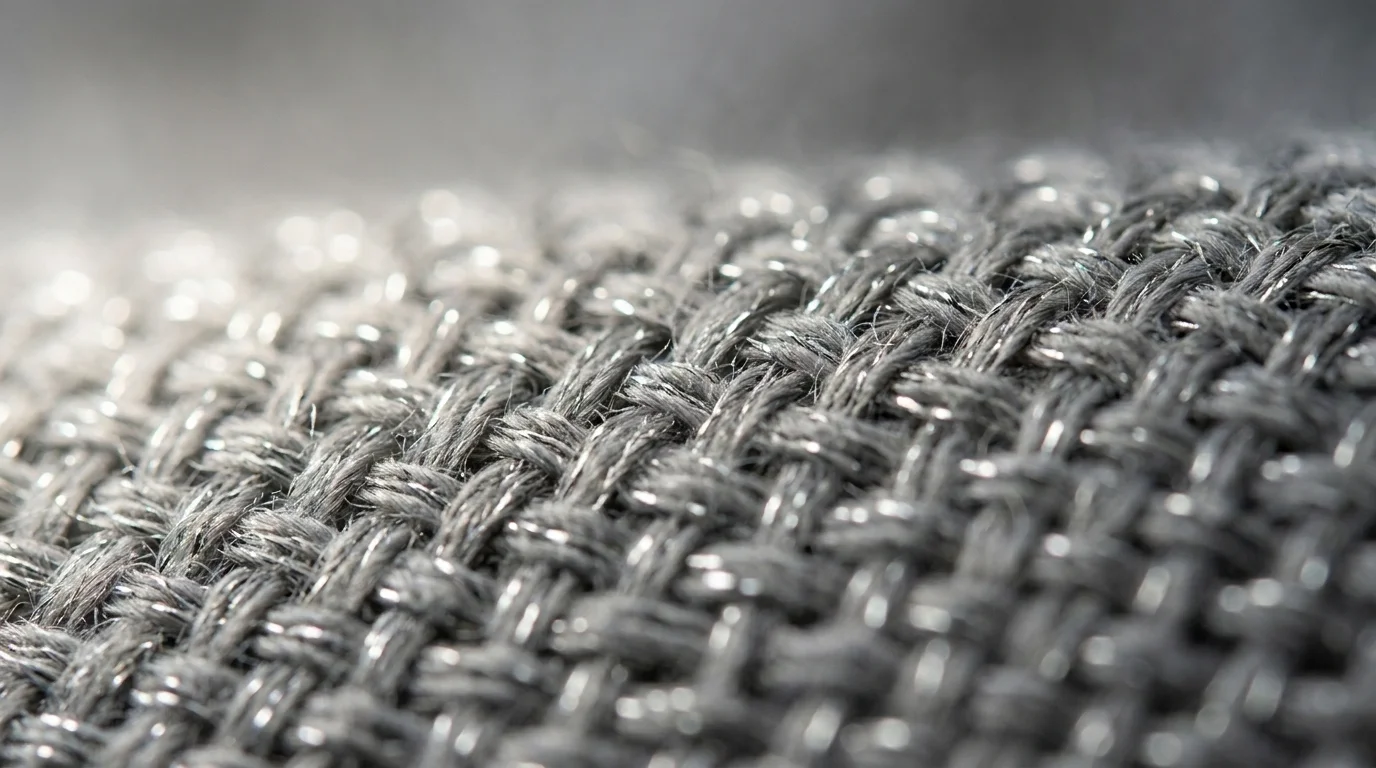
There's no magic here, which is exactly why it's interesting. The sensing comes from a few real mechanisms woven into the cloth: conductive threads (often metal- or carbon-based) that carry signals, micro-sensors integrated into the weave, and actuators that let the fabric respond. Some garments capture your body's electrical signals; others read movement or temperature.
One of the more elegant approaches is sweat sensing. As a 2025 review put it, "sweat provides a uniquely accessible and non-invasive source of molecular-level information, readily capturable at the skin–textile interface." Fabric-integrated sweat sensors can run continuously for several hours at a stretch. And in early research, acoustic textiles — fabrics threaded with piezoelectric transducers that send and receive sound waves through glass microfibres — are emerging as an entirely different way to read physiological signals, distinct from the electrical sensors that came before.
Related Article: AI-Powered Personalized Fitness: Revolutionizing Workout Regimens Through Data-Driven Insights
What they can track — and what it means for you
This is where I find the engineering reviews go quiet on the part you actually care about: not what the fabric measures, but what the measurement means. As of 2025, smart textiles can track heart rate and pulse waves, body temperature, respiratory rate, joint movement, and sweat biomarkers like lactate, glucose, pH, and electrolytes. A separate strand of research is developing textiles that read signals tied to mental states — electrodermal activity, cortisol, respiration, even EEG.
Translated into plainer stakes:
- For movement and sport, a sensor shirt that reports heart rate and breathing can genuinely help you train smarter. One review called smart textiles "inexpensive and efficient information-gathering terminals" for sport and healthcare — accurate enough to be useful, in the right conditions.
- For metabolic signals, sweat-sensing garments that estimate glucose or lactate are a real shift toward non-invasive monitoring — promising, and still mostly research-grade.
- For stress and mood, a fabric that tracks electrodermal activity or cortisol is measuring physiological correlates of arousal. That's data worth having, but a number on a screen is not the same as understanding what you're feeling, and it can't tell you whether a hard week is a hard week or something that needs support.

What's new in 2025-2026
If you read about smart clothing a few years ago, the story was wrist trackers and step counts. The current research has moved on. Sweat sensing went from single-signal to multi-marker — measuring several biomarkers at once. Acoustic textiles arrived as a genuinely new sensing modality. And mental-health and even skin-microbiome monitoring entered the picture as serious research frontiers rather than science fiction. The honest summary is that the capabilities are advancing quickly, which makes the next question more important, not less.
Accuracy, limits, and your data
Here is the section the engineers and vendors tend to skip, and the one I'd want you to read twice.
The accuracy is real but conditional. The same 2025 literature that celebrates these advances is candid about the constraints: sweat-sensor readings vary with how much you're sweating, sensors degrade under repeated washing and stretching, detecting multiple biomarkers at once introduces interference, and the rigid bits of circuitry can undercut the comfort that's supposedly the whole point. None of that makes the technology useless. It makes it a useful signal, not a verdict.
Two distinctions are worth holding onto. First, most smart garments you can buy are consumer-grade, not FDA-cleared medical devices — they're designed to inform, not to diagnose. If you're making a real health decision, the trend on your shirt is a conversation-starter with your doctor, not a substitute for one. Second, these fabrics generate a continuous stream of intimate data — your heart rhythm, your sweat chemistry, your stress signals. Before you wear one, it's worth knowing who holds that data, whether it's sold, and whether you can delete it. The privacy question is one no product page volunteers, and it's the one I'd ask first.
So, should you wear one?
If you find a well-made sensor garment genuinely useful — for training, for noticing a pattern in your sleep or stress, for staying curious about your own body — that's a good reason to wear it. Smart fabrics are a real and rapidly maturing technology, not a gimmick. Just wear it the way I'd want you to read any number about yourself: as one piece of information, held lightly, checked against how you actually feel. The fabric can tell you your cortisol rose. It can't tell you whether that's an ordinary stressful Tuesday or something worth bringing to a professional. That part is still, reassuringly, yours.
Frequently Asked Questions
Conductive threads or yarns (often metal- or carbon-based), woven micro-sensors, and actuators, sometimes alongside phase-change or piezoelectric materials, all integrated into otherwise normal-feeling textile. The result senses or responds to your body without looking or feeling like a gadget.
Sensor-embedded athletic shirts that track heart rate and breathing, sweat-sensing garments that estimate glucose, lactate, or pH, temperature-regulating jackets, and acoustic-sensing textiles in early research. Many advanced examples are still research-grade rather than consumer products.
They can track real signals, but accuracy is conditional. Sweat-sensor readings vary with how much you sweat, and washing and stretching degrade sensors over time. Most smart garments are consumer-grade, not FDA-cleared medical devices, so treat their data as a useful signal, not a diagnosis.
Passive smart textiles add a fixed function like UV protection or antimicrobial finishing. Active smart textiles sense and respond in real time, capturing body data or adjusting properties such as temperature. Health-tracking clothing is almost always the active kind.
Check Out These Related Articles

Revolutionizing Patient Care: The Impact of Data Analytics in Health and Wellness

The Technological Future of Holistic Healing: Innovations Reshaping Well-Being Practices
Revolutionizing Fitness Regimens with Smart Gym Equipment