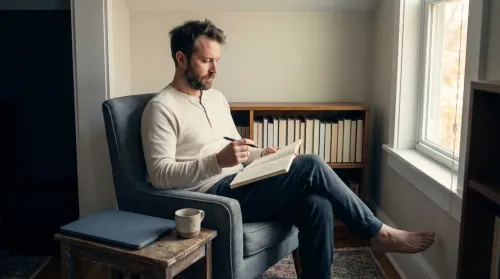
Unwinding Techniques for a Restful Nights Sleep


A claim worth interrogating
How to fall asleep faster is the most-Googled sleep question of 2025, which is why I want to start with a story. Two months ago, I was on a podcast with a wellness founder who told me, with genuine conviction, that her brand's $89-per-month "sleep stack" had "fundamentally rewired" her customers' sleep. She did not have a randomized trial. She had testimonials. The product was a magnesium-and-glycine-and-L-theanine capsule sold via subscription, with a customer acquisition cost a fraction of which would purchase the same ingredients in single-supplement form at any drugstore.
I write about the wellness economy for a living. The American sleep market — supplements, mattresses, trackers, apps, weighted blankets, smart-temperature mattress pads — was estimated at over $80 billion in 2025 and is projected to keep growing. A meaningful slice of that growth is built on the gap between what consumers think the science says and what the science actually says. That gap is the subject of this article.
The good news, before we get to the skeptical work: there is a useful, well-evidenced version of "how to fall asleep faster," and it is mostly free. It involves consistency, light, temperature, and a short evening sequence that anyone can run with whatever they already own. Most of the products being sold to you are at best optional and at worst aggressively oversold. What follows is the bedtime routine that the actual 2025-2026 research supports, structured as a T-minus countdown you can run starting tonight, plus an honest section on what the supplement aisle is actually delivering. Let's get into it.
What the December 2025 Scripps study actually showed
The most important sleep-research finding of the last twelve months — which somehow has not made it onto a single major wellness-blog article I can find — is that sleep regularity matters more than sleep duration for several health outcomes. A December 2025 study from Scripps Research, analyzing data from approximately 70,000 participants, found that adults whose nightly bedtime varied by just one hour had more than twice the risk of sleep apnea and 71% higher odds of high blood pressure than peers with consistent schedules. The duration effect was real but smaller. The regularity effect was the headline.
That finding aligns with a January 2026 analysis covered by ScienceDaily reporting that habitual sleep duration's association with mortality was stronger than diet, physical activity, or social isolation — second only to smoking. Combine the two and the practical conclusion is simple: a consistent, well-timed seven hours beats a ragged eight, and "I'll catch up on the weekend" is a less effective strategy than the wellness internet has pretended for two decades.
This is also why "bedtime ritual" is not a soft or aesthetic concept. A ritual is the mechanism by which you make a behavior consistent. The point of the rituals below is not that any one of them is magic. The point is that running them in the same sequence at roughly the same time each night is what produces the regularity Scripps measured.
A baseline reality check, from the NSF 2025 Sleep in America Poll: six in ten U.S. adults don't get enough sleep, about 40% have trouble falling asleep three or more nights a week, and nearly half struggle to stay asleep three or more nights a week. Eighty-eight percent of adults with good sleep satisfaction were classified as "flourishing" in the same poll, versus 47% of those with poor sleep satisfaction. The gap is not subtle.
A T-minus countdown to lights-out
Most bedtime-routine articles list techniques without telling you when to do them. Sequencing matters. Here is the timeline I would defend, anchored to a 10 p.m. lights-out — adjust the absolute times if your bedtime is different.
| Time | Action | Why |
|---|---|---|
| T-8 hr | Last caffeine. No more coffee, energy drinks, or strong tea. | Caffeine half-life is roughly 5 hours; a 2 p.m. cup is still ~25% active at midnight. |
| T-3 hr | Last full meal. Eat dinner. Hydration only after this point. | Late large meals raise core temperature and disrupt sleep architecture. |
| T-90 min | Dim the lights. Switch from overhead to lamps; warm-bulb only. | Bright light suppresses melatonin and re-elevates cortisol in the wind-down window. |
| T-60 min | Devices out of the bedroom. Phone on a charger in another room. | The 2024 NSF Consensus on Screens recommends a device curfew of at least one hour before bed; the bedroom should not contain devices. |
| T-30 min | Stretch or warm shower. Five to ten minutes of gentle mobility, or a warm shower (the post-shower cooling phase signals sleep). | Lets accumulated physical tension discharge before lying down. |
| T-15 min | Bed. 4-7-8 breathing or a body scan. | Slow, parasympathetic-leaning practices reliably lower heart rate within minutes. |
| T-0 | Lights out. Bedroom 60-67°F. | Core body temperature must drop ~1-2°F to initiate sleep; a cool bedroom is part of that mechanism. |
The temperature target — 60 to 67°F — comes from Sleep Foundation guidance and has held up across multiple recent reviews. If your bedroom runs warmer than that, this is the intervention with the highest physiological leverage you have not paid for.
A note on what this routine does NOT require: a $300 sleep mask, a smart-temperature mattress pad, or a $89-per-month supplement subscription. None of the products being marketed to you in this category have evidence stronger than the cool-dark-quiet-consistent baseline. Some have evidence weaker than that.
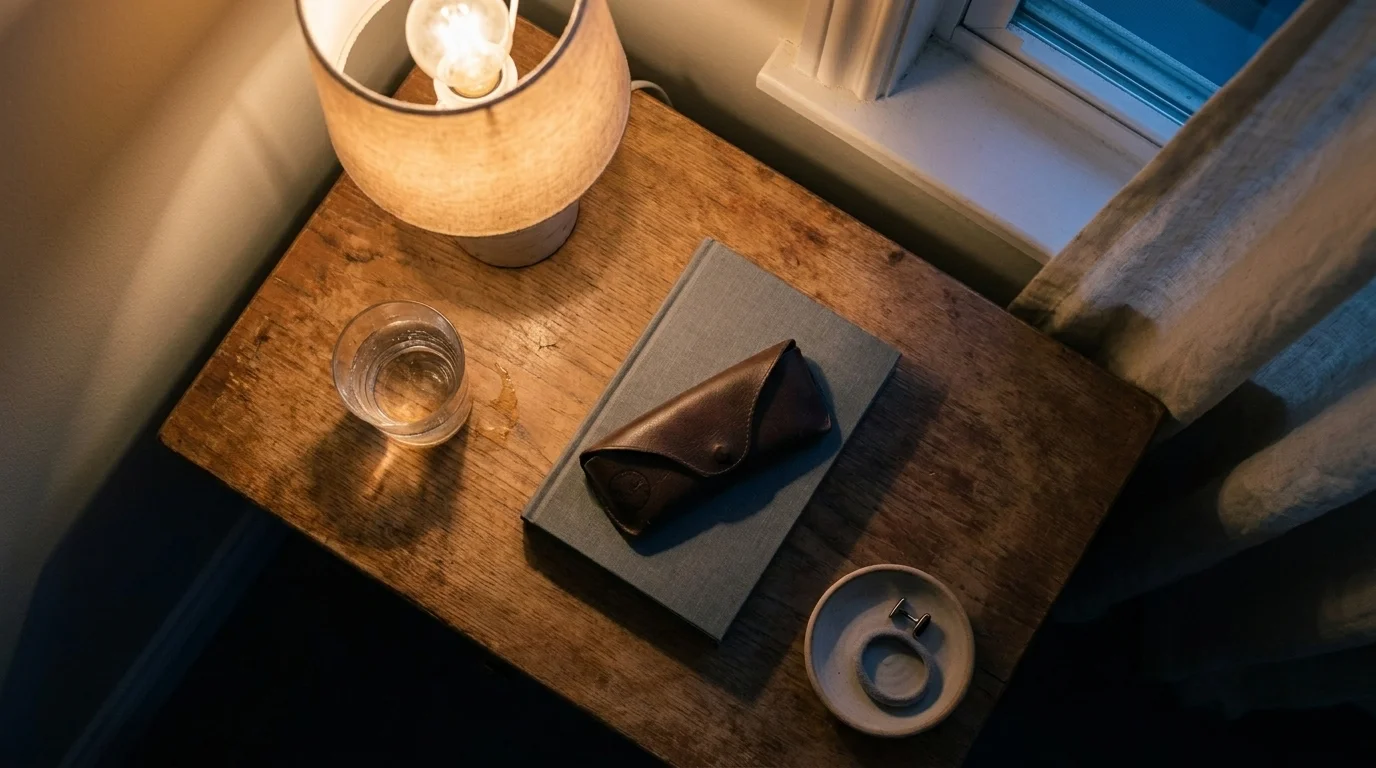
How to do 4-7-8 breathing (and what the evidence actually supports)
I want to be precise about evidence tiers here, because the wellness market routinely conflates "low-risk and anecdotally helpful" with "clinically proven."
The 4-7-8 protocol:
- Exhale fully through the mouth, soft sound.
- Inhale through the nose for 4 seconds.
- Hold for 7 seconds.
- Exhale through the mouth for 8 seconds, soft sound.
- Repeat for 4 cycles.
What the evidence says: the Cleveland Clinic explainer, the University of Michigan medical school, and a 2025 Frontiers in Sleep review all classify breathing protocols of this type as low-risk and plausibly helpful for sleep onset, with the bulk of supporting evidence coming from anecdotal reports and small-sample studies rather than large randomized controlled trials. The mechanism — extended exhalation activating parasympathetic pathways through the vagus nerve — is well-established. The specific clinical efficacy of any one named protocol is less established than wellness-blog confidence implies.
The honest framing: it costs nothing to try, takes two minutes, and is well-tolerated. It is not a treatment for clinical insomnia. If insomnia is what you are dealing with — three or more bad nights a week for more than a few weeks — a clinician evaluation matters more than a breathing technique.
Related Article: Pacific Island Paradigm: Infusing Indigenous Wisdom into Holistic Healing Practices
When your brain won't stop
This is the section the standard sleep-hygiene listicles tend to skip. The acute scenario most people who can't sleep are actually dealing with is not "I forgot to dim the lights" — it is "I am lying here with a racing mind, and the longer I lie here the more anxious I get about not sleeping."
Three protocols that work better than waiting it out:
The 20-minute rule. If you have been in bed more than about 20 minutes and are still awake, get up. Go to a different, dimly lit room. Do something quiet — read a paper book, stretch, journal. Wait until you feel sleepy, then return to bed. Lying in bed awake teaches your brain that bed is a thinking environment, which is the exact association you don't want. This is the single most underrated piece of insomnia advice, and it is supported across the Harvard Health, Mayo Clinic, and Sleep Foundation guidance.
The cognitive shuffle. Pick a random letter. Mentally generate words that start with it — "apple, antler, asphalt, abacus" — without meaning or association. After 20 or 30 seconds, pick another letter. The cognitive shuffle is designed to occupy the verbal-thinking part of your brain with content that has no narrative or emotional charge, which is the opposite of what rumination does. There is small but credible behavioral-research support for it as a falling-asleep aid; my colleagues have tested it informally and it works for many of them.
The five-minute worry journal. An hour before bed, write down the things you are worried about — and a single tiny next-action for each. Not to solve them. To externalize them. The evidence base on expressive writing and pre-bedtime worry journaling is small but consistent. The mechanism: your brain holds onto unresolved threats, and putting them on paper with a small next-step lowers the urgency signal.
If you have a diagnosed anxiety disorder, OCD, or PTSD, please bring sleep-onset issues to the clinician treating those conditions. Sleep dysfunction is often a treatable feature of those conditions, and the clinical interventions outperform any sleep-hygiene blog.
What 2025 evidence says about sleep supplements
This is my actual professional lane, so I want to be specific. The Dietary Supplement Health and Education Act of 1994 (DSHEA) is the regulatory framework that governs the U.S. supplement industry, and it is more permissive than most consumers understand. Under DSHEA, the FDA cannot require a supplement to prove it is safe or effective before reaching the shelf. The agency must demonstrate, after the fact, that a product is unsafe in order to remove it. This is why you see FDA warning letters in this category, not FDA approvals. When a sleep brand tells you its product is "FDA-compliant," what it means is "the FDA has not yet told us to stop selling it." That is a much lower bar than the marketing implies.
With that as the regulatory backdrop, the actual 2025 evidence on the most-marketed sleep supplements:
- Magnesium. A 2025 randomized controlled trial of 155 adults reporting poor sleep found that magnesium bisglycinate at 250 mg significantly reduced insomnia severity within four weeks compared to placebo, with the strongest effect in adults with low dietary magnesium. Mayo Clinic Press cautiously endorses magnesium at 250-500 mg taken 30-60 minutes before bed for healthy adults, with a supplement cap of about 350 mg/day to avoid GI side effects. This is the strongest current evidence for any over-the-counter sleep aid.
- Melatonin. An August 2025 Washington Post analysis of the supplement evidence concluded that low-dose melatonin (0.5-3 mg, taken 30-60 minutes before bed) has modest credible benefits, particularly for circadian-rhythm issues like jet lag and shift work. The high-dose melatonin (5-10 mg) sold widely in the U.S. is no longer recommended for general use; it overshoots physiological levels by an order of magnitude. Most over-the-counter melatonin products in the U.S. are dosed higher than the evidence supports.
- Everything else. Valerian root, L-theanine, ashwagandha, chamomile, lemon balm, CBD, "sleep gummies" with proprietary blends — the evidence base ranges from weak to absent. Some have small RCTs with mixed results. Most rely on anecdote and brand testimonial. The ingredient panels of premium "sleep stacks" generally combine things with weak evidence into a more expensive product than any of the individual components.
A practical takeaway: if you want to try a supplement, magnesium bisglycinate at 250 mg is the cheapest and best-evidenced starting point, and a generic bottle from any drugstore costs roughly the same as a single month of a branded "sleep stack." Talk to your doctor before adding any supplement, particularly if you take prescription medication — interactions are real (magnesium with some antibiotics; melatonin with blood thinners and immunosuppressants).
Related Article: Embracing Cultural Diversity in Health and Wellness: Insights and Practices from Around the World
Orthosomnia and the sleep-tracker problem
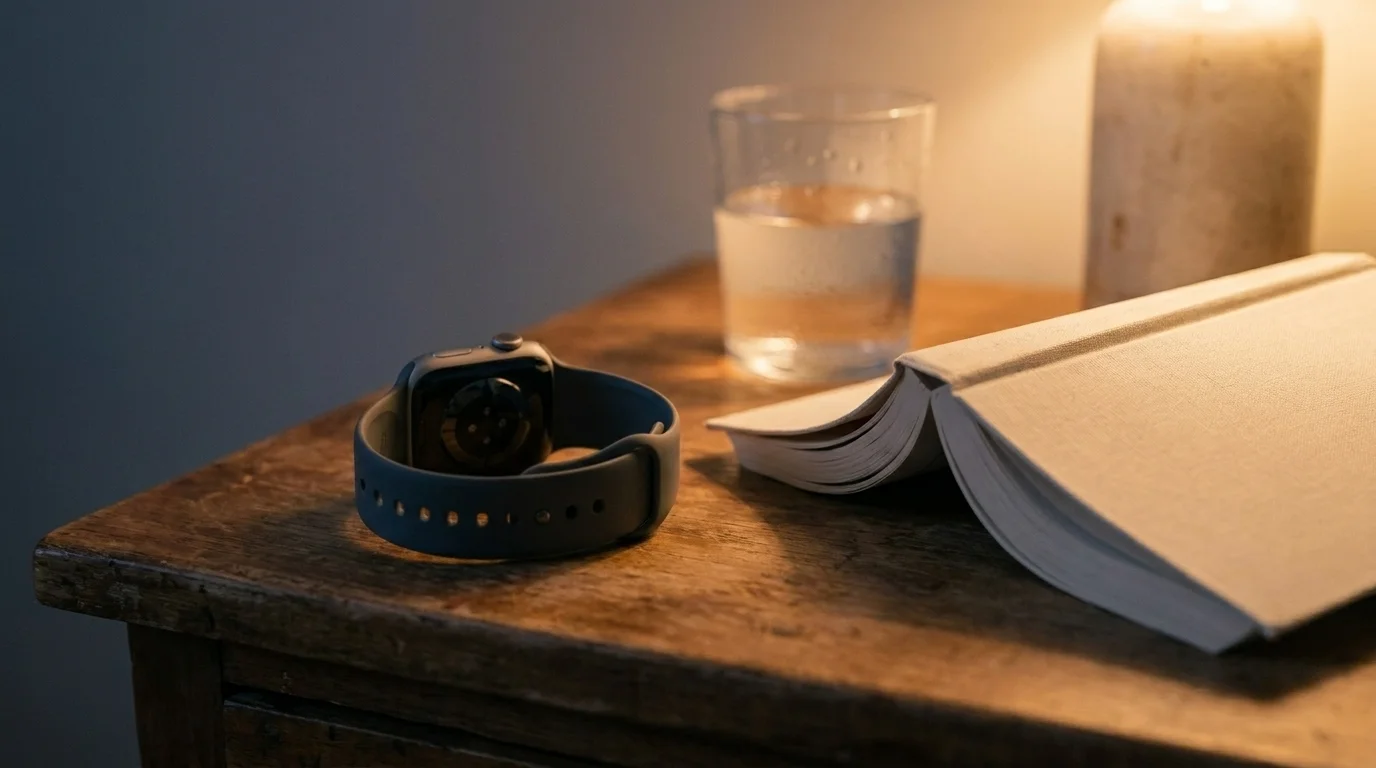
The 2017 Journal of Clinical Sleep Medicine paper that introduced the term "orthosomnia" described a then-emerging clinical phenomenon: patients whose sleep was actively worsened by their compulsive checking of sleep-tracking devices. Nine years later, the U.S. consumer wearables market is approximately $40 billion, sleep-tracking is a marquee feature of essentially every fitness band and smart watch sold, and orthosomnia has graduated from a curiosity to a real fraction of the sleep complaints clinicians see.
The mechanism is straightforward. The tracker reports a number. The user reads the number. If the number is low, the user becomes anxious about their sleep. The anxiety makes it harder to fall asleep tomorrow, which produces a worse number, which produces more anxiety. The tracker has, in effect, created the problem it claims to measure.
Two practical responses: turn off the sleep score for two weeks and see whether your subjective sleep quality changes (it often improves), or move the tracker to manual review only — look at the data weekly, not the morning after. The wearable market has incentive to make the daily number prominent because daily engagement is what its business model sells. Your sleep does not have that incentive.
Modern stressors, by name
Most sleep-hygiene articles say "limit screens" and stop there. The 2026 version of the bedtime sleep problem has more specific shapes worth naming.
- Doomscrolling. The pattern of consuming distressing news in 30-to-90-minute compulsive sessions before bed. The cognitive activation is meaningful even when the content is "informational." A doomscroll at 11 p.m. is a sympathetic-nervous-system intervention.
- Late-night Slack/email. The half-hour of "just clearing my inbox" at 10 p.m. is a small cognitive-load test that rebuilds work-mode arousal at the exact moment you are trying to wind down. The work doesn't get any cleaner; the sleep gets worse.
- Late-night YouTube/podcast autoplay. Engagement-optimized content algorithms are explicitly designed to keep you watching past your bedtime. The autoplay feature exists for the platform, not for you.
- The sleep-tracker check. See above.
The structural fix is the bedroom-without-devices rule, not willpower. None of these patterns are a personal failing of the user. They are platform-engineered defaults working as designed.
Related Article: Physical Fitness Traditions from Around the World
A note on who gets to sleep well
I cannot write a sleep-hygiene article without naming what it leaves out. The advice in this article assumes you control your schedule. Many of the people most affected by chronic sleep deprivation in the United States — shift workers, parents of infants and small children, caregivers of disabled or elderly family members, people working multiple part-time jobs without predictable hours, people whose housing is loud or unsafe — do not control their schedule. The Scripps consistency finding above is not less true for them. It is just structurally inaccessible.
A 2025 APA Work in America survey found that job insecurity is a meaningful stressor for over half of U.S. workers, and the annual U.S. economic cost of insomnia — concentrated heavily in workers without sleep-adequate jobs — runs to roughly $63 billion. The serious conversation about "wellness access" in this category is not which weighted blanket your benefits portal subsidizes. It is paid sick leave, predictable scheduling, and whether the people who keep American infrastructure running between 11 p.m. and 7 a.m. have any structural support to sleep well.
For the readers who do control their own schedule — and that is most likely you, if you are reading a 2,200-word sleep-hygiene article — the routines above will reliably move you toward better sleep. For the readers who do not, the routines are still useful where they fit, and the policy conversation is the more important one.
A short, sober usable takeaway
Pick one thing tonight. Bedroom temperature down to 65°F. Phone on a charger in another room from 9 p.m. to 9 a.m. A 250 mg magnesium bisglycinate at 9:30 if you want to try the supplement with the strongest evidence. Lights out at the same time tomorrow as last night. Run any one of these for two weeks and reassess.
Most of what gets sold to you in this category is optional. Some of it is dressed-up extraction. The actual sleep-quality lever is consistency, plus a routine that is small enough that you will run it on a Wednesday night when you are tired and don't feel like it. That routine is what produces the regularity Scripps measured. Everything else is, as I tell my friends, the cost of goods.
Frequently Asked Questions
The well-evidenced version is short and structural: caffeine cutoff 8 hours before bed, last full meal 3 hours before, dim lights 90 minutes out, devices out of the bedroom 60 minutes out, gentle stretching or a warm shower 30 minutes out, and 4 cycles of 4-7-8 breathing or a body scan 15 minutes out. Run the same sequence at the same time each night — a December 2025 Scripps study of ~70,000 adults found that a one-hour variation in bedtime more than doubled apnea risk and raised high-blood-pressure odds by 71% versus consistent schedules.
Three structural levers carry most of the effect: temperature, light, and devices. Bedroom between 60 and 67°F (most clinicians cite 65°F as a midpoint) — a cool room helps your body lower its core temperature, which is part of how it initiates sleep. Block light with blackout curtains or a sleep mask. Keep phones, tablets, and laptops out of the bedroom entirely; the 2024 NSF Consensus on Screens recommends a device curfew of at least one hour before bed and no devices in the bedroom.
The well-evidenced ones are the simple ones: a consistent wind-down routine, gentle stretching or mobility work, a warm shower or bath, and slow-paced breathing protocols (4-7-8 or box breathing) with the longer-than-inhale exhale that activates parasympathetic pathways through the vagus nerve. If your mind races, the cognitive shuffle (generating random unrelated words by letter) and a 5-minute pre-bed worry journal are credible behavioral interventions. None of this requires an app subscription.
About 15 to 20 minutes is normal. Falling asleep in under 5 minutes consistently can be a sign of sleep deprivation. Consistently taking longer than 20 to 30 minutes is an insomnia signal — and if you are awake more than 20 minutes, the right move is to get out of bed and do something quiet in dim light until you feel sleepy. Lying in bed awake teaches your brain that bed is a thinking environment, which is the exact association you do not want.
Between 60 and 67°F, with 65°F a common midpoint, per Sleep Foundation and Mayo Clinic guidance. Your body needs to drop core temperature by about 1 to 2°F to initiate sleep, and a warm room physically blocks that mechanism. If your room runs warmer than 67°F, this is the cheapest and highest-leverage sleep intervention you can make.
Magnesium has the strongest 2025 evidence. A 2025 randomized trial of 155 adults found magnesium bisglycinate at 250 mg significantly reduced insomnia severity within 4 weeks versus placebo. Mayo Clinic Press cautiously endorses 250-500 mg taken 30-60 minutes before bed (cap at 350 mg/day from supplements to avoid GI side effects). Low-dose melatonin (0.5-3 mg) has modest credible benefits, especially for circadian-rhythm issues; the high-dose 5-10 mg products sold widely in the U.S. are no longer recommended for general use. Most other sleep supplements (valerian, L-theanine, CBD, branded 'sleep stacks') have weak or absent evidence. Talk to your clinician before adding anything.
Three tools that work better than waiting it out: the 20-minute rule (if you've been in bed more than ~20 minutes awake, get up, go to a different dimly-lit room, and return only when sleepy); the cognitive shuffle (mentally generate random unrelated words starting with one letter, switch letters every 20-30 seconds); and a 5-minute worry journal an hour before bed (write the worry plus a single tiny next-action — to externalize it, not solve it). If racing thoughts at bedtime are persistent, an anxiety disorder may be driving them, and clinical treatment will outperform any sleep-hygiene blog.
Check Out These Related Articles

Aesthetic Harmony: Integrating Design Principles with Holistic Wellness Concepts
Navigating Holistic Wellness: Embracing a Well-Balanced Lifestyle for Beginners

Japanese Zen Embodied: The Art of Integrating Mindfulness into Everyday Life