
Wellness Retreats


Search "wellness retreats" and the results will try to sell you something before they teach you anything. Operators list their own resorts. Travel brands name a handful of photogenic places. But almost nobody hands you a neutral way to choose between them. I spend my working life on what happens when older healing practices become products you can book by the night. Think of the fast, the pilgrimage, the retreat into silence, the sweat lodge. The wellness retreat is one of the most successful repackagings of the last decade.
This guide is the part the search results skip: how to actually choose one. A wellness retreat is a structured, multi-day stay that centers on guided health practices. Choosing one well is a real decision, with real money attached. What follows is the honest part: the 2026 cost, the insurance reality, and how to vet a barely-regulated industry. It ends with a shortlist of notable US retreats and the traditional-healing traditions the travel lists leave out.
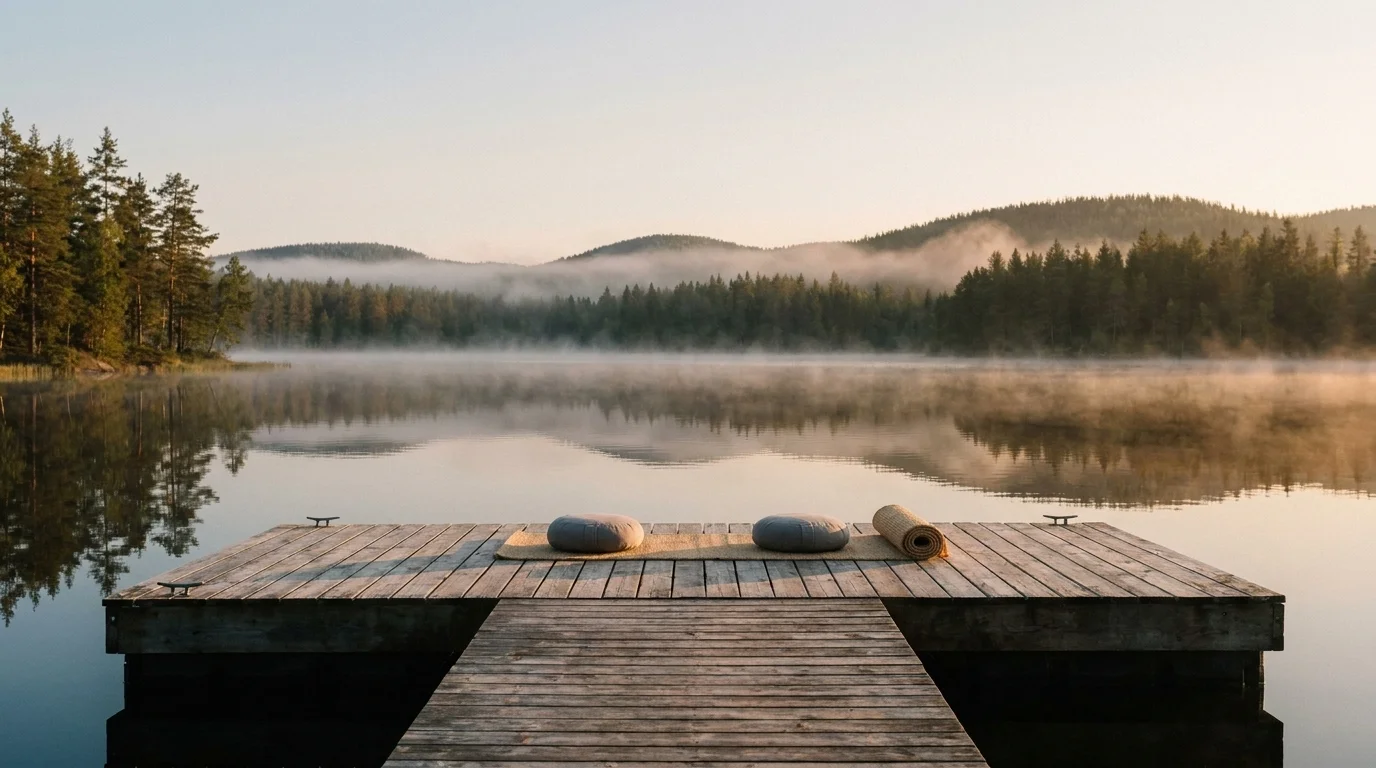
What Is a Wellness Retreat — and Why 2026 Changed the Math
A wellness retreat is a multi-day stay that combines lodging, healthy meals, and guided sessions. Those sessions run from yoga, meditation, and bodywork to nature time and therapeutic or educational programming. So the whole thing organizes around a wellbeing goal rather than sightseeing.
That definition has held for years. What changed is the money. In BookRetreats' 2026 State of Retreats survey, retreats overtook spa treatments as the number-one wellness-travel spending priority. Some 49 percent planned to spend on a retreat, ahead of spa treatments (45 percent) and supplements (44 percent). The same survey found that 64 percent of US travelers had a retreat planned for the year. The retreat is no longer the splurge you add to a vacation. For a lot of people, it has become the trip itself.
The programming shifted too. École hôtelière de Lausanne's wellness-tourism analysts describe a move away from passive relaxation. The industry now calls the goal "nervous-system regulation" — resilience, recovery from burnout, measurable reset. And you can hear it in what people say they are buying. In the BookRetreats data, 62 percent go for rest and relaxation. Another 37 percent go for mental-health support. Then 35 percent want recovery from stress and burnout, and 25 percent want to reconnect with nature.
I read those numbers the way an anthropologist reads any marketplace: follow the money and you find the incentives. A retreat-specific market worth roughly $248 billion in 2025 and projected near $273 billion in 2026 is a big tent. It is large enough to attract two kinds of people. There are those who have spent decades doing this carefully, and those who printed a website last month. The whole point of this guide is to help you tell them apart.
The Real Cost of a Wellness Retreat — and Whether Insurance Covers It
In the US, a wellness retreat runs roughly $150 to $400 per day all-in. Over a week, that runs about $800 at the budget end and well past $12,000 at luxury, depending on tier.
Here is the honest problem with the numbers you will find online. The figure the search results surface for "average cost" is $4,700 to $8,600. But that range quietly skews to the premium end. It makes a mid-range retreat look cheap and a budget retreat look impossible. The real spread is much wider than that, and pretending otherwise is how people end up overpaying.
How much a US wellness retreat costs (2026)
Published 2026 cost breakdowns from RetreatCentral and Health and Fitness Travel put the weekly ranges roughly like this:
| Tier | Roughly per week (US, 2026) |
|---|---|
| Budget | $800 – $1,500 |
| Mid-range | $1,200 – $2,500 |
| Premium | $2,000 – $4,500 |
| Luxury | $5,000 – $12,000+ |
Two things the brochures underplay. First, one-on-one work usually costs extra — a private therapy session, a specialist consult, a longer bodywork appointment. Programs bill it on top, often $120 to $150 and up per session. So the "all-inclusive" number is rarely the final number. Second, geography moves the total more than tier does. BookRetreats found average retreat spend of about $3,053 in Hawaii against roughly $446 in Illinois. Same country, nearly a sevenfold difference. Decide your tier first, then let location adjust it — not the other way around.
Will insurance pay for a wellness retreat?
Almost never. Standard US health insurance treats a wellness retreat as elective travel, not medical care. Elective travel simply is not a benefit these plans cover. Plan on paying out of pocket, and budget accordingly.
The rare exception is a clinically supervised program. Think of a licensed intensive-outpatient or medically-directed treatment. It runs in a retreat-like setting, bills as care, and carries diagnosis codes. That is a different product from the retreats in this guide, and even then coverage is not automatic. If a program tells you insurance "may apply," do not take the marketing at its word. Get the billing codes in writing, and confirm them with your own insurer before you put down a deposit.
Types of Wellness Retreats
Wellness retreats sort into a handful of recognizable types: yoga, meditation, detox, spiritual, Ayurvedic, and indigenous or traditional-healing. Each one centers on a different goal and a different daily rhythm. Matching the type to what you actually want is the single most useful thing you can do before comparing prices.
- Yoga retreats — the largest adjacent category. Expect two practice sessions a day, shared meals, and free afternoons. Suits people who want a movement anchor and a predictable structure.
- Meditation retreats — quieter, often partly or fully silent, built around sitting practice and instruction. Suits people chasing regulation and stillness more than exercise.
- Detox and cleanse retreats — organized around food, fasting, or elimination protocols. Suits a defined reset. But this is the type where health claims most outrun the evidence, so read the fine print.
- Spiritual retreats — contemplative programming, sometimes inside a specific religious tradition, sometimes deliberately non-denominational. Suits people looking for meaning-making, not a spa.
- Ayurvedic retreats — worth a careful word. Ayurveda is a codified medical system from the Indian subcontinent. India has practiced it clinically for centuries and still regulates it as medicine. A resort weekend borrowing its vocabulary is not the same thing as a consultation with a trained vaidya. It helps to know which one you are booking.
- Indigenous and traditional-healing retreats — the type most easily flattened into a souvenir, and the one that needs the most care. It gets its own section below.
A cleaner way to choose: sort by goal, not by label. Relaxation, nervous-system regulation, and recovery from burnout are three different destinations. But a retreat optimized for one is often mediocre at the others.
The Best US Wellness Retreats: A Curated Shortlist
I chose these across goals and budgets to show the range. Nobody paid to be here. Run every candidate through the vetting checklist further down before you book. For the traditional-healing end, peppino's indigenous wellness coverage goes deeper than any roundup can.
- Canyon Ranch (Tucson, Arizona and Lenox, Massachusetts) — the elder statesman, forty-plus years old. Its integrative model keeps physicians, fitness staff, and spa under one roof. Premium to luxury. Suits structure-seeking first-timers.
- Cavallo Point (Sausalito, California) — a lodge in a historic Army fort at the foot of the Golden Gate. It has a dedicated Healing Arts Center. Premium. Suits a Bay Area add-on of bodywork and meditation, not full immersion.
- Garden of the Gods Resort (Colorado Springs, Colorado) — a resort at the base of Pikes Peak. It runs an integrative wellness program and a full spa. Premium. Suits mountain-and-spa seekers.
- The Ashram (Calabasas, California) — since 1974, twelve guests at a time, built around hard daily hikes, plant-based food, and yoga. This is austerity, not pampering, yet it still charges premium rates. Suits people who want a demanding reset.
- The Pearl Laguna (Laguna Beach, California) — small, intimate, women-oriented, organized around yoga and cleansing in a canyon. Mid to premium. Suits solo women wanting a tiny-group week (more below).
- Breitenbush Hot Springs (Detroit, Oregon) — the outlier, and my favorite to point to. It is an off-grid, worker-owned cooperative on natural hot springs, offering year-round personal retreats. Budget to mid-range. Suits travelers who want the least commodified option, where the residents run the place.
EHL's analysts note that space and silence are now named as the real markers of status — bare luxury. Breitenbush had it all along, minus the markup, because no one built it for sale.

How to find a wellness retreat near you
"Near me" is the wrong first filter. Proximity is convenient, but it has nothing to do with whether a place is any good, and the map pack rewards whoever optimized their listing, not whoever runs the best program. Start with your type and your budget, then search by state or region. California, Colorado, Arizona, and Oregon all have deep benches. Use reputable directories that let you filter by type, group size, and price rather than by distance. Remember the state math: a week in Hawaii and a week in the Midwest are not competing on the same budget. Widen the radius before you narrow it, and let quality, not the drive time, make the final cut.
Wellness Retreats for Women and Solo Travelers
This cohort is not a niche; it is the center of the market. EHL's analysts report that women make up around 60 percent of solo travelers. They are also one of the fastest-growing wellness-tourism demographics. That is why so much 2026 programming targets them with stress regulation, recovery, and hormonal-health framing.
So if that is you, a few things deserve extra weight. Ask specifically about the vetting of facilitators. Who are they, what did they train in, and do their names appear anywhere before you arrive? Decide whether you want a women-only container or a mixed group. Do not let a booking page blur the two. Check how the retreat prices single-occupancy, because the "solo supplement" can quietly add a tier to your total. And favor small-group formats. They tend to mean more supervision and less chance of getting lost in a crowd.
The through-line: a solo traveler carries the whole due-diligence burden alone. There is no second person to notice a red flag you talked yourself out of. That is not a reason to stay home. It is a reason to do the vetting in the next-but-one section before you pay, not after you land.
Indigenous and Traditional-Healing Retreats — Handled with Respect
This is the section every generic roundup skips. It is also the one my training taught me to take seriously. US retreats increasingly fold in Native American and other indigenous healing traditions. As Wellness Tourism Magazine has documented, that has arrived with real and rising scrutiny of appropriation. The honest question is not whether these traditions "work." It is who may carry them, and who profits when someone sells them.
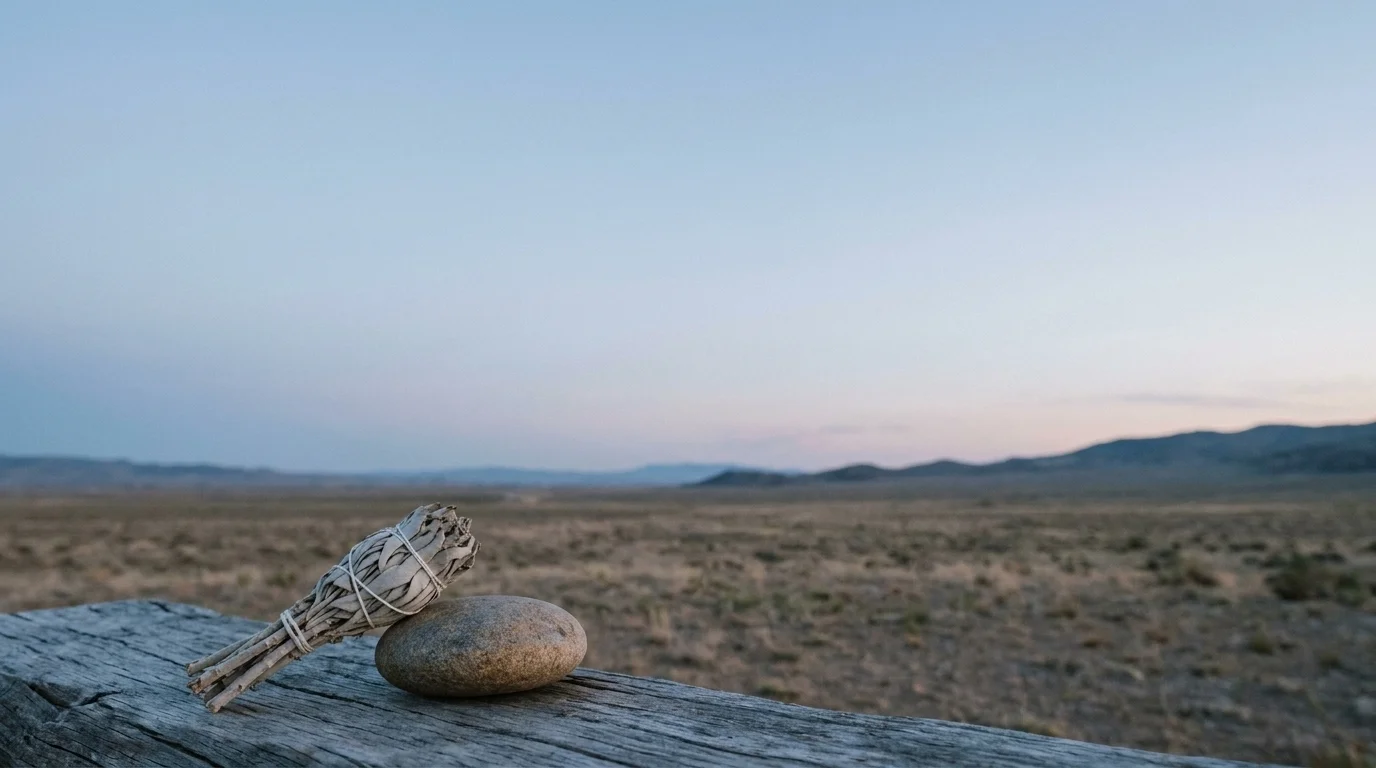
A survey at the level this guide can responsibly offer, and nothing more. Sweat-lodge and ceremony-adjacent programs draw on specific lineages, such as the Lakota inipi. But those are not generic "detox." Ayahuasca-based plant-medicine retreats belong to Amazonian cosmologies. There, the songs a healer sings — the Shipibo icaros among them — are half of the practice. US federal law controls the brew, and it carries genuine medical-interaction risks. So I will not tell you how to seek it out. Silent vipassana is the ten-day format many Americans meet first. It comes out of Theravada Buddhism, where vipassanā is Pali for "insight." Its traditional network offers it on donation and never sells it as a package.
So here is the respect test, which doubles as a quality test. Are the facilitators lineage-holders or members of the community whose practice this is, named and checkable — not weekend-certified? Does any money flow back to that community? Is there informed consent and real medical screening, especially when a substance enters the picture? And is the marketing honest, or does it promise a shortcut? A program selling a guaranteed transformation has already told you something. It has severed the practice from the people who kept it alive. The traditions that survived a century of suppression did not survive by being easy to buy.
How to Choose and Vet a Wellness Retreat: Red Flags to Watch
In a barely-regulated industry, you vet a wellness retreat yourself. Check the facilitators' credentials, insist on medical pre-screening, and distrust any guaranteed outcome. And confirm exactly what the price includes before you pay a cent.
The wellness sector is largely unregulated, which means the burden of quality control falls on you. Borrowing from the kind of pre-booking questionnaire experienced practitioners recommend, here is the checklist I would run:
- Named, credentialed facilitators. Real people with verifiable training, not "our expert team." If no name appears before you arrive, that is the flag.
- Medical pre-screening. A serious program asks about your health history before it takes your money. One that does not is not managing risk — yours or its own.
- No guaranteed outcomes. "Cure," "breakthrough guaranteed," "you will leave transformed" — health does not come with a warranty. A promise like that is a marketing choice, not a clinical one.
- Transparent inclusions. Get, in writing, what the price covers and what costs extra. Vagueness here is where budgets blow up.
- A real cancellation policy. Refund terms tell you how the operator thinks about you when things go wrong.
- Sane group size. A number you can picture, matched to the number of staff.
- Independent reviews. Verifiable feedback from somewhere other than the operator's own website.
The composite red flag is pressure: pressure to pay fast, book now, decide before you have read the fine print. So anyone genuinely running a good program can wait a day for your questions.
What to Expect — and Whether a Retreat Is Worth It
Most days settle into a familiar arc. An unhurried onboarding often asks you to put the phone away. Then come a morning guided session, free time, careful meals, and an evening practice. Some structured reflection helps you make sense of it before you leave. The digital-detox piece is now a mainstream feature, not a gimmick. EHL's data has searches for unplugged, tech-light properties up 17 percent.
Is it worth it? In BookRetreats' 2026 survey, 51 percent of attendees reported improved mental and emotional wellbeing afterward. Another 30 percent reported ongoing physical-health benefits. I want to be precise about what that does and does not mean. It is exactly the kind of number people oversell. This is a self-report from people who chose to attend and chose to answer. That is real, and worth something, but it is not a clinical trial. That people say they feel better is genuine evidence of one thing. It is not proof that a retreat treats a condition.
Which is the honest limit to end on. A wellness retreat is a reset and a catalyst, not a cure. It is not a substitute for medical or mental-health care. If you are managing a diagnosed condition, a retreat is at most an adjunct to treatment. That includes clinical depression, an anxiety disorder, or burnout that has tipped into a health crisis. The right first call is your clinician, not a booking page.
Choosing Well
The best wellness retreats are not the prettiest ones on a list. They are the ones whose type, cost tier, and facilitators actually match your goal and survive a little scrutiny. Pick your type before you compare prices. Know the honest cost, and assume insurance will not cover it. Run the red-flags checklist, and walk away from anyone who rushes you. And if indigenous or traditional healing draws you, choose programs that honor the people who carry the practice. Peppino's indigenous wellness writing is a good place to keep reading.
Use the shortlist and the checklist to build a shortlist of your own. Then confirm inclusions and credentials before you pay. The wellness retreats worth your money can answer a plain question without flinching. Who taught the people leading this, and who benefits when you hand over the fee?
Frequently Asked Questions
Wellness retreats are worth it for most attendees, with limits. In BookRetreats' 2026 survey, 51% reported improved mental and emotional wellbeing afterward and 30% reported ongoing physical benefits — self-reported, not clinical proof. Worth ultimately depends on matching the retreat's type, cost tier, and facilitators to your actual goal.
The best time to book a wellness retreat is early. Demand is seasonal and peaks in April and May — roughly twice the mid-summer floor — driven by New-Year-into-spring behavior. Reserve during the January-to-April surge for the widest choice, or book an off-peak summer week if you want better value on price.
A wellness retreat can support stress and burnout recovery, and many attendees go for exactly that: 35% cite burnout recovery and 37% mental-health support in 2026 data, and programming has shifted toward nervous-system regulation. But a retreat is a catalyst, not treatment — for a diagnosed condition, see a clinician first.
The difference is structure and intent. A wellness retreat is multi-day programming built around guided sessions and a wellbeing goal — regulation, recovery, reset — with meals and schedule designed to support it. A regular vacation is unstructured leisure. That structured design is why retreats are now the number-one wellness-travel spending priority.
A typical wellness retreat lasts from a long weekend to a full week. Pricing is usually quoted both per day — roughly $150 to $400 all-in in the US — and per week, so match the length to your goal and budget: a short reset versus a deeper, week-long immersion.