Beyond Yoga: Alternative Mind-Body Practices for Inner Harmony


If you came here typing "alternatives to yoga" into a search bar, you probably already know what you want — something that does for your body what a good yoga class does, without the part of yoga you bounced off. Maybe the chanting felt forced. Maybe your shoulders are not made for chaturanga. Maybe you tried it for six months and the flexibility came but the strength did not. Whatever it was, the question is the same: what else is in this family of practices, and which one would actually do something for you?
This is not a list of yoga substitutes. It is a working coach's read on five mind-body practices that share yoga's premise — that breath, movement, and attention belong together — but route the work through the body differently. I have trained under a barbell for nine years and on a mat in Chennai for one, and the honest answer is that each of these does a specific thing well. Pick the one that matches what you actually need.
One framing note before the list. The 2026 Global Wellness Summit named nervous-system regulation one of the year's defining trends, and clubs are now adding "somatic movement such as Qi Gong or Feldenkrais classes" as recovery and stress-management offerings (Global Wellness Summit, Health & Fitness Business). That is the lens here. Each of these practices teaches your nervous system something — how to down-regulate, how to organize movement, how to occupy a position. That is what they share, and it is the part most "best yoga alternatives" listicles miss.
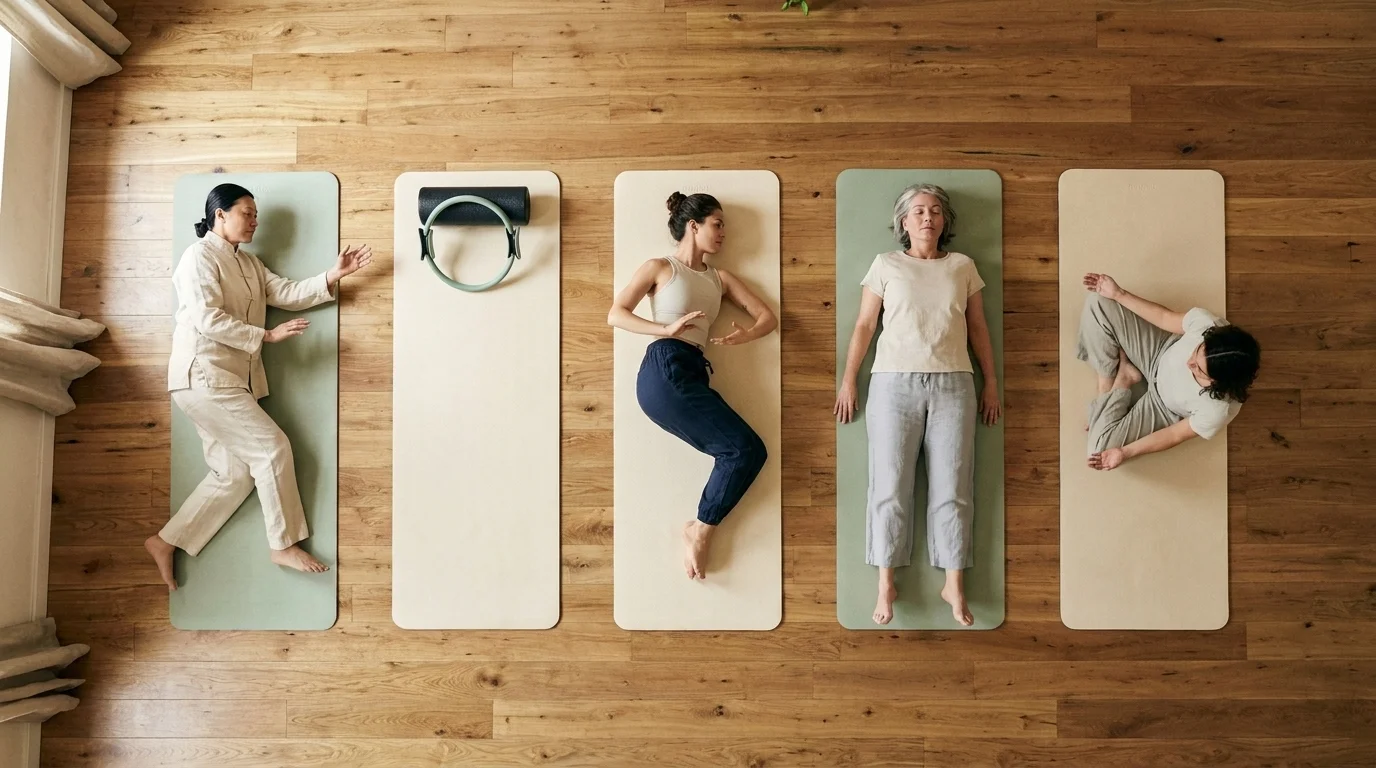
Tai Chi: the highest-adherence practice on this list
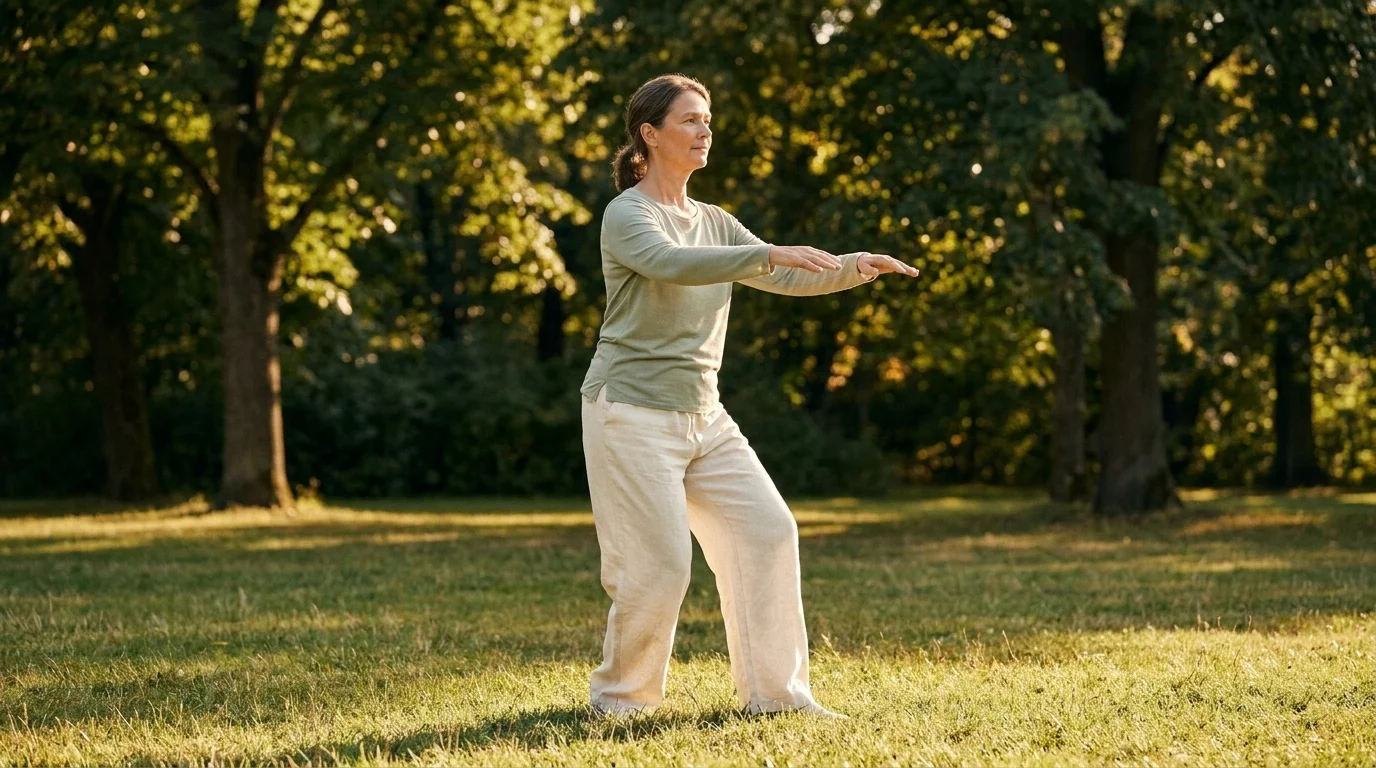
Tai Chi is the one I recommend first when someone tells me they want yoga's calm without yoga's flexibility demands. It is a sequence of slow, weight-shifting movements derived from a Chinese martial art, and the cue I give people is simple: imagine you are pushing your hands through still water. The external marker a coach would look for is that your knees stay soft and tracking over your second toe, your shoulders stay down, and your weight transfers smoothly from one foot to the other rather than dropping.
The reason I lead with Tai Chi is not that it is the most exciting practice on this list. It is that it has the highest stick rate. A 2025 review in Scientific Reports tracking Tai Chi programs across multiple populations reported a 79.6 percent adherence rate, which is well above the dropout-heavy averages most gym and yoga programs see (Scientific Reports 2025). A practice that you actually do beats a perfect practice you quit.
On the outcomes side, the same body of research shows real change. The Scientific Reports study found a 3.38 cm reduction in waist circumference and a 0.87 kg gain in lean body mass over the intervention period — not huge numbers in isolation, but meaningful for a practice that looks, on the surface, like very slow walking. A separate 2025 meta-analysis documented clinically important benefits for falls risk, knee osteoarthritis, low back pain, hypertension, and cardiovascular disease (PMC).
If you are starting from zero: find a community-center or YMCA class with an instructor over fifty. Tai Chi is one of the few practices where age of the teacher correlates with quality — the form takes years to settle into the body. Plan twenty minutes, twice a week, for six to eight weeks before you decide if it is for you. Nothing in training works in a week, and Tai Chi works on a slower clock than most.
Qigong: tai chi vs qigong, and why you might want both
If you search "tai chi vs qigong" — and 1,300 people a month do — the short answer is that Tai Chi is a choreographed sequence, while Qigong is a broader category of breath, posture, and slow-movement exercises that can stand alone. Tai Chi has form. Qigong has parts.
In practice, that means Qigong is easier to break into. You can learn a single Qigong standing exercise — feet shoulder width, knees soft, arms floating up on the inhale, sinking on the exhale — and practice it for ten minutes a day with no choreography to memorize. That is also why "qigong for beginners" pulls 1,900 searches a month: the entry barrier is low, the gear is none, and the learning curve is forgiving.
The evidence base on Qigong has hardened recently. A March 2025 systematic review of 31 studies, published in Medicine (Lippincott), concluded that traditional Chinese exercises — Tai Chi and Qigong, primarily — produced significant improvements in anxiety and depression in older adults (Lippincott Medicine 2025). For a population where adherence to talk-therapy and pharmacological interventions is famously low, that is a meaningful finding.
If you are starting from zero: pick one of two standing forms — "Holding the Ball" or "Sinking into the Earth" — find a five-minute video walk-through, and practice the same form daily for two weeks before adding a second. Cue: think about lengthening your tailbone toward the floor while letting your crown drift up. The external marker is that your shoulders drop and your jaw releases on the exhale. Six weeks of consistent practice before you draw any conclusions.
Pilates: pilates vs yoga, and what each is actually doing
Pilates vs yoga is the highest-volume comparison question in this entire space — 12,100 searches a month — and most articles answer it badly. They list "Pilates strengthens, yoga stretches," which is true at the surface and useless at the level you have to make a decision at.
Here is the version a coach gives. Yoga, at least in its modern Western gym-studio form, is a flexibility and balance practice with a strength tax that varies wildly by teacher. A vinyasa class with thirty chaturangas will load your shoulders meaningfully; a yin class will not. Pilates is a controlled-strength practice that emphasizes spinal articulation, posterior chain endurance, and breath coordination through movement. The plank in a Pilates class is loaded for time under tension; the same plank in yoga class is usually a transit position.
For someone with a desk job, weak glutes, and a stiff thoracic spine — which describes most people who walk into my gym — Pilates earns its place faster than yoga does. The 2025 fibromyalgia clinical reviews are now explicitly listing Pilates alongside Tai Chi as recommended movement-based interventions for chronic-pain populations (PMC 2025), which tells you the medical world has moved past treating it as a niche studio offering.
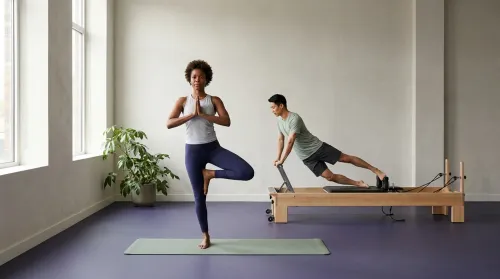
If you are starting from zero: start with mat Pilates, not reformer. The reformer is a wonderful tool but the springs make it easy to coast on the equipment. Mat Pilates forces you to produce the work, which is where the strength and motor-control gains live. Twice a week, forty minutes, for eight weeks. Cue: zip the front of your hip points toward your ribs and breathe into the back of your ribcage. Marker a coach would look for is that your lumbar spine stays neutral as you move your limbs — no bridging the lower back off the mat on the hard sets.
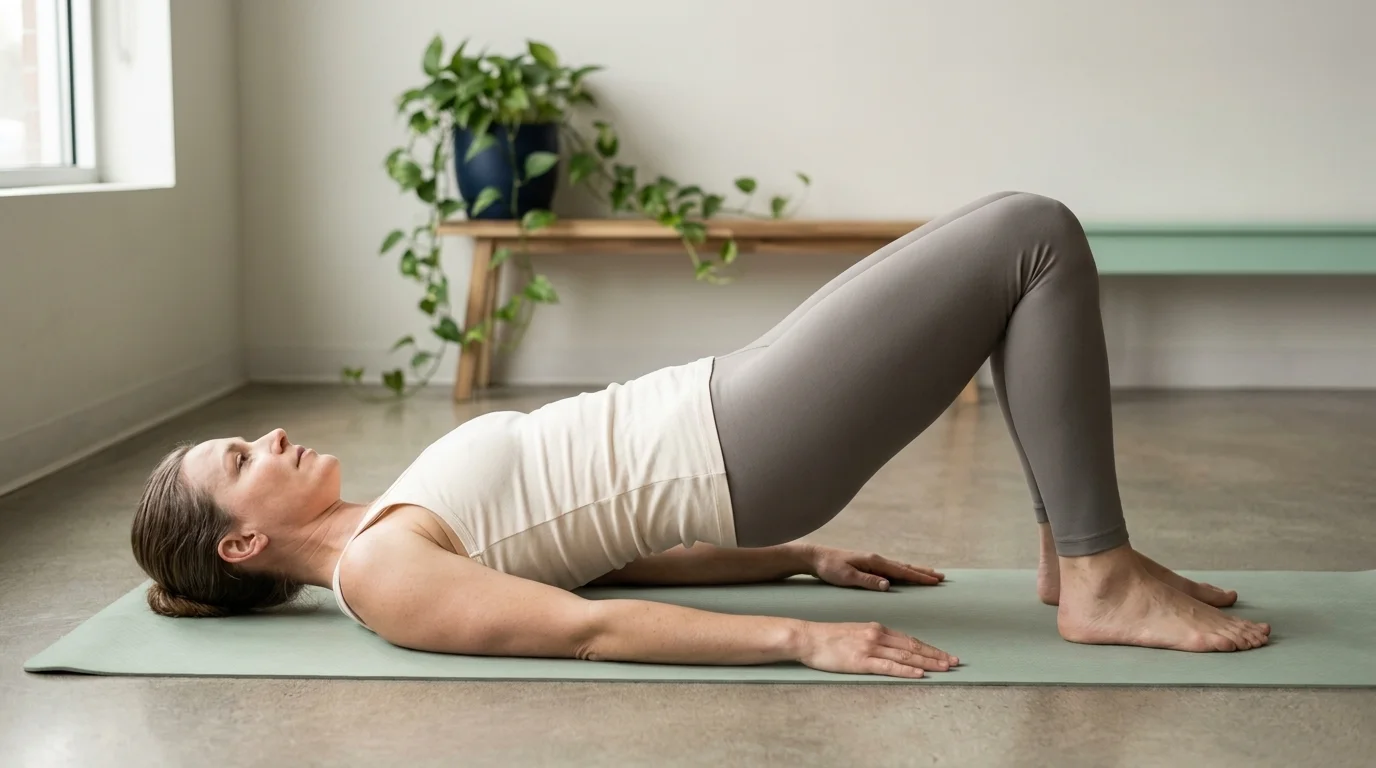
The Feldenkrais Method: the practice nobody explains
Feldenkrais is the practice that gets named-dropped in every "yoga alternatives" listicle and explained in none of them. So let me actually explain it.
The Feldenkrais Method, developed by Moshe Feldenkrais — a physicist and judoka who, having destroyed his knees, reverse-engineered movement from first principles — is a somatic-education system that trains your nervous system to reorganize how you move. A typical class, called an Awareness Through Movement lesson, looks almost embarrassingly low-intensity. You lie on the floor. The teacher cues a small, slow movement — turn your head ten degrees to the right, then back, then slower, then notice what your left shoulder does. You repeat it twenty times. You rest. You do another variation. After forty-five minutes, you stand up, and your gait has measurably changed.
The mechanism is proprioceptive: by giving your nervous system enough quiet, repetitive input to actually notice habits, the brain rewires the movement pattern. It is the opposite of progressive overload — call it progressive refinement. For people with chronic pain, neurological injury, or movement habits ground in over decades, it can produce changes that strength work cannot, because the issue is not weakness, it is wiring.
The search term to use is Feldenkrais Method, not bare "Feldenkrais" — the former pulls 6,600 searches a month and has stronger directory listings.
If you are starting from zero: find an introductory Awareness Through Movement audio recording — there are good free ones from the Feldenkrais Guild — and do one a week for a month before deciding. Cue: do less, slower, with more attention. The marker is that you can sense the movement on the side you have not yet moved.
Somatic exercises: the rising fifth modality
The biggest gap in every other "alternatives to yoga" article on the internet is that almost none of them cover somatic exercises, despite the term pulling 18,100 searches a month and trending upward fast. "Somatic" simply means body-felt — practices that prioritize internal sensation and nervous-system regulation over external performance.
The line between somatic exercises and Feldenkrais is fuzzy because Feldenkrais is, technically, a branded somatic-education system. The looser "somatic exercises" category includes Hanna Somatics, Trauma-Sensitive Yoga, Body-Mind Centering, and a number of newer trauma-informed movement protocols. What they share is a slow tempo, an interoceptive focus, and a theory of change rooted in nervous-system down-regulation rather than musculoskeletal training.
The evidence base is thinner than for Tai Chi but it is building fast. A June 2025 study in the Journal of Bodywork and Movement Therapies tracked older adults in a twice-weekly online somatic movement program for ten weeks and found measurable improvements in spinal mobility (summary). That is a real outcome from a low-load intervention, and it matches the clinical intuition that nervous-system stuck-points respond to attention more than to load.
On the market side, somatic therapy as a sector is projected to grow at a 17.5 percent compound annual rate through 2032 to a roughly USD 12.4 billion category (Somatic Therapy Ireland). That kind of growth attracts both real practitioners and a lot of bad apps, so vet your sources.
If you are starting from zero: look for somatic instructors with either a Feldenkrais credential, a Trauma-Sensitive Yoga certification, or a graduate clinical background. Avoid Instagram somatic content that promises emotional release in fifteen minutes. The point of this work is slow integration, not catharsis.
A side-by-side: pilates vs yoga vs the rest
Here is the comparison the SERP is missing.
| Practice | Best for | Intensity | Spirituality | Cost | Weekly time to see change |
|---|---|---|---|---|---|
| Yoga | Flexibility, balance, breath-led meditation | Low–high | Often present | Low (mat) to mid (studio) | 2–3 sessions × 45–60 min |
| Tai Chi | Balance, fall prevention, mood, sustainable adherence | Low | Light (philosophy) | Low (community class often) | 2 sessions × 20–30 min |
| Qigong | Stress, anxiety, breath training, joint mobility | Very low | Light (energy) | Low (videos free, classes mid) | 5 × 10–15 min daily |
| Pilates | Core strength, posture, controlled strength | Moderate | None | Mid (mat) to high (reformer) | 2 sessions × 40–50 min |
| Feldenkrais | Chronic-pain remap, movement re-education | Very low | None | Mid (private) to low (recorded) | 1–2 sessions × 45 min |
| Somatic exercises | Nervous-system regulation, trauma-informed movement | Very low | Varies | Low (videos) to high (1:1) | 2–3 sessions × 20–30 min |
Two notes. First, "weekly time to see change" assumes consistent practice and a six-to-eight week horizon. Nothing on this list works in three days, regardless of what the marketing says. Second, "intensity" is for general-population beginners — every one of these practices can be loaded up by an advanced practitioner.
Which one should you try first?
The decision aid most listicles skip. Use this as a starting point, not a verdict.
- You want strength and posture, you have a desk job, your back aches. Start with mat Pilates. The combination of spinal articulation, posterior-chain endurance, and breath coordination will hit the right buttons fastest.
- You are over sixty, balance is the concern, or you want a practice you will actually keep doing. Start with Tai Chi. The 79.6 percent adherence number is the most actionable statistic on this whole list.
- You are anxious, your sleep is bad, you want to down-regulate. Start with Qigong. Standing breath-and-posture work is the lowest-friction entry point to nervous-system regulation in the entire mind-body world.
- You have chronic pain or a movement habit you cannot break by stretching it. Start with Feldenkrais. The proprioceptive remap mechanism is what your situation calls for; strength work will only paper over the wiring.
- You are processing a stressful period or want trauma-informed movement. Start with somatic exercises through a credentialed instructor. Avoid app-based promises of fast emotional release.
- You want flexibility above all else. Stay with yoga. None of the alternatives on this list will give you a deeper forward fold faster than a well-coached yoga practice will.
The honest closing
There is no secret modality on this list that yoga has been hiding from you. There is a question — what does your body and your nervous system actually need this season — and there are five reasonable answers, each of which has a specific mechanism and an honest timeline.
Pick one. Do it for six to eight weeks. Pay attention to whether your sleep, your posture, and your tolerance for stress are different by week six. If the answer is yes, stay with it. If the answer is no, try a different one on this list. The worst thing you can do is read articles like this one for a year and never start.
I will not tell you a thirty-day transformation is coming, and I will not tell you that one of these practices is the answer. The answer is that you trained your nervous system to know one of these positions intimately, and the practice that gave you that gift is, for you, the right one.
Frequently Asked Questions
Tai Chi has the highest adherence rate of any practice in this category — 79.6% across reviewed studies in a 2025 Scientific Reports analysis — and adapts to any fitness level, making it the easiest entry point. Qigong is a close second if you want a breath-centered, lower-movement option you can practice in ten-minute daily blocks.
Pilates is a controlled-strength practice emphasizing spinal articulation, posterior-chain endurance, and breath coordination through movement. Yoga (in its modern studio form) is a flexibility and balance practice with a strength load that varies wildly by teacher. For desk-bound bodies with weak glutes and stiff thoracic spines, Pilates earns its place faster. For flexibility and meditation depth, yoga remains stronger. Many practitioners run both.
Tai Chi is a choreographed sequence of weight-shifting movements derived from a Chinese martial art — it has form. Qigong is a broader category of breath, posture, and slow-movement exercises that can stand alone — it has parts. Tai Chi takes longer to learn because the form has to settle into the body. Qigong is easier to break into because you can practice a single ten-minute standing exercise without memorizing choreography.
Yes. A June 2025 study in the Journal of Bodywork and Movement Therapies tracked older adults in a twice-weekly online somatic movement program for ten weeks and found measurable improvements in spinal mobility. The Global Wellness Summit also named nervous-system regulation a defining 2026 trend, and the somatic-therapy sector is projected to grow at a 17.5% compound annual rate through 2032. The evidence base is thinner than for Tai Chi but it is real and building.
For balance, fall prevention, mood regulation, and gentle strength — yes. 2025 reviews show Tai Chi delivers comparable mood and pain-management benefits with a notably higher adherence rate (79.6%). For deep flexibility work, yoga remains stronger. A reasonable answer is to use Tai Chi as your primary practice and add yoga twice a week if flexibility is the goal.
The Feldenkrais Method is a branded somatic-education system developed by Moshe Feldenkrais. Classes (called Awareness Through Movement lessons) use small, slow, repeated movements to retrain how the nervous system organizes motion — proprioceptive refinement rather than progressive overload. 'Somatic exercises' is the broader category that includes Feldenkrais, Hanna Somatics, Trauma-Sensitive Yoga, and similar trauma-informed protocols. Feldenkrais is one specific system; somatic exercises is the umbrella.