Pacific Island Paradigm: Infusing Indigenous Wisdom into Holistic Healing Practices


The phrase "indigenous healing" covers an enormous range — the Hawaiian lomi lomi practitioner working with patients on Oahu, the Quechua curandero working with Andean herbs in Cusco, the Lakota elder running a sweat lodge in the Black Hills, the Yawanawa shaman in the Brazilian Amazon, the sangoma in KwaZulu-Natal. These are different traditions with different cosmologies, different protocols, and different rules about who can practice. What they share is a model of health that locates illness in relationship — between a person and their community, their land, their ancestors, and the unseen — rather than only in the individual body.
This is a plainspoken 2026 guide to the global field of indigenous healing, written for adult readers trying to understand what these traditions actually are, what 2025's WHO Traditional Medicine Strategy means for any of this, how to engage respectfully if you are not from one of these traditions, and what the evidence shows about the plants and practices most commonly named. I am a registered dietitian, not an Indigenous practitioner or ethnographer — every specific claim about a tradition or a plant is attributed to the named source, and the limits of my standing to write certain sections are noted where they apply.
What changed in 2025–2026
Indigenous healing has moved through a regulatory and policy inflection in the last 12 months that most consumer wellness coverage has not caught up with.
The WHO Traditional Medicine Strategy 2025–2034 was adopted at the 78th World Health Assembly in May 2025. It formally frames evidence-based traditional medicine — including indigenous healing systems — as central to universal health coverage, and it explicitly addresses Indigenous rights, biopiracy, data sovereignty, and intellectual property protection. That is the first time those four issues have appeared together in a WHO traditional-medicine strategy.
The Second WHO Global Summit on Traditional Medicine convened in New Delhi in December 2025, with 800 in-person delegates from over 100 countries, more than 20 ministers, and 160 speakers. The summit produced the Delhi Declaration, signed by 26 Member States committing to four pillars: primary-care integration, regulation and safety, research investment, and interoperable data systems.
The WHO Traditional Medicine Global Library launched in December 2025 as a digital platform consolidating 1.6 million resources — the first serious attempt to bridge peer-reviewed scientific studies and Indigenous knowledge in one searchable repository, with attention to attribution and consent that earlier digitization efforts often skipped.
Washington State's Medicaid Section 1115 waiver proposal (2025). Tribal Nations in Washington are shaping a Medicaid waiver to reimburse Traditional Indian Medicine — the first US attempt to embed Indigenous healers as Medicaid-billable providers, expected to begin implementation across participating tribes. California's existing waiver (in force since October 2024) reimburses traditional healing within Indian Health Care Provider settings for substance-use treatment; Washington's proposal would extend the principle more broadly.
The funding gap that hasn't moved. Even with the above, less than 1% of global health research funding goes to traditional medicine despite billions of people relying on it as primary care. The disparity between population reliance and research investment is the structural reason the evidence base remains uneven across the modalities discussed below.
The market growing alongside the policy. Industry analysis estimates the global traditional medicine market at $213.81 billion in 2025, projected to reach $359.37 billion by 2032. Most of that growth is consumer spending — supplements, mind-body services, traditional practitioners — outside any insurance framework, which is precisely why the questions of regulation, sourcing, and consent are taking on real consequence.
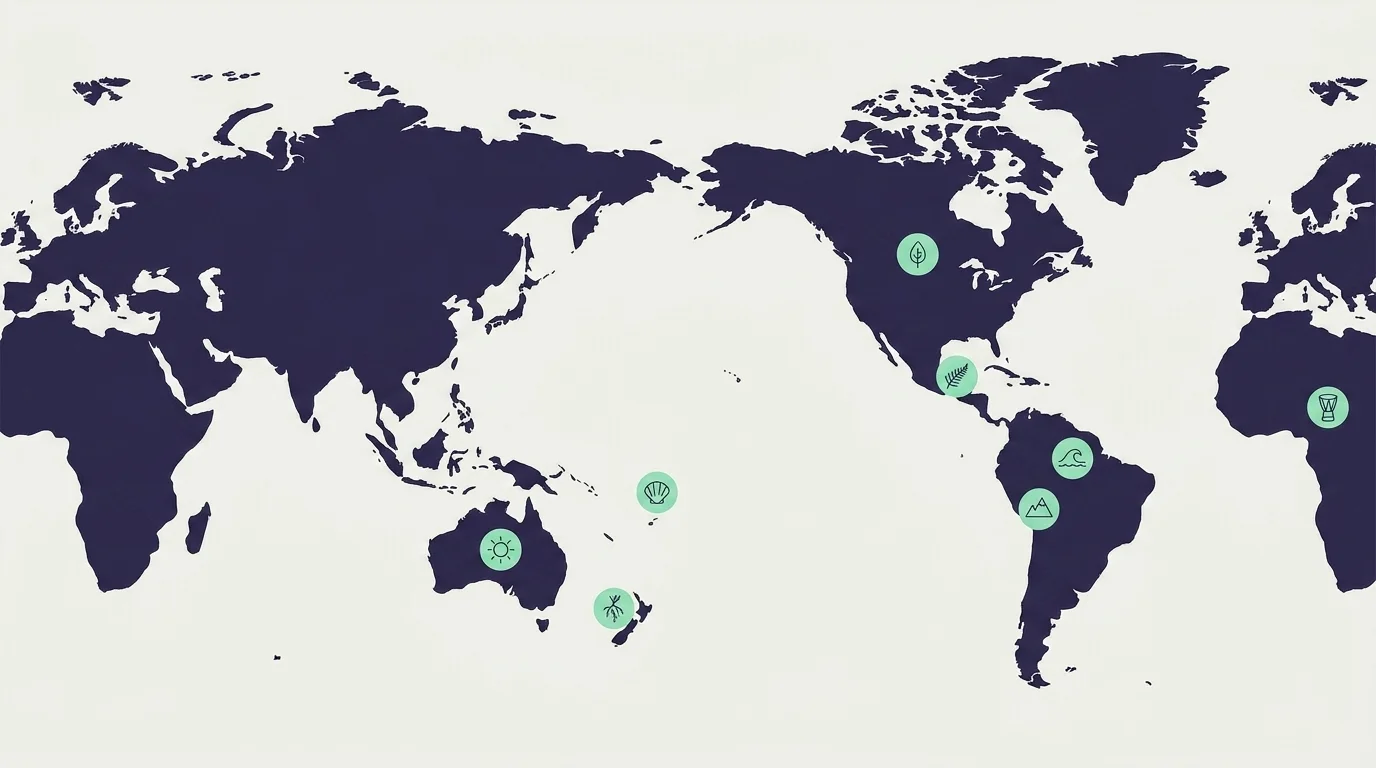
Indigenous healing traditions around the world
A short non-exhaustive global survey. Each tradition below is referenced by its own self-name where possible; the descriptions are drawn from publicly available Indigenous-authored or peer-reviewed sources and are deliberately brief, because depth on any one of these belongs to the communities that hold it.
Native American (Turtle Island). Hundreds of distinct nations across the US and Canada with distinct healing practices. Common across many traditions: medicinal-plant use (sage, sweetgrass, cedar, tobacco), structured ceremonies like the sweat lodge and the talking circle, and a relational understanding of health that integrates spiritual, emotional, mental, and physical dimensions. The First Nations Health Authority in British Columbia is one widely cited contemporary articulation.
Andean (South America). Curanderismo in its broad sense and the more specific Andean traditions of the Quechua and Aymara peoples — combining ritual cleansing (limpieza), herbal preparations, coca leaf use in its ceremonial context, and mesa (altar-based) practices. Pago a la Tierra — offerings to Pachamama — is a recurring ceremonial form.
Amazonian. Multiple distinct lineages including the Shipibo-Konibo, Asháninka, Yawanawa, and Huni Kuin, plus the Brazilian syncretic traditions Santo Daime and União do Vegetal. The Amazonian pharmacopeia is among the most-studied in modern ethnobotany; ayahuasca has emerged as the most-recognized international example, though it is one part of a much broader plant-medicine landscape.
Mesoamerican. Mayan and Aztec descendant traditions including the temazcal (sweat ceremony), Mayan abdominal massage (sobada), traditional midwifery (partería), and a deep medicinal-plant tradition still in active practice across rural Mexico and Central America.
Aboriginal Australian. Some of the oldest continuously practiced healing traditions on the planet — Ngangkari healers among Anangu communities, bush medicine knowledge across many language groups, and a healing model deeply tied to Country (the relational concept of land that includes ancestors, water, plants, and law).
Maori (Aotearoa New Zealand). Rongoā Māori is the formal name — rongoā rākau (plant-based medicine), mirimiri (massage and bodywork), and karakia (prayer and incantation). The New Zealand Accident Compensation Corporation now contracts with registered Rongoā Māori providers for certain services, putting it ahead of most traditional systems in state integration.
Pacific Island. Lomi lomi in Hawaii, fofo in Samoa, fa'a Samoa (the Samoan way) framing of well-being, ho'oponopono (Hawaiian reconciliation/healing practice), Tongan toomelie and faito'o, Fijian bati and daunivucu practices, and the broader kava-ceremony traditions across Polynesia and Melanesia. The next section goes deeper here as a focused case study.
African. A heterogeneous field — Sangoma (diviner-healer) traditions in South Africa, Yoruba babalawo traditions in Nigeria, Ethiopian herbalism, traditional medicine systems across the Sahel and East Africa. WHO regional offices have been working since the 1970s to formalize collaboration between conventional and traditional providers in sub-Saharan Africa.
Sami (Sápmi, northern Scandinavia). Noaidi (traditional healer) practices, drumming as a healing modality, and the use of regional medicinal plants including Angelica archangelica. The Sami traditions are among the lesser-documented in English-language wellness coverage but are actively practiced.
San (Southern Africa). Trance dancing and the !Kung n/om tradition are the most-cited examples in academic literature; the broader San healing systems are organized around community and trance-state intervention.
A standing caution about this kind of survey: a paragraph each is enough to know these traditions exist and not nearly enough to understand any of them. The serious depth on any of these belongs to the communities that hold them, to Indigenous-authored books (Robin Wall Kimmerer's Braiding Sweetgrass, Linda Tuhiwai Smith's Decolonizing Methodologies, and the work of Indigenous scholars in each region), and to direct engagement with practitioners through community-sanctioned routes.
Related Article: Embracing Cultural Diversity in Health and Wellness: Insights and Practices from Around the World
Pacific Island case study: kava-talanoa as a 2025 clinical protocol
The Pacific Island traditions warrant a closer look because something new happened in the academic literature in 2025 that meaningfully bridges the older tradition with current clinical practice.
A 2025 peer-reviewed paper in the PubMed Central archive examined kava-talanoa — combining the Pacific kava ceremony with talanoa, the Samoan tradition of dialogic storytelling — as a culturally aligned therapeutic protocol for PTSD symptom amelioration. This is one of the first formal academic legitimizations of a Pacific Island healing modality as a structured clinical protocol rather than as ethnographic interest. The framing matters: the protocol does not strip the ceremony out and isolate kava as an active ingredient; it treats the integrated ceremony-and-dialogue as the intervention.
Surrounding context: Lomi lomi in the Hawaiian tradition is a deep massage practice with strong somatic and spiritual components, traditionally taught through lineage. Fofo in Samoa is a related massage tradition embedded in family and community structures. The kava ceremony itself is centuries old across Polynesia and Melanesia, used socially, diplomatically, and therapeutically, with the prepared root commonly drunk from a coconut-shell bilo.
Where the consumer-product market and the traditional practice diverge: a kava ceremony is a relational, structured social event. Buying a kava supplement bottle online is a different transaction with different risk and consent considerations, and the next section addresses what that change of context does to the safety profile.
Plants used in indigenous medicine: what the evidence shows and what to know about risks
A short evidence-and-safety briefing on three plants commonly named in this article family:
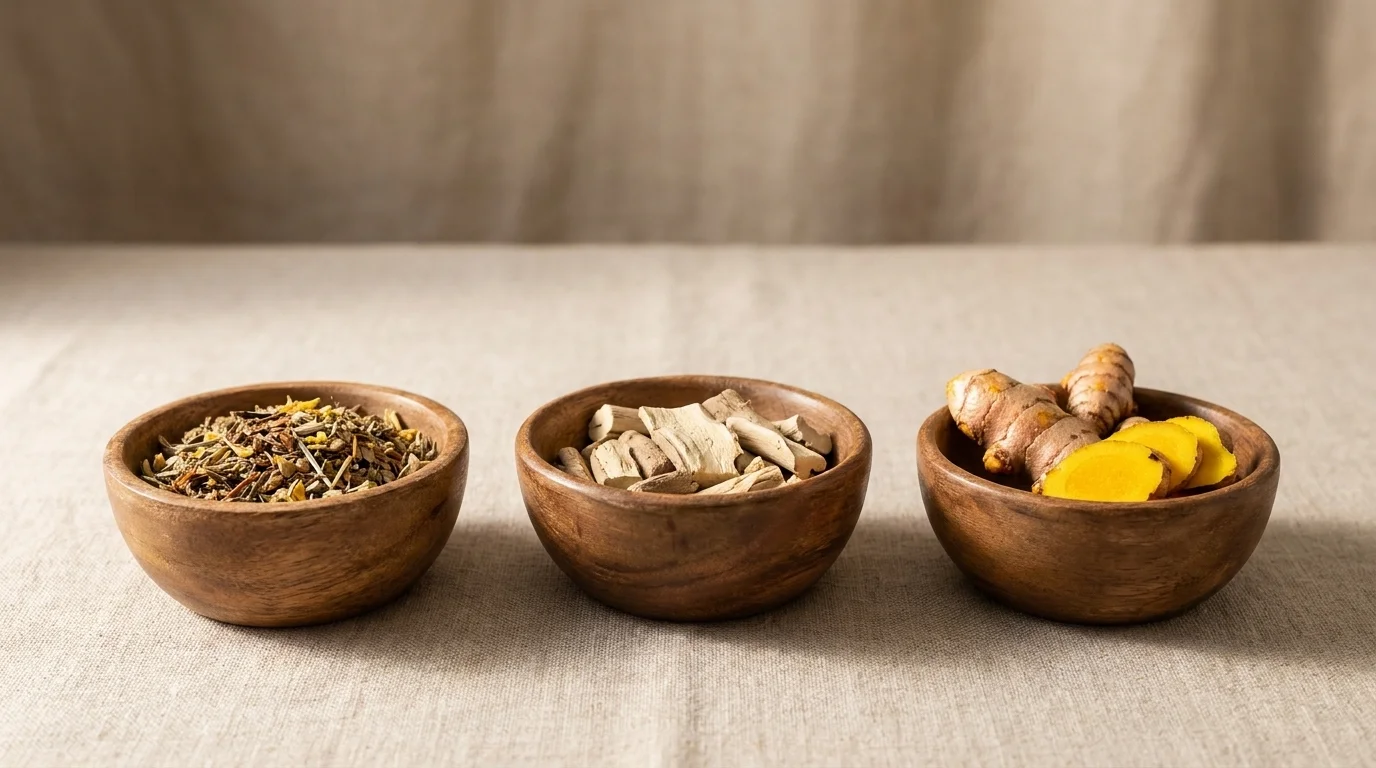
Kava (Piper methysticum). Used ceremonially across the Pacific for centuries. Modern clinical literature includes small randomized trials supporting modest short-term anxiety reduction at standardized doses. The safety story is genuinely complicated: in the early 2000s, several case reports of severe liver injury associated with kava products led the EU and Canada to suspend kava sales and the FDA to issue a 2002 consumer advisory. WHO's 2007 review concluded the risk is dose- and preparation-dependent and that traditional water-extracted kava (the form used in Pacific ceremony) appears to carry lower risk than the acetone- and ethanol-extracted concentrated products that drove the European case reports. Many kava products have returned to the European market under tighter sourcing and preparation standards. For consumers: prefer noble-strain kava prepared with water, avoid solvent-extracted concentrates, and do not combine kava with alcohol, acetaminophen, or hepatotoxic medications. Anyone with existing liver disease or on hepatically metabolized medications should not use kava without clinician oversight.
Noni (Morinda citrifolia). A traditional Polynesian and Pacific Island food and medicine. Modern human clinical evidence is limited and inconsistent; most published research is small or in vitro. A few case reports of liver injury have been documented in the literature. The honest framing is that noni has cultural and possibly nutritional value as part of a traditional diet, and that the supplement-market claims (cancer, infection, diabetes) considerably outrun what the evidence supports.
Turmeric / curcumin. Used in South Asian, Ayurvedic, and Southeast Asian traditions for centuries. Modern clinical research on curcumin (the most-studied active component) is extensive — meta-analyses support modest effects on joint pain in osteoarthritis, lipid markers, and some inflammatory measures. Curcumin in supplement form has documented interactions with anticoagulants and a small number of reports of liver injury at very high supplement doses. The cooking-spice form (turmeric in food) has a different safety profile from the high-dose isolated-curcumin supplement form; the latter is what the trials and the warnings apply to.
A standing rule across the three: ceremonial or food use within a tradition is not the same risk profile as a supplement-isolated extract sold online. Dose, preparation, sourcing, and the body of food and medicines it is consumed with all change what happens in the body. Anyone with liver disease, on hepatically metabolized medications, or pregnant should not use any of these in concentrated supplement form without clinician oversight.
Related Article: Physical Fitness Traditions from Around the World
How to engage as a non-Indigenous reader
This is the section the rest of the wellness internet usually skips, and the one with the highest practical consequence for readers thinking about engaging with any of the above traditions.
The base posture: cultural humility, not cultural competence. Cultural competence is the idea that a non-Indigenous person can become competent in a tradition's frame through training. Cultural humility is the idea that the work is ongoing, the tradition is not a finite curriculum, and the appropriate posture is one of learning that follows the host community's lead. The clinician literature has largely moved toward cultural humility for the same reasons that apply here.
The CARE Principles for Indigenous Data Governance. Developed by the Global Indigenous Data Alliance, CARE stands for Collective Benefit, Authority to Control, Responsibility, and Ethics. The principles are increasingly cited in research ethics, in WHO's 2025 strategy, and in conversations about how AI and digital platforms handle Indigenous knowledge. The practical version: if you are sharing, citing, or building on Indigenous knowledge — including in wellness coverage, in social media, in product development — the source community needs to benefit, retain authority, and be properly attributed.
Biopiracy is a live issue. The Nagoya Protocol on Access and Benefit-Sharing (adopted 2010, entered into force October 2014) requires researchers and companies to negotiate agreements with the communities from which genetic resources and traditional knowledge originate. The 2015 Quassia amara case — a French research institute (IRD) was granted a European patent in March 2015 on an antimalarial molecule (Simalikalactone E) developed from interviews with Kali'na, Palikur, and Creole communities in French Guiana, without acknowledging their contribution — is the textbook example. Enforcement varies by country; the United States is not a party. The practical implication for consumers: prefer wellness products with explicit benefit-sharing language and indigenous co-op partnerships, and treat the absence of any sourcing transparency as a meaningful red flag.
On which practices are open and which are not. Some practices are explicitly closed — Lakota Inipi (sweat lodge) ceremony has been the subject of public statements from Lakota elders that non-Native participation outside community sanction is not appropriate. Some ayahuasca lineages similarly restrict who can administer or sit in ceremony. Other practices — Hawaiian lomi lomi taught through certified lineages, Rongoā Māori providers, certain Andean traditions — have explicit pathways for non-Indigenous learners or clients that include payment, attribution, and reciprocity. The work for any non-Indigenous reader is to follow the host tradition's stated rules, not to extrapolate from general "open or closed" categories.
How to find legitimate routes in. Indigenous-led clinics and community wellness programs (the First Nations Health Authority in British Columbia, the Indian Health Service in the US, Rongoā Māori registered providers in New Zealand, EAGALA-affiliated centers for indigenous-adjacent practices, Sangoma traditional-leader councils in South Africa) are the cleanest starting point. Books and curricula by Indigenous scholars and elders in each region are the next layer. Wellness brands that have made their reputation on appropriated content — the consistent failure mode of the last decade of wellness publishing — are not.
What to pay for. Honoraria for elders and practitioners, fees set by the practitioner, ceremonies through legitimate community channels, books and courses authored by Indigenous teachers. What to avoid paying for. Generic "shamanic journey" packages from wellness brands with no transparency about lineage or community, ceremonies advertised to outsiders by people whose standing in the tradition is unclear, products that name an Indigenous tradition in marketing without naming the community or partnership behind the product.
Indigenous-centered frameworks for public health
A short note for the readers who are clinicians or public-health professionals reading this for work. The 2024 PubMed Central paper on developing Indigenous-Centered Healing Frameworks makes the structural argument that mainstream evidence-based public-health frameworks have limited applicability to tribal communities, and that Indigenous Social Determinants of Health frameworks need to be developed in and by those communities. The WHO 2025 strategy implicitly endorses this — the Delhi Declaration's four pillars are designed to be enacted at the Member State level in coordination with traditional-medicine institutions, which in indigenous contexts means the source communities.
For a non-clinician reader, the takeaway is narrower: the structural reform is happening at the institutional level. Your individual engagement decisions sit underneath it.
A sober takeaway
Indigenous healing is not a single thing and it is not a finished thing. There are dozens of distinct traditions, each with its own protocols and own rules about engagement, and they sit inside a global field that — as of 2025 — has finally seen serious WHO-level policy attention, the first US state Medicaid reimbursement for traditional Indian medicine, and the first major peer-reviewed academic legitimization of specific protocols (kava-talanoa for PTSD being the most notable).
For a reader interested in any of this: start with the WHO Strategy framing if you want the policy picture, with Indigenous-authored books if you want the cultural depth, and with the host community's own stated entry pathways if you want to engage as a participant. For products — supplements, retreats, courses — apply the sourcing transparency standard above. For your own health: as with any practice or substance that does something pharmacologically or therapeutically real, individual decisions about treating a diagnosed condition belong in a conversation with your own clinician.
The closing rule across all of this: respect for these traditions starts with not flattening them into a single "indigenous wisdom" smoothie. The specific Pacific Island, the specific Native American nation, the specific Andean community whose practice you are looking at is a real, particular, living thing with people in it. That is the lens that holds up — both ethically and for any wellness writing that wants to be defensible.
Frequently Asked Questions
Pacific Island traditions include lomi lomi massage in Hawaii, fofo in Samoa, ho'oponopono reconciliation practice in Hawaii, and the kava ceremony across Polynesia and Melanesia. A 2025 peer-reviewed paper documented kava-talanoa — the kava ceremony combined with the Samoan dialogic storytelling tradition — as a culturally aligned PTSD intervention, one of the first formal academic legitimizations of a Pacific Island modality as a clinical protocol.
Plants like kava, noni, and turmeric have been used ceremonially and medicinally across the Pacific for centuries. Modern clinical evidence varies: kava has small randomized trials supporting short-term anxiety reduction but a complicated liver-safety history that prompted EU restrictions and a 2002 FDA advisory; noni has limited human clinical evidence; curcumin (turmeric's main active compound) has meta-analytic support for joint pain and inflammatory markers. Traditional ceremonial use within a tradition is not the same risk profile as a concentrated supplement extract sold online.
Indigenous-authored sources, Indigenous-led organizations, and direct partnerships with source communities are the appropriate starting points. The WHO Traditional Medicine Global Library, launched in December 2025, consolidates 1.6 million resources with attention to attribution and consent. The CARE Principles for Indigenous Data Governance (Collective Benefit, Authority to Control, Responsibility, Ethics) are the framework increasingly cited for how Indigenous knowledge should be shared, cited, or built upon.
Adopted at the 78th World Health Assembly in May 2025, the WHO Traditional Medicine Strategy 2025–2034 frames evidence-based traditional medicine as central to universal health coverage and explicitly addresses Indigenous rights, biopiracy, data sovereignty, and intellectual property protection. The December 2025 Delhi Declaration committed 26 Member States to four pillars: primary-care integration, regulation and safety, research investment, and interoperable data systems. Less than 1% of global health research funding still goes to traditional medicine.
Start with Indigenous-led education and direct sources rather than commercial wellness translations. Pay practitioners and educators fairly. Recognize that some practices (such as Lakota Inipi sweat-lodge ceremonies or certain ayahuasca lineages) require lineage, initiation, or community sanction and are not open to outsiders, while others have explicit pathways for non-Indigenous learners or clients. Follow the CARE Principles for Indigenous Data Governance when sharing or building on traditional knowledge, and prefer products with explicit benefit-sharing language and indigenous co-op partnerships.
Yes. A 2025 peer-reviewed paper in PubMed Central examined kava-talanoa — combining the Pacific kava ceremony with the Samoan dialogic storytelling tradition — as a culturally aligned protocol for PTSD symptom amelioration. It is one of the first formal clinical legitimizations of a Pacific Island healing modality. The framing treats the integrated ceremony-and-dialogue as the intervention rather than stripping the ceremony out and isolating kava as an active ingredient.
It depends on dose, preparation, and the consumer's medical context. Small clinical trials support modest short-term anxiety reduction at standardized doses. The EU restricted kava in the early 2000s after liver-injury case reports and the FDA issued a 2002 advisory; the WHO 2007 review concluded the risk is dose- and preparation-dependent, with traditional water-extracted kava appearing lower-risk than solvent-extracted concentrates. Avoid kava if you have liver disease or are on hepatically metabolized medications, and never combine it with alcohol or acetaminophen.
Check Out These Related Articles

Aesthetic Harmony: Integrating Design Principles with Holistic Wellness Concepts

Navigating Holistic Wellness: Embracing a Well-Balanced Lifestyle for Beginners
Japanese Zen Embodied: The Art of Integrating Mindfulness into Everyday Life