
Treading New Waters: Hydrotherapy’s Transition From Ancient Baths to Modern Aquatic Therapy


The Romans built vast public baths and the Greeks soaked in hot springs because they were convinced water healed. They were right, though not for the reasons they thought — and what's genuinely new is that we can now measure exactly why. Modern aquatic therapy is the clinical descendant of those ancient baths: the same intuition, run through buoyancy physics, randomized trials, and a billing code. This guide separates the two things that often get blurred — the spa-wellness version of "water is relaxing" and the actual rehabilitation medicine — and walks through what aquatic therapy is, how it works, the conditions it treats, and whether your insurance pays for it.

What is aquatic therapy — and is it the same as hydrotherapy?
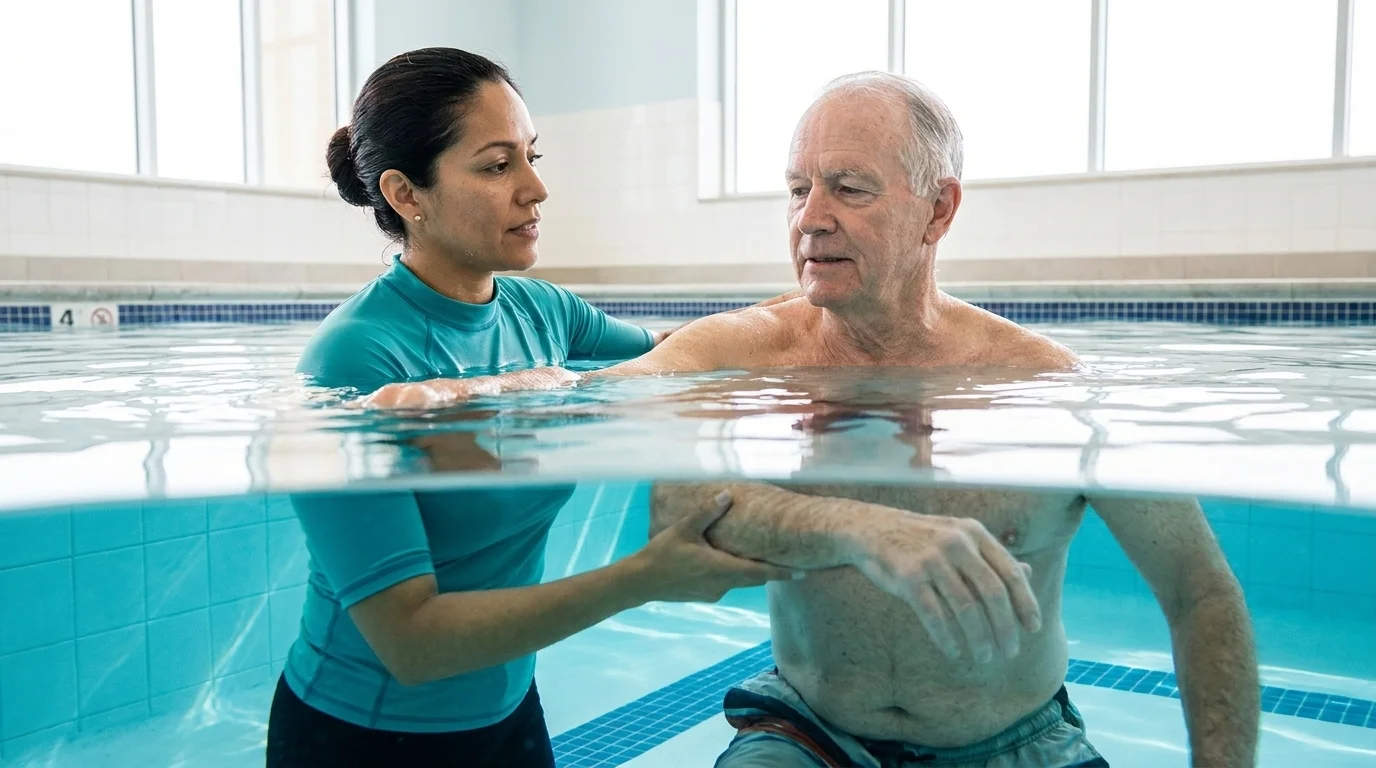
Aquatic therapy is a form of physical rehabilitation performed in water, supervised by a trained therapist, that uses the properties of water to make movement easier, safer, and more effective than it would be on land. For practical purposes, "hydrotherapy" and "aquatic therapy" are used interchangeably in clinical settings — both describe therapeutic, water-based exercise (the older term "hydrotherapy" sometimes also covers passive treatments like contrast baths, but the overlap is near-total). One concrete marker of how established it is: in the U.S. it has its own medical billing code, CPT 97113 — "aquatic therapy with therapeutic exercises." This is not a spa treatment. It is licensed clinical care that happens to take place in a pool.
How does aquatic therapy actually work?
Four physical properties of water do the work, and understanding them is the difference between "water is nice" and "here is the mechanism."
- Buoyancy offloads body weight, which is the headline effect. Standing in waist-deep water unloads roughly 50% of your body weight, chest-deep about 75%, and neck-deep up to 90% (Advanced Rehabilitation). For a painful knee or a healing hip, that's the difference between unable-to-walk and able-to-train.
- Resistance (viscosity) works the other direction: moving through water can provide up to about 15 times the resistance of the same movement in air, so the water builds strength even as it cushions the joints.
- Hydrostatic pressure — the even pressure of water on a submerged body — "works to decrease swelling and improve joint position awareness… facilitating reduction of swelling and adding lymphatic drainage" (Advanced Rehabilitation).
- Warmth. Therapy pools are kept warm, which relaxes muscles and eases pain, making movement more tolerable. A 2026 meta-analysis in Frontiers in Physiology confirms these buoyancy, resistance, and hydrostatic mechanisms reduce joint load while improving function and quality of life (Frontiers in Physiology).
What conditions does aquatic therapy treat?
This is where the evidence has gotten specific and recent. Aquatic therapy is used for arthritis and knee osteoarthritis, chronic low back pain, fibromyalgia, post-surgical and post-injury recovery, and neurological conditions including stroke, Parkinson's, and multiple sclerosis. A few sourced examples:
- Multiple sclerosis. A December 2025 randomized controlled trial found water exercise improved both balance and fatigue in relapsing-remitting MS. On the Berg Balance Scale, the hydrotherapy group gained 2.7 points while the control group lost 3.64; on the Modified Fatigue Impact Scale (lower is better), the hydrotherapy group improved 9.02 points while the control group worsened (MS News Today).
- Fibromyalgia. A systematic review and meta-analysis found aquatic therapy improved sleep quality by about 1.71 points on the Pittsburgh Sleep Quality Index versus controls (NCBI).
- Mental health. Compared with land-based physical therapy, aquatic therapy was associated with greater improvements in anxiety (−4.09 at three months) and depression (−6.35 at six months) in a comparative review (SpryPT) — putting numbers to the old "water is calming" claim.
Is aquatic therapy better than land-based physical therapy?
For some conditions, the recent evidence says yes — which is a stronger claim than "nice complement." The 2025 MS trial above didn't just show aquatic therapy helped; it showed water outperformed conventional physiotherapy on fatigue and balance. As the University of Thessaly researchers put it, their findings "reinforce that hydrotherapy is a valuable and effective component of MS rehabilitation, leveraging the supportive, low-impact properties of water." There's also an adherence advantage that matters enormously in rehab: one comparative study reported about 92.9% session completion for aquatic therapy versus 86.7% for land-based — people stick with it, partly because it hurts less. The honest framing: it's not universally superior, but for painful, weight-bearing-limited, or balance-impaired conditions, it is often the better starting point, not the afterthought.
Types of aquatic therapy and the equipment behind it
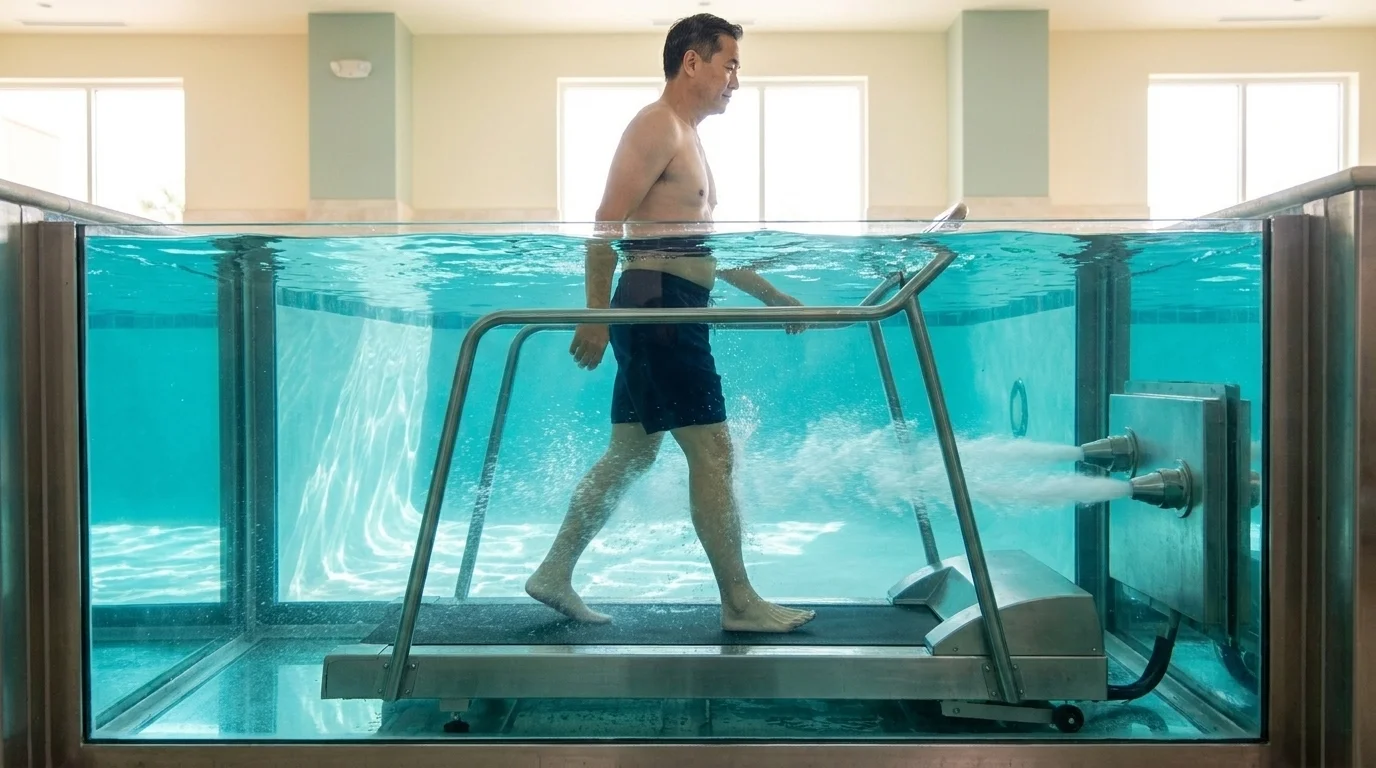
Aquatic therapy isn't one method. The recognized clinical approaches include Halliwick (a structured method emphasizing balance and independence in water), the Bad Ragaz Ring Method (therapist-guided resistance work with the patient supported by floats), Ai Chi (a slow, tai-chi-like sequence of movement and breathing), and Watsu (passive, supported stretching and movement). On the equipment side, the field has modernized well beyond a simple pool: underwater treadmills let patients rebuild gait at a fraction of their body weight, while resistance jets and precisely temperature-controlled pools let a therapist dial intensity up or down without ever increasing joint load.
Does insurance cover aquatic therapy?
Often, yes — with conditions. Because it bills under CPT 97113, medically necessary aquatic therapy is covered by Medicare Part B and many private insurers when a physician documents the need; Medicare typically pays 80% after the annual deductible (Medicare.org). The catch worth knowing before you book: coverage generally requires one-on-one contact with a licensed therapist. A group aqua-aerobics class at your gym, however good for you, is not the same thing and is not billable as therapy. If cost matters, ask specifically whether the program is a billable CPT-97113 service or a wellness class.
A closing note
The Romans were working from intuition; we're working from effect sizes — but they pointed at something real. Aquatic therapy is one of the better-evidenced examples of an ancient water-healing tradition that survived contact with modern clinical scrutiny and came out validated rather than debunked. If you have a condition where pain or weight-bearing limits land-based exercise — arthritis, a recovering joint, MS, fibromyalgia — it's worth raising with your doctor or physical therapist specifically, because it may be a better fit than the standard prescription. As with any therapy, suitability is individual: people with open wounds or active infections, uncontrolled cardiac or respiratory conditions, or certain seizure disorders should be cleared by a clinician first. The water has been healing people for two thousand years. We've finally caught up to measuring how.
Frequently Asked Questions
Yes — it bills under CPT 97113, and Medicare Part B covers medically necessary, physician-documented aquatic therapy (typically 80% after the deductible). It requires one-on-one contact with a licensed therapist; group aqua-aerobics is not covered.
People with open wounds or active infections, uncontrolled cardiac or respiratory conditions, or certain seizure disorders should be cleared by a clinician first. Suitability is decided case by case by a qualified therapist.
For some conditions, recent evidence favors it — a 2025 MS trial found water exercise improved balance and fatigue more than conventional physiotherapy, with higher session-completion rates. It is often easier on painful, weight-bearing-limited joints.
Beyond physical rehab, aquatic therapy is linked to reduced anxiety and depression — a comparative review found greater improvements than land-based therapy — thanks to warm water's calming effect and the confidence of moving with less pain.
Underwater treadmills let patients rebuild gait at a fraction of their body weight, while resistance jets and precisely temperature-controlled pools let a therapist adjust intensity without increasing joint load.
It suits a wide range of people — those with arthritis, chronic back pain, fibromyalgia, neurological conditions like MS or stroke, and anyone recovering from surgery or injury — because buoyancy makes movement possible when land-based exercise is too painful.