Overcoming Exercise Barriers: Inclusive Fitness Solutions for Everyone


I have spent nine years watching people decide they are "not a gym person." Almost none of them were right. What they had was a barrier — a bad knee, a tight schedule, a wheelchair, a sensory environment that felt like an assault, or a membership they couldn't afford — and nobody had ever handed them the version of training that worked around it. Low impact exercise is usually where that conversation starts, because it removes the single most common reason people quit: it hurts, or they're afraid it will.
The gap is real and it's measured. In 2024, only 47.2% of US adults met federal aerobic-activity guidelines, and the split by ability is stark: just 22.4% of adults with disabilities met them, versus 49.8% of adults without — more than a two-to-one gap (CDC NCHS Data Brief 555). That is not a motivation problem. It's an access problem. So let's do something more useful than celebrating "inclusivity" in the abstract: let's go barrier by barrier and name what actually works.
What low-impact exercises are easiest on the joints?
If impact is the problem, you have more options than you think — and none of them require a gym. Walking, resistance-band training, water-based exercise, chair yoga, and Tai Chi build real strength and aerobic capacity without the jarring load that aggravates arthritic or recovering joints (HelpGuide; SI Ortho).
Here's how I'd actually program it for someone starting over. Resistance bands are the highest return per dollar: a single set of looped bands runs about ten dollars and replaces a rack of dumbbells. Start with two sessions a week — banded rows, banded presses, and seated leg extensions, 2 sets of 12 to 15 reps each, moving slowly enough that you feel the muscle working through the whole range, not just the ends. Water exercise is the other big lever: the buoyancy offloads roughly your body weight off the joints while the water still provides resistance in every direction, which is why aquatic programs are a staple for arthritis and post-injury return. And don't dismiss chair yoga or Tai Chi as "gentle" — controlled, full-range movement under your own control is how you train a joint to produce force in a position again, not just stretch into it.
The cue I give every beginner: pick the version you'll actually repeat three times this week. The honest timeline is six to eight weeks of consistent work before low-impact training starts to feel easy and your joints stop arguing. Nothing here works in three days. If a joint is actively painful or you're returning from an injury, see a clinician before you load the movement — that's not a disclaimer, it's how you avoid setting yourself back a month.
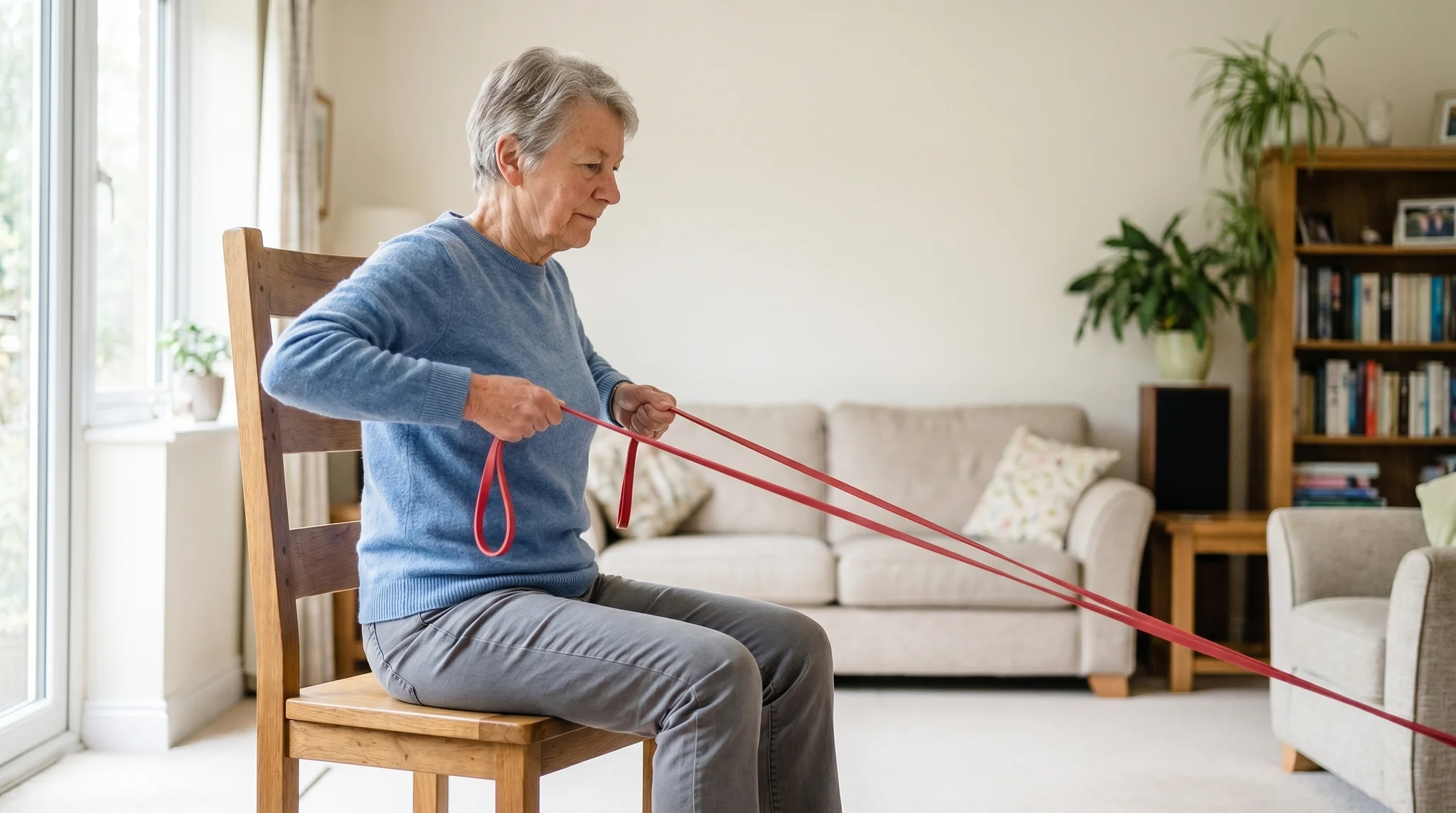
Staying active after 50: exercise for seniors
Activity declines with every life stage, and the CDC numbers make it concrete: 54.0% of adults 18–34 met the aerobic guidelines in 2024, falling to 44.6% at 50–64 and 38.4% at 65 and up (CDC NCHS Data Brief 555). The drop isn't inevitable biology — it's mostly that the standard "go hard" template stops feeling possible, and nobody offers the scaled version.
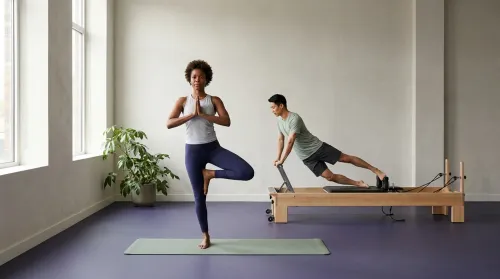
For older adults, the program I'd build leans on exactly the low-impact tools above, with two additions worth defending. First, strength work is non-negotiable, because the muscle and bone you don't use after 50 is the muscle and bone you lose — seated and standing resistance-band work, chair-supported squats, and light dumbbell movements two to three times a week. Second, balance training, which most programs skip: Tai Chi and simple single-leg holds (hold a counter, work up from ten seconds) train the balance and proprioception that age tends to erode — the difference between a stumble and a fall. The marker I look for isn't how much weight someone moves — it's whether they can get off the floor without using their hands, and whether their balance is improving month over month. Give it eight weeks before you judge it.
Adaptive fitness: method over equipment
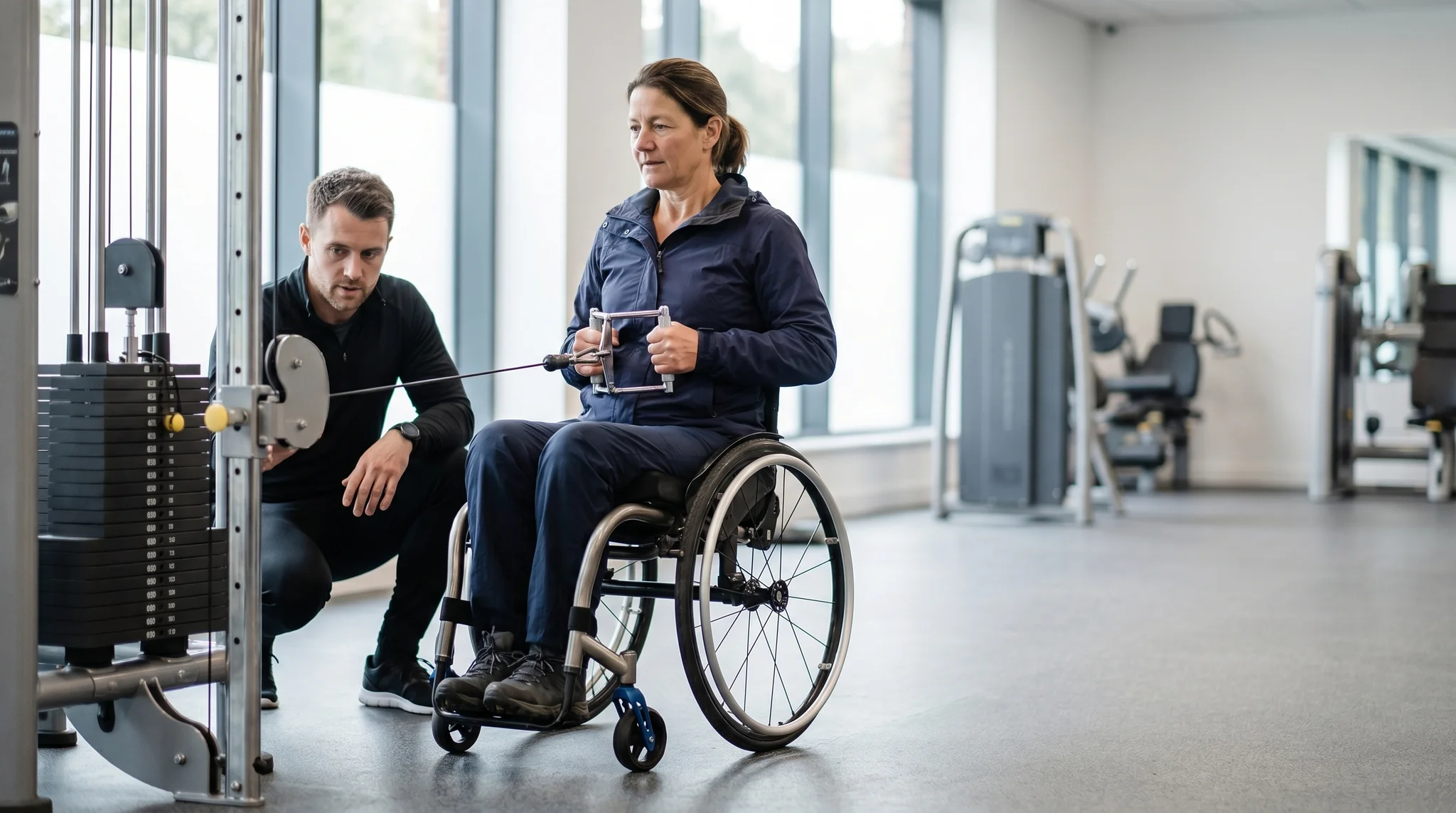
The biggest shift in adaptive fitness over the last two years isn't a piece of gear — it's the consensus that coaching method matters more than equipment. As of 2026 the field is professionalizing: facilities increasingly expect adaptive credentials like the ACSM Inclusive Fitness Specialist or RESNA standards, not just goodwill (Special Strong). Equipment helps — modular adjustable dumbbells, wheelchair-accessible cable stacks, gripping aids and wrist straps, transfer benches — but a well-coached scaling beats a well-stocked gym every time.
What "method over equipment" means in practice: instead of prescribing a fixed weight, you scale by what you can observe — breath, form, and recovery. If form holds and breathing stays controlled, you add load or reps; if either breaks down, you've found the working edge for today. You build a predictable session structure so the workout itself isn't a source of anxiety. This is the same scaling logic I use with every client, able-bodied or not — it's just good coaching, applied honestly.
The barrier here is also psychological, and the research names it plainly: people with disabilities "commonly report barriers associated with self-efficacy, perception of risks, and fear of embarrassment" (NIH/PMC). A coach who scales by observable markers instead of comparison to the room is directly addressing that fear, not just the physics.
Sensory and neurodivergent access
This is the barrier almost nobody writes about, and it knocks out a lot of people before they ever touch a weight. A standard gym is a sensory gauntlet — fluorescent glare, mirrored walls, echoing clang, blaring music, unpredictable crowds. For autistic and otherwise neurodivergent people, that environment is the barrier, full stop.
The 2026 design fixes are concrete: tactile floor markers to define space without signage, adjustable or dimmable lighting, low-echo acoustic panels, and audio- or haptic-feedback equipment that replaces busy visual dashboards (getfit.news). If you train at home, you can replicate the principle for free: a consistent corner, the same playlist or silence, predictable lighting, and a fixed session order. The point isn't a special facility — it's a predictable one. And from a gym's side this is sound business, not just ethics: "small investments in design and training pay back through greater membership stability and lower churn" (getfit.news).
Does VR exercise actually help?
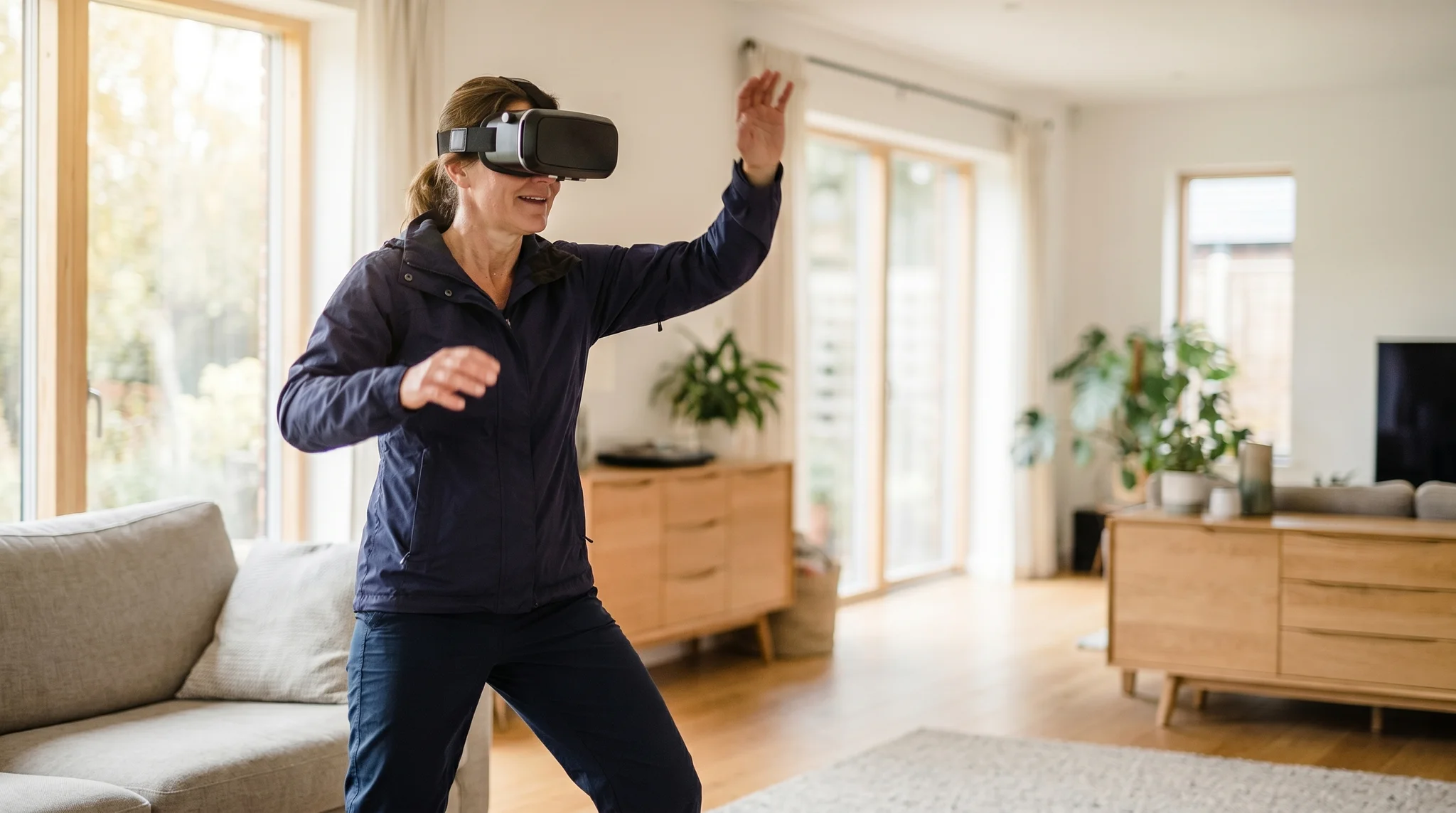
For years I'd have called VR workouts a novelty, and most of the marketing still is. But the evidence has caught up to a specific, useful claim: 2026 systematic reviews in JMIR Aging found that immersive VR exergames improved physical activity, quality of life, and — the part that matters most — exercise adherence in older adults (JMIR Aging; meta-analysis). Adherence is the whole ballgame. The best program on earth does nothing if you stop doing it in week three, and the population most prone to dropping off is exactly the one VR seems to help keep going.
So here's the honest read, the same way I'd call zone 2 cardio: VR is about 80 percent right and 20 percent oversold. It's a genuinely good tool for making movement engaging enough to repeat, especially at home and especially for someone who finds a gym intimidating. It is not a replacement for progressive strength work, and you don't need a headset to be fit. If it gets you moving consistently when nothing else has, that's not a gimmick — that's the answer for you.
When cost is the barrier
Money is a measurable barrier too: in 2024, just 35.4% of adults below the federal poverty level met the activity guidelines, versus 56.5% of those at 400% of poverty or above (CDC NCHS Data Brief 555). That spread isn't about willpower — it's gym fees, transportation, and time.
The good news is that almost everything I've recommended so far is nearly free. A set of resistance bands, body-weight and chair work, walking, and a streamed or VR routine cover the joint, senior, adaptive, and at-home barriers without a membership. Beyond the home setup, look for the community layer that's genuinely expanding: subsidized memberships, free outdoor group classes, library and senior-center programs, and parks-department fitness events. The most accessible workout is the one you can reach and afford twice a week, indefinitely.
The honest takeaway
Inclusive fitness isn't a product or a piece of equipment — it's a coaching mindset that starts with your actual barrier and scales the movement to meet it. Name the barrier, pick the low-impact tool that routes around it, and commit to a realistic dose for long enough to judge it: six to eight weeks, not six to eight days. If pain or a medical condition is part of the picture, loop in a clinician before you load anything. Everyone deserves a version of training that fits — and for almost everyone, that version exists.
Frequently Asked Questions
Walking, resistance-band training, aquatic exercise, chair yoga, and Tai Chi build strength and aerobic capacity without jarring impact — ideal for arthritis, joint pain, or returning to activity after an injury.
Resistance bands, seated and chair routines (seated marching, leg lifts, bicep curls), and adaptive aids like gripping straps deliver low-cost strength work without a gym. Coaching method — scaling by breath, form, and recovery — matters more than the gear.
2026 JMIR Aging reviews find immersive VR exergames improve physical activity, quality of life, and — most importantly — exercise adherence in older adults, the group most prone to dropping off. It is a tool for consistency, not a replacement for strength work.
CDC's 2024 data shows only 22.4% of adults with disabilities met aerobic guidelines versus 49.8% without — more than a 2x gap. It is driven by inaccessible facilities, transportation and scheduling, and psychological barriers like low self-efficacy and fear of embarrassment.
Common obstacles include lack of motivation, time constraints, and feelings of intimidation in fitness environments. Many individuals also face challenges related to access to facilities, which can hinder their ability to engage in physical activity consistently. Understanding these barriers is crucial for developing effective inclusive fitness solutions.
Inclusive design in fitness spaces focuses on creating environments that accommodate diverse needs and abilities. This approach not only enhances accessibility for individuals with disabilities but also fosters a welcoming atmosphere for everyone. By implementing ergonomic equipment and accessible infrastructure, fitness facilities can promote overall health and wellness for all participants.
Cultivating an inclusive fitness culture is essential to ensure that individuals from all backgrounds feel welcome and valued in exercise environments. This involves addressing issues like body shaming and discrimination, which can deter participation. Promoting diversity and acceptance empowers everyone to engage in physical activities without fear of prejudice or exclusion.