Yoga vs. Pilates: Unraveling the Core Differences and Unique Benefits


I get the yoga vs Pilates question constantly, usually phrased as if one has to win. It doesn't. Here's the one-sentence version I give first: yoga emphasizes flexibility, breath, and mental calm, while Pilates is built around core strength and postural control. I hold a strength-coaching certification and a 200-hour yoga qualification, so I'll say plainly what some instructors won't — these two are complements, not rivals, and the better one is the one you'll actually keep doing. That last point matters more than ever in 2026, the year Pilates became the most-booked workout in the world, up about 66% since 2024 (Mariana Tek via Fitt Insider). So let's compare them honestly, then I'll tell you which to pick for your specific goal.
What's the difference between yoga and Pilates?
Both are low-impact, mat-based practices that build strength and mobility through bodyweight movement and breath. The differences are in emphasis and origin. Yoga, rooted in ancient India, weaves physical postures together with breathwork and meditation toward flexibility and mental calm. Pilates, developed by Joseph Pilates in the early 20th century, is a modern conditioning system built to strengthen the deep core and improve postural alignment through precise, controlled movement. Here's how they stack up:
| Yoga | Pilates | |
|---|---|---|
| Primary focus | Flexibility, breath, mind-body calm | Core strength, posture, control |
| Origin | Ancient India | Early 1900s (Joseph Pilates) |
| Movement style | Held poses + flowing sequences | Precise, controlled reps |
| Mind-body | Meditation, breathwork central | Concentration on form, less meditative |
| Equipment | Just a mat (usually) | Mat or reformer/equipment |
| Calories (per hr) | ~150–400 | ~170–350 |
| Best known for | Stress relief, mobility | Core, rehab, posture |
Which should you choose? A goal-by-goal verdict
This is the part most comparisons dodge. As a coach, I'd rather give you a clear pick per goal than a noncommittal "both are great." Here's the honest matrix:
| Your goal | Better pick | Why |
|---|---|---|
| Overall flexibility & stress | Yoga | Breath + mobility focus; AHA research links it to lower blood pressure |
| Core strength & posture | Pilates | Built specifically to train deep stabilizers |
| Back-pain rehab | Pilates (slight edge) | 2025 RCTs show pain/disability reductions (below) |
| Beginners | Either | Both scale down well; pick the vibe you'll return to |
| Weight loss | Tie | Neither is built for it — consistency wins (below) |
| Strength + flexibility together | Pilates, then add yoga | WebMD: "increase strength and flexibility, Pilates"; do both for the rest |
As WebMD puts it, "if you want to increase your strength and flexibility, Pilates might be the better choice. If you want to improve your overall wellness, you might choose yoga" (WebMD).
Yoga vs Pilates for weight loss
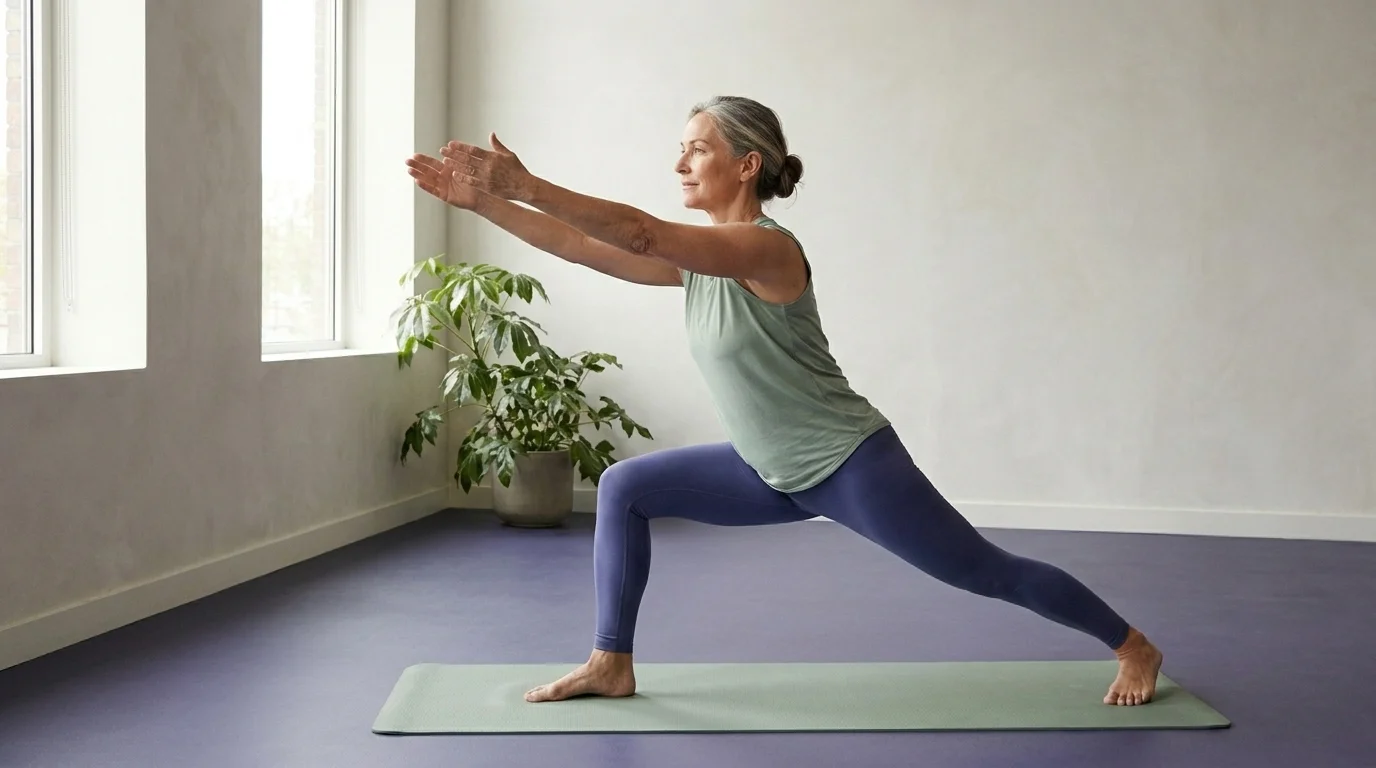
Short answer: neither, really — and that's the most useful thing I can tell you. Both are modest calorie burners. Yoga runs roughly 150–400 calories an hour depending on style (gentle Hatha near 200, dynamic power yoga 300–600), Pilates roughly 170–350 (Tom's Guide). There's an interesting wrinkle in the metabolism: one study found yoga burned about 22% more calories during a session, while Pilates produced about a 15% higher resting metabolic rate in the 24 hours after. But don't overthink that split. A 2025 study in Sensors found that adherence — actually sticking to the activity — is one of the strongest predictors of long-term weight-loss success (The Healthy). In plain coaching terms: the practice you'll do three times a week beats the one that burns marginally more and you quit by Thursday. Pair either with a sensible diet and a bit of strength or cardio, because no mat practice is a weight-loss program on its own.
Yoga vs Pilates for back pain
Here Pilates has the stronger evidence, and it's worth being specific. Two 2025 randomized controlled trials — Coelho and colleagues (168 participants, comparing higher- and lower-intensity Pilates for chronic low back pain) and Ulusoy and colleagues (Pilates versus PNF exercises) — both found Pilates reduced pain, disability, and fear of movement, with a particular edge for core stability (The Pilates Circuit). That fits the mechanism: chronic low back pain often responds to training the deep stabilizers, which is exactly Pilates' specialty. Yoga still helps, mostly through flexibility and stress reduction, but if rehab is the goal, I'd start with Pilates. One non-negotiable, the same one I give every client: if you have acute or undiagnosed back pain, see a clinician before you load any movement. A class is not a diagnosis.
Can you do both?
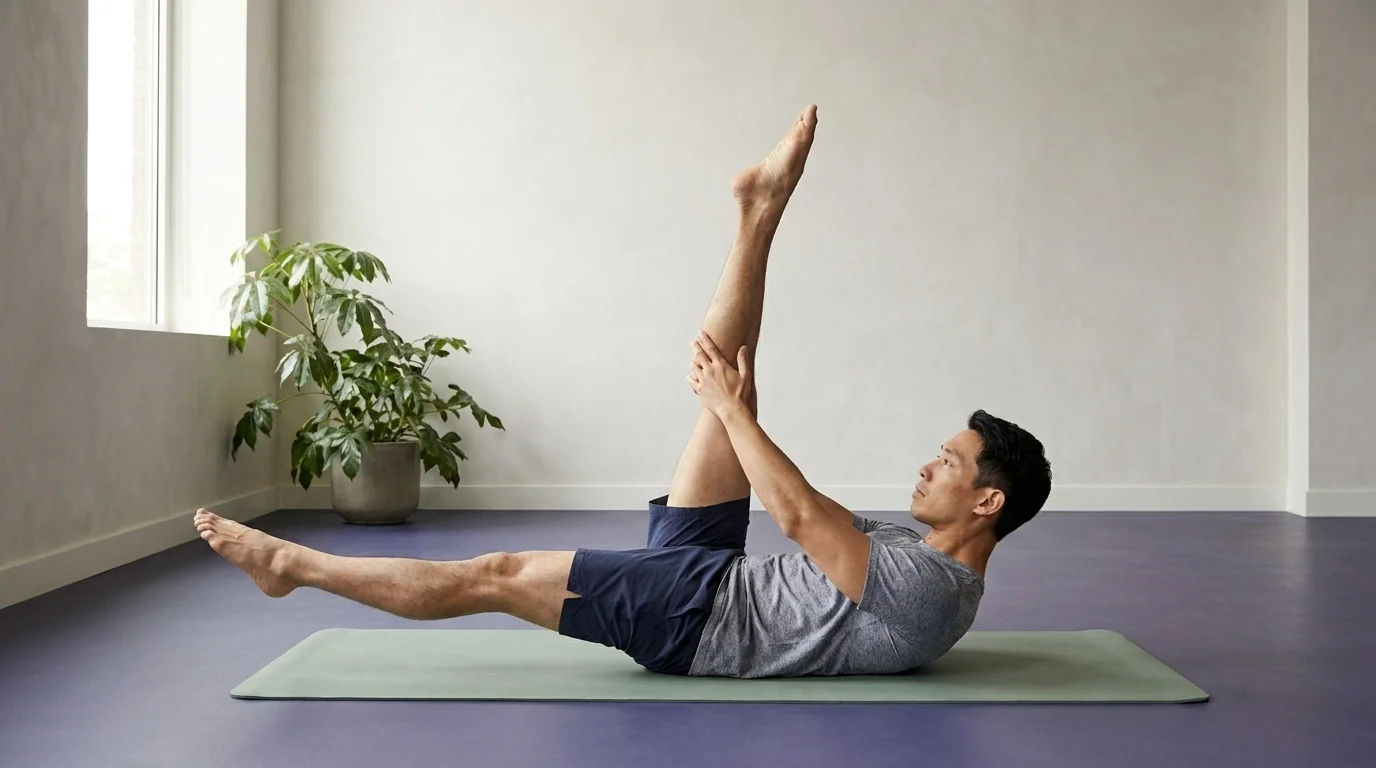
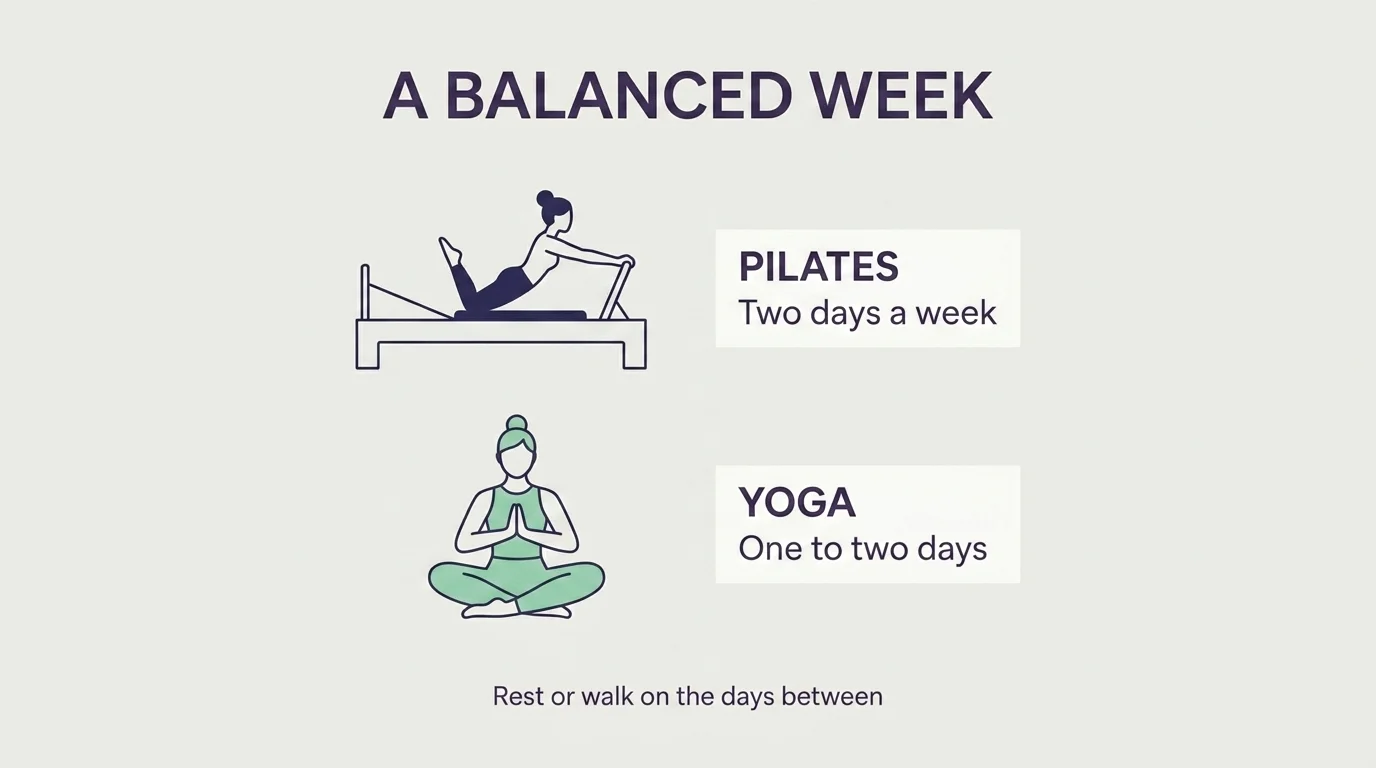
Yes — and as someone who trains both, it's what I actually recommend for most people. They cover each other's gaps. As the Cleveland Clinic puts it, "Pilates builds strength and body awareness that allows you to improve your yoga practice safely and avoid injury, and yoga provides the spiritual reflection that Pilates does not" (Cleveland Clinic). A practical split I like: two Pilates-style sessions a week for the core and postural work, one or two yoga sessions for mobility and decompression. The core strength from Pilates makes your yoga poses more stable; the flexibility from yoga makes your Pilates positions more achievable. You don't have to choose a side.
The bottom line
Stop framing it as a fight. If you want calm and mobility, start with yoga. If you want core strength, posture, or back-pain rehab, start with Pilates. If you can't decide, you genuinely can't pick wrong — so choose the class whose vibe makes you want to come back, because that's the variable that actually predicts results. Give whichever you pick a real eight weeks of two or three sessions a week before you judge it. And when you're ready, add the other one. The best practitioners I know don't debate yoga versus Pilates. They do both, and let each fix what the other can't.
Frequently Asked Questions
Neither is built for weight loss. Yoga burns about 22% more calories per session, but Pilates raises resting metabolism roughly 15% afterward. The bigger predictor is which you'll do consistently — a 2025 Sensors study found adherence is one of the strongest weight-loss predictors.
Pilates has the stronger rehab evidence — 2025 RCTs (Coelho et al.; Ulusoy et al.) found it reduces pain, disability, and fear of movement, with an edge for core stability. Yoga helps through flexibility and stress relief. See a clinician first for undiagnosed pain.
Pilates often feels harder for the core, because every move challenges deep stabilizers with controlled tension. Yoga's difficulty scales more with style — from gentle yin to demanding power yoga.
Yes — they complement each other. Pilates builds the core strength and body awareness that make yoga safer, while yoga adds the flexibility and mindfulness Pilates lacks. A common split is two Pilates sessions and one or two yoga sessions a week.
Yoga, rooted in ancient India, unites physical postures with breathwork and meditation toward flexibility and mental calm. Pilates, developed by Joseph Pilates in the early 20th century, is a modern conditioning system focused on core strength and postural control.
Yes — both scale down well for beginners with foundational, low-impact movements and modifications. The right starting point is simply the one whose style and class environment make you want to come back.