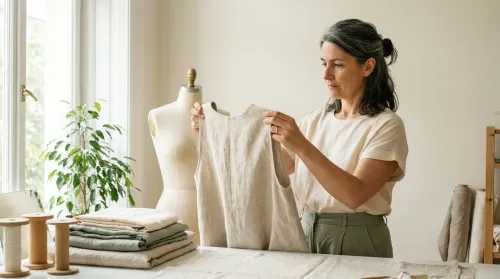
Unveiling the Ripple Effect: How Health and Wellness Drive Innovation in the Fashion Industry


Start with the spending, because the spending is the story. Eighty-four percent of US consumers now call wellness a crucial or significant priority, and — the number that should make any retail strategist sit up — 51% say they would maintain or increase their wellness spending even if their discretionary income fell (Shopify, 2026). Money that resilient does not sit still. It reshapes the industries it touches, and one of the industries it is reshaping fastest is fashion — sustainable fashion most of all. Business of Fashion's State of Fashion 2026 report frames this directly: brands are opening wellbeing-adjacent "third spaces" and re-tooling around health as shoppers redirect discretionary dollars toward feeling well (paraphrased from the BoF report summary; the primary is paywalled).
That is the ripple effect, and it runs one direction that most coverage gets backward. Wellness is not a style fashion adopted. Wellness is the demand force pulling fashion toward new materials, new technology, and new claims — some of them real, some of them marketing. This piece follows that force to where it actually lands.
How is health and wellness driving fashion innovation?
Wellness demand is pushing fashion toward organic and bio-based fabrics, biometric smart clothing, and functional everyday wear — now among the industry's fastest-growing and most-funded segments. The wellness consumer is not asking for a logo. They are asking what the garment is made of, what it does to their body, and what it does to the planet. Those three questions are the engine, and each one drives a different innovation track.
The planet question carries the hardest numbers. Fashion is responsible for roughly 10% of global carbon emissions — more than international flights and maritime shipping combined — and about 20% of global plastic and wastewater pollution (Earth.Org; UNEP). The industry generates an estimated 92 million tonnes of textile waste a year, a figure projected to reach 134 million tonnes by 2030 (Surplus Market / UNEP data). When a wellness-minded consumer balks at that, a market gets built to answer them.
The material shift: organic fabrics, and who is paying for them
Here is the cleanest single proof that wellness drives the innovation rather than decorating it. Organic fabrics now hold the largest material share of the sustainable-fashion market in 2026, and analysts attribute that lead explicitly to "consumers shifting toward health and wellness" (Coherent Market Insights). The cause is named in the market report itself. The sustainable-fashion market is valued at roughly $10.1 billion in 2026 and projected to reach about $19.9 billion by 2033 at a 10.1% compound rate (Coherent Market Insights) — small against fashion's total, but the fastest-converting slice of consumer intent into product.
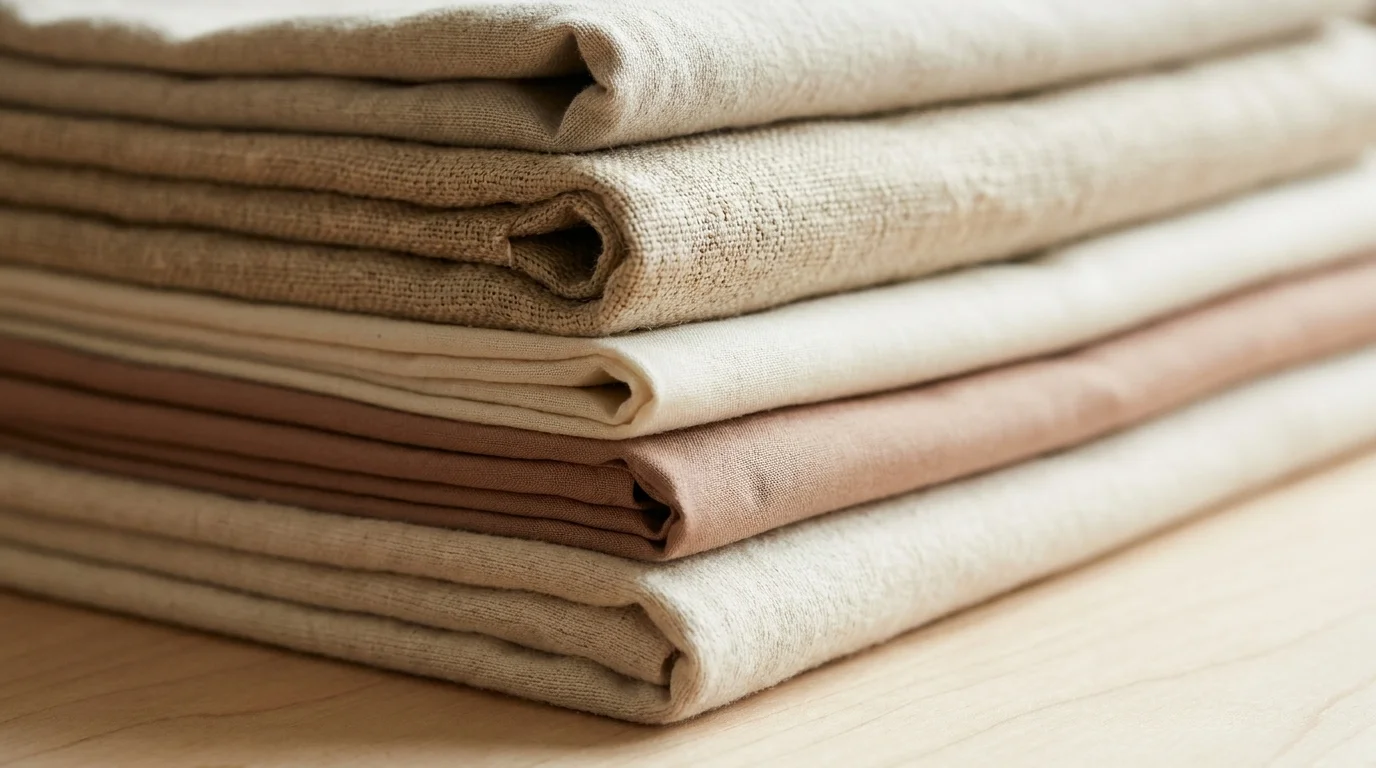
What that money buys is more specific than "eco-friendly." It buys lyocell (Tencel), hemp, recycled fibers, and emerging mycelium-based leather alternatives, increasingly measured against standards like the Higg Index, GOTS organic certification, and the EU's 2022 Sustainable and Circular Textiles Strategy (Wikipedia: Sustainable fashion). It also buys process change at scale: Levi's reports its Water<Less program has saved more than 3 billion liters of water and cut water use by up to 96% on some styles (Levi's own figures, via industry reporting). Treat that last number the way you would any company's self-reported sustainability stat — as a claim worth verifying, not a finding — but the direction of travel is real, and it is consumer-driven.
From the gym to the street: athleisure and functional wear
The second track is performance bleeding into everyday clothing. Athleisure is the loudest example — and one of the most commercially crowded search categories in apparel — but the deeper shift is quieter: moisture management, thermal regulation, and stretch have moved from activewear-only features into baseline expectations for ordinary clothes, which in turn drives fundamental textile innovation (Global Textile Times). The functional feature is no longer the frontier. It is the floor.
Some of this is straightforwardly useful. UV-protective (UPF-rated) clothing, for instance, does what it says and has a clear health rationale for sun safety. The point worth keeping is that wellness demand made "what does this fabric do" a default purchasing question — and that question is what pulls breathable fabrics, recycled performance fibers, and ergonomic construction into mainstream lines that, a decade ago, would have sold on appearance alone.
The wellness wearable: from gimmick to clinic
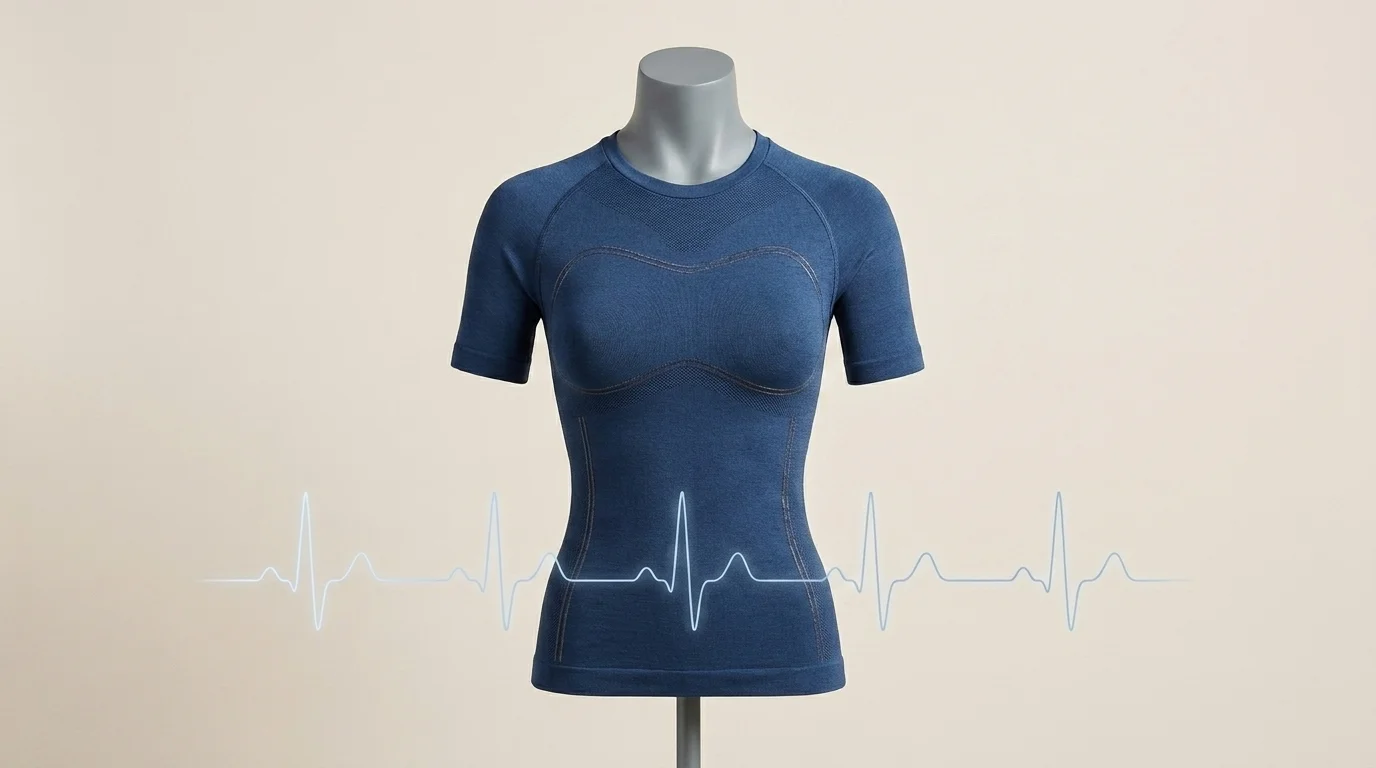
The third track is the one that has changed most since this article first published, and it is where the vague promise of "smart fabrics" got real. Smart fabrics embedded with sensors can now "monitor health metrics, improve athletic performance and even charge electronic devices," as Global Textile Times puts it (globaltextiletimes.com) — but the more important development is clinical validation. Hexoskin's smart shirts are clinically validated for continuous ECG, HRV, respiratory, activity, sleep, and stress monitoring (Hexoskin): medical-grade biometrics in a garment, not a concept render. Alongside it sit Sensoria's sensor-equipped smart socks, Nadi X yoga pants that cue posture, and Levi's Jacquard touch-responsive textiles.
The money agrees this track is serious. The smart-clothing market was valued at about $5.88 billion in 2025 and is forecast to reach $38.94 billion by 2033 — a 26.8% compound growth rate (Grand View Research), the steepest curve in this whole story. That is the wellness-wearables category graduating from novelty to infrastructure.
Where the ripple effect overpromises
Now the part the celebratory coverage skips. A demand force this strong attracts claims that outrun the evidence, and fashion is not a regulated medical category — it is a consumer one, which means the burden of proof is wherever the marketing department decides to put it.
Two examples from the genre. "Moisturizing fabrics infused with nutrients to promote skin health" and "posture-improving garments designed to support spinal alignment" are pitched as wellness innovation, but the evidence that a nutrient-coated textile measurably improves skin, or that a compression garment durably corrects posture, is thin to absent. Those are structure-function-style claims borrowed from the supplement playbook, and they should be read the same way: as marketing until a study says otherwise. The broader version is greenwashing — "sustainable," "clean," "eco" applied to garments with no certification behind them, a practice common enough that the EU built a regulatory strategy partly to police it (Wikipedia: Sustainable fashion).
The marketing language — "infused," "clinically inspired," "consciously crafted" — is doing real commercial work. The fabric is the cost of goods. The wellness story is the margin. None of that means the ripple effect is fake; it means the same demand that funds genuine innovation also funds the imitation of it, and the two ship in similar packaging.

What a wellness-minded shopper should actually do
The honest summary is that wellness is genuinely reshaping fashion, and the reshaping is uneven. The material shift toward organic and certified fibers is real and consumer-driven. The wearables track is real and clinically maturing. The "nutrient fabric" and posture-correction claims are mostly story. So buy like a skeptic who still cares: favor certified organic or lyocell over the word "natural," choose fewer, more durable pieces over volume, use resale and rental to fight the 92-million-tonne waste problem, and treat any garment sold on a health outcome as a claim to check rather than a benefit to trust. The ripple effect is doing its work. Your job is to tell the wave from the foam.
Frequently Asked Questions
Certified organic and bio-based fabrics (organic cotton, lyocell, hemp) reduce water use, chemical load, and waste versus conventional textiles, and avoid many of the finishes that irritate sensitive skin. The largest gains come from buying fewer, more durable pieces.
Wellness demand is pushing fashion toward organic and bio-based fabrics, biometric smart clothing, and functional everyday wear. Analysts attribute organic fabrics' lead in the sustainable-fashion market directly to the consumer shift toward health and wellness.
Organic and mycelium-based materials, clinically validated biometric clothing (e.g., Hexoskin), circular and resale models, and certification against standards like GOTS, the Higg Index, and the EU's Sustainable and Circular Textiles Strategy.
Favor certified organic or lyocell fabrics over vague 'natural' labels, buy fewer higher-quality pieces, use resale and rental platforms, and treat any garment sold on a health outcome as a claim to verify rather than a benefit to trust.
Some do. Hexoskin's smart shirts are clinically validated for ECG, heart-rate variability, respiration, sleep, and stress monitoring. Many other 'wellness' garment claims — nutrient-infused or posture-correcting fabrics — lack comparable evidence.