
Healthy Prints and Patterns: Artistic Inspiration from Natural Elements for Stylish Apparel


Nature inspired fashion is clothing whose prints, patterns, palettes, and silhouettes are drawn directly from the natural world — botanical florals, animal motifs, landscape and mineral textures, earthy color stories. That is the easy part to define. The more interesting question, and the one almost no one writing about it bothers to ask, is whether dressing in nature's imagery does anything for you beyond looking good. I want to take that question seriously, which means being precise about what the evidence supports and honest about where it runs out.
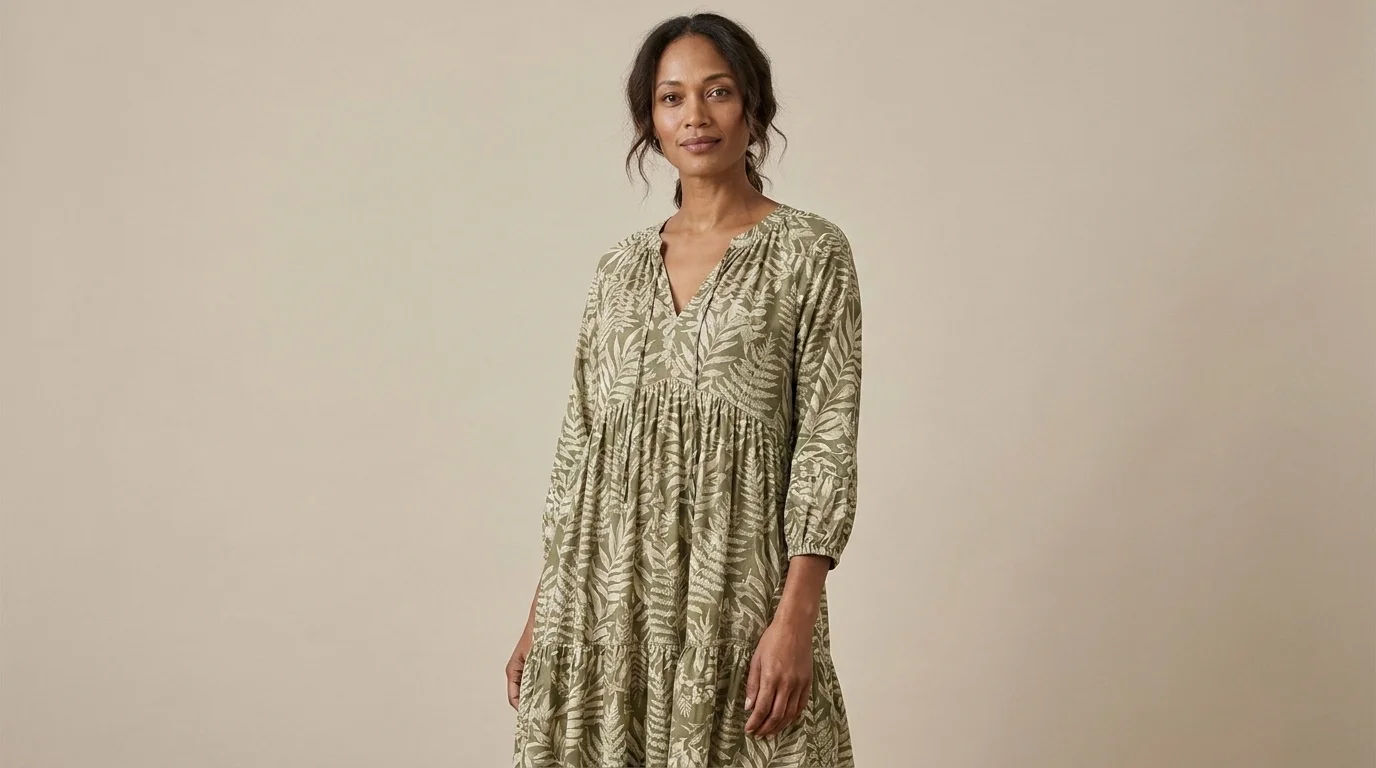
Why nature's patterns calm us — and where the evidence stops
The starting point is a word the biologist E.O. Wilson coined in 1984: biophilia, which he defined as the "innate tendency to focus on life and lifelike processes". The claim is that humans are drawn to living forms because we evolved among them, and a fair amount of later research is consistent with it.
The most quotable piece comes from a 2019 study in Frontiers in Psychology, in which salivary cortisol — a stress hormone — dropped about 21.3% per hour during a "nature experience," with the efficiency peaking somewhere between 20 and 30 minutes of exposure. A broader 2023 meta-analysis of 47 studies (combined N around 2,430) found a small-to-medium effect for nature reducing physiological stress relative to urban settings. So: time among living things measurably settles the nervous system. That much is well-supported.
Here is the bridge — and the place I have to be careful, because the wellness market loves to sprint past it. A 2024 meta-analysis in Internet Interventions compared viewing digital or representational nature against being in the real thing and found no significant difference for stress recovery (a standardized mean difference of −0.01). In plain language: looking at an image of nature appears to do nearly as much for stress as standing in it.
That is genuinely interesting, and it is the closest thing to a scientific permission slip for treating a botanical print as a kind of portable, low-dose nature cue. But I will not collapse two different claims into one. That study measured people viewing nature imagery in controlled conditions. No one has run the trial on "wearing a leaf-print blouse lowers your cortisol by 21%," and anyone who tells you they have is selling something. What the evidence supports is modest and worth having anyway: representations of nature carry real restorative weight, so surrounding yourself with natural forms — in your space, and plausibly in what you wear — is a reasonable, low-cost way to keep a little of that within reach. Pretty and defensible. Just not magic.
Flora, fauna, and the designers who got there first
Strip away the adjectives and nature-inspired fashion has a long, datable lineage — which is exactly what makes it more than a trend. The Museum at FIT's Force of Nature exhibition documents the line well, and the designers in it are worth naming.
Alexander McQueen built an entire 2010 collection, Plato's Atlantis, around melting ice caps and aquatic evolution; he once said, "I have always loved the mechanics of nature, and to a greater or lesser extent my work is always informed by that." Dolce & Gabbana covered garments in butterfly appliqués for Spring 1998, leaning on the butterfly's old association with rebirth. Cristóbal Balenciaga shaped a silk-chiffon and ostrich-feather gown in 1967 that reads as plumage. Go further back and the Victoria & Albert Museum points to William Kilburn's seaweed-pattern textile from 1790 — proof that "biophilic fashion" is a new label on a very old impulse.
The 2026 botanical print families
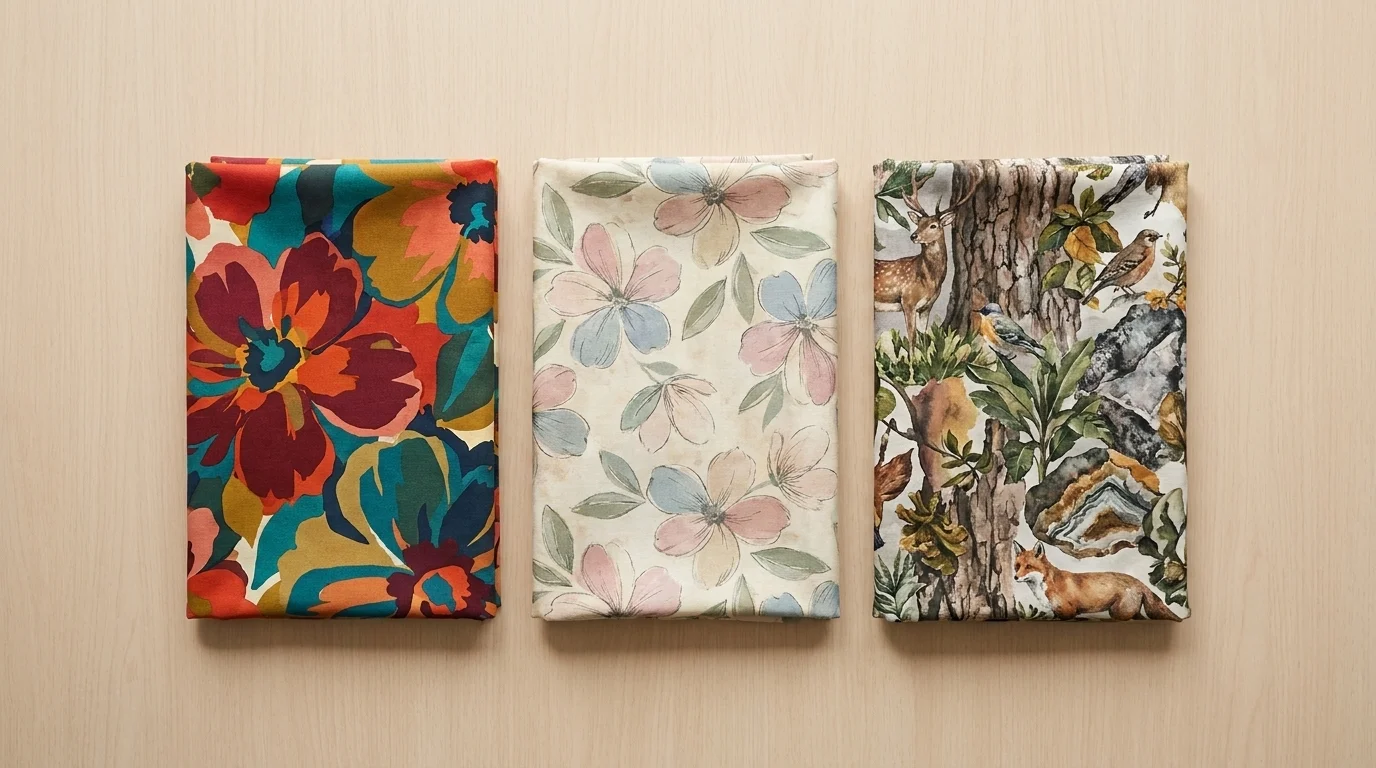
What the trade press has done recently is useful: it has stopped treating "florals" as one undifferentiated thing. The Spring/Summer 2026 forecasting sorts botanical prints into three distinct families, which is a more honest way to talk about them:
- Punk Floral (Intensely Botanical) — disrupted, almost hallucinatory florals and enlarged cell structures; Dries van Noten is the reference point.
- Botanical Idyll — soft, drifting petals in a vintage-sketch register, rendered in pastels and neutrals.
- Plantasia — wild animals merged with bark, foliage, and mineral or shell textures.
Notably, the same forecasters frame the whole season as a "detox society" reaching for nature as "a coping mechanism for societal healing" — a restart from digital saturation. It is striking that the fashion industry arrived at the wellbeing rationale on its own, from the commercial side. That convergence is the actual story here.
What you wear and how you think
There is a second, smaller body of evidence worth knowing, usually filed under color psychology and enclothed cognition. The cleanest demonstration is a 2012 study by Adam and Galinsky: participants who put on a coat described as a "doctor's coat" did measurably better on attention tasks than people who wore the identical coat described as a "painter's coat." The garment did nothing; the meaning attached to it did.
I read this carefully, because it is easy to over-claim. It does not prove a green dress makes you calm. It does suggest that the symbolic associations you bring to what you wear can shift your mental state — and if botanical greens and watery blues carry, for you, an association with calm and the outdoors, then leaning into those associations is a small, real lever, not a placebo to be embarrassed about. "What your clothes say about you" turns out to also be a little about what they say to you.
Conscious consumption, not eco-virtue
A sustainability section is table stakes for this topic, but the generic version — "recycled materials, conservation messages" — has aged badly. The current conversation is more specific. Eco-minded design now names actual fibers: organic cotton, hemp, linen, Tencel, GRS-certified recycled polyester, and newer bio-based materials such as Spiber's Brewed Protein. On the regulatory side, the EU's Digital Product Passport becomes mandatory in 2027, which will attach traceable material and origin data to garments.
I would gently reframe this, though. The wellbeing payoff of "sustainable fashion" is not the eco-virtue badge; it is the conscious consumption itself — buying less, choosing deliberately, knowing where a thing came from. That is the same nervous-system logic as the rest of this piece: less churn, fewer decisions, more intention.
How to wear it as a daily reset
If you want the practical version, none of this requires a wardrobe overhaul.
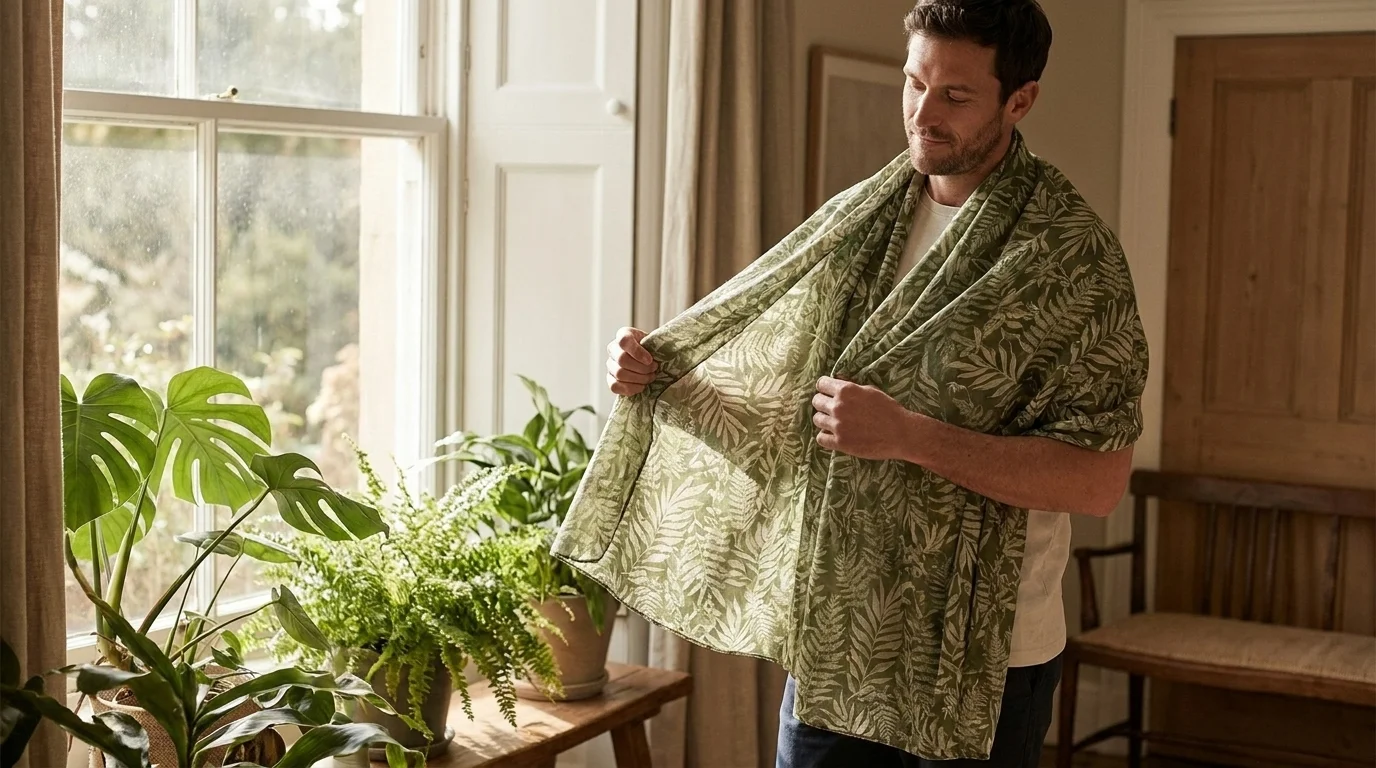
A few nature-inspired outfit moves that line up with the evidence above:
- Keep one botanical or landscape piece in easy reach for days you can't get outside — a scarf, a shirt, a print you actually like looking at.
- Lean into greens and blues when you want the calm association working for you, warmer botanical tones when you want energy.
- Choose the print you'd want to look at, not just be seen in — the restorative weight, such as it is, comes from your own attention to the imagery.
- Buy slowly. A few pieces you return to beat a closet full of impulse florals, for both the planet and your own decision fatigue.
The honest summary is this. Nature-inspired fashion is not a treatment, and I would not trust anyone who frames it as one. But it sits at a genuine intersection — real evidence that natural imagery soothes us, a centuries-old design lineage, and a modest psychology of how clothing's meaning shapes mood. Worn with that understanding, a botanical print is a small, pleasant, defensible way to keep a little of the outdoors against your skin. That is enough. It does not need to be more.
Frequently Asked Questions
Nature-inspired fashion is clothing whose prints, patterns, palettes, and silhouettes are drawn from the natural world — botanical florals, animal motifs, landscape and mineral textures, and earthy color stories.
Biophilia research shows nature exposure lowers cortisol (about 21% per hour; Hunter, 2019), and 2024 evidence finds viewing representational nature restores nearly as well as the real thing — so botanical motifs can act as a portable, low-dose nature cue. It's a modest effect, not a treatment.
Alexander McQueen (Plato's Atlantis, 2010), Dolce & Gabbana (butterfly appliqués, Spring 1998), and Cristóbal Balenciaga (ostrich-feather gown, 1967) all drew directly on natural motifs — part of a lineage that reaches back to William Kilburn's 1790 seaweed textile.
To a degree. "Enclothed cognition" research (Adam & Galinsky, 2012) shows the symbolic meaning we attach to clothing shifts how we think and feel — so if greens and blues read as calm to you, leaning into them is a small, real lever rather than a placebo.
A capsule-wardrobe guideline — pick 3 tops, 3 bottoms, and 3 pairs of shoes that mix into multiple outfits — used to reduce decision fatigue and build a more intentional, sustainable wardrobe.