Mindful Design: How Meditation and Mindfulness Impact Fashion Creation


There is a quiet confusion buried in most writing about "mindful fashion" and "slow fashion," and it is worth naming before we go any further. Two different things wear the same word. One is about buying — building a calmer closet, choosing fewer and better pieces. The other is about making — what happens in the design studio when the person creating a garment slows down and pays attention. They are not the same activity, and the second one is far less written about. This piece is mostly about the making, because that is where the more interesting and less-told story lives. Slow fashion — searches for the term, alongside "sustainable fashion" and "ethical brands," have risen over 200% in five years — is the home this thesis has been looking for.
What slow fashion actually means
Slow fashion is not a mood. It is a defined idea with a traceable origin: the sustainability researcher Kate Fletcher coined the term in 2007, at the Centre for Sustainable Fashion, modelling it explicitly on the Slow Food movement. Fletcher named three pillars — mindfulness, quality, and responsibility — which is a more useful definition than anything involving the word "tranquility," because each pillar points to a decision a maker or a buyer can actually make.
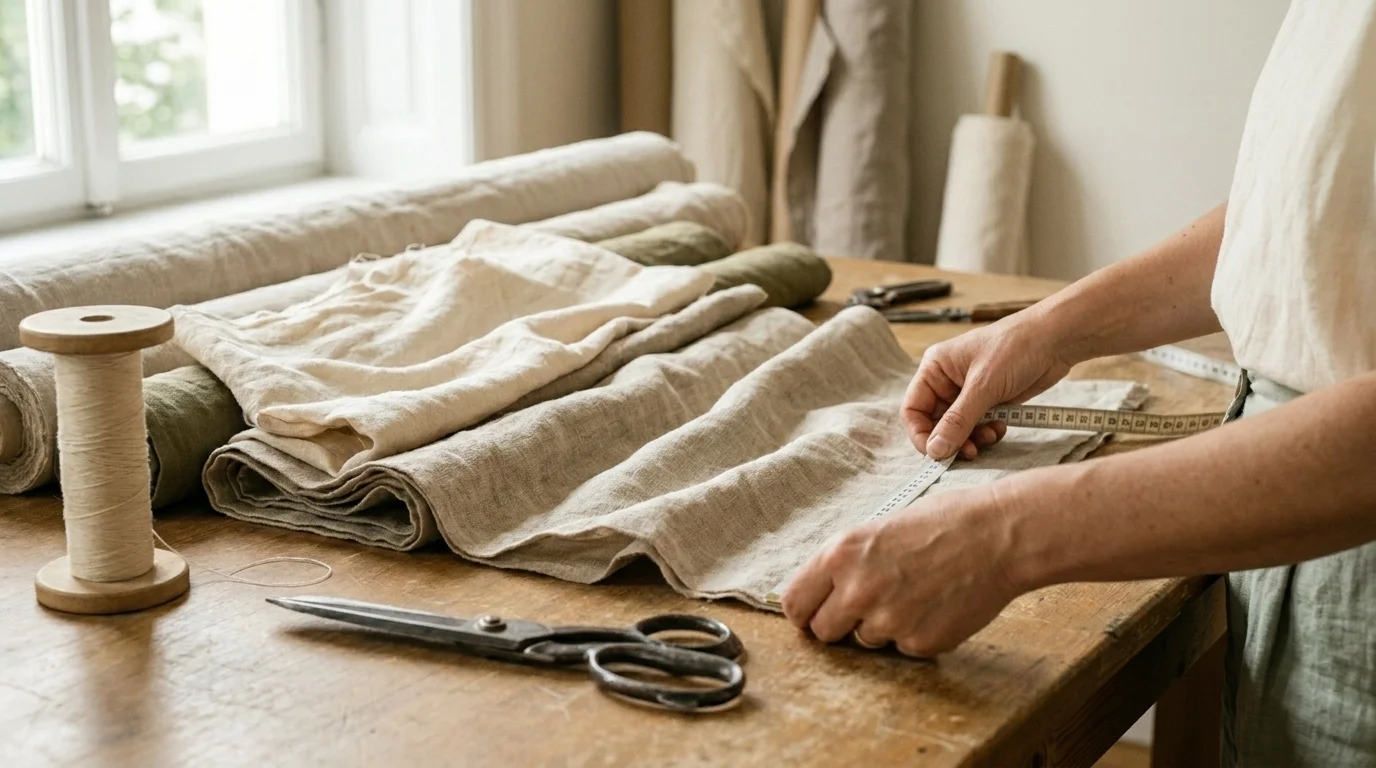
That first pillar is the one this article sits on. Mindfulness here does not mean a serene aesthetic or a beige linen palette. It means attention paid on purpose: to the material, to the process, to whether a thing needs to exist at all before it is made. The reason that matters is not spiritual. The fashion industry produces roughly 2.1 billion tonnes of carbon a year, about 4% of the global total, and a great deal of that is made fast, sold fast, and discarded fast. Slowing the making down is, among other things, a way of making less of it.
What meditation does to a maker's attention
Here is where I want to be careful, because this is the kind of claim that gets oversold. You will read, in a lot of wellness writing, that meditation "infuses creativity" or "unlocks the designer's inner energy." That language tells you nothing, and I would rather tell you what the research can and cannot support.
The most relevant evidence is a 2012 study by Colzato, Ozturk and Hommel in Frontiers in Psychology. After a session of open-monitoring meditation — the kind where you notice whatever arises without fixing your attention on a single object — participants "showed more flexibility, fluency, and originality in their responses" on divergent-thinking tasks. Divergent thinking is the generative part of any creative act: producing many possible answers rather than narrowing to one. The authors link it to open monitoring's "distributed" cognitive-control state, in which top-down guidance is loosened enough for unexpected ideas to surface.
A word of honesty about what that does not prove: this was a lab study on idea-generation tasks, not a study of fashion designers, and it does not show that a meditating designer makes better clothes. What it offers is a plausible mechanism for something practitioners already describe. The design firm IDEO, for instance, runs a daily meditation group and uses what it calls "sacrificial concepts" — deliberately disposable prototypes whose only job is to absorb early criticism so the designer's ego does not. That is mindfulness doing something concrete in a studio: making it easier to let a first idea go.
A studio that takes mindfulness literally
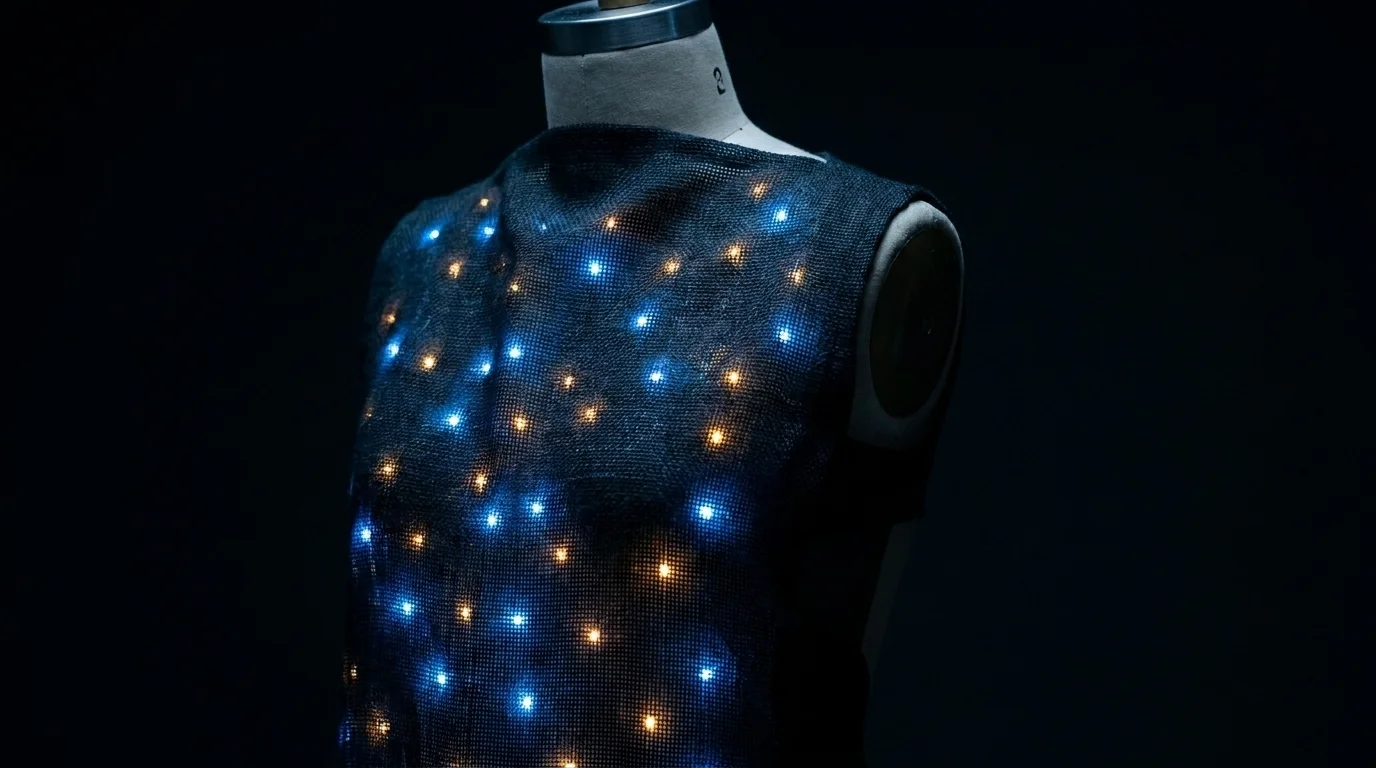
If you want the idea made physical, look at the Polish designer Iga Węglińska's Emotional Clothing project. The garments carry embedded sensors that read heart rate, body temperature, and galvanic skin response — the faint changes in skin conductance that track arousal and stress — and translate them into shifts of light and colour across the fabric. Węglińska's stated aim, as she described it to Designboom, is to "stimulate cognitive involvement and mindfulness — a sense of taking part."
I find this more interesting than the usual examples because it does not just say mindfulness; it builds an interoceptive feedback loop into a piece of clothing — a way of noticing what the body is doing, which is most of what mindfulness training actually trains. It is a prototype, not a product line, and I would not oversell it. But it is the clearest answer I know to the question "what would it look like for a garment to be designed around attention rather than around a trend?"
Named makers, not nameless "designers"
The older version of this article gestured at "designers" without naming a single one, which is how you can tell a piece is decorating an idea rather than reporting one. The makers exist and they are specific. Eileen Fisher keeps a meditation room at her company's headquarters and has built mindfulness into how the business runs, not as decoration but as practice. On the methodology side, Marine Serre treats upcycling and deadstock as a design-first method rather than an afterthought, Stella McCartney has worked without leather or fur while putting real money into eco-fabric research, and Miu Miu's 2026 Upcycled collection reworked vintage cotton shirts and khaki chinos into one-of-a-kind, hand-finished pieces. None of that requires you to believe anything mystical. It requires the maker to make a slower set of choices, on purpose.
Slow vs. fast fashion
The contrast is the clearest way to see what slow fashion is for. Fast fashion optimises for speed, volume, and low price: design fast, manufacture fast, sell fast, replace fast. Slow fashion optimises for durability, ethical making, and intentional design — fewer pieces, made to last, chosen because they are wanted rather than because they are cheap.
It is worth saying that the demand for the slower side is real and not just aspirational. McKinsey data cited in early 2026 found that 73% of Millennials say they are willing to pay more for sustainable brands. Willingness is not the same as behaviour — people say a great deal at the checkout that their actual spending does not back up — so I would treat that figure as a signal of where attention is headed, not proof of a settled habit.
A short practice for mindful making — and buying
Whether you are designing a collection or just standing in front of a rack, the underlying skill is the same one mindfulness teaches everywhere else: a pause long enough to notice what is actually happening before you act. Here is a version stripped of the slogans.
- Name the impulse. Before sketching or buying, say in one sentence what you are reaching for and why. "I want this because it is new" is useful information, not a verdict.
- Touch the material. For a maker, that means knowing the fabric — organic cotton, linen, Tencel, recycled polyester — and what it will become. For a buyer, it means handling the garment and asking whether it will survive thirty washes.
- Sit with the no. The most mindful design decision is often not making the thing. IDEO's sacrificial-concept habit is, at bottom, practice at letting a first idea go without grief.
- Choose for the long version of yourself. Slow fashion's "quality and responsibility" pillars are really one question: will this still be worth owning, or worth having made, in five years?
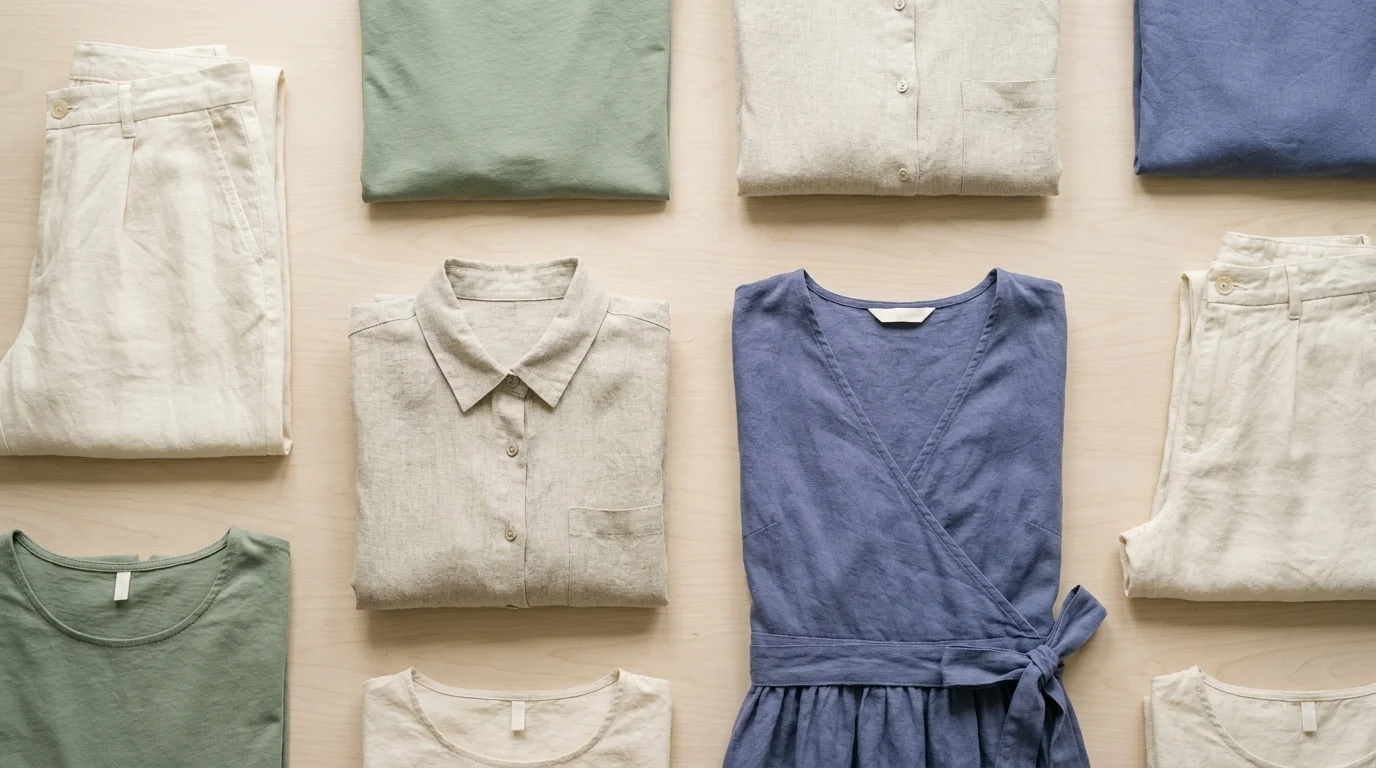
A brief word on the consumer side, because the older article spent half its length there. Building a calmer wardrobe — fewer, better, versatile pieces — is a real expression of mindful consumption, and it is worth doing. I am simply not going to pretend that buying a well-cut blazer is a spiritual act. It is a sensible one, and sensible is enough.
Where this lands
The honest version of "mindful fashion" is narrower and more useful than the inspirational one. It is not about emanating tranquility through your clothes. It is about a maker paying real attention to a process — and, downstream, a buyer paying real attention to a choice — in a system built to discourage both. There is research suggesting the attention itself can make the generative part of design a little more flexible, and there are makers who treat that as a working method rather than a marketing line.
If you take one thing from this, let it be the distinction between intentional and anxious consumption. Choosing slowly because you have thought about it is a good practice. Agonising over every purchase as if your worth depended on it is a different thing entirely, and that one is worth talking to someone about. Mindfulness, in fashion as everywhere else, is meant to give you more room to act on your values — not one more thing to do perfectly.
Frequently Asked Questions
Slow fashion, coined by sustainability researcher Kate Fletcher in 2007, is an approach built on three pillars — mindfulness, quality, and responsibility — making and buying fewer, longer-lasting garments rather than chasing fast trends.
Fast fashion optimises for speed, volume, and low cost; slow fashion optimises for durability, ethical making, and intentional design — fewer pieces meant to last, chosen because they are wanted rather than because they are cheap.
A 2012 study in Frontiers in Psychology (Colzato et al.) found that open-monitoring meditation increased flexibility, fluency, and originality on divergent-thinking tasks — the generative core of design. It was a lab study, not a study of designers, so treat it as a plausible mechanism rather than proof.
Through deliberate focus on one material and task at a time, ego-setting habits like IDEO's disposable 'sacrificial concepts,' and intention-led making — Eileen Fisher, for example, keeps a meditation room at her company's headquarters.
Mindful fashion is the practice of paying deliberate attention to clothing — on the making side, designing slowly and consciously; on the buying side, choosing fewer, better, longer-lasting pieces. It overlaps heavily with slow fashion and mindful consumption.