
Japanese Zen Embodied: The Art of Integrating Mindfulness into Everyday Life


"Japanese mindful living" is a phrase that mostly exists to sell things. It is printed on tea tins, stitched into the marketing copy of meditation apps, and invoked on wellness podcasts as a kind of ancient credential — proof that the practice on offer is older and wiser than whatever you were doing before. Strip the branding away and what's underneath is more specific and more useful than the umbrella term suggests: four distinct practices — forest bathing, ikigai, the tea ceremony, and a decluttering method called danshari — each with its own evidence, its own history, and its own way of being borrowed into an ordinary week. This is mindful living without the $68 tea. Here is what each one actually is, what the research says, and how to use it.
Forest Bathing (Shinrin-Yoku): The One With the Most Evidence
Of all the practices in this article, shinrin-yoku — literally "forest bathing" — has the firmest ground under it. It is no longer a wellness-blog claim. A January 2026 review in the journal Medical Sciences frames forest bathing under "immune modulation, stress regulation, neurocognitive resilience" — the language of preventive medicine, not of a candle ad.
The headline finding comes from Dr. Qing Li, the Tokyo physician who effectively founded forest-medicine research. In his studies, a two-to-three-day forest trip raised participants' natural killer (NK) cell activity — part of the immune system's anti-tumor response — and the effect persisted for more than 30 days, alongside elevated levels of the anti-cancer proteins perforin and granulysin. The proposed mechanism is phytoncides: the antimicrobial compounds that conifers like pine, cedar, and spruce release into the air. You are, in a literal sense, inhaling a tree's chemical defenses.
The thirty-day durability matters because it turns a vague suggestion into a dose. If a single immersion holds for a month, then a monthly session is enough to maintain the effect, and Li's recommended session length is two to six hours — not a brisk walk, not a marathon.

How to forest bathe — including at home
The practice is sensory immersion, not exercise. You walk slowly or sit still and deliberately register what you see, hear, smell, and feel — bark texture, birdsong, the temperature shift under the canopy. No phone, no destination, no step count.
And you do not strictly need a forest. The rising demand in this space is for the at-home and urban version, and the mechanism cooperates: open a window onto a tree line, sit in a city park, or tend a few conifer cuttings and name each sense as you go. It is a weaker dose than two hours among cedars — but it is the difference between a practice you keep and one you admire from a distance.
Related Article: Embracing Cultural Diversity in Health and Wellness: Insights and Practices from Around the World
Ikigai: First, Throw Out the Diagram You've Seen
If you have encountered ikigai, you have almost certainly seen the four-circle Venn diagram: what you love, what you're good at, what you can be paid for, what the world needs, with "ikigai" in the overlap. It is on a million LinkedIn posts. It is also not Japanese, and it is not ikigai.
Follow the provenance. The diagram was created by Spanish psychological astrologer Andrés Zuzunaga in 2011 to illustrate purpose — not ikigai. In 2014, UK blogger Marc Winn swapped a single word — "purpose" became "ikigai" — in a viral blog post after watching a TED talk, and the relabeled version went global. Winn has since admitted, plainly, "I changed one word on a diagram." Authentic Japanese ikigai requires none of those four conditions. Not income. Not skill. Not the world's needs.
What it actually describes is smaller and more durable. A May 2025 Sony Life Insurance survey of 1,400 Japanese respondents found that over 90% said experiencing ikigai moments matters, and they named eight to nine distinct sources — food, travel, hot springs, music, time with people they love. Ikigai is an accumulation of small daily reasons to get up, not a single grand vocation sitting in the center of a Venn diagram. The Western version reframed a quiet idea about daily texture into a career-optimization puzzle, which is precisely why it sells so well to people trying to monetize their hobbies.
So the honest "how to find your ikigai" exercise is not a diagram. It is an inventory: over a week, write down the specific moments — not categories — that gave you a reason to keep going. The first morning coffee. A particular walk. A conversation. The pattern in that list is closer to ikigai than any quadrant.
The Tea Ceremony: A Borrowable Ritual, Not a Performance
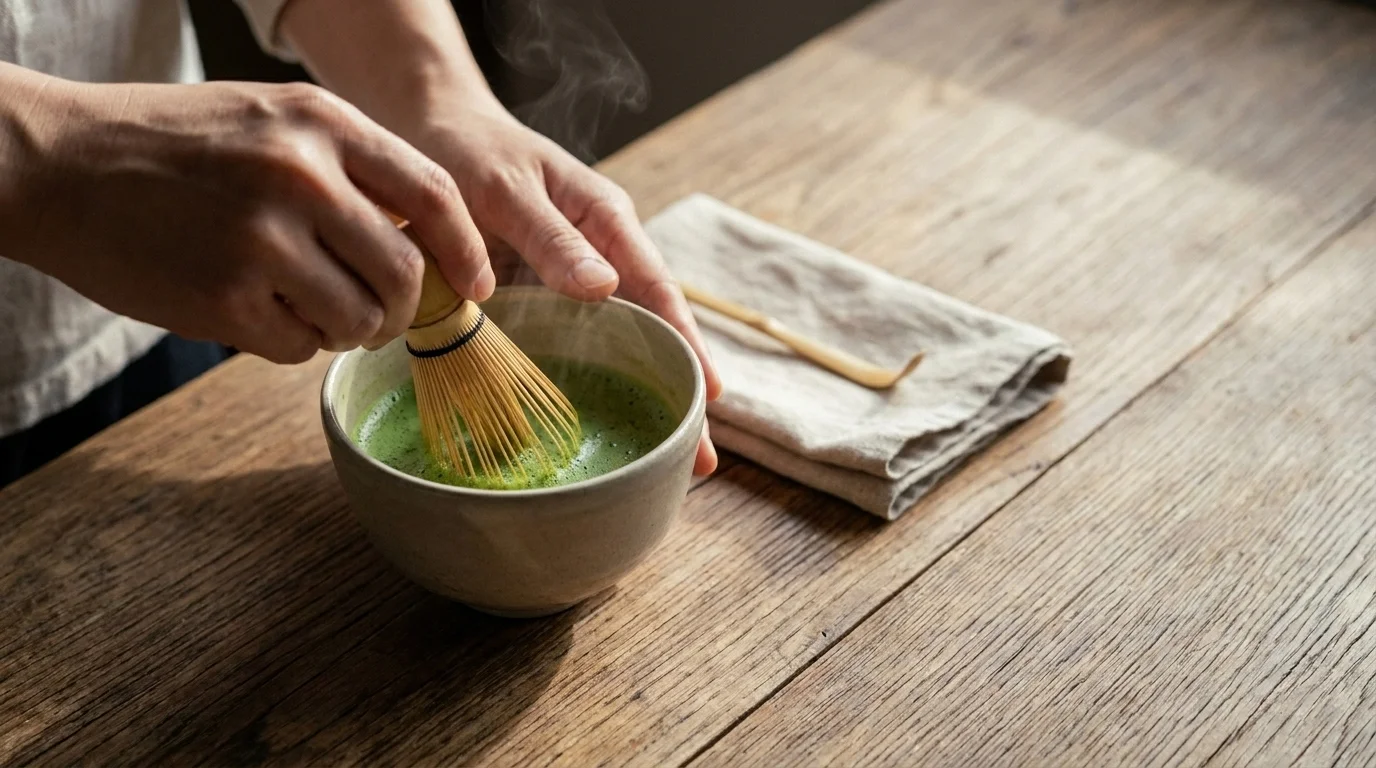
The Japanese tea ceremony — chanoyu, sometimes sado — is the practice most often frozen behind glass as historical heritage: precise movements, the whisking of matcha, centuries of formal lineage. All true, and all somewhat beside the point for a reader who is not going to spend years studying under a tea master.
The transferable part is the attention. The ceremony is a structured demonstration that a single ordinary act — preparing and drinking a cup of tea — can absorb your full presence if you let it slow down enough. That is borrowable for any daily activity, and the timing is good: a 2025–2026 trends report notes that roughly half of surveyed young people in Japan are opting out of alcohol, shifting toward specialty teas and mocktails. The daily cup is already becoming a deliberate ritual for a lot of people. Treating it as one — phone down, full attention on the steam, the warmth, the taste — is the ceremony's actual export.
Related Article: Physical Fitness Traditions from Around the World
Danshari and "Ma": Decluttering as a Method, Not a Mood
Western minimalism tends to collapse into one name — Marie Kondo — and one test: does it spark joy? The Japanese tradition is broader and, frankly, older. Danshari (断捨離 — "refuse, dispose, separate") was developed by Hideko Yamashita more than two decades ago, before the KonMari method existed.
The difference is not cosmetic. KonMari filters your belongings by whether an item sparks joy; danshari filters by attachment and the freedom of parting — refuse what you don't need coming in, dispose of what's already cluttering, separate yourself from the urge to possess. One method asks what to keep. The other asks what you're willing to let go of, which is a harder and more honest question.
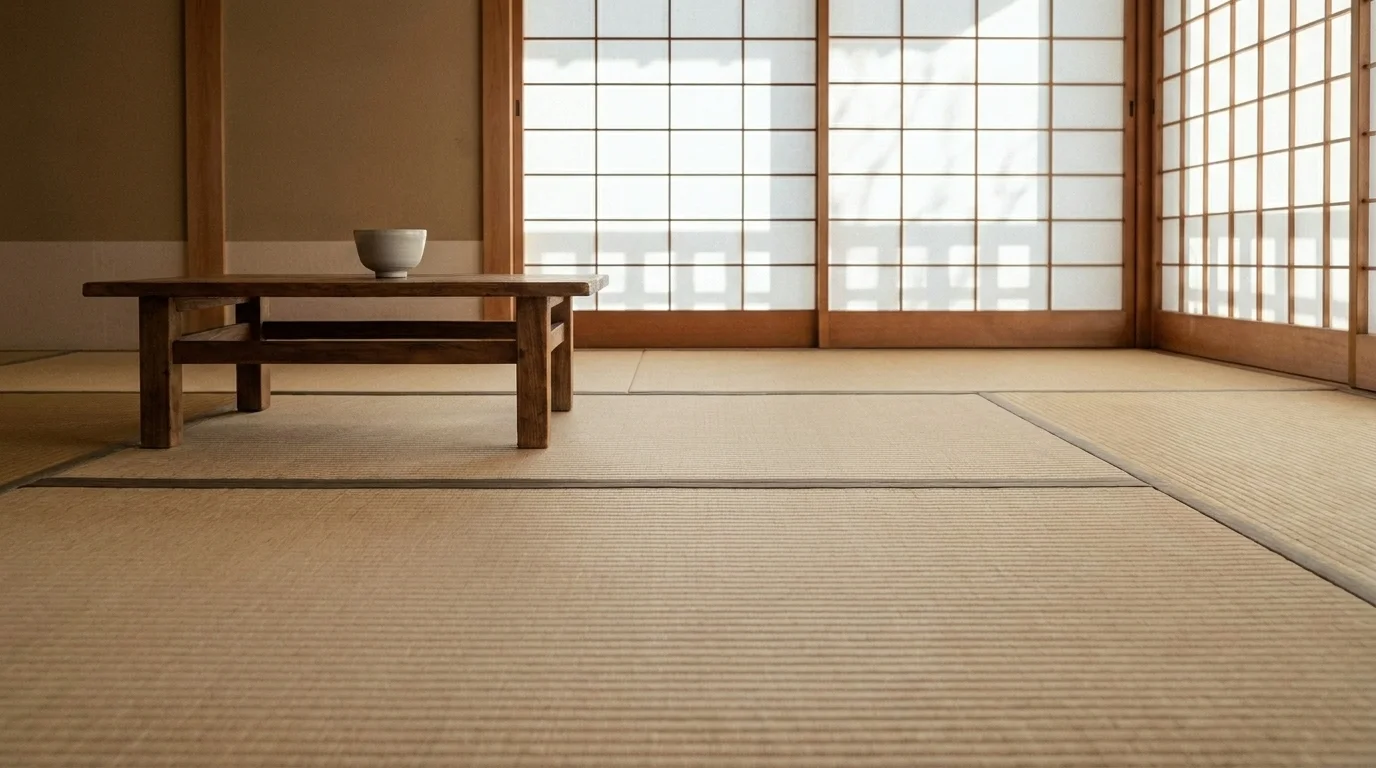
Sitting underneath both is the older aesthetic concept of ma (間): the meaningful empty space between things. In Japanese design, the gap is not wasted — it is doing work, giving the objects around it room to be seen. Applied to a room, a calendar, or an inbox, ma reframes empty space as a feature you are protecting, not a vacancy you are obligated to fill.
What People Actually Mean by "Zen"
A quick clarification, because the word does the most marketing work of any term here. "Zen" gets used as a synonym for calm — a zen kitchen, a zen morning. In its actual sense, Zen is a school of Mahayana Buddhism centered on seated meditation (zazen) and direct experience over doctrine. The tea ceremony, the attention to ma, and the value placed on simplicity all trace back to that lineage. None of which is required to borrow the practices above — but it is worth knowing that when a product promises to make your life "more zen," it is borrowing the prestige of a 1,500-year-old meditative tradition to sell you a scented candle.
The Honest Version of Mindful Living
The useful through-line is not "ancient wisdom." It is that four specific, checkable practices survive scrutiny: forest bathing has measurable immune effects at a known dose, ikigai is a real idea badly distorted by a diagram, the tea ceremony is a transferable lesson in attention, and danshari is a decluttering method with a sharper question than its Western cousin. You do not need to buy anything to use any of them. That, more than the branding, is what makes them worth keeping.
Frequently Asked Questions
No. The four-circle "what you love / are good at / can be paid for / the world needs" diagram was created by Spanish author Andrés Zuzunaga in 2011 to illustrate purpose, and blogger Marc Winn relabeled it "ikigai" in a 2014 viral post. Authentic Japanese ikigai requires none of those four conditions — not income, not skill, not the world's needs.
Research by Dr. Qing Li found that a two-to-three-day forest trip raised natural killer (NK) cell activity for more than 30 days, suggesting a monthly session maintains the effect. Recommended session length is two to six hours.
Yes. Forest bathing is sensory immersion, not a specific forest. Open a window onto a tree line, sit in an urban park, or tend conifer cuttings and deliberately name what you see, hear, smell, and feel. It's a weaker dose than hours among cedars, but it's the version most people will actually keep.
Danshari (Hideko Yamashita) means "refuse, dispose, separate" and filters belongings by attachment and the freedom of parting. The KonMari method filters by whether an item "sparks joy." Danshari predates KonMari by over two decades.
Shinrin-yoku is the Japanese term for "forest bathing" — slow, deliberate sensory immersion in a natural environment. A January 2026 review in Medical Sciences frames it under immune modulation, stress regulation, and neurocognitive resilience, positioning it as preventive medicine rather than a wellness trend.
No. A 2025 Sony Life survey of 1,400 Japanese respondents found people named eight to nine distinct sources of ikigai — food, travel, music, time with loved ones. Ikigai is an accumulation of small daily reasons to get up, not a single career or grand purpose.
Check Out These Related Articles

Aesthetic Harmony: Integrating Design Principles with Holistic Wellness Concepts
Navigating Holistic Wellness: Embracing a Well-Balanced Lifestyle for Beginners

Amazonian Wisdom Unveiled: Exploring Unique Healing Traditions from the Rainforest