Cracking the Code: Do Superfoods Really Exist?


A reader asked me recently whether she should be paying a premium for a bag of açai powder, and the answer captures everything you need to know about this topic. So let me answer the real question — what are superfoods, and are they worth it — plainly: "superfood" is a marketing term, not a scientific one. There's no official definition, no regulatory standard, and no single food that's magic. But here's the part the cynical takes miss: most of the foods that get the "superfood" label genuinely are nutrient-dense and worth eating. The problem isn't the foods. It's the word, the price tag attached to it, and the idea that one heroic ingredient can carry an otherwise mediocre diet.
Are superfoods real?
Scientifically, no. As Healthline's dietitian-reviewed guide states flatly, "nutritionally speaking, there is no such thing as a superfood. The term was coined for marketing purposes to influence food trends and sell products." Harvard's Nutrition Source agrees: "there's no scientifically based or regulated definition for superfood." The gap between the hype and the rulebook is enormous — roughly $190 billion is spent on superfoods each year, a market headed toward $272 billion, all built on a word that means nothing legally. When that much money rides on an undefined term, you can safely assume the term is doing marketing work, not nutrition work.
So what should you actually eat? The honest list
Here's where I part ways with the pure debunkers, because you came here for something useful. The foods that get tagged "superfood" mostly earned the nutrient density, even if they didn't earn the cape. A reasonable, dietitian-backed shortlist:
- Dark leafy greens (spinach, kale, chard) — folate, vitamin K, fiber.
- Berries — anthocyanins and other antioxidants, plus fiber, for very few calories.
- Fatty fish (salmon, sardines) — omega-3 fats for heart and brain.
- Legumes (beans, lentils) — the fiber-and-protein workhorses, and cheap.
- Nuts and seeds — healthy fats, protein, magnesium.
- Garlic and alliums — flavor plus modest cardiovascular-supportive compounds.
- Extra-virgin olive oil — monounsaturated fat, the backbone of the Mediterranean pattern.
- Yogurt and kefir — protein and live cultures for the gut.
- Sweet potato — fiber and beta-carotene.
- Green tea — polyphenols, and a pleasant ritual.
Notice what's on that list: ordinary, mostly inexpensive whole foods. None of them is super on its own. Together, eaten regularly, they're most of a genuinely good diet.
Related Article: Culinary Wellness: Redefining Nutrition with the Culinary Arts
Secret superfoods: the same nutrients for less money
This is the part the wellness industry would rather you not run the numbers on. For almost every trendy, premium "superfood," there's a humble grocery-store food delivering the same key nutrient for a fraction of the price. Washington Post reporting in 2026 laid this out, and it's worth keeping on your phone for the grocery aisle:
| The premium "superfood" | A cheaper food with the same payoff |
|---|---|
| Goji berries | Blueberries, strawberries, or even grapes (antioxidants) |
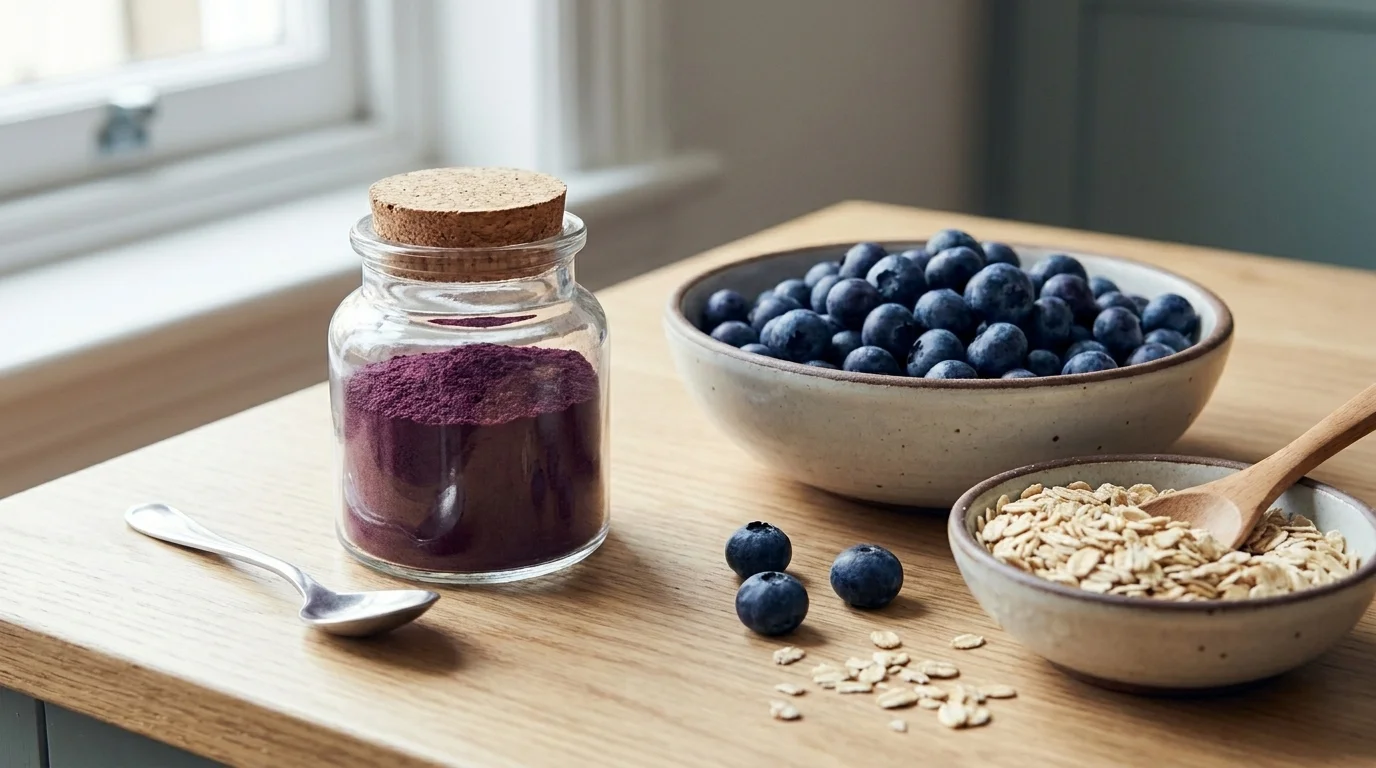
| Açai powder | Mixed frozen berries (antioxidants, fiber) |
| Tiger nuts | Oats or barley (fiber) |
| Premium packaged "bone broth" | Homemade stock from a roast carcass |
| Exotic imported fish | Sardines or salmon (omega-3s) |
The marketing language is the product here; the powder is the cost of goods. You are not buying better nutrition when you trade up to the exotic version — you're buying the label.
Where the word came from
It helps to know the term's history, because it explains a lot. "Superfood" traces back to an early-twentieth-century United Fruit Company campaign to sell bananas — it was an advertising word from birth. It worked so well that regulators eventually pushed back: since 2007, the European Union has prohibited marketing a product as a "superfood" unless it carries a specific, scientifically authorized health claim. And the single biggest pillar of superfood marketing — "high in antioxidants" — has quietly crumbled: the USDA withdrew its ORAC antioxidant database after concluding that antioxidants have many functions, not all of them tied to the free-radical activity the marketing implied. A word born to sell bananas, banned by the EU without proof, and built on an antioxidant claim the USDA retracted. That's the foundation under the $190-billion aisle.
Related Article: Understanding Nutritional Psychology: Decoding the Relationship Between Food and Mood
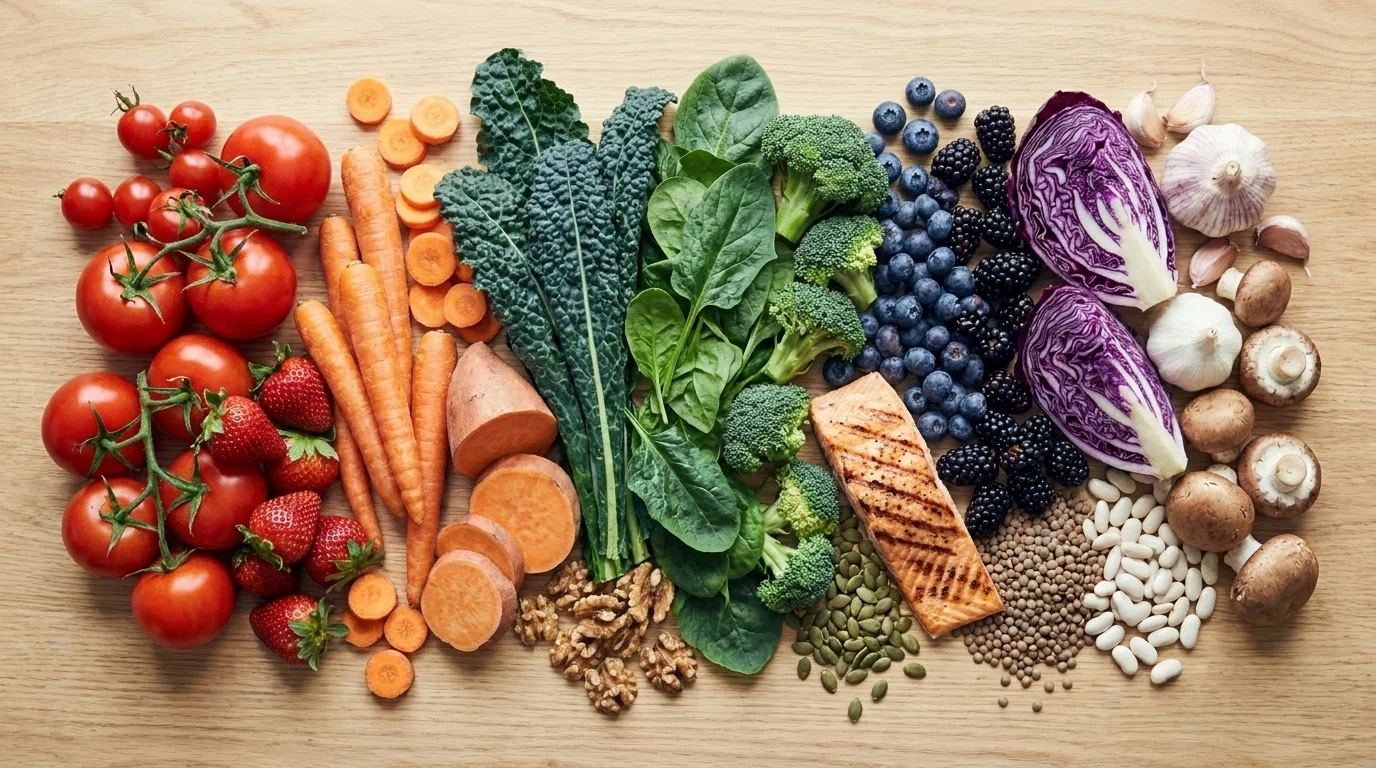
Eat the rainbow
If there's one phrase worth keeping from the whole superfood conversation, it's this one — and it's free advice. Different plant pigments come with different beneficial compounds, so eating a range of colors is a simple proxy for eating a range of nutrients:
- Red (tomatoes, strawberries, red peppers) — lycopene and vitamin C.
- Orange/yellow (carrots, sweet potato, citrus) — beta-carotene and vitamin C.
- Green (leafy greens, broccoli) — folate, vitamin K, lutein.
- Blue/purple (blueberries, eggplant, red cabbage) — anthocyanins.
- White/brown (garlic, onions, mushrooms) — allicin and other sulfur compounds.
Aim for variety across the week and you've captured the actual benefit the superfood label was only ever pointing at — without ranking, fixating on, or overpaying for any single item.
What's "super" in 2026 (and why it doesn't change the advice)
The label is always migrating to whatever's novel. In 2026 it's moved off berries and onto fermented foods (kefir, kimchi, miso), adaptogens (ashwagandha, reishi), functional mushrooms (Lion's Mane), and seaweed. Some of these have genuinely interesting evidence — seaweed, for instance, has human-intervention studies suggesting modest metabolic benefits, which is why nutrition scientists increasingly call it a functional food rather than a "superfood." But notice the pattern: the marketing term hops from food to food every couple of years while the underlying advice never changes. Eat a variety of minimally processed whole foods. That sentence was true for the 1918 banana ad and it's true for this year's mushroom powder.
Related Article: Understanding the Basics of Nutrition for Beginners
The bottom line
So, what are superfoods? A marketing word wrapped around foods that are usually worth eating anyway. Eat the leafy greens, the berries, the beans, the fish — not because any one of them is magic, but because together, with variety, they make a good diet. Buy the cheaper version; the nutrients don't know what the package costs. And if you have a specific condition or goal, a registered dietitian can tailor this far better than any list. No single food is super. A varied, mostly-whole-food pattern, eaten consistently, genuinely is — and that's the only "superfood" worth believing in.
Frequently Asked Questions
"Superfood" is a marketing term with no scientific or regulated definition — no single food is magic. But most foods that get the label are genuinely nutrient-dense and worth eating; the hype is in the word and the price, not the food.
There's no official ranking, but dietitian-backed lists consistently include dark leafy greens, berries, salmon, legumes, nuts and seeds, garlic, extra-virgin olive oil, yogurt or kefir, sweet potato, and green tea — all nutrient-dense whole foods.
Usually not at premium prices. Roughly $190 billion is spent on superfoods each year, yet cheaper everyday foods deliver the same nutrients — blueberries match goji berries' antioxidants, oats match tiger nuts' fiber, and sardines match exotic fish for omega-3s.
Since 2007, the EU has banned marketing a product as a 'superfood' unless it carries a specific, scientifically authorized health claim — because the term has no regulated definition.
The evidence is weaker than the marketing suggests. The USDA even withdrew its ORAC antioxidant database, noting antioxidants have many functions not all tied to free-radical activity. Variety, not a single antioxidant-rich food, is what matters.
It means eating a range of differently colored plant foods, because different pigments carry different beneficial compounds — red lycopene, orange beta-carotene, green folate and lutein, blue-purple anthocyanins. Variety across the week is the real benefit the superfood label only pointed at.
Yes — easily. No single food is required for health. A varied, mostly-whole-food diet eaten consistently delivers everything the 'superfood' label promises, without ranking, fixating on, or overpaying for any one item.