
Unraveling the Power of Herbal Remedies: Integrating Nature's Healing Wisdom into Daily Life


If you have a spice rack and an opinion about ginger tea, you already practice herbal medicine. That is the honest opening to a herbal remedies for beginners guide in 2026. Most of what an introductory reader needs to know is closer to "how to use the herbs already in your kitchen safely and well" than it is to "should I order goji berries from a TCM dispensary." This guide is built around the first question, with the evidence and citations to back it up.
I am a registered dietitian, which means food-as-medicine sits squarely in my scope and clinical-dose supplements sit at the edge of it. The dietary specifics here are sourced from peer-reviewed nutrition and pharmacology literature; the practical recipes are designed for safe culinary use. Two facts to anchor everything below. First, according to a 2025 review of herb-drug interactions in Journal of Modern Natural Products, about 70 percent of people who use herbal remedies also take prescription pharmaceuticals at the same time — which means the herb-drug interaction question is not a fringe concern, it is the baseline of who is actually using these. Second, the National Center for Complementary and Integrative Health (NCCIH), part of the NIH, publishes a clinician-facing digest of herb-drug interactions with named mechanisms — that document is the closest thing to authoritative guidance the US has, and I will cite it heavily.
Everything that follows assumes you want to use herbs because they make food taste better, because they are gentle daily support tools, and because you would like to do this without accidentally interfering with a medication or supplement you are already taking. That is the right scope for a beginner. If you are using herbs to treat a specific clinical condition, please read that section first, then talk to a clinician.
What Herbal Remedies Actually Are
A herbal remedy is the use of a plant or part of a plant — leaf, root, bark, flower, seed — for a stated health purpose, prepared by infusion, decoction, tincture, capsule, or simply cooking. The bioactive compounds that do the work are mostly secondary plant metabolites called phytochemicals: alkaloids, flavonoids, terpenes, glycosides, polyphenols. Different parts of the same plant can have very different chemistry. Ginger root contains gingerols and shogaols; ginger leaf does not. This sounds like a trivia note, but it is the reason "make sure you are buying the right part of the right plant" matters more in herbal medicine than it does in produce.
A short history note before getting practical, because the sibling article on traditional herbal wisdom across cultures covers it in depth and I will not duplicate that work here. The major traditions — Traditional Chinese Medicine, Ayurveda, indigenous North American practices, European folk traditions — each developed coherent frameworks for matching herbs to symptoms and people over centuries. Modern phytochemistry and pharmacology have validated a subset of those uses, contradicted a smaller subset, and left the rest in the under-studied category. The honest framing is that traditional use is meaningful evidence for safety after centuries of population exposure, and meaningful but not conclusive evidence for efficacy until clinical trials add their data. Both layers matter.
How to Start as a Beginner
Three steps that work for almost everyone.
- Start with one herb at a time. If you add ginger, turmeric, and chamomile to your routine the same week and you feel different, you have no idea which one did it. Add one. Use it for a couple of weeks. Notice what happens. Then add the next.
- Start with food forms before supplements. A ginger tea with one teaspoon of grated ginger and a teaspoon of turmeric in your stir-fry are well-studied culinary doses with essentially no interaction risk. A 600-milligram ashwagandha capsule is a clinical-dose intervention that belongs in a separate decision. The food-form route is the safer learning ground.
- Read every medication interaction before adding a concentrated supplement. This is the step beginners most often skip and the one most likely to cause a real problem. The NCCIH herbs-at-a-glance individual fact sheets are the closest free reference. We will also cover the most important named interactions in the next section.
A practical anchor: if you can buy the herb in a grocery store's produce or spice section, the dose you will typically use is a culinary one, and the safety bar is essentially "you can eat it." If you are buying capsules or tinctures from a supplement store, the dose is concentrated, and the safety bar is "have you read the interactions and talked to your pharmacist if you are on a medication."
Related Article: Transformative Potential of Psychedelic Therapy: Breakthroughs in Mental Health Treatment Paradigms
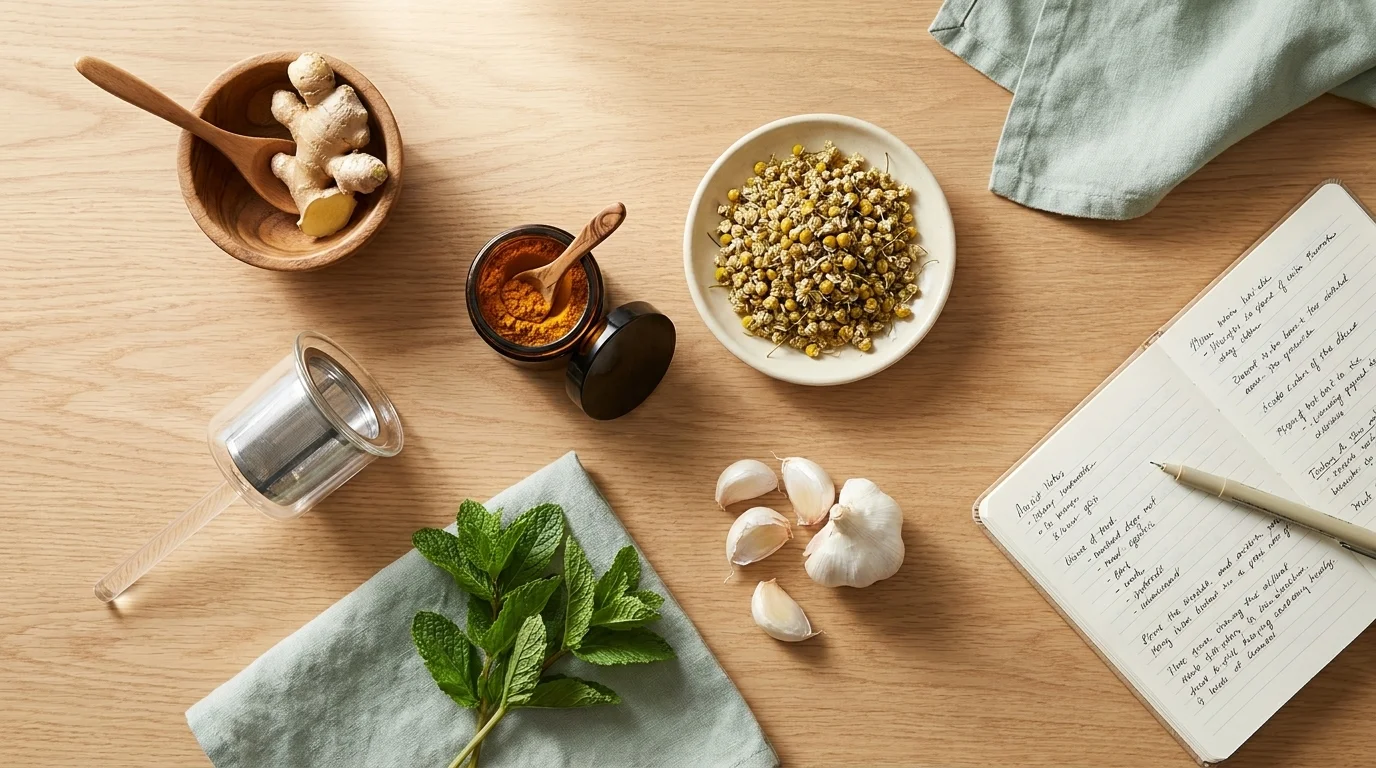
The 5-Herb Starter List
If you are picking five herbs to learn first, these are the ones with the best balance of kitchen-availability, replicated evidence, and a low interaction profile at culinary doses.
| Herb | Latin binomial | What it is best for | Typical culinary dose | Notes |
|---|---|---|---|---|
| Ginger | Zingiber officinale | Nausea, motion sickness, post-meal bloating | 1 tsp grated fresh root in tea; ½ tsp dried in food | Generally safe in pregnancy at culinary doses |
| Turmeric | Curcuma longa | Inflammation support; oxidative stress | ¼–1 tsp dried in food; pair with black pepper | Gallstone caution at high doses; see dosing below |
| Chamomile | Matricaria chamomilla | Mild sleep support; GI calm | 1 tbsp dried flowers in 1 cup hot water | See interactions table — interacts with warfarin |
| Peppermint | Mentha × piperita | Tension headache (topical oil); GI calm; congestion | 1 tsp dried leaves in tea; 1–2 drops oil topical | Skip topical peppermint oil for infants; safe drinking |
| Garlic | Allium sativum | Cardiovascular support; antimicrobial culinary use | 1–2 cloves daily in food | Concentrated supplements have stronger drug interactions |
The principle behind this list: every entry is in a typical kitchen, every entry has peer-reviewed support for at least one of its claimed uses, and every entry is safe at the culinary doses listed. Add the more concentrated supplemental forms only after you have a clear reason and have read the interactions.
A few words on dosing for the two herbs where the supplement-versus-culinary distinction matters most.
Ashwagandha (Withania somnifera) is not in the kitchen starter list above because it is a supplement-only herb in Western practice. According to the November 2025 Cureus comprehensive review integrating PubMed/Scopus/Cochrane studies through August 2025, the clinical dosing ranges are 250 to 1,000 mg/day, with most stress-reduction trials at 600 mg/day for 4 to 12 weeks. One trial in the review reported a 27.9% reduction in serum cortisol over 60 days; adverse events occurred in 5 to 8 percent of participants, mostly mild GI upset or drowsiness. If you decide to try ashwagandha, those are the evidence-supported dose ranges; below them you likely will not see effects, above them you may see GI side effects.
Turmeric/curcumin at supplement strength is meaningfully different from culinary turmeric. The 2025 BMC Complementary Medicine network meta-analysis of 17 RCTs concluded that all turmeric preparations significantly reduce pain and improve function in knee osteoarthritis versus placebo, with effective daily doses running 500 to 1,500 mg curcuminoids for 6 weeks to 6 months. Note that this is curcuminoid content, not turmeric powder weight — a ¼ teaspoon of culinary turmeric contains roughly 50 mg of curcuminoids, far below the clinical-trial range. Both forms have a place; they are not interchangeable.
Herb-Drug Interaction Matrix
This is the section that needs the closest read. Roughly 70 percent of herbal-remedy users co-use prescription medications, per the 2025 SciLTP JMNP review. The dominant mechanism is interference with the cytochrome P450 enzymes that metabolize most prescription drugs (CYP induction speeds drug breakdown, CYP inhibition slows it). The named interactions below come from the NCCIH herb-drug interactions digest.
| Herb | Interacts with | Mechanism | What can happen |
|---|---|---|---|
| St. John's Wort | Cyclosporine, indinavir, oral contraceptives, warfarin, digoxin, benzodiazepines, antidepressants | Potent CYP450 + P-glycoprotein inducer | Drug levels drop below therapeutic range; pregnancy on OC; serotonin syndrome |
| Ginkgo | Warfarin and other anticoagulants | Pharmacodynamic — antiplatelet effect | Increased risk for major bleeding events |
| Goldenseal | Metformin | CYP2C9 inhibition | Reduces metformin blood levels by ~25% (NCCIH-funded 2021 study) |
| Asian ginseng | Calcium channel blockers, statins, antihypertensives, warfarin | Suspected CYP and pharmacodynamic mechanisms | Variable; clinical signal real but mechanism less fully characterized |
| Chamomile | Oral contraceptives, sedatives, warfarin | Hepatic metabolism interference | Variable interaction strength; consider risk if combining |
| Green tea (high dose) | Nadolol, atorvastatin | Reduced GI absorption | Lower drug blood levels |
A few notes on how to use this table in practice. St. John's Wort is the single most consequential row — it interacts with a large fraction of prescription medications and is sold over the counter to people who often do not realize it does this. If you are on any prescription medication at all, do not add St. John's Wort without your pharmacist's review. Ginkgo with warfarin is the bleeding-risk row most likely to send a person to the emergency room. Goldenseal with metformin is the row I see most often missed because both products are in the wellness category and the consequence — undertreatment of diabetes — is silent until lab work catches it. Chamomile's interaction list is shorter and weaker than the others above, but it exists, and if you are on warfarin or oral contraceptives a daily chamomile habit deserves a quick check.
The general rule that emerges from the matrix: any time you are starting a new prescription medication, run your herbal supplements past your pharmacist. They have the interaction databases and they will check it in about 90 seconds.
Related Article: The Healing Art of Sound Therapy: Harnessing Vibrational Frequencies for Holistic Wellness
Four Real Recipes With Measurements
The recipes below use the kitchen-form herbs from the starter list. None of them are clinical-dose interventions; all of them are well-studied culinary preparations.
Ginger-Turmeric Morning Infusion
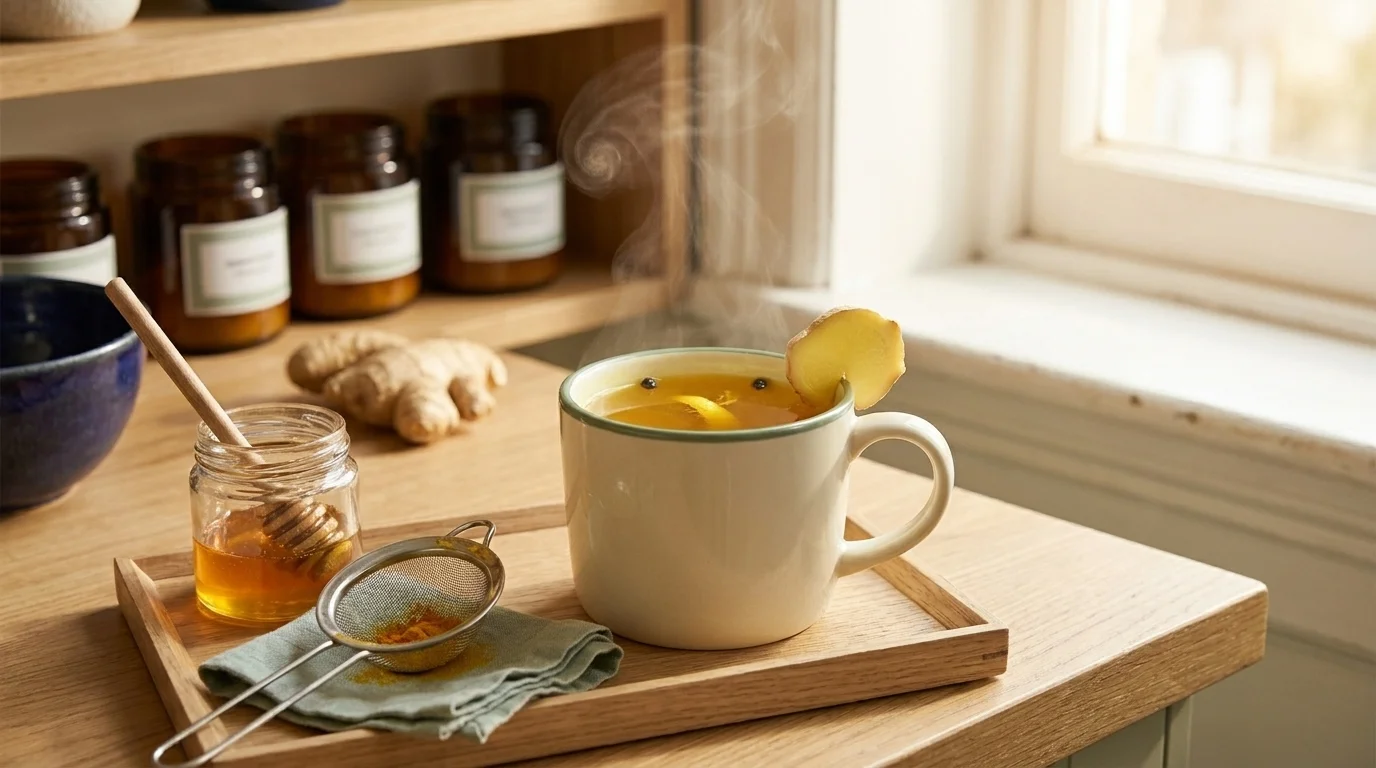
Combine 1 teaspoon grated fresh ginger root, ¼ teaspoon ground turmeric, and a pinch of freshly ground black pepper in a mug. Pour 1 cup near-boiling water over and steep, covered, for 5 minutes. Strain or drink with the solids settled. Optional: 1 teaspoon honey, a squeeze of lemon. The black pepper materially improves curcumin bioavailability via piperine; it is not optional if the turmeric is meant to do anything beyond color.
Related Article: Uncovering Herbal Wisdom: Harnessing the Power of Traditional Remedies for Holistic Well-Being
Chamomile-Lavender Sleep Tea
Combine 1 tablespoon dried chamomile flowers and 1 teaspoon dried culinary lavender in a tea infuser or fine strainer. Pour 1 cup near-boiling water over and steep, covered, for 5 minutes. Drink 30 to 60 minutes before bed. Caveat: if you are on warfarin or oral contraceptives, treat chamomile as more than a tea — review the interaction note above before making this a nightly habit.
Garlic-Honey Cold Cordial
Peel and finely mince 4 to 6 cloves of fresh garlic. Place in a clean, dry glass jar with ½ cup raw honey. Cover loosely and let sit at room temperature 24 to 48 hours; the garlic will release its juices and infuse the honey. Refrigerate after that and use within 4 weeks. Dose: 1 teaspoon at first sign of a cold, up to 3 times daily for 3 days. Skip this entirely if you are on warfarin or other anticoagulants; concentrated garlic compounds increase bleeding risk.
Peppermint-Ginger Digestive Tea
Combine 1 teaspoon dried peppermint leaves and 1 teaspoon grated fresh ginger in a mug. Pour 1 cup near-boiling water over and steep, covered, for 5 to 7 minutes. Drink after a heavy meal or when bloated. Safe for occasional use in pregnancy at this dose; ask your OB or midwife for ongoing daily use.
When to Skip Herbs — Populations to Be Careful
Some populations have specific named avoidance lists. These are not exhaustive — they are the most commonly relevant ones.
Pregnancy and breastfeeding. Avoid ashwagandha, St. John's Wort, high-dose chamomile beyond an occasional cup, comfrey, ephedra, blue cohosh, and pennyroyal. Generally safer in moderation: ginger (for nausea), peppermint tea. Talk to your OB or midwife before starting any concentrated supplement — and let them know about any culinary-dose practice that exceeds occasional use.
Two weeks before surgery. Stop ginkgo, garlic supplements, and ginseng. All three increase bleeding risk during and after surgical procedures. Tell your surgeon and anesthesiologist about every herbal supplement you take, including the ones you think are too mild to mention. Many surgeons request a 2-week washout for all herbal supplements, not just the bleeding-risk ones, to simplify the perioperative profile.
Anticoagulant medications (warfarin, DOACs, low-dose aspirin daily). Avoid ginkgo, high-dose ginger supplements, concentrated garlic supplements, ginseng, and high-dose green tea extract. Culinary doses of ginger and garlic are generally fine in normal eating; supplements are not.
SSRI or other serotonergic medications. Avoid St. John's Wort entirely. The interaction is serotonin syndrome, which is a medical emergency.
Chronic disease on multiple medications. If you are on three or more prescription medications, run any new herbal supplement past your pharmacist before starting. The probability of an interaction goes up combinatorially with the number of medications.
Children. Pediatric herbal medicine is its own discipline. Most adult dosing does not scale down safely. Skip concentrated supplements entirely; culinary doses (ginger in food, peppermint tea, etc.) are generally fine. Topical peppermint oil should not be used on infants or young children — it can cause respiratory issues.
A blunt clinician note here: "natural" and "safe" are not the same word. A plant evolved to defend itself with bioactive compounds is still a bioactive intervention. Treat herbs with the same respect you would treat an over-the-counter medication.
How to Buy Herbal Supplements (3-Question Label Test)
The FDA's role in this category is reactive, not preventive — the agency cannot require pre-market safety testing for supplements under DSHEA. That means the brand-quality work falls to the consumer. The October 2024 FDA warning that certain tejocote-root supplements were adulterated with toxic yellow oleander is the canonical recent example of why this matters. The Q1–Q3 2025 FDA warning letter activity targeted disease claims, social media violations, CBD/delta-8 contamination, and substituted ingredients across hundreds of brands.
Three questions to ask before buying any herbal supplement:
- Is the brand exclusive to social media or a single marketplace? Brands that exist primarily through Instagram, TikTok, or Amazon-only listings have a higher base rate of adulteration and quality issues than brands sold through specialty health stores, pharmacies, and major retailers with quality controls.
- Does the label make a disease-cure claim? "Cures arthritis," "treats anxiety," "reverses diabetes" — any of these are illegal claims for supplements under FDA rules, and a brand willing to make them is signaling either ignorance or willingness to break the law. Walk away.
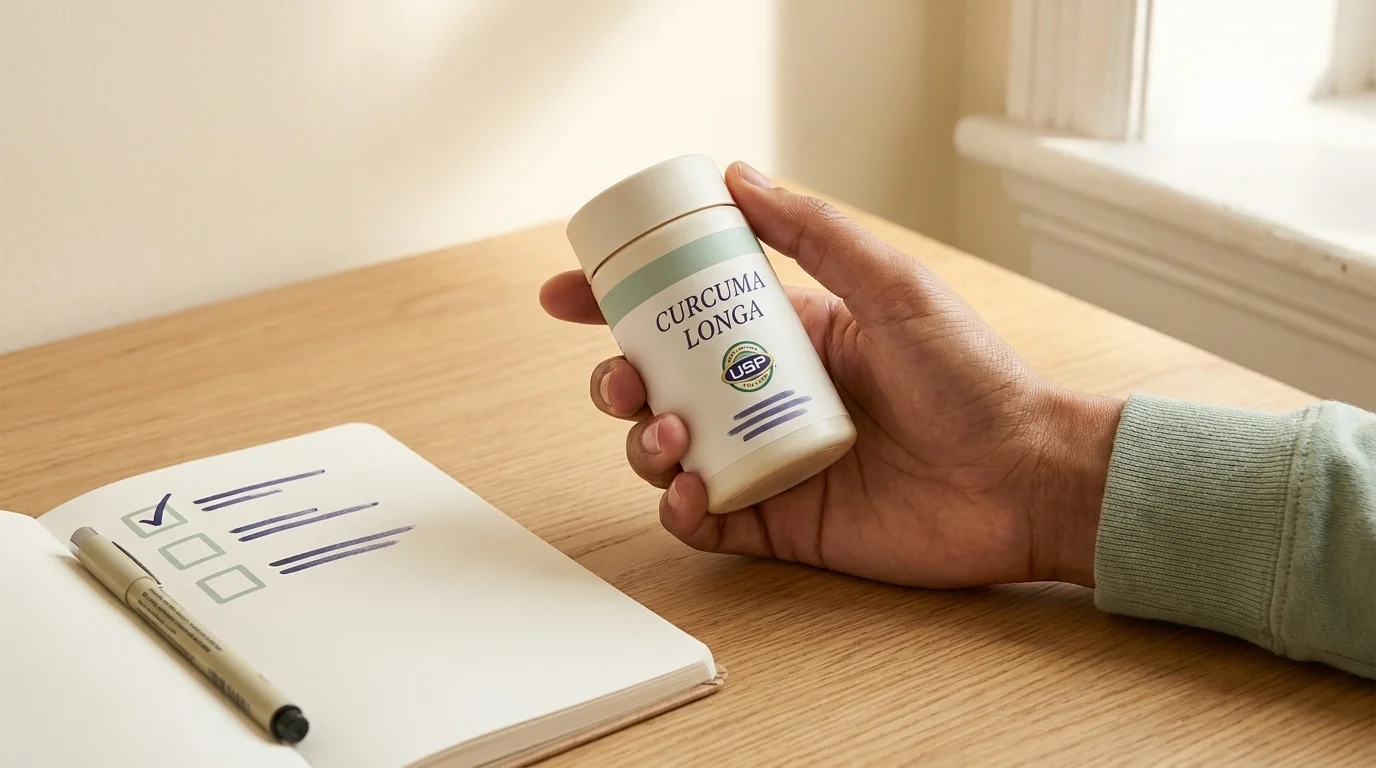
- Does the bottle carry a third-party testing seal? USP Verified, NSF, or ConsumerLab seals indicate the brand pays for independent batch testing. None of those seals is perfect, but the presence of one is a meaningful signal that the brand can pass batch verification. Look on the bottle itself, not on the website.
A bonus check that catches a lot of bad products: look for the Latin binomial name on the label (Lavandula angustifolia, Zingiber officinale, Curcuma longa). Brands willing to label species precisely are more likely to have actually sourced the species correctly. Brands that only print common names (just "lavender" or "ginger") leave more room for substitution.
Building a Daily Herbal Routine
Once you have used a couple of herbs individually and have a sense of what your body responds to, a simple daily routine looks like this. Morning: ginger-turmeric infusion (the recipe above) with breakfast. Afternoon: a small handful of fresh peppermint or rosemary in a salad, or fresh ginger grated into a stir-fry at dinner. Evening: chamomile or chamomile-lavender tea 30 to 60 minutes before bed.
Three rules for the routine. Vary the herbs. A daily routine that uses the same five herbs in the same combinations for a year is a thinner exposure than a routine that rotates through ten herbs across the seasons. Pair herbs with food. Culinary use almost always wins on safety, bioavailability, and pleasure compared to drinking the same herb as a standalone tea. Treat the routine as flexible. Some weeks you will reach for ginger every day; some weeks you will reach for none. Both are fine. The point is to integrate herbs into normal eating, not to impose a regimen.
If at any point in this routine you notice the herbs are not doing what you thought they would do, or are interacting with how you feel in unexpected ways, the right next step is not adding a sixth herb. It is talking to a pharmacist, an RD, or a clinical herbalist (the credential to look for is RH(AHG) — Registered Herbalist of the American Herbalists Guild). Each of those professionals can read your current routine and your medication list together in a way an article cannot.
A Plainspoken Note on Herbs as Food vs. Medicine
The line I would walk a friend through, before they buy a single capsule, is this. Culinary herbs are food. They are gentle, generally safe at the doses normal cooking uses, and the centuries of population exposure tell us almost everything we need to know about their safety profile. The right way to bring them into your life is through your kitchen — slowly, one at a time, paired with meals you already enjoy.
Concentrated herbal supplements are pharmacology. They have specific doses, specific durations, specific named interactions, and specific populations they are not appropriate for. The right way to bring them into your life is the way you would bring any over-the-counter medication in: with a clear reason, a known dose range, a pharmacist's check on your existing medications, and a willingness to stop if the response is not what you expected.
Mixing the two registers — treating a clinical-dose supplement like a kitchen herb, or treating a kitchen herb like it is going to fix a clinical condition — is the way most herbal-medicine mistakes happen. If what you are reaching for is more than food can provide, please make the appointment with the dietitian, the pharmacist, or the physician. Therapy and clinical care are not the opposite of herbal medicine. They are how it gets used safely.
Most of what you need from herbal remedies is already on your spice rack. Use those first.
Frequently Asked Questions
The five-herb starter list — ginger, turmeric, chamomile, peppermint, and garlic — balances kitchen-availability, replicated evidence, and low interaction risk at culinary doses. Add one at a time over a few weeks so you can tell what each one is doing. Start with the food forms (a ginger tea, turmeric in a stir-fry, fresh peppermint in a salad) before moving to concentrated supplements; food forms have the longest safety track record and almost no clinically relevant drug interactions at normal doses.
Per the National Center for Complementary and Integrative Health (NCCIH), ginkgo is associated with an increased risk of major bleeding events when combined with warfarin and other anticoagulants. Concentrated garlic supplements, high-dose ginger supplements, ginseng, and high-dose green tea extract also have documented anticoagulant interactions. Culinary doses of ginger and garlic in normal cooking are generally fine. If you are on warfarin or a DOAC, ask your pharmacist before adding any concentrated herbal supplement.
The 2025 BMC Complementary Medicine network meta-analysis of 17 RCTs found effective daily doses of 500 to 1,500 mg of curcuminoids for 6 weeks to 6 months in knee osteoarthritis. That is curcuminoid content, not turmeric powder weight — a ¼ teaspoon of culinary turmeric contains roughly 50 mg of curcuminoids, far below clinical-trial range. Culinary doses (¼ to 1 teaspoon daily in food) are safe for nearly everyone. People with gallstones should consult their clinician before high-dose supplements.
Avoid ashwagandha, St. John's Wort, high-dose chamomile beyond an occasional cup, comfrey, ephedra, blue cohosh, and pennyroyal in pregnancy. Generally safer in moderation: ginger (well-studied for nausea), peppermint tea. Talk to your OB or midwife before starting any concentrated supplement and let them know about culinary practices that exceed occasional use. The decision is individualized — even herbs with reassuring data are not automatically safe for every pregnancy.
No, and this is the most important distinction. Culinary doses (a teaspoon of dried turmeric, a couple of cloves of garlic) provide gentle daily support and contain a fraction of the active compound that clinical-trial supplements deliver. A 1.5 g/day curcuminoid supplement contains roughly 30 times the curcuminoid content of a ¼ teaspoon of culinary turmeric. Both have a place — but they are not interchangeable, and the safety profile and interaction risk are different at the two doses.
Run the three-question label test. (1) Is the brand exclusive to social media or a single online marketplace? Brands existing primarily through Instagram, TikTok, or Amazon-only listings carry higher adulteration risk — see the 2024 FDA warning about tejocote-root supplements being substituted with toxic yellow oleander. (2) Does the label make a disease-cure claim ('cures X,' 'reverses Y')? Those are illegal for supplements; walk away. (3) Does the bottle carry a USP Verified, NSF, or ConsumerLab third-party testing seal? Bonus check: look for the Latin binomial species name on the label, not just the common name.
A simple template: morning, a ginger-turmeric infusion (1 tsp grated ginger + ¼ tsp turmeric + pinch black pepper, 5 min steep in 1 cup near-boiling water) with breakfast. Afternoon, a culinary herb in your main meal — fresh peppermint or rosemary in a salad, fresh ginger grated into a stir-fry. Evening, a chamomile or chamomile-lavender tea (1 tbsp dried chamomile + 1 tsp lavender, 5 min covered steep) 30 to 60 minutes before bed. Rotate herbs through the seasons rather than using the same five all year.
Check Out These Related Articles

The Power of Hydrotherapy: Transformative Benefits for Physical Rehabilitation & Relaxation

The Art of Healing: Exploring the Therapeutic Potential of Art Therapy

The Magic of Equine-Assisted Therapy: Harnessing Horse Power for Rehabilitation