The Evolution of Fitness: Modern Workout Trends for Maximum Impact


A client walked into the gym last week, plugged in his Whoop strap, and asked me what I thought he should do. His sleep was a 64. His recovery was yellow. He hadn't lifted in three days because work blew up. He'd seen something on TikTok about "cortisol cocktails." He wanted to know if Zone 2 was real, whether he should try a HYROX, and whether the AI app his friend was using would build him a better program than I could. That conversation, more or less, is the whole story of the fitness trends 2026 has handed us — too many signals, not enough framework. This piece is the framework.
The structure follows what the American College of Sports Medicine reported in its 20th annual Worldwide Survey of Fitness Trends, which polled over 2,000 exercise professionals across more than a hundred countries. I am working from the ACSM top-10 plus the cultural phenomena ACSM does not always pick up (HYROX, Pilates, Japanese walking, GLP-1 programming) and adding what I tell clients to actually do.
1. Wearables, used as instruments
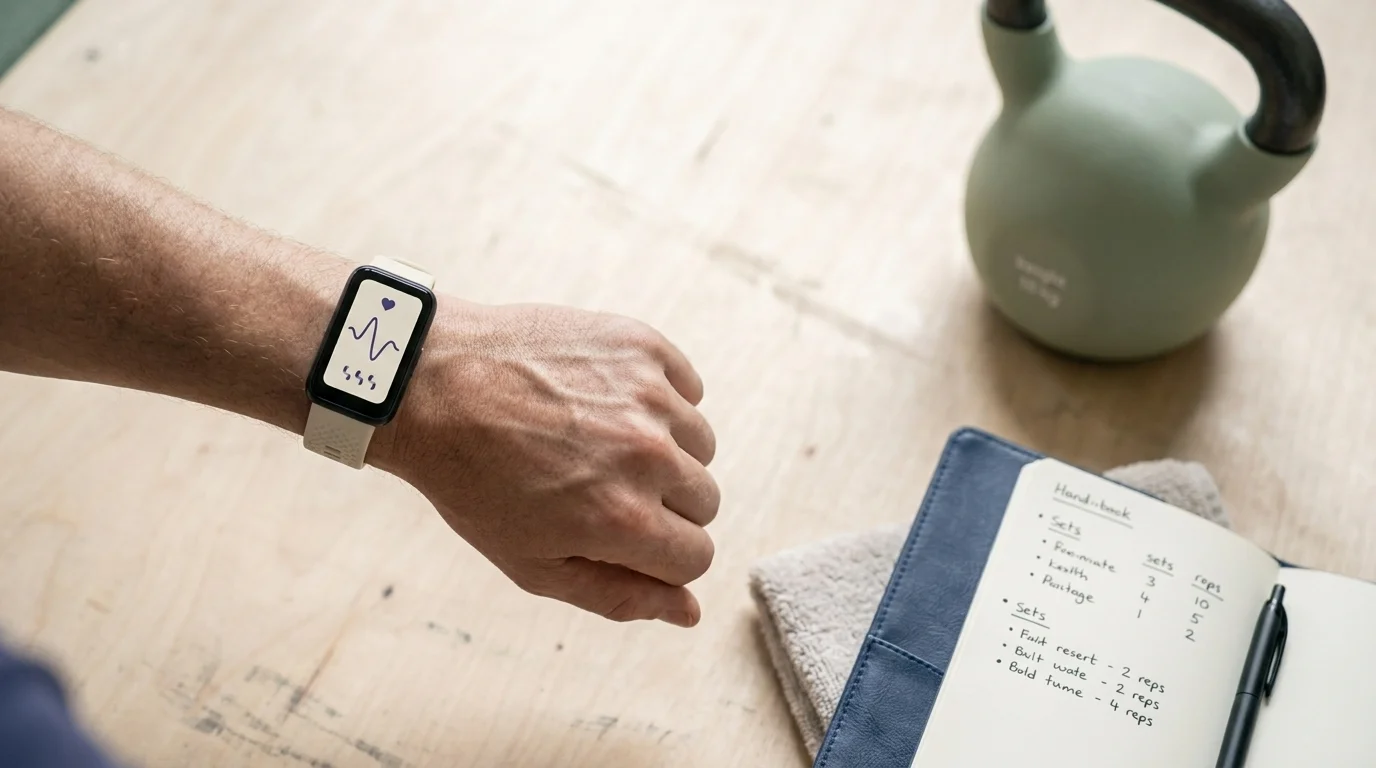
The first ACSM trend in 2026 is wearable technology. Nearly half of US adults now own a fitness tracker or smartwatch, per ACSM's reporting. The conversation has changed from "should I buy a tracker" to "what do I do with what it tells me," and most readers I see are stuck on the second question.
The metrics worth caring about are narrower than the marketing suggests. Heart-rate variability is the most useful daily signal — when your HRV drops below your individual baseline for two or three consecutive days alongside elevated resting heart rate and poor sleep, that is not a yellow light. That is your nervous system saying training stress is exceeding recovery. The right response is not to push through. The right response is to substitute Zone 2 cardio or mobility work for the planned strength session and reassess in 48 hours.
Sleep score is mostly a directional metric, not a diagnostic. Watch the seven-day average, not the nightly number. Recovery score is HRV plus sleep plus resting heart rate trended together; treat the color as a programming input, not a verdict.
Devices worth knowing about in 2026: Whoop (the strongest pure-recovery interpreter), Oura (best sleep tracking, ring form factor), Garmin (best for endurance metrics and battery life), Apple Watch (broadest health-feature set). None of them are wrong choices. The wrong choice is buying one and ignoring what it tells you.
2. AI-driven programming, treated as an assistant
AI fitness coaching crossed from novelty to backbone over the last two years. Industry coverage now frames AI as the programming layer behind member apps, scheduling, and personalized adjustments rather than a chatbot pinned on top of a workout. Functionally, the better platforms ingest your wearable data — HRV, sleep, recovery — and adjust the next session's volume or intensity in something close to real time.
This is genuinely useful for the 80 percent of programming decisions that boil down to "did you sleep well and recover from the last session." It is genuinely not useful for the parts that require a coach's eyes: spotting that your knees collapse on rep three of a heavy squat, knowing that your left hip has been the achy one for six months, and adjusting for a return-from-injury that needs care no algorithm can model from a Garmin's data feed.
The right way to use AI right now is as a programming assistant — let it modulate volume on a baseline structure you set with a human coach, or use it to write the deload week so you do not skip it. The wrong way is to use it as a programming author with no human in the loop. The technology is good. It is not that good.
3. Strength training for longevity, not aesthetics
The NASM 2026 trend report, based on a survey of 625 fitness professionals in late 2025, found that longevity and healthy aging have become the fastest-growing client goals, outpacing traditional physique motivations. This is the Peter Attia framing without the supplement-stack accessory: build muscle and aerobic capacity now because the things that go first as we age — falls, frailty, blood-sugar control, cardiovascular function — are the things resistance training and zone-2 cardio measurably improve.
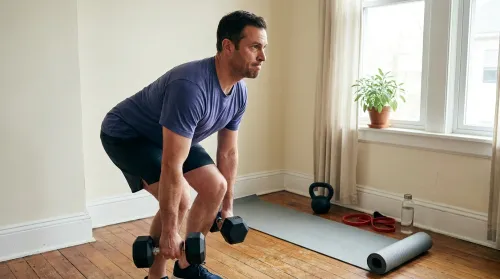
What this looks like as programming: two to four strength sessions a week organized around the basic movement patterns (squat, hinge, push, pull, carry), enough mechanical tension to drive muscle protein synthesis, and progressive overload — adding a small amount of weight, reps, or controlled tempo over time. RPE 7 to 8 most working sets, full effort with two reps in reserve. Six to eight weeks of consistent work to start seeing strength gains; twelve weeks before you see real hypertrophy. No shortcuts.
The mistake I see often is people training for longevity by doing only steady-state cardio and stretching. That preserves what is already there. It does not build the reserve you will need at sixty-five. Resistance training is the load-bearing intervention here, both literally and figuratively.
4. HYROX and the return of functional fitness racing
HYROX broke into the ACSM top-10 fitness trends list for the first time in 2026, and across virtually every fitness-trend article published this year, the race name shows up. Most of those articles drop the name without explaining it. Here is the explainer.
A HYROX race is 8 kilometers of running, broken into 1-kilometer intervals, with a workout station between each one. The eight stations are SkiErg, sled push, sled pull, burpee broad jumps, rowing, farmer's carry, sandbag lunges, and wall balls. You run a kilometer, you do a station, you run another kilometer, you do another station, until you have completed all eight. The fastest competitive finishers are under an hour. Most amateurs finish in 75 to 110 minutes.
The reason HYROX has captured the format is that it is honest. Most people who think they are fit are good at one or two energy systems and bad at the others. HYROX rewards being well-rounded — you need an aerobic engine, you need the strength to move external load while fatigued, and you need the work capacity to keep moving for over an hour. You do not have to race to benefit from training like a HYROX athlete. Three weeks of run-station-run programming, with intervals built around the eight HYROX stations, will tell you more about your actual conditioning than three months on a treadmill.
A reasonable on-ramp: three sessions per week, each combining 5–8 kilometers of running with a HYROX-style station circuit (10 minutes of sled pushes, wall balls, kettlebell carries). Expect to be terrible in the first two weeks. Expect to be noticeably better in six.
5. GLP-1 medications change how you train
ACSM ranked Exercise for Weight Management at #3 in 2026, its highest position ever — up from #4 in 2024–25 and #8 in 2023. The reason is medication context. With a meaningful fraction of weight-loss now driven by GLP-1 receptor agonists, the question for trainers and clients has shifted from "how do we burn more calories" to "how do we preserve lean muscle while the medication does its work."
The reframe: on GLP-1 medications, weight loss is largely solved. Muscle preservation is the new problem. That means resistance training becomes the load-bearing intervention, not cardio, and protein at every meal becomes a programming detail you do not skip. Specifically:
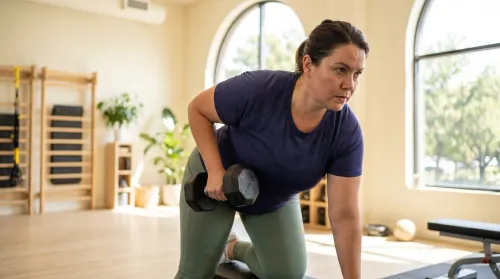
- Two to three full-body strength sessions per week. Progressive overload across compound lifts.
- Aim for 1.6 to 2.2 grams of protein per kilogram of body weight per day, distributed across meals.
- Add walking, not extra cardio. Walking preserves the deficit without adding stress that interferes with the lifting.
- Expect strength to feel different. Lower body weight means perceived heaviness on lifts can shift unpredictably; trust the RPE, not the absolute load.
The medication will handle the scale. The gym is what protects the muscle you will need on the other side.
6. Zone 2 cardio, with real numbers
Zone 2 has become its own cult, and like most cults it is about 80 percent right. Here is the part that is right: steady, nasal-breathing effort somewhere around 60 to 70 percent of max heart rate — the kind where you could hold a conversation but would prefer not to — builds aerobic base, improves mitochondrial efficiency, and meaningfully improves recovery between hard strength sessions. For most general-population lifters, three 45-minute sessions a week will produce noticeable aerobic gains within six to eight weeks.
The part that is oversold: you do not need a lactate meter, you do not need a premium-priced heart-rate strap, and you do not need to replace your strength training. Zone 2 is a supplement to the program, not the program itself. If you can talk in full sentences but find yourself wanting to slow down, you are in the zone.
VO2 max — your peak rate of oxygen utilization — is increasingly cited as the most reliable single biomarker for long-term health. It is also one of the few biomarkers you can meaningfully improve with training. Zone 2 builds the base. Short, hard intervals — four to six rounds of four minutes at near-max effort with three to four minutes of easy recovery — build the ceiling. Most general-population athletes need more of the base before they need more of the ceiling.
7. Recovery as programming, not afterthought
The 2026 lists across ACE, NASM, and ACSM all flag recovery shifting from afterthought to scheduled. Cold plunges, infrared saunas, percussive therapy, and dedicated recovery memberships are now top-three trends across multiple major surveys. The evidence quality varies sharply by modality.
What the evidence actually supports:
- Sleep. The first and most ignored recovery practice. Seven to nine hours, consistent timing. No supplement beats it. This is free.
- Sauna. Solid cardiovascular evidence, particularly for heat-tolerant individuals. Two to three 15–20 minute sessions per week at 175–195°F is the range most studies have used.
- Cold plunge. Contested. Useful for acute mood and inflammatory recovery; can blunt hypertrophy adaptations if used immediately after strength training. Save it for non-lifting days or use it 6+ hours after a session.
- Percussion guns and massage rollers. Weak evidence for performance recovery. Useful for the feeling of warmth and circulation, which is not nothing, but is not what the marketing implies.
- Active recovery — walking, light cycling, mobility work. Strong evidence for everyone. Cheap. Underused.
Plan recovery like you plan training. Two recovery slots per week is reasonable. Anything beyond that is diminishing returns or vanity.
8. Pilates, Japanese walking, and the trends that did not get press from the strength magazines
Three trends consistently top the women-coded surveys and consistently get under-covered in male-skewed lifting media. They deserve mention.
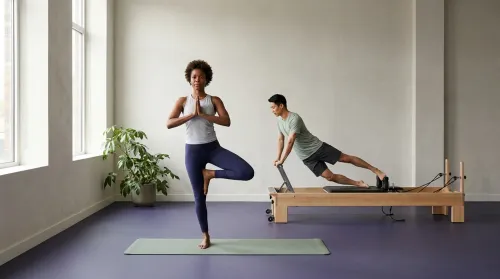
Pilates is up 66 percent on ClassPass bookings since 2024 and is the most-booked workout globally for three consecutive years, per PureWow's 2026 fitness trends report. The reason is that it works — Pilates trains spinal control, hip stability, and movement quality in ways that complement strength training rather than competing with it. I program Pilates-style exercises for clients with persistent core endurance gaps or chronic low back pain. Two 30-minute sessions a week is enough.
Japanese walking — short brisk-walk intervals (typically three minutes brisk, three minutes easy, repeated four to six times) — saw a 2,986 percent surge in search interest in 2026 per PureGym's report. The format has a clean evidence base in older-adult populations for improvements in aerobic capacity, leg strength, and blood pressure when run over several months. It is a legitimate Zone 2 / interval hybrid for people who do not want to run.
Menopause-specific programming has become a recognized trainer competency, not a niche. The recognition of "musculoskeletal syndrome of menopause" — joint pain, lean-mass loss, decreased recovery — is now reflected across the ACE and NASM top-10 lists. The programming response is unsurprising and effective: resistance training two to four times a week, adequate protein, and power-focused work (jumps, throws, fast eccentrics) to defend against the rapid power loss women experience in their late forties and fifties.
9. Older adults are now the fastest-growing gym demographic
ACSM ranked Fitness Programs for Older Adults at #2 in 2026. Roughly 73 million Americans — the entire baby-boomer cohort — will all be 65 or older by 2030, and adults 65+ are now visiting gyms and studios more often than any other age group, per IHRSA's 2023 Consumer Report. The programming priorities for this group are functional strength, balance, and power, in that order. The mistake to avoid is treating older clients like fragile versions of younger ones; the right framing is that the right stimulus has not changed, but recovery windows lengthen.
10. Mental-health-coded movement
ACSM ranks Exercise for Mental Health at #6 for 2026, reflecting a real shift in how clients describe what they are training for. The evidence base for movement as an adjunct in mild-to-moderate depression and anxiety has matured enough that mainstream clinical bodies now treat it as part of standard care alongside therapy and, when indicated, medication. The clinical specifics belong with a mental-health professional, but the gym side is straightforward: three sessions a week of anything you will actually do is the floor. Lifting works. Running works. Yoga works. Pilates works. The mode matters less than the consistency.
Related Article: Holistic Fitness: Integrating Mental and Physical Well-Being
Fads vs trends: what is worth your time
This is the section I wish more 2026 fitness articles included.
| Practice | Verdict | Why |
|---|---|---|
| Wearable technology | Trend | ACSM #1 for a reason; useful if you act on the data |
| Strength training | Trend | The single most reliable longevity intervention |
| Zone 2 cardio | Trend | Real physiology; the 80 percent right part of the cult |
| HYROX | Trend | Rewards being well-rounded; the format exposes weakness |
| Pilates | Trend | Movement quality, control, balance — works |
| Sauna | Trend | Cardiovascular evidence; well-tolerated |
| Cold plunge | Contested | Useful for mood and acute recovery; can blunt strength gains |
| Percussion guns | Mostly fad | Weak evidence; feels good, does little |
| Vibration plates | Fad | No meaningful evidence for general-population outcomes |
| Cortisol cocktails | Fad | TikTok cocktail of magnesium + tart cherry — sleep would work better and is free |
| 30-day transformation challenges | Fad | Nothing in training works in a month |
The filter to apply when you see the next viral trend: would it have worked twenty years ago, and will it still work in twenty? If yes, it is a trend. If it depends on a specific product or a viral moment, treat it as a fad.
How to put it together
If you take three things from this piece into next week, take these. Strength train two to three times a week, with progressive overload across the basic movement patterns. Do Zone 2 cardio two or three times a week, 30 to 45 minutes, conversational pace. Sleep seven to nine hours on a consistent schedule. Everything else on the 2026 trend list — wearables, AI coaching, HYROX, Pilates, sauna — is supplement to those three. Get those three right and add one or two of the others over six to eight weeks. Nothing in training works in three days, and the 2026 trends that will still be relevant in 2036 are the ones whose timelines look like months, not weekends.
If you are coming back from pain or an injury, see a clinician before loading the movement. That is not a hedge. That is what coaches who have seen things go wrong tell you.
Frequently Asked Questions
Per the American College of Sports Medicine's 2026 Worldwide Survey of Fitness Trends — the 20th consecutive year of the survey, polling over 2,000 exercise professionals globally — the #1 trend is wearable technology. Roughly 49% of US adults now own a fitness tracker or smartwatch. The 2026 generation tracks heart-rate variability, sleep, recovery, blood glucose, blood pressure, and skin temperature. The question for most readers is no longer whether to wear one; it is what to do with what it tells you.
AI coaching works best as an interpreter, not a replacement. The better platforms ingest your wearable data — HRV, sleep, recovery — and adjust the next session's volume or intensity in something close to real time. That covers the 80% of programming decisions based on whether you slept well and recovered. It does not watch your squat technique, know your injury history, or coach you through pain. Use it as a programming assistant working off a baseline plan a human coach helped set, not as a programming author.
A trend has evidence and longevity — wearables, strength training, functional fitness, Pilates, and Zone 2 all clear that bar. A fad has volume and brevity — vibration plates, cortisol cocktails, and most 30-day transformation challenges fail it. The simplest filter: if the practice would have worked twenty years ago and will still work in twenty, it is a trend. If it depends on a specific product or a viral moment, treat it as a fad.
HYROX broke into the ACSM top-10 fitness trends for the first time in 2026 because it rewards being well-rounded — 8 kilometers of running broken into 1-kilometer intervals, with eight strength stations between them. You need an aerobic engine, the strength to move external load while fatigued, and work capacity to keep moving over an hour. You do not have to race to benefit. Three weeks of run-station-run programming will tell you more about your real fitness than three months on a treadmill.
If you are losing weight on a GLP-1 medication, the priority shifts from burning calories to preserving lean muscle. That means resistance training becomes the load-bearing intervention, not cardio. Two to three full-body strength sessions per week with progressive overload, 1.6 to 2.2 grams of protein per kilogram of body weight per day, and walking instead of additional cardio. The medication will handle the scale. The gym is what protects the muscle you will need on the other side.
Zone 2 is steady, conversational-pace cardio — roughly 60 to 70 percent of your maximum heart rate, the kind of effort where you could hold a full conversation but would prefer not to. For most general-population lifters, three 45-minute sessions a week of Zone 2 will noticeably improve recovery between strength sessions within six to eight weeks. You do not need a lactate meter. You do not need a $200 chest strap. If you can talk in full sentences but find yourself wanting to slow down, you are in the zone.
The dominant 2026 conversation runs through wearable-driven training, AI-powered programming, strength training for longevity (not aesthetics), HYROX and functional fitness racing, GLP-1 + resistance training to preserve muscle during medication-driven weight loss, Zone 2 cardio as a longevity tool, programmed recovery (sleep first, then sauna, then everything else), Pilates, Japanese walking, and mental-health-coded movement. The throughline: practices with real evidence over practices with viral momentum.
Modern wearables — Whoop, Oura, Garmin, Apple Watch — track HRV, sleep quality, recovery, and resting heart rate, then feed that data either to your coach or to an AI coaching platform that adjusts the next session's volume and intensity accordingly. The leverage is in interpretation, not collection: HRV trending down for three days alongside elevated resting heart rate and poor sleep is a programming input that says substitute Zone 2 or mobility work for the planned strength session. Buying the tracker is the easy part; acting on what it tells you is the rest.
Wearable data lets a coach or AI program adjust the prescription to the recovered athlete in front of them, not the athlete on paper. HRV, sleep score, and recovery score together are the simplest behavioral inputs into a smart program — and the cleanest signal for when to push, when to deload, and when to substitute lower-intensity work. The pitfall is treating the numbers as a verdict instead of a signal. They are inputs to a coaching decision, not a replacement for one.