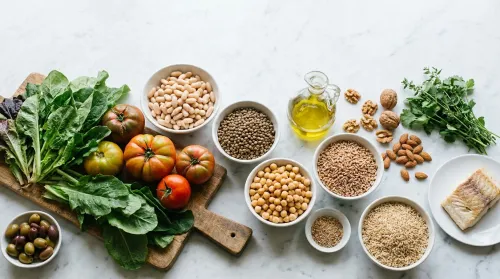
The Mind-Body Connection: How Nutrition Supports Your Overall Wellness


A new APA Monitor piece in March reported that 74% of Americans believe what they eat affects their mental health, and 61% say their emotional state shapes what they eat. That is a remarkable level of consensus for a country that cannot agree on much else. What most of those people do not have is a clear picture of what the evidence actually says, where it is strong, where it is shaky, and what to do at dinner tonight as a result.
This piece is an attempt at that picture. The organizing idea is mindful eating, because it sits at the intersection of how you eat and what you eat, and because the research from the last three years has quietly repositioned it from a wellness practice into something closer to a clinical adjunct. We will walk through what mindful eating actually is, why it appears to work neurologically, ten foods worth knowing about and the mechanism behind each, the honest answer on weight loss, and where supplements fit in.
What mindful eating actually is
Mindful eating is paying attention while you eat. That sounds trivial. The reason it is not is that most adults in the United States eat while doing something else — a screen, a commute, a meeting, a phone — and the body uses sensory and timing cues that those distractions blunt.
The core practices are unromantic and consistent across the research literature:
- Eat without a screen at least once a day.
- Slow the pace; put the utensil down between bites.
- Notice hunger before you start and fullness before you keep going.
- Distinguish physical hunger from emotional triggers (stress, boredom, loneliness).
- Notice the food itself — temperature, texture, the actual taste of it — instead of inhaling it.
- Stop somewhere short of stuffed.
- Treat one meal a day as a meal, not a refueling stop.
That is the whole practice. It is not a diet, and it does not tell you what to put on the plate. That is why this article pairs it with food selection — the practice unlocks the plate's effect, not the other way around.
Why mindful eating works (the biology, briefly)
Three mechanisms keep showing up in the literature, and each one is worth a sentence:
- Vagal afferent signaling. Slower chewing and longer meal duration give the gut time to send satiety signals up the vagus nerve to the brainstem. Fast eaters often pass through the satiety window before the signal lands.
- Reward-system recalibration. A 2026 Frontiers in Nutrition paper frames mindful eating as engaging the same biobehavioral targets that nutritional psychiatry interventions go after: reward sensitivity, hedonic hunger, and the gut-brain axis. The practice nudges those systems toward less reactive patterns.
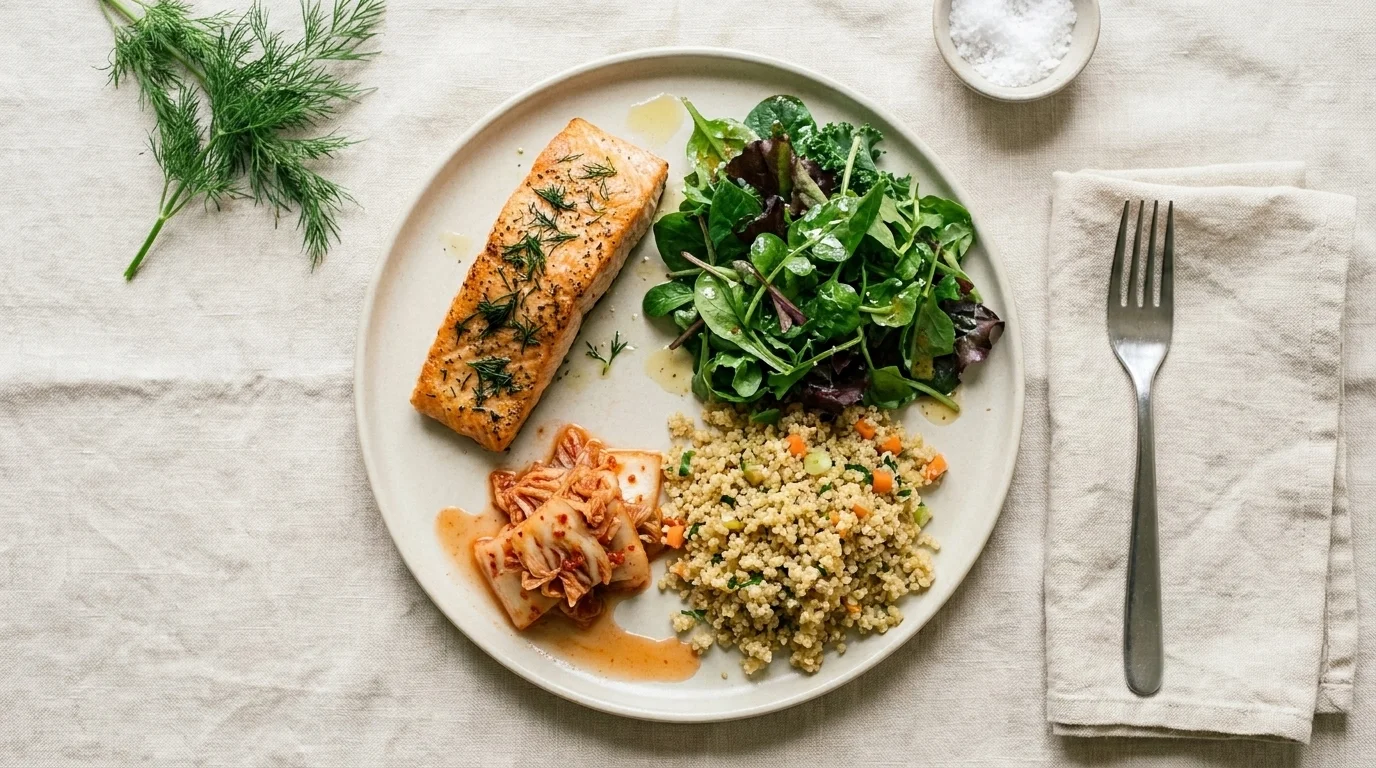
- Stress-eating decoupling. A 2025 translational review in Nutrients argues that the durable benefit of mindful eating is uncoupling stress arousal from food intake. The "psychobiotic plate" framework in that review — roughly a quarter each fermented food, fiber, omega-3 protein, and phytochemical-rich greens — is the food-side counterpart to the practice.
None of these mechanisms is settled science in the way "vitamin D deficiency causes rickets" is settled. They are the best current explanations from a field that is, by its own admission, still working out the long-term mechanistic studies. The Frontiers authors flag conceptual ambiguity and a scarcity of multi-year mechanistic data as live limitations. Worth knowing.
Related Article: The Gluten-Free Craze: Is It Actually Healthier?
Ten foods worth knowing — and the mechanism behind each
This is the kind of table the top-ranking pages on this topic tend to skip. Specific food, specific reason it shows up in the literature. Where the evidence is mixed, I have said so.
| Food | Active component | Mechanism | Evidence strength |
|---|---|---|---|
| Fatty fish (salmon, sardines, mackerel) | EPA + DHA omega-3s | Reduces neuroinflammation; supports membrane fluidity in neurons | Strong for depressive symptoms as adjunct |
| Kefir, plain yogurt with live cultures | Lactobacillus / Bifidobacterium strains | Probiotic colonization influences GABA and serotonin precursors via the gut-brain axis | Moderate, strain-specific |
| Leafy greens (spinach, kale, Swiss chard) | Folate, magnesium | Folate is a co-factor in serotonin and dopamine synthesis | Moderate from observational cohorts |
| Berries (blueberries, raspberries, blackberries) | Anthocyanins | Antioxidant activity; some animal data on BDNF | Moderate; mostly cohort + small RCTs |
| Dark chocolate (high-cacao) | Flavanols | Increases cerebral blood flow on short-term measures | Modest; small short-duration trials |
| Walnuts | ALA + polyphenols | Plant omega-3 precursor; polyphenols reduce inflammatory markers | Moderate from cohorts |
| Turmeric (whole spice, in food) | Curcumin | Anti-inflammatory; CRP reduction in trials at gram-scale doses | Mixed; bioavailability is the limiting factor |
| Green tea | L-theanine + EGCG | L-theanine shows α-wave EEG activity associated with calm-alert states | Moderate for acute effects |
| Kimchi, sauerkraut, miso | Live fermentation cultures | Microbial signaling to the vagus nerve; short-chain fatty acid production | Moderate, growing |
| Pumpkin seeds | Magnesium, zinc | Magnesium supports HPA-axis regulation; deficiency is common | Moderate, especially in deficient populations |
Two notes. First, every entry on this list is a food, not a supplement — the supplement literature looks different, and we will get to it. Second, none of these foods is "a superfood." That word does more marketing work than scientific work. The reason these particular foods earn their column inches is that they slot into dietary patterns that have been studied at scale.
Food and mood: what the evidence actually shows
The strongest dietary-pattern data we have is on the Mediterranean diet. Pooled randomized-trial data summarized in the 2026 Frontiers paper shows depressive symptoms drop 32 to 45 percent in groups assigned to it. That is a large effect for any nutritional intervention. Harvard Health's nutritional psychiatry overview cites a parallel finding from observational cohorts: people following traditional Mediterranean or Japanese dietary patterns have a 25 to 35 percent lower risk of depression than people on a typical Western pattern.
What is the mechanism? Roughly 95% of the body's serotonin is produced in the gastrointestinal tract, by enteroendocrine cells and gut bacteria — not the brain. Gut microbes manufacture short-chain fatty acids and neurotransmitter precursors that travel along the vagus nerve and through the bloodstream, where they influence inflammation, mood, and stress response. The dietary pattern that feeds this system well is broadly the same pattern that shows up in the cardiovascular literature: fiber, fermented foods, vegetables, olive oil, fish, modest amounts of meat. There is no twist.
For young adults specifically, a 2025 study in Food Science & Nutrition found a statistically significant negative correlation between depression scores and mindful-eating questionnaire scores, with a moderate negative association between psychological distress and both intuitive and mindful eating. The effect size is modest. The pattern is consistent.
The honest framing: changing your diet will not, by itself, treat clinical depression or an anxiety disorder. It can plausibly nudge symptoms in a useful direction and is a reasonable adjunct to whatever clinical care you are already in. Conversations about that adjunct belong with your own clinician.
Related Article: Busting the Myths: Detox Teas More Harm than Harmony
Fermented foods and gut health (without the rebalancing pitch)
Fermented foods for gut health are everywhere right now. When a yogurt brand tells you its strain of Lactobacillus will "rebalance" your gut, two questions are worth asking. First: which strain — they are not interchangeable, and the trial that produced a benefit was usually on one specific strain. Second: in what dose, measured in colony-forming units. Most probiotic research shows transient colonization. The bacteria pass through, do some work along the way, and leave. That is not a flaw. It just means a fermented dietary pattern matters more than the shot you drank this morning.
Practically: a daily serving of plain kefir or live-culture yogurt, plus one or two servings of kimchi, sauerkraut, miso, or kombucha across the week, will out-deliver almost any probiotic capsule for most people. Pair this with fiber — beans, oats, whole grains, vegetables, fruit — because the bacteria you are feeding are the ones already there.

Anti-inflammatory eating, and why it shows up in mood research
The reason anti-inflammatory food lists keep appearing next to mood research is the cytokine-induced sickness-behavior model: chronic low-grade systemic inflammation produces fatigue, social withdrawal, and depressed mood that look indistinguishable from a mild mood disorder. The dietary pattern shown to dampen that inflammation in cohort data — high in vegetables, fruit, fish, olive oil, nuts, whole grains, and fermented foods, low in refined sugar and ultra-processed foods — is the same Mediterranean-shaped pattern that shows up in the depression literature. The overlap is not coincidence.
Specific foods with the strongest anti-inflammatory data in human trials are fatty fish, leafy greens, berries, whole-spice turmeric (with black pepper, which improves curcumin bioavailability), green tea, and extra-virgin olive oil. Ginger and garlic have laboratory data and reasonable culinary case for inclusion. None of these is a one-shot fix; the pattern is the intervention.
Related Article: Understanding Nutritional Psychology: Decoding the Relationship Between Food and Mood
Hydration, briefly
Mild dehydration — the level people routinely hit at desks, well before they feel thirsty — has been associated with measurable drops in attention, working memory, and mood across multiple short-term experimental studies. The intervention is not exotic: most adults do fine with water alongside meals and a glass between, more if it is hot or you are training. The "drink eight glasses a day" rule has no particular evidence base; the body's thirst signal works for most healthy adults. Pay attention to it.
Mindful eating and weight loss: the honest answer
The most-Googled question on this topic, by a wide margin, is whether mindful eating causes weight loss. The honest answer is: it depends on what you are measuring, and the SERP currently does a poor job of telling you.
Healthline's mindful-eating guide cites studies showing 12-week mindful-eating training produces an average 4 lb weight loss in adults, with roughly 50 percent of lost weight regained at two years and 80 percent at five years without continued behavior change. That is real, but modest, and the long-term picture is sobering.
Harvard's Nutrition Source, summarizing the field, takes a sharper line: mindful eating is not primarily a weight-loss tool. The Mason et al. 2016 randomized trial of 194 adults over 5.5 months found that the mindfulness arm reduced sweets intake and maintained fasting glucose levels — while the control group's glucose rose — but the two arms did not differ significantly on weight loss.
Both of these things are true. Mindful eating, as a behavior change, supports the patterns that drive sustainable weight management — less binge eating, less emotional eating, better satiety recognition — and the metabolic markers often improve even when the scale does not move much. If you want weight change as the primary outcome, mindful eating alone is a weak lever. If you want a sustainable relationship with food and improvements in glucose, sweets intake, and binge frequency, it is one of the better-studied tools we have.
Related Article: Cracking the Code: Do Superfoods Really Exist?
Supplements, ranked honestly by evidence
Most "brain-boosting" supplement claims do not survive contact with a careful trial. Here is what the evidence currently supports, in tiers. None of this replaces a conversation with your own clinician, particularly if you take other medications.
- Strong evidence (adjunct, not stand-alone). Omega-3 fatty acids at 1 to 2 grams per day of combined EPA + DHA show a small but consistent effect on depressive symptoms as an adjunct to standard treatment. Vitamin D supplementation in genuinely deficient populations (serum 25-OH-D below 30 nmol/L) improves a range of outcomes; in non-deficient people, the data is much weaker.
- Mixed evidence. Probiotics for IBS-related mood symptoms — strain-specific, dose-specific, modest effect. Magnesium glycinate or citrate at 200 to 400 mg per day for anxiety symptoms in people with low intake.
- Insufficient evidence. Turmeric capsules for general mood (bioavailability problems make food-form curcumin a better bet); ashwagandha for stable, non-clinical "stress"; multivitamins as a "brain support" product. The trials are small, short, often funded by the supplement industry, and rarely replicated.
Food first, supplements to fill specific gaps. Reverse that order and you spend more for less.
A note on cultural framing
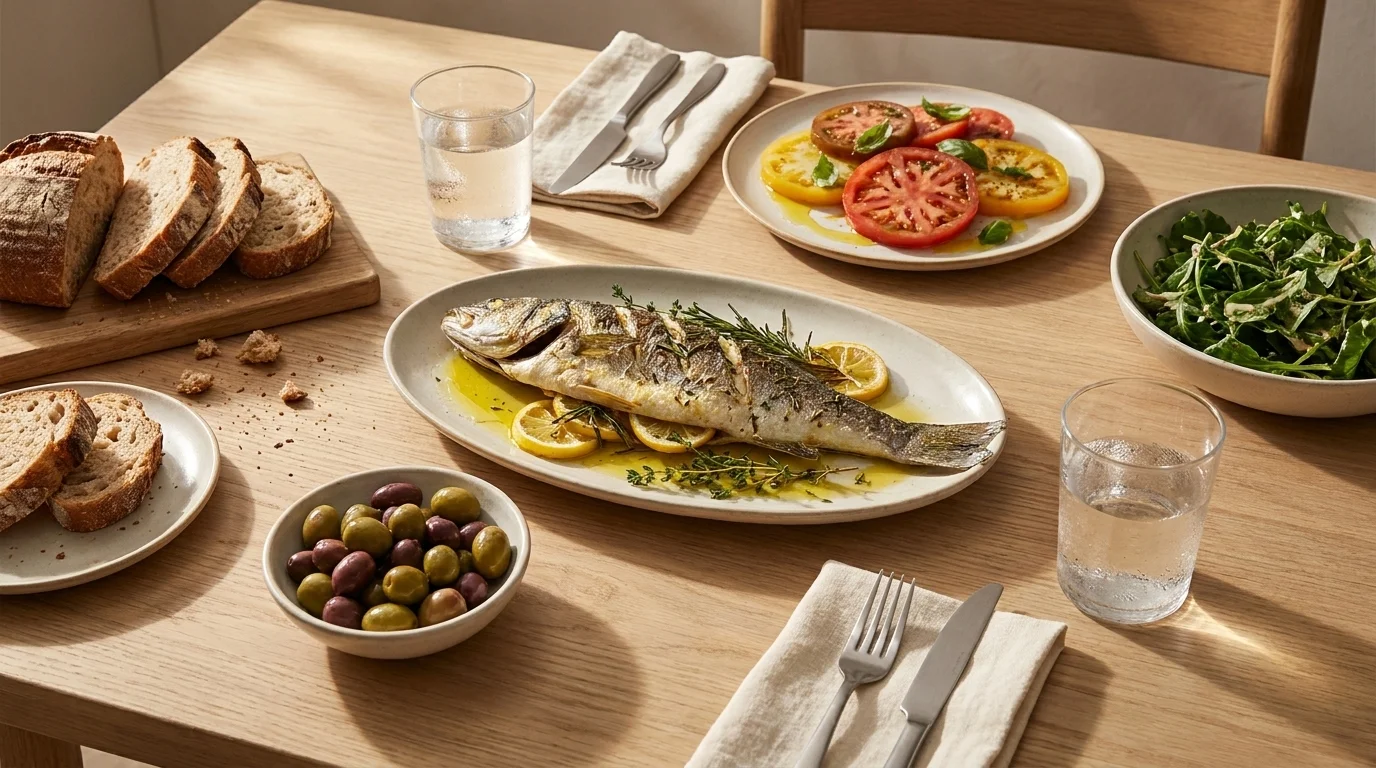
It is worth saying that mindful eating is not a new wellness invention. The Okinawan tradition of hara hachi bu — eat until you are roughly 80% full — is a structural form of the same practice, and the Okinawan dietary pattern is one of the more studied longevity diets on record. The Mediterranean pattern's evidence base depends as much on the social structure of meals (longer, shared, unrushed) as on the food itself. Most of what the research literature has documented as helpful is a recovery of eating habits that pre-modern food environments produced by default. If that framing is more useful than the wellness-app version, use it.
Related Article: Understanding the Basics of Nutrition for Beginners
What to do at dinner tonight
If you take one thing away from this piece: pick one meal a day and eat it without a screen. Put the phone in another room. Notice when you are full and stop a little before stuffed. On the food side, work toward a plate that, more days than not, has vegetables, a fermented or fiber-rich element, a piece of fish or plant protein, and whole-grain or whole-food carbohydrate. That is the entire intervention. Everything else in this piece — the mechanisms, the food table, the supplement tiers — is supporting context for those two moves.
Individual nutrition decisions, particularly around mood, weight, or chronic disease, belong in a conversation with your own clinician. The science here is good enough to act on; it is not good enough to replace someone who knows your bloodwork.
Frequently Asked Questions
Most people notice reduced overeating and better meal satisfaction within 2 to 4 weeks of consistent practice. Measurable changes in mood, digestion, and metabolic markers tend to emerge between 8 and 12 weeks. That is the timeline a typical mindful-eating randomized trial uses, and it lines up with the 12-week training studies reported by Healthline that produced an average 4 lb weight loss in adults.
It supports the behaviors that drive sustainable weight management — less binge eating, less emotional eating, better satiety recognition — more than it causes weight loss on its own. A 2016 randomized trial of 194 adults (Mason et al., summarized in Harvard's Nutrition Source) found mindfulness reduced sweets intake and stabilized fasting blood glucose, but did not produce significantly more weight loss than the control group. Combined with nutritional knowledge it is a powerful long-term tool. Used alone, it is a behavioral one.
The most consistent evidence points to fatty fish (omega-3s reduce neuroinflammation), fermented foods like kefir and kimchi (gut bacteria modulate GABA and serotonin precursors), dark leafy greens (folate supports serotonin synthesis), berries (anthocyanins protect against oxidative stress), and dark chocolate (flavanols increase cerebral blood flow). Pooled randomized-trial data on the Mediterranean diet shows depressive symptoms drop 32 to 45 percent in people who eat this way consistently.
Roughly 95 percent of your serotonin is produced in your gut, not your brain. The bacteria living in your intestines manufacture short-chain fatty acids and neurotransmitter precursors that travel along the vagus nerve and through the bloodstream, where they influence inflammation, mood, and stress response. A microbiome fed by fiber, fermented foods, and phytochemicals produces signals that calm rather than aggravate the brain — and the dietary pattern that does this is broadly the same Mediterranean-shaped pattern that shows up in the depression literature.
Diets high in refined sugar are consistently linked with higher systemic inflammation markers and worse mood outcomes in observational research. Harvard's nutritional psychiatry work notes refined-sugar-heavy diets correlate with impaired brain function. The thing to keep in mind: occasional sweets are not the problem. The problem is daily intake at typical Western levels, where added sugar quietly contributes 200 to 400 calories of low-nutrient density to most days.
Food first, almost always. The evidence is strongest for omega-3s at 1 to 2 grams per day as a depression adjunct and vitamin D in deficient populations. It is mixed for probiotics and magnesium. It is genuinely insufficient for most brain-boosting multivitamin claims. Supplements bridge specific gaps that food cannot fill cheaply — for example, omega-3s if you do not eat fatty fish twice a week. They are not a substitute for the underlying dietary pattern.
Yes, and the family-meal context is actually one of the better settings for it. The practice scales down to the simple structure of a shared meal eaten at a table without screens. Children pick up eating pace and satiety awareness from the adults at the table. You do not need to teach mindful eating explicitly. You demonstrate it by slowing down, talking, and letting the meal last.
Nutrient-rich foods deliver a high amount of vitamins, minerals, fiber, and beneficial plant compounds per calorie. Examples include leafy greens, berries, fatty fish, legumes, whole grains, nuts and seeds, and fermented foods. Building meals around these foods means more of the active components that influence mood, inflammation, blood sugar, and gut health show up in your diet by default — without you having to think about it at every meal.
Even mild dehydration — 1 to 2 percent body water loss, the level desk-bound adults routinely hit — is associated with measurable drops in attention, working memory, and mood in experimental studies. Adequate hydration supports digestion, nutrient transport, circulation, and temperature regulation. There is no strong evidence for the 'eight glasses a day' rule; thirst is a reliable signal for most healthy adults, and water alongside meals plus a glass between meals covers most people most days.